When Is The Best Time For Parkinson's Disease Patients To Receive A Brain Pacemaker (DBS)?
Mar 26, 2022
ali.ma@wecistanche.com
There are many guidelines in the field of Parkinson's treatment in the world, including the World Movement Disorders Association MDS guidelines, the American AAN guidelines, the European Union EFNS guidelines, and the British NICE guidelines. Among them, the MDS guidelines are the most reliable, because MDS attaches great importance to the quality assessment of each clinical trial, and the scoring standard is 24 items, and strictly evaluate the efficacy. Science knows no borders. Parkinson's disease is widely distributed all over the world, and the treatments are similar. In an environment where there are many guidelines, there is not much need for Chinese treatment guidelines. For the diagnosis of Parkinson's disease, China has no special diagnostic criteria, nor does Europe or the United States. Almost the whole world uses the diagnostic criteria of the British Brain Bank. There is little racial difference in Parkinson's disease. Horizontally, the similarity is very high. Vertically, many foreign guidelines have only been updated and supplemented a little after 2006, and there has been no major change. From the point of view of practicality, it can be completely unified in the world, all adopt the MDS guidelines of the World Movement Disorders Association, the Chinese version is enough for Chinese, and it is used in combination with the actual situation in China.

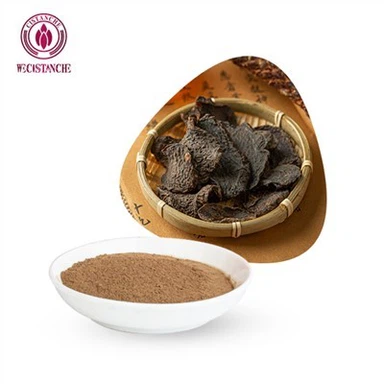
Click to Cistanche extract powder for Parkinson's disease
In the field of Parkinson's disease treatment in China, there is a saying that is widely spread: "Small water will flow without seeking full effect". Such a statement is not entirely based on a scientific basis but has a strong cultural color: it is better to die than living. In the early years, many people worried about the side effects of dopamine drugs, often delaying the start of medication. There are clinical patients with a disease course of more than 10 years, who are already the most severe H&Y grade 5 patients, and are still suffering from delaying the time of taking the medicine, fearing that the medicine is "too toxic". With the prolongation of time, the effect of dopamine drugs decreased, and the main reasons for the side effects were the apoptosis of the dopamine receptor postsynaptic membrane and the decrease of the ability of the presynaptic membrane to release vesicles, which had nothing to do with the use of dopamine drugs. Drug therapy for Parkinson's disease should be started as soon as possible for the following reasons: 1. Early intervention can improve motor function and quality of life; 2. Early progression of Parkinson's disease is faster than the late stage, possibly due to the existence of harmful compensatory mechanisms in the early stage; 3. Early-stage of Parkinson's disease progression Initiation of symptomatic drug therapy may interrupt this deleterious compensation. For neurodegenerative diseases such as Parkinson's disease, the future of research lies in early diagnosis and early treatment. When a patient develops symptoms, more than half of the dopaminergic cells in the basal ganglia of the brain have already died. If only 20% of the dopaminergic cells remain, what else can doctors do?

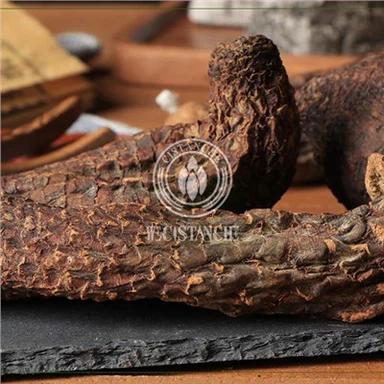
CISTANCHE TUBULOSA SLICES
The EarlyStim study published in the New England Journal of Medicine in 2013 was a large-scale double-blind randomized controlled trial conducted in France and Germany. The average course of the disease was 7 years, and the shortest was 3 years. The efficacy of the DBS+ drug treatment group was significantly better than that of the drug alone group. . The previous view is that DBS surgery must be performed 4 years after the patient's onset, because the 4-year disease course is enough to determine whether the patient has Parkinson's disease or Parkinson's syndrome. With the development of technology, such as the PDRD brain-related network established based on FDG PET-CT, the identification accuracy of Parkinson's disease and Parkinson's syndrome exceeds 80%, and the disease duration of 4 years is no longer the threshold for diagnosis. Studies of DBS therapy in patients with an average disease duration shorter than 7 years are currently underway in Europe.

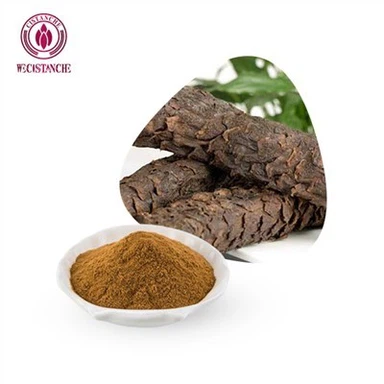
Cistanche extract can reduce Parkinson's syndrome
3-5 years is the honeymoon period of drug therapy, during which the patient feels well, is surgery necessary? The question here is that DBS is very effective in the treatment of symptoms, and it beats drugs in the treatment of symptom fluctuations and dyskinesia. Does DBS have neuroprotective effects and delay disease progression? It is difficult to distinguish between protective and therapeutic effects in terms of research, and the evidence of protective effects of so-called protective therapeutic drugs such as pramipexole, selegiline, rasagiline, high-dose vitamin E, coenzyme Q10, etc. is also inconsistent. Sufficient and often evidence to the contrary emerges. This year's revised guideline cancels the practice of separating protective drugs and symptomatic drugs in the second edition of the 2009 guideline, because even if the drug simply improves symptoms and improves the patient's exercise ability and mood, it will indirectly slow down disease progression. speed. The advantages of DBS in improving motor function and improving the quality of life are incomparable with drugs. If the honeymoon period of drug treatment is not so sweet, DBS can make patients feel more comfortable.

The World Movement Disorders Society MDS in 2011 has listed bilateral subthalamic nucleus DBS, bilateral globus pallidus DBS, and unilateral globus pallidus lesions as the highest level of evidence. Compared with 2009, the third edition of the 2014 Chinese guidelines has not changed much in the surgical treatment section. It is still recommended that preoperative levodopa sensitivity can be used as a prognostic indicator for DBS treatment (level B evidence). Patients with younger age and shorter disease duration may improve more. Significant (level of evidence C), no evidence for GPI DBS and VIM DBS to make a prognostic recommendation (level of evidence U). Such apparently unreasonable views in the Chinese guidelines are likely to mislead doctors and patients.
If the patient must wait until the drug treatment is exhausted, and the remaining dopamine cells are less than 10% before seeking surgical treatment, then we can only comfort the patient: it is better to die than to live. Faced with such treatment guidelines, we would like to remind patients with Parkinson's disease that if you hope to have a high quality of life, early DBS surgery will benefit them more.
Note: The traditional Chinese medicinal herb cistanche (also known as the "dragon herb" and "desert ginseng"), grows only in the arid and warm deserts. As one of the nine immortal herbs, Cistanche (cistanche tubulosa/cistanche deserticola/desertliving cistanche/cistanche salsa)contents with rich effective ingredients such as echinacoside, acteoside, total phenylethanoid glycosides, flavonoids, polysaccharides, etc. these effective ingredients made cistanche a precious nourishing herb and food material for people's immunity, internal organs, and brain cells and neurons, etc. The modern pharmacological studies have confirmed the following effects of cistanche(benefits of cistanche): improve immunity; improve sexual function and kidney function; anti-fatigue; anti-aging; improve memory; anti-Parkinson's disease; anti-Alzheimer's disease; antioxidation; ease-constipation; anti-inflammatory; promote bone growth, whitening skin; protect liver; etc.