A Study On The Fabrication Of An Effective Natural Substance Based On Schisandra Chinensis Extracted Fermentation
Apr 14, 2023
Purpose: In this study, a high-efficiency Schisandra chinensis extract (SCE) produced by the fermentation of effective microorganisms (EM) was used as an antioxidant material in preparing cosmetic products.
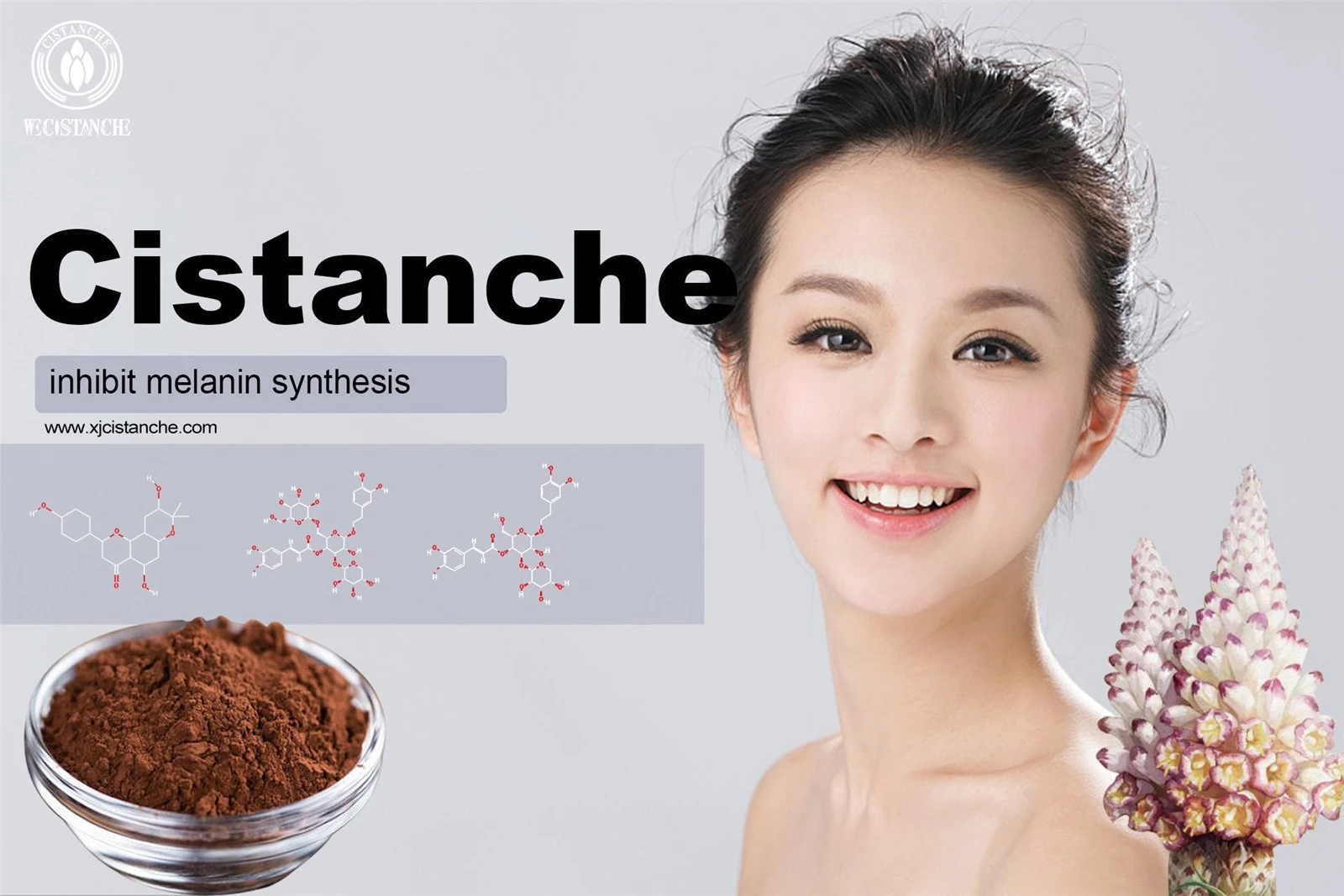
According to relevant studies,cistanche is a common herb that is known as "the miracle herb that prolongs life". Its main component is cistanoside, which has various effects such as antioxidant, anti-inflammatory, and immune function promotion. The mechanism between cistanche and skin whitening lies in the antioxidant effect of cistanche glycosides. Melanin in human skin is produced by the oxidation of tyrosine catalyzed by tyrosinase, and the oxidation reaction requires the participation of oxygen, so the oxygen-free radicals in the body become an important factor affecting melanin production. Cistanche contains cistanoside, which is an antioxidant and can reduce the generation of free radicals in the body, thus inhibiting melanin production.
Click To Where Can I Buy Cistanche
For more info:
david.deng@wecistanche.com WhatApp:86 13632399501

Introduction
In recent years, the improvement and the pursuit of high living standards have caused a lot of problems affecting people’s health. Among these, cosmetic products are a particular example that needs to be carefully investigated. The use of synthetic chemicals as a main ingredient of cosmetic products leads to many negative results, such as toxicity and high cost. This is the reason why the investigation of natural products for cosmetic applications has attracted a lot of interest from many researchers. Schisandra chinensis (SC) is a medicinal and edible plant that has five tastes (sweet, sour, bitter, salty, and pungent),1,2 and is widely used in many foods, drinks, and herbal industries, etc.3,4 SC contains many bioactive compounds, such as domain, malic acid, and citric acid, and can be effectively used to treat cough and asthma.5 In addition, it can be used in the food and cosmetic industries owing to its well-known antibacterial and antioxidant abilities. Furthermore, it has excellent heat stability and can be used in cosmetics and foods that do not affect people’s health.6 Fermentation refers to the process of decomposing organic material using the enzymes of microorganisms and is derived from the Latin word fervent. 7 It has been used in various ways and different fields, such as food, drugs, and cosmetics.7 Food fermentation through the enzymatic action of microorganisms is traditionally used in manufacturing processes to improve flavor and destroy toxins, and also has the effect of promoting the biomolecules.8,9 Effective Microorganisms (EM) are useful microorganisms that were developed in 1982.10 EM was originally developed for use in natural and organic farming. Subsequently, its applicable scope has been gradually extended and it is commonly used in Asian countries, Russia, and the USA.11 Initially, the solution of EM was developed from 80 species of 10 genera in 5 families; however, it was a very complex process. Therefore, EM was then simply developed by some principal organisms, such as photosynthetic bacteria, lactic acid bacteria, fungi, yeast, and actinomycetes.12 Regarding the fermentation application, it is fermented in facultative anaerobic conditions, so its synthesis products, such as vitamin and carotene pigments as powerful antioxidants to prevent the decay of organic material.13 The resulting amino acids and organic acids are converted to the respective proteins and sugars and then absorbed immediately by the plant. This improves greatly the efficiency of both the synthesis and use of plant food. EM was originally developed for use in natural, organic agriculture, but nowadays is used in a variety of fields such as construction, medical, and cosmetic industries.14–16

Materials and Methods
Materials
SC Extraction
Preparation of Different Extract Concentrations
Microelement Analysis
By the Food Code method,17 1.0 g of the sample was dissolved in nitric acid 100 mL with DI water at 100°C. Then, the amounts of trace elements in the sample were measured and analyzed with an Elemental Analyzer (Vario EL, Germany).

Measurement of Polyphenol Content
The polyphenol content per gram of the sample was measured by the Folin–Denis method.18 Thus, 100 μL of extract and 2 wt% Na2CO3 were mixed in an EP tube. The EP tube was kept at room temperature for 2 min for the reaction. After that, 50% Folin–Ciocalteu’s phenol reagent was added to the tube. The sample was put in a vortex mixer at room temperature for 30 min and then analyzed with a UV-Vis spectrophotometer at 750 nm.
Measurement of Flavonoids
The total content of flavonoid per gram of extract was measured by diethylene glycol colorimetry.19 Thus, 100 μL of extract and 100 μL of 1.0 N NaOH were added to an EP tube and mixed using a vortex mixer. After mixing, the solution was kept at 30°C for 1.0 h for the reaction. The yield of the reaction was analyzed by a UV-Vis spectrophotometer at 420 nm.
Measurement of Free-Radical Scavenging
The free-radical scavenging by 1,1-diphenyl-2-picrylhydrazyl (DPPH) was measured by the modified Blois method.20 In this context, 0.1 M Trizma base–HCl buffer (Tris buffer, pH 7.4) and 500 mM DPPH were initially prepared with methanol. Butylated hydroxytoluene (BHT) and butylated hydroxyanisole (BHA) were selected as standards for the control experiment. Then, 100 μL of extract samples and 400 μL of Tris buffer were mixed in an EP tube, followed by the addition of 500 μL of DPPH solution. The mixture was kept in a dark room for 20 min, then analyzed by a UV-Vis spectrophotometer at 517 nm. In the control experiment, 100 μL of BHT and BHA were added instead of the extract samples. In the non-additive group, 100 μL of Tris buffer was added to the EP tube instead of the extract samples. The measurement of electron donation ability is shown as follows:21

Measurement of Nitrite Scavenging Activity
The nitrite scavenging activity was measured using the modified method developed by Kim et al.22,23 Specifically, 0.3 mL of the extracted sample and 0.1 mL of 1.0 mM NaNO2 solution, 0.2 M citrate buffer–HCl at pH 2.5 was mixed to obtain a final volume of 1.0 mL. The mixture was then reacted at 37°C for 1.0 h. Subsequently, it was mixed with 0.4 mL Griess reagent (30% CH3COOH solution containing sulfanilic acid (1.0 wt%): naphthylamine (1 wt%)) and 3.0 mL of CH3COOH solution (2.0 wt%). Then, the reaction took place at room temperature for 15 min.

Measurement of Superoxide Dismutase-Like Activity (SODA)
Measurement of Tyrosinase Inhibitory Activity
Tyrosinase inhibitory activity was measured by a modified version of the method presented by Masamoto et al.25 To measure the mushroom tyrosinase-deactivating properties in vitro conditions, 0.3 mL of 2.5 mM 3.4 dihydroxy-phenylalanine (L-DOPA), 0.05 mL of the extracted sample, and 0.1 M phosphate buffer solution (pH 6.8, total volume 1.5 mL) were mixed using a vortex mixer, and then pre-incubated at 25°C. Then, 0.05 mL of mushroom tyrosinase at 1380 units·mL−1 (Sigma Co., USA) was added and then mixed using a vortex mixer. After that, the reaction was performed at 25°C for 2.0 min.

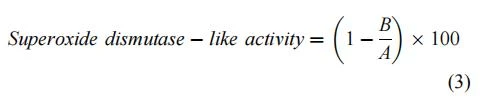
where A is the absorbance value between 0.5 and 1 min of the reaction solution without the sample, measured at 475 nm by a UV-Vis spectrophotometer; and B is the absorbance value between 0.5 and 1.0 min of the reaction solution with the sample, measured at 475 nm by a UV-Vis spectrophotometer.
Preparation of Cream Material
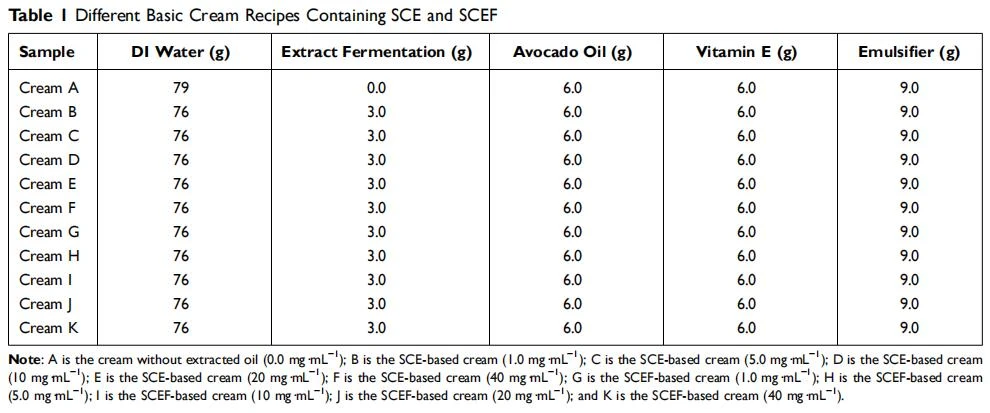
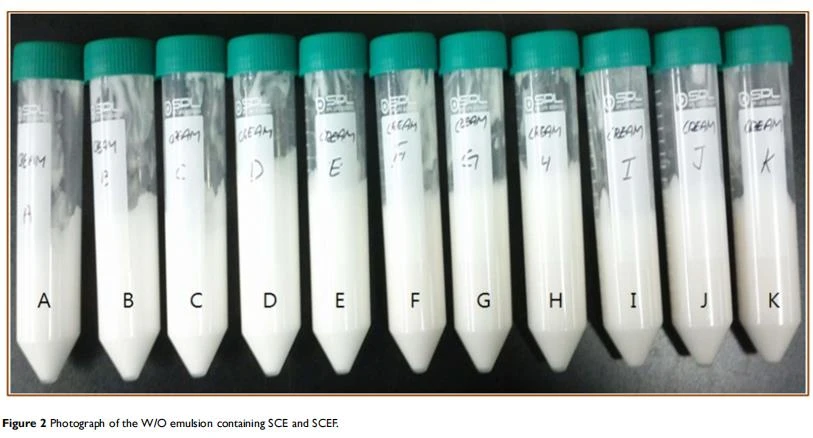
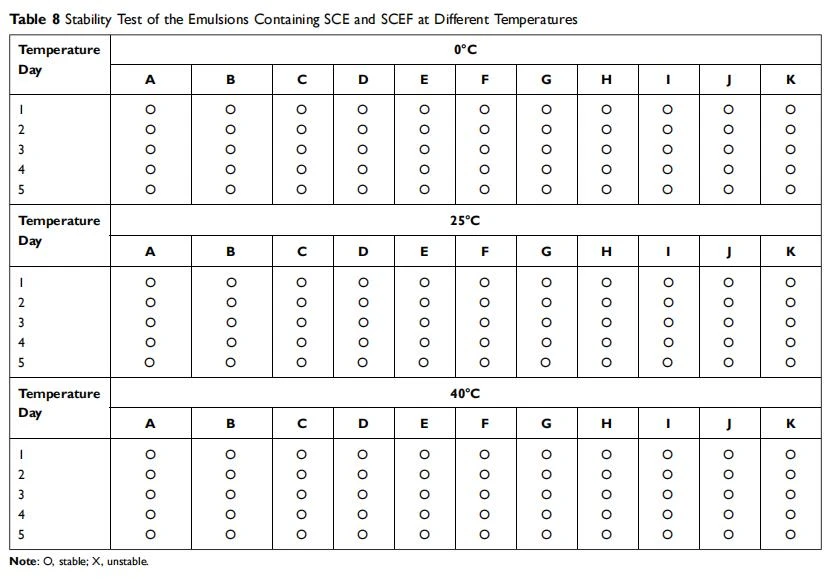
The cream formulas, based on distilled water, extracted oil, and additives, were prepared as listed in Table 1. Water, additives, and oil were weighed and then heated at 80°C in a water bath. Water was slowly added and vigorously mixed with oil in a mini mixer (DS-1800; Korea). Cream A was prepared without the extracted oil. Creams B, C, D, E, and F contained 1, 5, 10, 20, and 40 mg·mL−1 of SC extract (SCE), respectively. Creams G, H, I, J, and K contained 1, 5, 10, 20, and 40 mg·mL−1 of SCE fermentation (SCEF).

Assessment of Safety
Assessment of Stability
Results and Discussion
Microelement Analysis
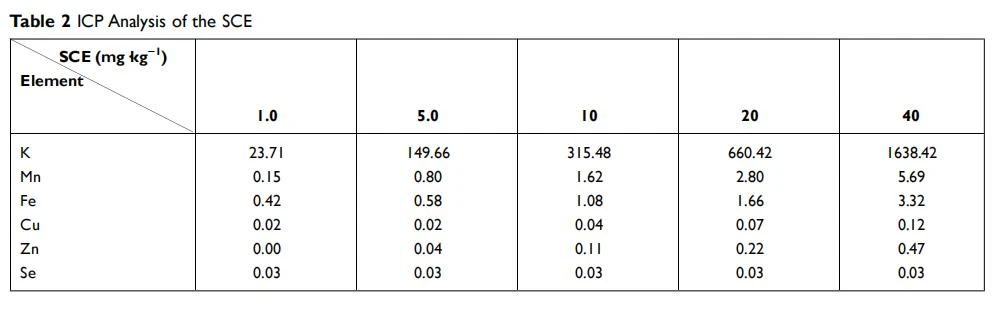
The results of inductively coupled plasma mass spectrometry (ICP) analysis of SCE are shown in Table 2, which indicates that 1.0 mg·mL−1 of the SCE contains 23.71, 0.42, and 0.03 mg·kg−1 of K, Fe, and Se, respectively. When the amount of SCE increased, the content of these trace elements increased. In this regard, the increase in K was dominant, and the increases in Mn, Fe, Cu, and Zn were not significant. The content of Se remained the same regardless of the concentration of SCE. These trace elements help the actions of many physiologically active substances both inside and outside the human body and serve important roles, including antioxidizing and immunity activities.
Measurement of Extract and Its Content of Flavonoids and Polyphenols
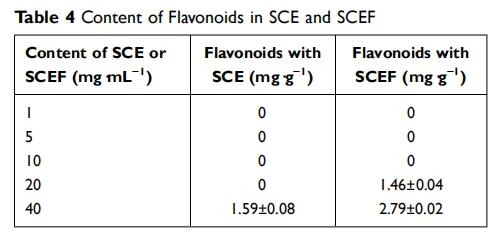
The content of the SCE was 27.91 wt% in 100 g of SC. The extraction provided the same yield when the procedure was performed in water and ethanol. However, the yield of extract was lower than that in previous papers.26,27 This is due to the differences in the places where the SC was grown, as well as the conditions of culture and the method of extraction.26 The polyphenol content is shown in Table 3. The extract of ordinary SCE at 1.0 mg·mL−1 provided 1.53±0.02 mg·g−1 of polyphenol, while the same amount of EM SCEF provided a higher polyphenol content (20.84±0.04 mg·g−1) than the non-fermented extract. The extraction results for EM SCEF at 5, 10, 20, and 40 mg·mL−1 were 25.82±0.04, 29.13±0.05, 42.07±0.05, and 59.22±0.09 mg·g−1, respectively.

Measurement of Free-Radical Scavenging
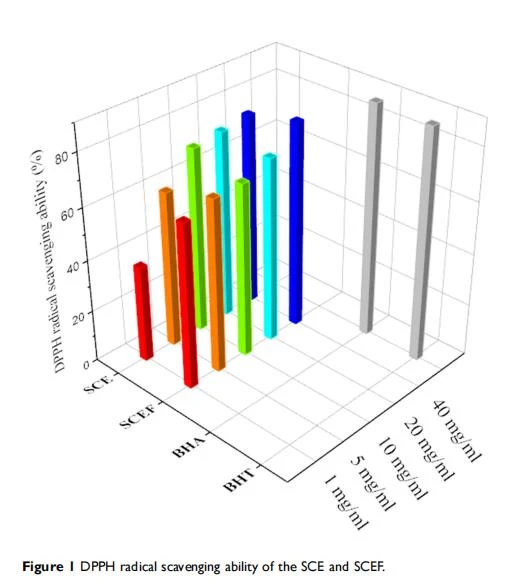
Free radicals in the body can promote biological aging, by reacting with lipids and proteins. To remove this phenomenon, many studies have investigated natural products.31 The DPPH radical scavenging test method is used in many natural products for antioxidant measurements using the electron-donating ability of antioxidants.32–34 The results of the antioxidant effects in the SCE and EM SCEF groups are shown in Figure 1. In the case of the DPPH radical scavenging ability of SCE, as the concentration varied from 1.0, 10, to 40 mg·mL−1, the antioxidant ability increased from 37%, 72%, to 74%. The EM SCEF group, showed 63%, 67%, and 79% antioxidant ability at the respective concentrations of 1.0, 10, and 40 mg·mL−1. In the EM SCEF group, the minor change in antioxidant ability with concentration seems to be due to the reaction between EM SCEF and microbes to produce antioxidant substances. The antioxidant ability of SC was compared to some well-known antioxidants, such as BHT (89%) and BHA (88%). It was found that the free-radical scavenging ability of SC was not much different from theirs. In addition, SCEF has a higher radical scavenging ability than SCE, even at low concentrations. This means that as SC and EM active solutions reacted with each other, the microbes produced physiologically active materials which have the antioxidant ability. Therefore, it is possible to produce material containing higher levels of antioxidants with lower amounts of EM SCEF than SCE. We concluded that this could solve the problem of dosage in manufacturing cosmetics, and simultaneously improve functional aspects of cosmetic products containing natural substances derived from plants.
Measurement of Nitrite Scavenging Activity
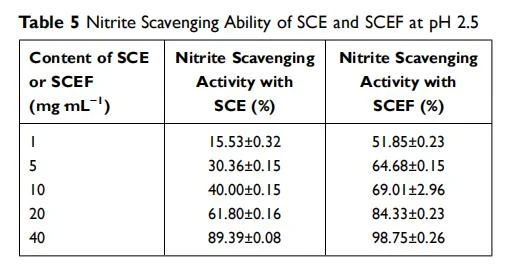
Nitrite reacts with secondary amine (a chemical compound in which two hydrogen atoms of ammonia are substituted with the hydrocarbon functional group R), producing nitrosamine, a notorious carcinogen; in other words, nitrite acts as a precursor for nitrosamine. Therefore, the formation of nitrosamine can be effectively inhibited by removing nitrate.35 If reactivity between the sample for analysis and nitrite is high, nitrite will be removed because it reacts in the ionized state, which leads to the inhibition of nitrosamine formation. This applies equally to other substances that exist in ion or electron forms, and the high reactivity of the sample is equivalent to or assessed as high activities of nitrite scavenging and antioxidation. The greater the amount of total phenol compounds in a sample, the more powerfully the reaction of nitrite scavenging occurs in the lower pH range, and, adversely, the scavenging effect decreases in the upper pH range.36 Table 5 shows that the nitrite scavenging activity of SCE was 15% at 1 mg·mL−1, 40% at 10 mg·mL−1, and 89% at 40 mg·mL−1. On the other hand, SCEF showed nitrite scavenging activity of 51% at 1 mg·mL−1, 69% at 10 mg·mL−1, and 98% at 40 mg·mL−1. From this test, it was observed that as the concentration of both groups increased, the scavenging activity also increased. In addition, SCEF was superior to SC in its nitrite scavenging activity, which is similar to other experimental results. At a concentration of 1.0 mg·mL−1, the difference in scavenging activity was 40 mg·mL−1, the largest among the different concentrations, and the gap narrowed as the concentration increased. From this comparative experiment, through the EM fermentation process, the nitrite scavenging effect of SC, which was assessed as being quite good, improved further. This phenomenon can be attributed to the fermentation process generating more biologically active substances, which, in turn, led to an increase in the inhibition of nitrosamine formation, as well as many phenols, as crude plant ingredients, also contributing to the effective nitrite scavenging reaction.
SODA Measurement
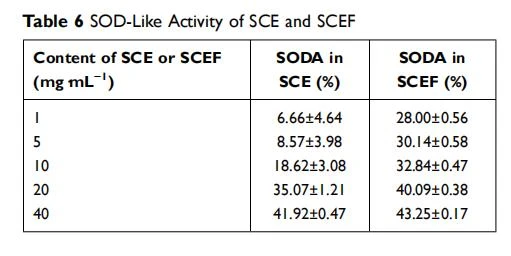
SOD is an enzymatic antioxidant that can detoxify and suppress the toxicity of O2, H2O2, peroxide, OH radicals, etc.37,38 SODA is shown in Table 6 for SCE (or SCEF) concentrations of 1.0, 10, and 40 mg·mL−1. The SCE group had SODA of 6%, 18%, and 41%, while the EM SCEF group had SODA of 28%, 32%, and 43% when the concentration increased from 1 to 40 mg·mL−1. To analyze the difference in activity of the two groups, the difference in SODA value was higher at a low concentration of SCE and SCEF (1.0 mg·mL−1) and smaller at a high concentration (40 mg·mL−1). In this test, both groups had an outstanding level of SODA.26,39 Therefore, it can be judged that both SCE and SCEF have high, naturally originating, antioxidant abilities.
Measurement of Tyrosinase Inhibitory Activity
The mechanism of tyrosinase inhibitory activity is very important in the cosmetic industry and can be used as a measure of the skin whitening effect.40 In the SCE group, tyrosinase inhibitory activity increased from 35% to 36%, 37%, 38%, and 39% as the concentration of the extract increased (Table 7). In the EM SCEF group, tyrosinase inhibitory activity increased from 38% to 39%, 40%, 41%, and 42% when the concentration increased. The EM SCEF had a more effective tyrosinase inhibitory activity than the normal extract, but there was not much difference. However, it is thought that both extracts have a skin-whitening effect when they are used to make cosmetics.41

Safety Evaluation
The formulas of cosmetics with different concentrations of SCE and EM SCEF, ie, 0.0, 1.0, 5.0, 10, 20, and 40 mg·mL−1, are shown in Figure 2. The manufactured cosmetics were formed in W/O dosage form by adding the aqueous phase to the oil phase. The pH value of the surface of human skin is generally between 4.5 and 6.5, which is either slightly acidic or neutral.42 If the pH becomes alkaline, the skin’s resistance will be weakened, leading to the propagation of germs and eventually to skin diseases. Therefore, it is highly recommended to use neutral or slightly acidic cosmetic products. The change in pH value with storage time is shown in Figure 3. Using the cream without SCE, the pH was slightly increased to 6.23 after 60 days compared to its initial value of 6.25. The cream products with SCE concentrations of 1.0, 5.0, 10, 20, and 40 mg·mL−1 had initial pH values of 5.53, 3.87, 3.43, 3.15, and 3.03, respectively. These pH values did not change after 60 days. The EM SCEF-based creams with EM SCEF concentrations of 1.0, 5.0, 10, 20, and 40 mg·mL−1 had initial pH values of 4.12, 3.46, 3.37, 3.15, and 2.98, respectively. Similar pH values were observed after 60 days. These results mean that there was no significant difference in pH change in either group and when the concentration of the extract increased, the pH value decreased. These results imply that there were no safety problems in using these cosmetic products.
Effect of Temperature on Cosmetic Stability

Conclusion
Acknowledgment
Disclosure
References
1. Choi BR, Kim HK, Park JK. Effects of Schisandra chinensis fruit extract and domain A on the contractility of penile corpus cavernosum smooth muscle: a potential mechanism through the nitric oxide - cyclic guanosine monophosphate pathway. Nutr Res Pract. 2018;12 (4):291–297. doi:10.4162/nrp.2018.12.4.291
2. He J-L, Zhou Z-W, Yin J-J, He C-Q, Zhou S-F, Yu Y. Schisandra chinensis regulates drug metabolizing enzymes and drug transporters via activation of Nrf2-mediated signaling pathway. Drug Des Devel Ther. 2015;9:127–146.
3. Nowak A, Szyda MZ, Błasiak J, Nowak A, Zhang Z, Zhang B. Potential of Schisandra chinensis (Turcz.) Baill. In human health and nutrition: a review of current knowledge and therapeutic perspectives. Nutrients. 2019;11(2):333. doi:10.3390/nu1102 0333
4. Ramanathan L, Das NP. Studies on the control of lipid oxidation in groundfish by some polyphenolic natural products. J Agric Food Chem. 1992;40(1):17–21. doi:10.1021/jf00013a004
5. Yang S, Yuan C. Schisandra chinensis: a comprehensive review on its phytochemicals and biological activities. Arab J Chem. 2021;14 (9):103310. doi:10.1016/j.arabjc.2021.103310
6. Cho EG, Cho HI, Choi YJ. Antioxidant and antibacterial activities, and tyrosinase and elastase inhibitory effect of fermented Omija (Schizandra chinensis Baillon.) beverage. J Appl Biol Chem. 2010;53(4):212–221. doi:10.3839/jabc.2010.038
7. Park SJ, Seong DH, Park DS, et al. Chemical compositions of fermented Codonopsis lanceolata. J Korean Soc Food Sci Nutr. 2009;38(3):396–400. doi:10.3746/jkfn.2009.38.3.396
8. Dimidi E, Cox SR, Rossi M, Whelan K. Fermented foods: definitions and characteristics, impact on the Gut Microbiota and effects on gastrointestinal health and disease. Nutrients. 2019;11(8):1806. doi:10.3390/nu11081806
9. Moon S-H, Chang H-C. Rice bran fermentation using Lactiplantibacillus plantarum EM as a starter and the potential of the fermented rice bran as a functional food. Foods. 2021;10(5):978. doi:10.3390/foods10050978
10. Katina K, Liukkonen KH, Kaukovirta A, Adlercreutz H, Heinonen SM, Lampi AM. Fermentation-induced changes in the nutritional value of germinated rye. J Cereal Sci. 2007;46 (3):348–355. doi:10.1016/j.jcs.2007.07.006
11. Foolad N, Brezinski EA, Chase EP, Armstrong AW. Effect of nutrient supplementation on atopic dermatitis in children. Arch Dermatol. 2012;17:E1–E6.
12. Olle M, Williams IH. Effective microorganisms and their influence on vegetable production – a review. J Hortic Sci Biotechnol. 2031;88 (4):380–386. doi:10.1080/14620316.2013.11512979
13. Uma MN, Abirami R. A review on effective microorganisms and their applications. AJMR. 2019;8(4):121–129. doi:10.5958/2278-4853.20 19.00142.3
14. Bzdyk RM, Olchowik J, Studnicki M, et al. The impact of Effective Microorganisms (EM) and organic and mineral fertilizers on the growth and mycorrhizal colonization of Fagus sylvatica and Quercus robur seedlings in a bare-root nursery experiment. Forests. 2018;9(10):597. doi:10.3390/f9100597
15. Chui CH, Cheng GYM. Growth inhibitory potential of effective microorganism fermentation extract (EM-X) on cancer cells. Int J Mol Med. 2004;14:925–929.
16. Chui CH, Hau DKP. Apoptotic potential of the concentrated effective microorganism fermentation extract on human cancer cells. Int J Mol Med. 2006;17:279–284.
17. Press mine. Conduct laboratory testing according to specifications and test methods of the food code. Food & Administration; 2003:887–892.
18. Latimer GW. Official Methods of Analysis of AOAC International. 21st ed. Hardcover; 2019
19. Kim J-H. Studies on the biological activity of Astragalus membranaceous extracts. Biomed Sci Lett. 2012;18(1):35–41.
20. Blois MS. Antioxidant determination by the use of a stable free radical. Nature. 1958;26(4617):1199–1200. doi:10.1038/1811199a0
21. Ahn YH, Yoo JS, Kim SH. An antioxidant capacity assay using a polyvinyl alcohol-based DPPH pellet. Bull Korean Chem Soc. 2010;31(9):2557–2560. doi:10.5012/bkcs.2010.31.9.2557
22. Kim BJ, Park YK, Kang BS. The effect of Rubifructus on the ovoluationandovaryinrats. Korean J Herb. 2001;16:139–152.
23. Gray JI, Dugan JRL. Inhibition of N-nitrosamine formation in the model food system. J Food Sci. 1975;40(5):981–985. doi:10.1111/j.1365- 2621.1975.tb02248.x
24. Marklund S, Marklund G. Involvement of superoxide an amino radical in the oxidation of pyrogallol and a convenient assay for superoxide dismutase. Eur J Biochem. 1975;47:468–474.
25. Masamoto YH, Ando Y, Murata Y, Shiraishi M, Tada K, Takahata K. Mushroom tyrosinase inhibitory activity of Esculetin isolated from seeds of Euphorbia lathyris L. Biosci Biotechnol Biochem. 2003;67(3):631–634. doi:10.1271/bbb.67.631
26. Kwon HJ, Park CS. Biological activities of extracts from Omija. Korean J Food Preserv. 2008;15:587–592.
27. Shin HO. Studies on the physiological effect of purified polyphenol and the development of multiple emulsification. Gyeongbuk, Korea: Department of Cosmeceutical Science Graduate School, Daegu Haany University; 2009.
28. Markris DP, Rossiter JT. Comparison of quercetin and a non-ortho hydroxy flavonol as antioxidants by competing in vitro oxidation reactions. J Agric Food Chem. 2001;49(7):3370–3377. doi:10.1021/jf010107l
29. An BJ, Park TS, Lee JY, et al. The anti-microbial effect of irradiated green tea polyphenol addition into the cosmetic composition. J Korean Soc Appl Biol Chem. 2007;50:210–216.
30. Hong JY, Nam HS, Yoon KY, Shin SR. Antioxidant activities of extracts from fermented black jujube. Korean J Food Preserv. 2012;19(6):901–908. doi:10.11002/kjfp.2012.19.6.901
31. Youn JS, Shin SY, Wu Y, et al. Antioxidant and anti-wrinkling effects of Aruncus dioicus var. kamtschaticus extract. Korean J Food Preserv. 2012;19(3):393–399. doi:10.11002/kjfp.2012.19.3.393
32. Chan YY, Kim KH, Cheah SH. Inhibitory effects of Sargassum polycystin on tyrosinase activity and melanin formation in B16F10 murine melanoma cells. J Ethnopharmacol. 2011;137(3):1183–1188. doi:10.1016/j.jep.2011.07.050
33. Huang HC, Hsieh WT, Niu YL, Chang TM. Inhibition of melanogenesis and antioxidant properties of Magnolia grandiflora L. flower extract. BMC Complement Altern Med. 2012;6:12–72.
34. Jang MJM, Woo H, Kim YH, Jun DY, Rhee WJ. Effects of antioxidative, DPPH-radical scavenging activity and anti-thrombogenic by the extract of Sancho (Zanthoxylum schinifolium). Korean J Nutr 2005;38:386–394.
35. Fiddler W, Piotrowski EG, Pensabean JW, Doerr RC, Wassermann AE. Effect of sodium nitrite concentration on N-nitroso dimethylamine formation in frankfurters. J Food Sci. 1972;37(5):668–673. doi:10.1111/j.1365-2621.1972.tb02721.x
36. Lee SJ, Chung MJ, Shin JH, Sung NJ. Effect of natural plant components on the nitrite-scavenging. J Food Hyg Safety. 2000;15 (2):88–94.
37. Kang BR, Changes of SOD-like activities and nitrite scavenging abilities by germination in brown rice Seoul National University of Technology Master’s thesis (2003).
38. Yang YW, Hsu PYJ. The effect of Poly (D, L-Lactide-Co-Glycolide) microparticles with polyelectrolyte self-assembled multilayer surfaces on the cross-presentation of exogenous antigens. Biomaterials. 2008;29(16):2516. doi:10.1016/j.biomaterials.2008.02.015
39. Serrano MC, Pagani R, Manzano M, Comas JV, Portoles MT. Mitochondrial membrane potential and reactive oxygen species content of endothelial and smooth muscle cells cultured on poly-(epsilon-caprolactone) films. Biomaterials. 2006;27(27):4706. doi:10.1016/j.biomaterials.2006.05.007
40. Pawelek JM. After dopachrome. Pigm Cell Res. 1991;4(2):53–62. doi:10.1111/j.1600-0749.1991.tb00315.x
41. Invergar R, McEvily AJ. Studies on biological activity from the extract of Crataegi Fructus. Korean J Herbol. 1992;17(1):29–38.
42. Wilkinson JB, Moore RJ. Harry’s Cosmetology. New York: Chemical Publishing Co., Inc; 1982:749.
For more info: david.deng@wecistanche.com WhatApp:86 13632399501