Advances in The Association Between Benign Prostatic Hyperplasia And Secondary Skeletal Disorders: Implications For Prostate-Focused Herbal Development
Aug 06, 2026
Abstract
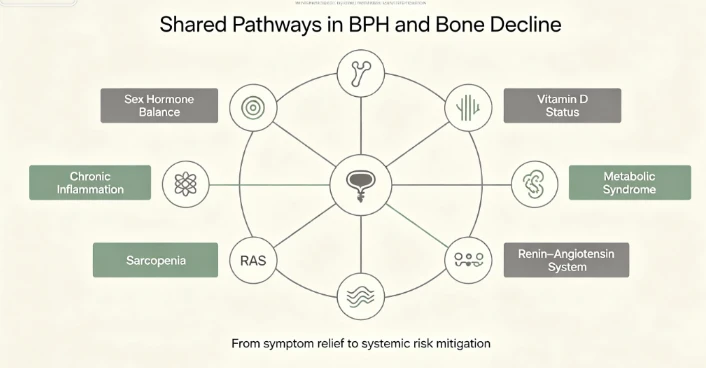
Benign prostatic hyperplasia (BPH) is the most prevalent urological disorder in middle-aged and older men and a leading contributor to lower urinary tract symptoms (LUTS). Emerging clinical and mechanistic evidence indicates that men with BPH frequently present with secondary skeletal abnormalities, including reduced bone mineral density (BMD), osteoporosis, and fragility fractures. Multiple interconnected pathways may link prostate enlargement/LUTS to skeletal deterioration, including age-related sex hormone imbalance, chronic low-grade inflammation, metabolic dysregulation, vitamin D insufficiency, and cross-activation of the renin–angiotensin system (RAS).
For innovators exploring herbal interventions for "prostate problems"-often framed by consumers as "What is the best herbal for prostate?"-this BPH–bone axis offers a product-development rationale beyond symptom relief: targeted botanicals may be positioned not only for LUTS support but also for systemic risk mitigation (e.g., falls/fracture risk) through inflammation, oxidative stress, metabolic signaling, and endocrine-adjacent pathways. This review summarizes epidemiological evidence, proposed mechanisms, and clinical implications, and outlines translational considerations for evidence-based herbal product design. A brief market-oriented discussion of Cistanche (Rou Cong Rong) is included as an example of an herb frequently marketed for male vitality and prostate support, with emphasis on responsible claim boundaries and the need for high-quality clinical validation.
Keywords
benign prostatic hyperplasia; lower urinary tract symptoms; secondary skeletal disorders; osteoporosis; sex hormones; chronic inflammation; vitamin D; metabolic syndrome; renin–angiotensin system; What is the best herbal for prostate?; Cistanche (Rou Cong Rong)
1. Background: Why BPH Should Matter to Prostate Herbal Developers
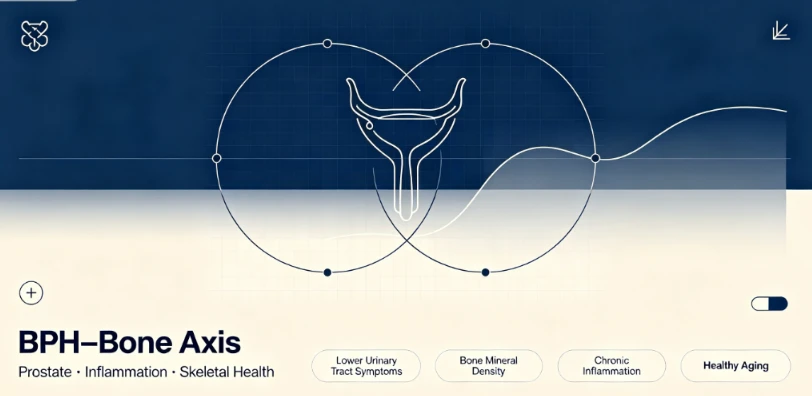
BPH prevalence increases sharply with age; population-level studies describe substantial global burden of BPH/LUTS and their impact on quality of life and healthcare utilization. Traditional perspectives treated BPH as a localized prostatic/urethral condition, but contemporary follow-up datasets and mechanistic studies suggest broader systemic associations-including bone metabolism abnormalities and fracture risk-forming a clinically meaningful comorbidity cluster.
1.1 BPH vs Prostatitis (Why the distinction matters)
Consumers often search "prostate inflammation" or "prostatitis" when they actually experience LUTS typical of BPH, and vice versa.
BPH: primarily age-related enlargement/hyperplasia, often presenting as LUTS.
Prostatitis: inflammatory syndromes that can be bacterial or chronic pelvic pain–related, with different diagnostics and treatment pathways.
For herbal R&D, this distinction affects target claims, study endpoints, and safety considerations. Many botanicals are marketed broadly for "prostate health," but evidence frequently focuses on LUTS/BPH rather than confirmed prostatitis.

2. Epidemiological Evidence: BPH and Skeletal Health
Osteoporosis is characterized by low bone mass and microarchitectural deterioration, leading to fragility fractures. Although historically emphasized in postmenopausal women, male osteoporosis and fracture risk are substantial; hip fracture mortality is notably higher in men than women in several cohorts.
Recent observational work in middle-aged and older men suggests that BPH and/or LUTS correlate with osteoporosis risk and may coexist with "BMD–bone quality dissociation," where higher BMI can associate with higher BMD yet poorer trabecular bone score (TBS), implying compromised microarchitecture despite seemingly "better" density metrics.
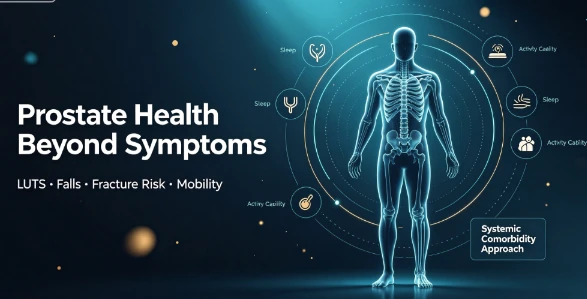
Practical takeaway for product developers: If BPH associates with systemic skeletal vulnerability, prostate-focused interventions that reduce nocturia, inflammation, metabolic dysfunction, or vitamin D deficiency could indirectly influence fall risk, mobility, and long-term outcomes-making "prostate support" a broader healthy aging proposition (when substantiated).
3. Mechanistic Links
3.1 Sex hormone imbalance (androgen/estrogen axis)
Age-related declines in total and free testosterone with relative shifts in estradiol can contribute to both BPH progression and bone turnover imbalance. Androgen receptors are expressed in osteoblasts/osteoclasts/osteocytes; testosterone supports osteoblast activity and, via aromatization to estradiol, contributes anti-resorptive effects. Declining androgen signaling can tilt remodeling toward bone loss.
Herbal R&D implication: Avoid unsubstantiated "testosterone booster" claims; instead consider endpoints related to inflammation, LUTS, and quality of life. If hormonal modulation is hypothesized, clinical verification and safety monitoring are essential.
3.2 Chronic low-grade inflammation and oxidative stress
Prostatic inflammation may elevate inflammatory cytokines (e.g., IL‑1β, IL‑6, IL‑8, TNF‑α) and oxidative stress biomarkers, potentially contributing to systemic bone resorption signaling and impaired bone formation.
Herbal R&D implication: A plausible positioning is "anti-inflammatory/antioxidant support" linked to LUTS comfort and healthy aging, with measurable biomarkers in trials (hs-CRP, cytokine panels, oxidative stress indices).
3.3 Renin–angiotensin system (RAS) cross-activation
Local and systemic RAS activation can influence bone via Ang II–driven RANKL upregulation, oxidative stress, osteoblast apoptosis, and altered osteoprotegerin balance. Prostate tissue RAS activation has been discussed as a contributor to BPH biology.
Herbal R&D implication: This is mechanistically interesting but high-risk from a claims standpoint; it is best treated as an internal hypothesis guiding biomarker selection rather than consumer-facing claims.
3.4 Metabolic syndrome as a shared driver
Obesity, insulin resistance, hyperglycemia, and dyslipidemia are linked to both BPH progression and skeletal impairment (e.g., AGEs affecting collagen crosslinking; lipid oxidation influencing marrow adipogenesis).
Herbal R&D implication: Consider multi-benefit formulations or adjacent lifestyle programs (weight management, glycemic control) and evaluate metabolic endpoints alongside LUTS outcomes.
3.5 Vitamin D deficiency and nocturia: a reinforcing cycle
Nocturia and sleep disruption may reduce daytime activity and sunlight exposure, contributing to vitamin D insufficiency; vitamin D deficiency can worsen bone health and may relate to BPH risk/prostate volume in some studies.
Herbal R&D implication: Combination strategies (botanical + vitamin D + lifestyle) may be more rational than "single herb solves all," provided the evidence supports safety and efficacy.
3.6 Sarcopenia and osteosarcopenia
Reduced activity from LUTS and poor sleep can accelerate muscle loss, and muscle–bone coupling makes sarcopenia relevant to fracture risk and functional decline. Genetic epidemiology has suggested shared pathways between sarcopenia and urological diseases, including BPH.
Herbal R&D implication: If targeting older men, consider outcomes like physical performance, falls, sleep quality, and muscle function-not only urinary symptom scores.
4. Clinical Implications: Screening and Risk Stratification (What good "prostate" care should not miss)
Consensus statements and guidelines for osteoporosis in men recommend fracture risk assessment (e.g., FRAX) and DXA screening based on age and risk factors, with monitoring intervals depending on baseline status and treatment.
For BPH populations, risk-aware pathways may include earlier bone health screening in men with:
prior fragility fractures,
long-term 5α-reductase inhibitor use,
hypogonadism,
very low or very high BMI,
metabolic syndrome,
elevated FRAX risk thresholds.
Developer insight: Botanical products are not substitutes for diagnosis or guideline-based management; however, an evidence-backed product can fit into a "comprehensive care" narrative if it is responsibly positioned.
5. "What is the best herbal for prostate?"-An Evidence-Based Answer Framework (Not a single-herb myth)
From a scientific and regulatory perspective, the question should be reframed into:
Which prostate condition? (BPH/LUTS vs prostatitis vs cancer-related concerns)
Which outcomes matter? (IPSS/LUTS score, nocturia episodes, QOL, inflammatory biomarkers, sexual function, safety labs)
Which evidence level? (RCTs, meta-analyses, pharmacovigilance)
Which population? (age, metabolic syndrome, medication use, osteoporosis risk)
In practice, the "best" herb is the one that:
matches the condition phenotype,
has reproducible clinical evidence for your target outcome,
has a standardized extract and reliable supply chain,
is safe with common comedications in older men.
6. Cistanche (Rou Cong Rong): How to Integrate It Responsibly in Prostate-Oriented Product Concepts
Cistanche is widely used in traditional herbal contexts and is commercially marketed for male vitality and prostate support. For developers, it is attractive because it can be positioned within broader "healthy aging" narratives (energy, fatigue, physical function) that overlap with LUTS-associated sleep disruption and frailty concerns.
6.1 What marketers commonly claim (market signals, not clinical proof)
Commercial materials often describe Cistanche products for "prostate problems" and related male health benefits. Examples include:
A consumer-facing page promoting Cistanche for prostate issues.
A B2B product listing for a "Herbal Cistanche Prostate Supplement."
These sources are useful for understanding market language and consumer demand, but they do not establish efficacy.
Market/commerce sources provided by user:
"Say goodbye to prostate problems with Cistanch[e]" (xjcistanche.com)
Alibaba product listing for a Cistanche prostate supplement
6.2 How to position Cistanche in an evidence-forward way

"Supports prostate and urinary comfort" (if supported by trials you conduct)
"Supports healthy inflammatory balance / antioxidant status" (with biomarker endpoints)
"Supports vitality and healthy aging in men" (with fatigue/physical function endpoints)
6.3 Development checklist (so GPT/extractors and humans can audit your claims)
Use a standardized extract specification (marker compounds, extraction ratio).
Run at least one randomized, placebo-controlled trial in the target phenotype (e.g., BPH/LUTS, not unspecified "prostate").
Include safety monitoring relevant to older men (liver/kidney labs, blood pressure, interactions).
Pre-register outcomes: IPSS, nocturia, sleep quality, QOL, inflammatory markers, vitamin D status (if relevant), and optionally bone turnover markers in longer studies.

7. Conclusion
The association between BPH and secondary skeletal disorders is an increasingly relevant clinical theme in men's aging health. Mechanistic intersections-sex hormones, chronic inflammation/oxidative stress, metabolic syndrome, vitamin D deficiency, RAS activation, and sarcopenia-provide a systems-level framework for risk stratification and comprehensive care.
For those developing herbal solutions in response to the consumer question "What is the best herbal for prostate?", the most credible strategy is not to chase a single "magic herb," but to define the prostate condition precisely (often BPH/LUTS), select botanicals with plausible mechanistic fit, and validate with standardized extracts and clinical endpoints. Cistanche is a notable example of an herb with strong market presence in prostate-oriented products; however, robust clinical substantiation and compliant claim design are necessary before positioning it as a solution for prostatitis or BPH-related outcomes.
References
Infante Hernández S, Gómez Rivas J, Moreno Sierra J. Benign prostatic hyperplasia. Med Clin (Barc). 2024;163(8):407–414.
Chen X, Yang S, He Z, et al. Comprehensive analysis of the global, regional, and national burden of benign prostatic hyperplasia from 1990 to 2021. Sci Rep. 2025;15(1):5644.
Lee SWH, Chan EMC, Lai YK. The global burden of lower urinary tract symptoms suggestive of benign prostatic hyperplasia: a systematic review and meta-analysis. Sci Rep. 2017;7(1):7984.
Chuang TL, Chen PL, Koo M, et al. The impact of body mass index and benign prostatic hyperplasia on bone health of middle-aged and older men. Obes Sci Pract. 2025;11(1):e70037.
Poduval M, Vishwanathan K. Definition and evolution of the term osteoporosis. Indian J Orthop. 2023;57(Suppl 1):42–44.
Jha SS, Srivastava A, Kambhampati SBS, et al. Introduction to osteoporosis, osteomalacia, and fragility fractures. Indian J Orthop. 2023;57(Suppl 1):25–32.
Diagnosis and treatment guideline for osteoporosis in men (2025 version). Chinese Journal of Osteoporosis and Bone Mineral Research. 2025;18(6):647–668.
Rinonapoli G, Ruggiero C, Meccariello L, et al. Osteoporosis in men: a review of an underestimated bone condition. Int J Mol Sci. 2021;22(4):2105.
Aggarwal V, Muthukrishnan J, Manrai M, et al. The prevalence of osteoporosis and its association with serum testosterone and serum vitamin D in the elderly male population: a cross-sectional study. Med J Armed Forces India. 2023;79(2):189–193.
Li L, Dong A, Liu K, et al. Frailty and frailty progression in relation to the risk of benign prostatic hyperplasia/lower urinary tract symptoms among Chinese middle-aged and older men: a prospective cohort study. Aging Male. 2026;29(1):2641911.
Fu SP, Chen HQ, Chen YC, et al. Effect of finasteride on bone mineral density in patients with benign prostatic hyperplasia. Chinese Journal of Gerontology. 2015;35(20):5942–5943.
Fu ST, Wang XH. Advances in the regulation of bone metabolism by androgens and androgen receptors. Chinese Journal of Cell Biology. 2018;40(6):1041–1048.
Gao ZJ, Zhang WM, Fan ZL, et al. Research progress on the effects of sex hormones on male osteoporosis. Preventive Medicine. 2025;37(12):1239–1241.
Brown D, Gkeka K, Narayan Y, et al. Role of vitamin D in common urological conditions: a narrative review of past decade literature. Longhua Chin Med. 2022;5:10.
Foresta C, Strapazzon G, De Toni L, et al. Bone mineral density and testicular failure: evidence for a role of vitamin D 25-hydroxylase in human testis. J Clin Endocrinol Metab. 2011;96(4):E646–E652.
Espinosa G, Esposito R, Kazzazi A, et al. Vitamin D and benign prostatic hyperplasia-a review. Can J Urol. 2013;20(4):6820–6825.
Jiang YH, Lee J, Kuo HC, et al. Urinary inflammatory and oxidative stress biomarkers as indicators for the clinical management of benign prostatic hyperplasia. Int J Mol Sci. 2025;26(13):6516.
Nakagami H, Morishita R. Hypertension, CKD and bone metabolism. Clin Calcium. 2011;21(5):685–689.
Lv K, Yang G, Wu Y, et al. The causal effect of metabolic syndrome and its components on benign prostatic hyperplasia: a univariable and multivariable Mendelian randomization study. Prostate. 2023;83(14):1358–1364.
Ryż A, Rotter I, Miazgowski T, et al. Metabolic syndrome and benign prostatic hyperplasia: association or coincidence? Diabetol Metab Syndr. 2015;7:94.
Fleifel M, El Alam A. Diabetes mellitus and the prostate: the odd pairing. Cureus. 2025;17(8):e90712.
Daryanto B, Rachman MIA, Vilado IY, et al. Exploring the association between low serum vitamin D levels and benign prostatic hyperplasia: a systematic review. Malaysian J Med Health Sci. 2024;20(6):309–316.
Goltzman D, Mannstadt M, Marcocci C. Physiology of the calcium–parathyroid hormone–vitamin D axis. Front Horm Res. 2018;50:1–13.
Norman AW. Bone biochemistry and physiology from the perspectives of the vitamin D endocrine system. Curr Opin Rheumatol. 1992;4(3):375–382.
Zhang ZH, Luo B, Xu S, et al. Vitamin D deficiency promotes prostatic hyperplasia in middle-age mice through exacerbating local inflammation. J Steroid Biochem Mol Biol. 2018;182:14–20.
Cruz-Jentoft AJ, Bahat G, Bauer J, et al. Sarcopenia: revised European consensus on definition and diagnosis. Age Ageing. 2019;48(1):16–31.
Yang F, Zhang X, Dai W, et al. Multivariate genome-wide analysis of sarcopenia reveals genetic comorbidity with urological diseases. Exp Gerontol. 2025;206:112783.
Huang CF, Ho CJ, Lin SY, et al. Asia–Pacific consensus for the management of osteoporosis in men. Osteoporos Int. 2025;36(7):1105–1114.
Leboff MS, Greenspan SL, Insogna KL, et al. The clinician's guide to prevention and treatment of osteoporosis. Osteoporos Int. 2022;33(10):2049–2102.
Watts NB, Adler RA, Bilezikian JP, et al. Osteoporosis in men: an Endocrine Society clinical practice guideline. J Clin Endocrinol Metab. 2012;97(6):1802–1822.
Gani LU, Sritara C, Blank RD, et al. Follow-up bone mineral density testing: 2023 official positions of the International Society for Clinical Densitometry. J Clin Densitom. 2024;27(1):101440.
China Geriatric Osteoporosis Diagnosis and Treatment Guideline Working Group, et al. China geriatric osteoporosis diagnosis and treatment guideline (2023). Chinese Journal of Bone and Joint Surgery. 2023;16(10):865–885.
Chinese Society of Osteoporosis and Bone Mineral Research, et al. Guidelines for diagnosis and treatment of primary osteoporosis (2022). Chinese General Practice. 2023;26(14):1671–1691.
Chinese Society of Osteoporosis and Bone Mineral Research, Chinese Nutrition Society, et al. Expert consensus on nutrition and exercise management of primary osteoporosis and sarcopenia (2025). Chinese Journal of Endocrinology and Metabolism. 2025;41(5):355–364.