Assessing Indicators And Clinical Differences Between Functional And Organic Childhood Constipation: A Retrospective Study in Pediatric Gastroenterology ClinicsⅠ
Dec 27, 2023
Introduction
Regular defecation is one of the markers of good health.1) Defecation patterns might vary according to age and dietary habits.1,2) Hence, it is very important to understand age-related normal and abnormal defecation patterns.1) Constipation in children is a prevalent and growing problem worldwide.1-6) Constipation is a commonly overlooked health problem.7)

Click to immediate constipation relief adults
However, it is one of the most common reasons to visit pediatric clinics and it places a significant burden on primary and secondary healthcare.8-10) Moreover, it causes anxiety for both children and parents as it affects the psychological, physical, and social well-being of the child, worsens academic performance, and deteriorates the quality of life.3,11,12) To eliminate parental anxiety, knowledge about normal defecation patterns in infants and children is important to discriminate the normal from abnormal.1)
Chronic constipation is divided into functional constipation (FC) and organic constipation (OC).13) Only a small minority of children have an OC which is diagnosed during the neonatal period.3,14) FC is the most common beyond the neonatal period.3,4) Yet, the pathogenesis of FC remains unclear.15) The most frequent cause of FC appears to be an acquired behavior of withholding stools and adopting retentive posturing after the experience of painful defecation.3,15) This leads to fecal stasis with reabsorption of fluid in the colon, causing the stool to become bulky, firm, and painful to pass.3)
Subsequently, stretching of the rectal wall to accommodate the retained feces can lead to a decrease in the rectal sensation, and fecal incontinence may develop.3) Constipation becomes chronic through a vicious cycle of stool retention, painful defecation, stool avoidance, and hardening of retained stool through fluid reabsorption.16) Therefore, early detection of constipation, its cause, and its subsequent complications in children is very important.17) The prevalence of childhood constipation in developing countries is difficult to estimate as it is dependent on the criteria used to define constipation.12,17,18)

Moreover, childhood FC is perceived as an unimportant, easily treatable disorder that improves on its own or needs non-invasive therapy.12) Furthermore, only a small proportion of patients seek medical advice.12) Accordingly, this study aimed to evaluate the prevalence and causes of childhood chronic constipation and to compare children and adolescents referred to pediatric gastroenterology clinics for FC or OC in terms of clinical presentations, treatment modalities, and outcomes, to identify the clinical predictors of each type.
Methods
1. Study design and setting
A retrospective cross-sectional analytical review of electronic medical records of children diagnosed with chronic constipation in 2 pediatric outpatient gastroenterology clinics, Salmaniya Medical Complex (SMC), Bahrain, between September 2017 and December 2021 was conducted.
2. Study population
All children who fit the definition of chronic constipation at the time of diagnosis were included in the study. Rome IV criteria were used for the diagnosis of a functional type of constipation. Accordingly, patients must have experienced at least 2 or more of the following: straining, lumpy or hard stools (Bristol Stool Form Scale 1–2), sensation of incomplete evacuation, sensation of anorectal obstruction, the use of manual maneuvers to facilitate defecation (e.g., digital evacuation, and/or support of the pelvic floor) in more than 25% of defecations each; fewer than 3 spontaneous bowel movements per week, loose stools are rarely present without the use of laxatives, and insufficient criteria for irritable bowel syndrome. Moreover, these symptoms could not be fully explained by another medical condition after an appropriate evaluation. These criteria must be fulfilled for the last 3 months, with symptoms onset at least 6 months before diagnosis.19) Patients found to have a medical condition known to cause constipation were considered to have an OC. Patients with no detailed relevant clinical data were excluded.
3. Data collection
Demographic data about sex, nationality, age at the time of the study, age at diagnosis, date at diagnosis, duration of symptoms, anthropometric measurement including (patient's weight, height, and body mass index [BMI]), and the number of clinic visits were collected. The BMI was calculated as weight in kilograms divided by height in meters squared. The "WHO AnthroPlus" anthropometric software program version 3.2.2 (World Health Organization [WHO], Geneva, Switzerland, 2011) was used to calculate the patient's growth parameters.
Weight for age z score; height for age z score, and BMI z score were calculated. The growth parameters were presented as a standard deviation (SD) from age- and sex-specific reference means. WHO child growth standards from birth years of age, and WHO growth references for school-age children and adolescents from 5–19 years of age were used as references for interpretation of the nutritional status.20,21) Accordingly, thinness was defined as BMI <-2 SD while the possible risk of overweight, overweight and obesity were defined as BMI for age >+1, >+2 and >+3 SD, respectively.
Linear growth impairment (stunting) was defined as length/height for age <-2 SD. The date of the presentation was used to study the effect of climate on the onset of constipation. According to the Bahrain Authority for Culture and Antiquities, the climate in Bahrain has 2 seasons, an extremely hot summer (May to October) where the temperature ranges between 37°C and 40°C or a relatively mild winter (November to April) with a temperature range between 10°C to 25°C. The patient's present history includes frequency of bowel movement, stool consistency, presence of blood or mucus in the stool, straining, painful defecation, rectal prolapse, anal itching, soiling, history of abdominal pain, colic, loss of appetite, nausea, vomiting, urinary tract infections (UTIs), urinary incontinence, family history of chronic constipation, history of consumption of iron therapy, high-fiber diet and milk consumption were obtained.
History of associated chronic diseases such as Hirschsprung's disease, gastroesophageal reflux disease (GERD), gastritis, hypothyroidism, trisomy 21, cow's milk protein allergy (CMPA), atopy, attention deficit hyperactivity disorders, autism, cerebral palsy, hydrocephalus, meningomyelocele, epilepsy, sickle cell disease (SCD), glucose-6-phosphate dehydrogenase deficiency and thalassemia were gathered. Physical examination findings such as abdominal distention, rectal mass, perianal fissures, perianal skin tags, sacral dimples or depressions, and hair tufts were included.

Physical deformities such as rectal prolapse, umbilical hernia, hypotonia, anal stenosis, and lumbosacral scars of previous spinal surgeries were noted. Organic causes of childhood constipation were categorized according to the MSD Manual Professional Version website.22)
Accordingly, organic causes of constipation in infants and children were classified into anatomic causes, endocrine or metabolic disorders, spinal cord defects, intestinal disorders, severe neurologic deficits, drug adverse effects, and toxins-induced constipation. Medical therapies including previous use of laxatives, use of disimpactive drugs, and maintenance therapy were documented. Patient's adherence to medical therapies (strict or poor), response to medications, and follow-up duration were gathered. The response to treatment was classified into good or poor response according to the improvement of symptoms after using one or more types of laxatives for the treatment of constipation.
Natural Herbal Medicine For Relieving Constipation-Cistanche
Cistanche is a genus of parasitic plants that belongs to the family Orobanchaceae. These plants are known for their medicinal properties and have been used in Traditional Chinese Medicine (TCM) for centuries. Cistanche species are predominantly found in arid and desert regions of China, Mongolia, and other parts of Central Asia. Cistanche plants are characterized by their fleshy, yellowish stems and are highly valued for their potential health benefits. In TCM, Cistanche is believed to have tonic properties and is commonly used to nourish the kidney, enhance vitality, and support sexual function. It is also used to address issues related to aging, fatigue, and overall well-being. While Cistanche has a long history of use in traditional medicine, scientific research on its efficacy and safety is ongoing and limited. However, it is known to contain various bioactive compounds such as phenylethanoid glycosides, iridoids, lignans, and polysaccharides, which may contribute to its medicinal effects.

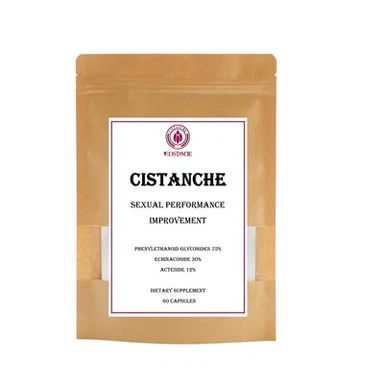
Wecistanche's cistanche powder, cistanche tablets, cistanche capsules, and other products are developed using desert cistanche as raw materials, all of which have a good effect on relieving constipation. The specific mechanism is as follows: Cistanche is believed to have potential benefits for relieving constipation based on its traditional use and certain compounds it contains. While scientific research on Cistanche's effect on constipation is limited, it is thought to have multiple mechanisms that may contribute to its potential to relieve constipation. Laxative Effect: Cistanche has long been used in Traditional Chinese Medicine as a remedy for constipation. It is believed to have a mild laxative effect, which can help promote bowel movements and induce constipation. This effect may be attributed to various compounds found in Cistanche, such as phenylethanoid glycosides and polysaccharides. Moistening the Intestines: Based on traditional use, Cistanche is considered to have moisturizing properties, specifically targeting the Intestines. Promoting hydration and lubrication of the Intestines may help soften tools and facilitate easier passage, thereby relieving constipation. Anti-inflammatory Effect: Constipation can sometimes be associated with inflammation in the digestive tract. Cistanche contains certain compounds, including phenylethanoid glycosides and lignans, that are believed to have anti-inflammatory properties. By reducing inflammation in the intestines, it may help improve bowel movement regularity and relieve constipation.