Chemical Constituents Of Iridoid Glycosides From The Water Fraction Of Cistanche Deserticola Y.C.Ma
Nov 03, 2025
Abstract: This study aimed to investigate the highly polar chemical constituents of Cistanche deserticola Y.C.Ma and evaluate their antibacterial activities against methicillin-resistant Staphylococcus aureus (MRSA). Compounds were isolated through column chromatography (silica gel, MCI gel CHP-20, ODS, and Sephadex LH-20) and purified via preparative HPLC. Structural elucidation was achieved using spectroscopic analysis (MS, 1HNMR, 13C NMR) and comparison with literature data. Eleven compounds were identified as 6-deoxycatalpol (1), bartsioside (2), gluroside (3), kankanoside B (4), catalpol (5), dihydrocatalpol (6), ajugol (7), monomelittoside (8), aucubin (9), kankanoside A (10), and kankanoside L (11). Compounds 5, 6, 8, and 9 were reported for the first time in Cistanche deserticola Y.C.Ma. Anti-MRSA evaluation revealed that compounds 4 and 11 exhibited significant inhibitory effects, with MIC50 values of 56.7 μmol/L and 77.2 μmol/L, and MIC90 values of 106.6 μmol/L and 147.6 μmol/L, respectively.
Keywords:Cistanche deserticola; chemical constituents; separation; anti-MRSA

Click to get more details

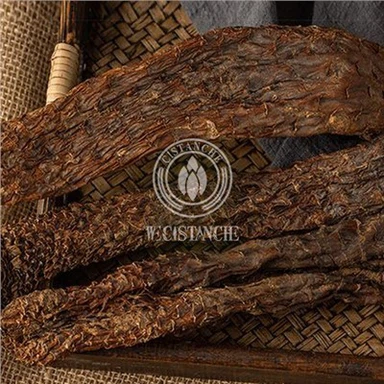
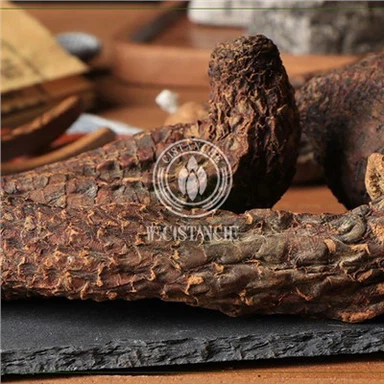
Cistanche deserticola (Y.C.Ma), a perennial tall herb of the family Orobanchaceae and genus Cistanche, is an endemic plant of Northwest China's arid regions. It is a holoparasitic species that obtains nutrients from host plants, primarily parasitizing the roots of Haloxylon ammodendron (saxaul). Owing to its unique survival strategy and notable tonic effects, it is honored in traditional Chinese medicine (TCM) as the "Ginseng of the Desert" and has long been regarded as a rare, geo-authentic medicinal material [1]. In TCM, Cistanche is sweet and salty in flavor, warm in nature, and enters the Kidney and Large Intestine channels. It warms and tonifies Kidney yang, nourishes essence and marrow, and moistens the intestines to relieve constipation. Clinically, it is indicated for Kidney yang deficiency, essence and blood deficiency, intestinal dryness, and certain gynecological disorders [2]. Contemporary studies have confirmed that Cistanche is rich in secondary metabolites such as phenylethanoid glycosides, benzyl alcohol glycosides, iridoids, and alkaloids, as well as carbohydrates, lignans, and volatile oils. Pharmacological research indicates that this medicinal material exhibits significant antioxidant and hepatoprotective effects, improves neurocognitive function, inhibits various pathogenic microorganisms, and shows anti-inflammatory and analgesic activities [3].
While antibiotics have greatly improved control of bacterial infectious diseases, irrational clinical use is widespread, including overdosing, unnecessarily prolonged courses, switching without indications, and multi-drug combination therapies. Such antibiotic misuse accelerates the emergence of multidrug-resistant (MDR) and pan-drug-resistant bacteria, intensifying selection pressure and critically narrowing therapeutic options [4]. Against the backdrop of global bacterial resistance, TCM resources offer innovative strategies beyond traditional antibiotics. Their multi-component synergistic mechanisms have spurred in-depth exploration of non-antibiotic therapies, especially targeted regulation of pathogens via selective natural antibacterial constituents. Pharmacological findings further reveal that TCM extracts not only display broad-spectrum antibacterial activity but can reverse resistance phenotypes by modulating biofilm formation or resistance gene expression, providing a theoretical basis to overcome current antibacterial bottlenecks [6]. Through literature investigation and activity screening of edible-medicinal plants, the 70% ethanol extract of Cistanche deserticola was found to markedly inhibit methicillin-resistant Staphylococcus aureus (MRSA) in vitro. Therefore, to discover anti-MRSA actives, we employed an activity-guided isolation approach and located active constituents in the aqueous layer remaining after ethyl acetate extraction, followed by systematic chemical profiling. Our goal was to elucidate the pharmacodynamic material basis of Cistanche against MRSA and provide a theoretical foundation for further medicinal development.

1 Materials and Methods
1.1 Instruments and Materials
AM-400 NMR spectrometer (Bruker); Agilent 1200 HPLC; CO2 incubator (Eppendorf, Germany); B75 autoclave (A&M); −80°C ultra-low temperature freezer (Shanghai Daluo Scientific Instruments); Evergreen multifunctional microplate reader (Beijing Zhongjian Baotai Biotechnology); LB-9110 biosafety cabinet (Qingdao LUBO); Zorbax SB-C18 columns (analytical: 4.6 mm × 250 mm, 5 μm; semi-preparative: 9.4 mm × 250 mm, 5 μm); silica gel for column chromatography (200–300 mesh, Qingdao Marine Chemical); TLC silica gel G and GF254 (Qingdao Marine Chemical); reversed-phase packings C18, RP-18 (Merck); Sephadex LH-20 (Pharmacia); chromogenic reagent: 5% H2SO4–ethanol; Columbia agar medium, lot HS-M1560202 (Shanghai Hongshun Biotechnology); sodium chloride, lot 20230521 (Sigma-Aldrich); tryptic soy broth (TSB, Dalian Meilun Bio); linezolid (PZ0014-5MG, Sigma-Aldrich).
The test strain was methicillin-resistant Staphylococcus aureus (MRSA) from the ATCC standard collection. Cistanche deserticola (Y.C.Ma) raw material was purchased in Alxa, Inner Mongolia (2022).

1.2 Extraction and Isolation
Fresh Cistanche (3 kg) was shade-dried, chopped, and extracted three times with 70% ethanol at room temperature (3 × 5 L, 24 h each). Combined extracts were concentrated under reduced pressure to a viscous residue. The residue (0.42 kg) was suspended in water (1 L) and successively partitioned with ethyl acetate (3 × 3 L) and n-butanol (3 × 3 L), yielding EtOAc fraction (30 g), n-BuOH fraction (35 g), and aqueous fraction (40 g) after concentration. Anti-MRSA screening showed the aqueous fraction had significant inhibition (≥70% at 3 mg/mL). Accordingly, we subjected the aqueous fraction to silica gel column chromatography combined with semi-preparative HPLC for systematic purification. The aqueous portion (200 mL) was loaded onto a macroporous resin column (i.d. 80 mm; bed height 600 mm), eluted with a water–methanol gradient (v/v: 1:0, 7:3, 1:1, 3:7, 0:1) to afford five fractions (A–E). Bioassays indicated fractions B and C exhibited notable anti-MRSA activity. Fraction B was further separated on MCI CHP20P with methanol/water (20%–100%) to give three subfractions (B1–B3). Repeated gel filtration yielded five compounds: 1 (2,832 mg), 2 (3,100 mg), 3 (686 mg), 4 (157 mg), and 5 (318 mg). Fraction C was fractionated on RP-C18 with a methanol–water gradient (30%–80% MeOH) to obtain four subfractions (C1–C4). Target subfractions were repeatedly purified on RP-C18 (10%–70% MeOH), followed by gel filtration for molecular sieving, affording compounds 6 (420 mg), 7 (36 mg), 8 (29 mg), 9 (320 mg), 10 (32 mg), and 11 (13 mg).

1.3 Evaluation of Anti-MRSA Activity
1.3.1 Bacterial Inoculum Preparation
Single MRSA colonies from Columbia agar (24 h) were suspended in 0.9% NaCl and adjusted to 1.0 × 10^8 cfu/mL.
1.3.2 Growth Inhibition on Agar
Isolated monomeric compounds were incorporated into agar at 1 mg/mL. MRSA was spread on plates and incubated at 37°C for 16–24 h. Growth was recorded. Linezolid served as a positive control.
1.3.3 Minimum Inhibitory Concentration (MIC)
Active compounds and linezolid were serially two-fold diluted. Two sets of nine sterile tubes were prepared; 1 mL nutrient broth was added to each tube in the first set. To tube 1, 1 mL of compound solution (2 mg/mL) was added and mixed; 1 mL was transferred sequentially through tube 7 to yield final concentrations of 1, 0.5, 0.25, 0.125, 0.063, 0.032, and 0.016 mg/mL. To tubes 1–7, 0.1 mL MRSA suspension was added. Tube 8 received 0.1 mL MRSA without drug (growth control). Tube 9 contained sterile saline and drug without inoculum (blank/control for drug stability). Tubes 1–8 were incubated at 37°C; turbidity was monitored to assess inhibition. Tube 9 was observed for precipitation or color change.
2.2 Anti-MRSA Results
All 11 compounds were evaluated. Compounds 4 and 11 exhibited observable inhibition of MRSA on agar at 1 mg/mL (see Table 1). MIC results (Table 2) were as follows: compound 4 MIC50 = 56.7 μmol/L and MIC90 = 106.6 μmol/L; compound 11 MIC50 = 77.2 μmol/L and MIC90 = 147.6 μmol/L. Linezolid showed MIC50 = 3.6 μmol/L and MIC90 = 7.4 μmol/L. Compounds 4 and 11 thus demonstrated potential anti-MRSA activity.
3 Discussion and Conclusions
Using Cistanche deserticola-a geo-authentic medicinal from arid Northwest China-as the study subject, we combined activity-guided fractionation with modern separation techniques [16] (including open-column chromatography and HPLC) to systematically isolate constituents from the aqueous fraction remaining after EtOAc partition of the 70% ethanol extract. Eleven iridoid-type monoterpene glycosides were obtained; literature comparison indicated compounds 5, 6, 8, and 9 were reported from this species for the first time. In vitro antibacterial assays focused on MRSA revealed that compounds 4 and 11 were active at 1 mg/mL (≈ 2.8 mmol/L), with MIC50 values of 56.7 and 77.2 μmol/L and MIC90 values of 106.6 and 147.6 μmol/L, respectively. Compared with linezolid (MIC50 = 3.6 μmol/L, MIC90 = 7.4 μmol/L), compounds 4 and 11 showed promising but weaker potency, supporting their potential as anti-MRSA leads. To date, pharmacological reports on Cistanche have mainly centered on antioxidant, anti-inflammatory, hepatoprotective, antihyperglycemic, and reproductive-modulating effects [17], while antibacterial data remain limited. Reported antibacterial constituents include 2-hydroxyphenylacetic acid [18], dehydrodiconiferyl alcohol A [19], verbascoside derivatives [6], and 8-epi-loganic acid isomer [20]. To further clarify antiviral and antibacterial material bases, we will continue investigating its chemical constituents, with emphasis on iridoids, lignans, and organic acids, aiming to discover components with significant anti-MRSA potential. This study enriches the secondary metabolite database of Cistanche deserticola and identifies compounds 4 and 11 as antibacterial leads, providing key chemical entities and a foundation for mechanism-of-action studies toward developing plant-derived anti-resistant agents.
References
[1] Song P.S., Ding Y.H. Materia medica studies of Cistanche. Gansu Journal of Traditional Chinese Medicine, 1996, 9(3): 41.
[2] Zhang J.J. Pharmacological effects and clinical applications of Mongolian medicine Cistanche. Journal of Chinese Ethnic Medicine, 2022, 28(5): 53–55.
[3] Li Y., Song Y.Y., Zhang H.Q. Research progress on chemical constituents and pharmacological activities of Cistanche. Wild Plant Resources of China, 2010, 29(1): 7–11.
[4] Chu F.X., Bai Z.Q., Zhu H.H. Research progress of natural products with anti-drug-resistant microbial activity. Natural Product Research and Development, 2015, 27(8): 1466–1482.
[5] Boakye-Yiadom M., Han L.F., Li W., et al. Chemical constituents from stems of Cistanche deserticola. Chinese Herbal Medicines, 2016, 8(3): 293–296.
[6] Pan Y.N. Chemical constituents and bioactivities of fresh Cistanche tubulosa. Dissertation. Shenyang Pharmaceutical University, 2011.
[7] Braga F.C., Kreis W., Almeida Récio R., et al. Variation of cardenolides with growth in a Digitalis lanata Brazilian cultivar. Phytochemistry, 1997, 45(3): 473–476.
[8] Xie H.H., Morikawa T., Matsuda H., et al. Monoterpene constituents from Cistanche tubulosa-kankanosides A–E and kankanol. Chemical & Pharmaceutical Bulletin, 2006, 54(5): 669–675.
[9] Morota T., Sasaki H., Nishimura H., et al. Two iridoid glycosides from Rehmannia glutinosa. Phytochemistry, 1989, 28(8): 2149–2153.
[10] Oshio H., Inouye H. Iridoid glycosides of Rehmannia glutinosa. Phytochemistry, 1982, 21(1): 133–138.
[11] Shi G.R. Active substances and functions of Rehmannia leaves and Iris. Dissertation. Peking Union Medical College, 2016.
[12] Morota T., Sasaki H., Sugama K., et al. Two non-glycosidic iridoids from Rehmannia glutinosa. Phytochemistry, 1990, 29(2): 523–526.
[13] Liao L.P., Zhang Z.J., Hu Z.B., et al. Iridoid glycosides from Clerodendranthus sp. Chinese Traditional and Herbal Drugs, 2012, 43(12): 2369–2371.
[14] Liu X.M., Jiang Y., Sun Y.Q., et al. Study on chemical constituents of Cistanche deserticola. Chinese Pharmaceutical Journal, 2011, 46(14): 1053.
[15] Morikawa T., Pan Y.N., Ninomiya K., et al. Iridoid and acyclic monoterpene glycosides, kankanosides L–P, from Cistanche tubulosa. Chemical & Pharmaceutical Bulletin, 2010, 58(10): 1403–1407.
[16] Jiang C., Fang S., Li Y.W., et al. Chemical constituents from the dichloromethane fraction of Ruta graveolens L. Natural Product Research and Development, 2023, 35(9): 1518–1527.
[17] Xu W.A., Yang D.Y., Wu J.Y., et al. Advances in main chemical constituents and bioactivities of Cistanche. Journal of Chinese Medicine, 2024, 42(10): 163–170.
[18] Cao L.B., Gong X.C., Jia J.R., et al. Rapid qualitative analysis of chemical constituents in Halophytic Cistanche by direct-injection full-scan multistage MS. China Journal of Chinese Materia Medica, 2021, 46(16): 4150–4156.