Chinese Expert Consensus On Diagnostic Evaluation And Surgical Management Of Slow Transit Constipation (2023 Edition)Ⅰ
Jan 05, 2024
In recent years, research on the basics and surgical diagnosis and treatment of slow transit constipation (STC) has made certain progress. However, Chinese surgeons still lack authoritative references in the clinical practice of STC, especially regarding preoperative evaluation and surgical selection.
To further standardize the clinical diagnosis, evaluation and surgical management of STC, the Anorectal Physician Branch of the Chinese Medical Doctor Association and the Functional Diseases Professional Committee selected relevant experts in the field of STC surgery in China to form the editorial committee of the "Expert Consensus on Diagnosis, Evaluation and Surgical Management of Slow Transit Constipation in China", focusing on the diagnosis, differential diagnosis, non-surgical treatment and surgical treatment of STC, 20 recommendations were put forward by searching domestic and foreign literature and combining the clinical experience of experts, aiming to standardize the surgical diagnosis and treatment process of STC in China and improve the overall quality of STC in China. Diagnosis and treatment level.

At present, functional constipation (FC) is mainly divided into three types: slow transit constipation (STC), outlet obstructive constipation (OOC), and mixed constipation [1-2]. Among them, STC is a subtype of functional constipation characterized by colonic transmission dysfunction [3-5].
The clinical symptoms of STC patients are mainly reduced defecation frequency (spontaneous defecation <3 times/week), labored defecation, and dry and hard stool [6]. As the disease progresses, STC patients may gradually develop incomplete obstruction symptoms such as abdominal pain and abdominal distension, and severe patients may develop fecal stone colon obstruction. When non-surgical treatment measures are ineffective and clinical symptoms seriously affect the quality of life, STC patients often turn to surgical treatment [7].

However, there are still many controversies and deficiencies in the surgical diagnosis and treatment of STC. To standardize the surgical diagnosis and treatment process of STC in China, the Anorectal Physician Branch of the Chinese Medical Doctor Association and the Functional Diseases Professional Committee jointly initiated the initiative together with the Chinese Journal of Gastrointestinal Surgery to select relevant experts in this field in China. After studying STC-related literature, combined with the latest updates Based on evidence from forensic medicine and the clinical experience of experts in the field of STC research, and guided by the surgical diagnosis and treatment issues involved in STC, this consensus was finally formulated after multiple rounds of discussions and integration of opinions.
Definition of STC
STC is a disease of colonic transport dysfunction. Its main clinical manifestations are: no need to defecate or the need to defecate is significantly weakened, the frequency of defecation is significantly reduced (spontaneous defecation <3 times/week) and progressively worsens; dry stool; over time, it may appear Abdominal bloating, labored bowel movements, and colon obstruction, among others. Simple STC specifically refers to STC without obvious OOC [4-5]. However, more than half of OOC patients have varying degrees of prolonged colon transit time, and more than two-thirds of STC patients have defecation coordination disorders [6,9]. Therefore, confirming (or suspected diagnosis of) STC requires an assessment of whether OOC also exists.
Recommendation 1: STC diagnosis should meet the following conditions:
(1) Meet the "Rome IV" diagnostic criteria for functional constipation, and the disease course lasts for at least 6 months;
(2) Exclude secondary constipation caused by organic lesions of the colon;
(3) Colonic transit examination confirms delayed colon transit [6,10-12].
(Evidence quality: moderate, recommendation level: strong)

Natural Herbal Medicine For Relieving Constipation-Cistanche
Cistanche is a genus of parasitic plants that belongs to the family Orobanchaceae. These plants are known for their medicinal properties and have been used in Traditional Chinese Medicine (TCM) for centuries. Cistanche species are predominantly found in the arid and desert regions of China, Mongolia, and Central Asia. Cistanche plants are characterized by their fleshy, yellowish stems and are highly valued for their potential health benefits. In TCM, Cistanche is believed to have tonic properties and is commonly used to nourish the kidney, enhance vitality, and support sexual function. It is also used to address issues related to aging, fatigue, and overall well-being. While Cistanche has a long history of use in traditional medicine, scientific research on its efficacy and safety is ongoing and limited. However, it is known to contain various bioactive compounds such as phenylethanoid glycosides, iridoids, lignans, and polysaccharides, which may contribute to its medicinal effects.

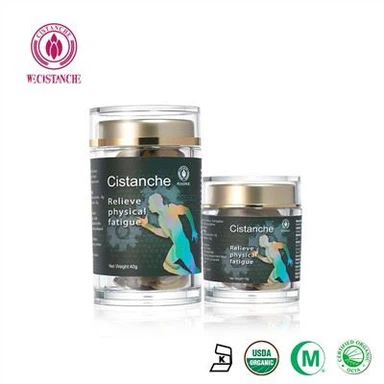
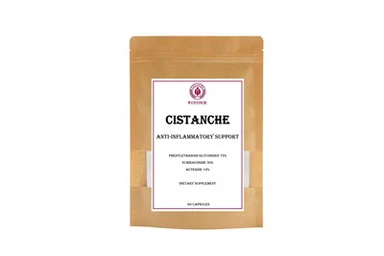
Wecistanche's cistanche powder, cistanche tablets, cistanche capsules, and other products are developed using desert cistanche as raw materials, all of which have a good effect on relieving constipation. The specific mechanism is as follows: Cistanche is believed to have potential benefits for relieving constipation based on its traditional use and certain compounds it contains. While scientific research specifically on Cistanche's effect on constipation is limited, it is thought to have multiple mechanisms that may contribute to its potential to relieve constipation. Laxative Effect: Cistanche has long been used in Traditional Chinese Medicine as a remedy for constipation. It is believed to have a mild laxative effect, which can help promote bowel movements and induce constipation. This effect may be attributed to various compounds found in Cistanche, such as phenylethanoid glycosides and polysaccharides. Moistening the Intestines: Based on traditional use, Cistanche is considered to have moisturizing properties, specifically targeting the Intestines. Promoting hydration and lubrication of the Intestines may help soften tools and facilitate easier passage, thereby relieving constipation. Anti-inflammatory Effect: Constipation can sometimes be associated with inflammation in the digestive tract. Cistanche contains certain compounds, including phenylethanoid glycosides and lignans, that are believed to have anti-inflammatory properties. By reducing inflammation in the intestines, it may help improve bowel movement regularity and relieve constipation.