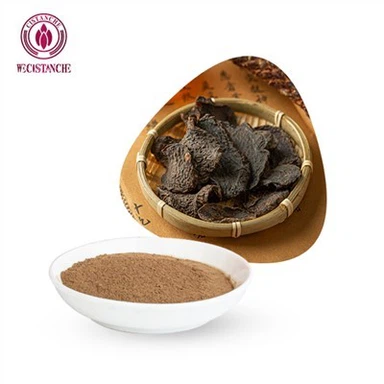
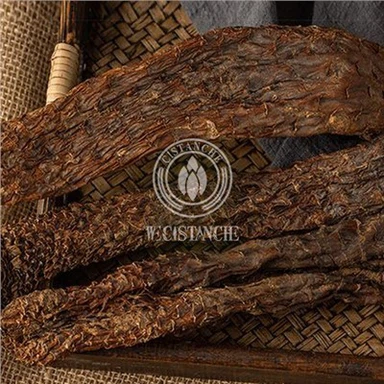
Cistanche Deserticola Minerals: What The Element Profile Of Desert Ginseng Tells Us About Quality, Safety And Origin
Oct 14, 2026
1. Introduction: Why Minerals Hold the Key to a Desert Herb
Cistanche deserticola, known around the world by the affectionate nickname "desert ginseng," has been treasured for thousands of years. Yet for most of its long history, people judged this herb by its reputation rather than its chemistry. Today that is changing. Modern analytical science allows researchers to look inside the plant and measure, element by element, exactly what it contains. And those measurements are turning out to be surprisingly valuable.
The reason is simple: where a plant grows shapes what a plant becomes. The same species raised in different soils, under different rainfall patterns and temperatures, can accumulate very different levels of mineral elements. For an herb that is eaten as food and taken as medicine, those differences can affect both its nutritional value and its safety. Mineral content has become one of the most reliable scientific tools for tracing a plant's origin, judging its quality, and checking whether it is safe for human use.
This article walks through a landmark Chinese study that measured 20 elements in Cistanche samples collected from eight regions of Gansu Province, a major growing area for this remarkable desert plant. We will look at what the researchers found, why mineral fingerprints matter, how modern instruments like ICP-MS make these measurements possible, and what the results mean for anyone who grows, buys, or uses Cistanche.
2. What Is Cistanche deserticola? A Closer Look at the Desert Ginseng
Cistanche deserticola is a tall, parasitic plant that belongs to the Orobanchaceae family. In Chinese it carries several traditional names, including "Da Yun" and "Cun Yun," and it has a long, well-documented history. The earliest written records appear in the "Shennong Bencao Jing," a foundational Chinese herbal text dating back to the Han dynasty. Centuries later, the great Ming-dynasty physician Li Shizhen formally named the plant "Roucongrong," praising its character as nourishing yet gentle.
What makes this herb so distinctive is the way it lives. Cistanche is not a plant that grows independently in open soil. Instead, it is a parasite that attaches to the roots of desert trees, most notably the Haloxylon tree, a hardy shrub that survives the harshest desert conditions. Drawing nutrients and water from its host, Cistanche manages to thrive where almost nothing else can. This unusual lifestyle, combined with the extreme desert environment it calls home, is believed to shape the unique chemistry found inside its stems.
Traditional medicine has long used Cistanche as a tonic to support vitality, strengthen the body, and resist fatigue. Modern research has identified a range of biological activities in the plant, including the ability to help lower blood lipids and blood sugar, antioxidant effects, nerve-protective properties, and anti-aging potential. In 2020, Cistanche was officially added to China's list of substances that may be used both as food and as medicine, opening the door to its wider use in food products and health supplements.
Today the plant is a valuable raw material for wines, teas, and dietary supplements, and it is especially popular in Asian markets including China and Japan. In China, Cistanche is mainly produced in Xinjiang, Inner Mongolia, Gansu, Qinghai, and Ningxia, with the Alxa region of Inner Mongolia widely regarded as producing the finest quality. Gansu Province, the focus of this study, is one of the country's most important growing areas.

3. Why Trace Elements Matter for a Medicinal Herb
It is easy to think of a plant as a collection of organic compounds, but living tissue also contains a significant mineral component. Plants absorb inorganic elements from the soil through their roots, and the amounts they absorb depend on many factors. Soil composition, climate, rainfall, and genetics all play a role. Because minerals cannot be easily broken down during a plant's metabolism, the mineral pattern left behind acts like a natural fingerprint, one that reflects the environment where the plant grew.
This is why element analysis has become a powerful tool in the study of herbal medicine. It serves two main purposes. First, it can help confirm where a plant came from, a concept researchers call origin traceability. By comparing the elemental fingerprints of samples, scientists can distinguish plants grown in one region from those grown in another, much the same way wine makers authenticate the origin of grapes. Studies have used this approach to trace the origins of peanut kernels, grapes, and various medicinal plants.
Second, element analysis helps evaluate whether a herb is safe and suitable for human consumption. Some elements are essential nutrients that support bodily functions, while others, such as lead, mercury, and arsenic, are toxic even at low levels. Measuring both types tells researchers not only how nutritious the herb is, but also whether it falls within safe limits. For a plant used both as food and as medicine, this dual role makes element testing especially important.
The Gansu study took exactly this comprehensive approach, combining a thorough mineral analysis with powerful statistical methods to evaluate the quality and safety of locally grown Cistanche.
4. The Technology Behind the Measurements: ICP-MS
To measure 20 different elements in plant tissue with high accuracy, researchers need an exceptionally capable instrument. The study used a technique called inductively coupled plasma mass spectrometry, commonly shortened to ICP-MS. This technology is widely regarded as one of the most powerful methods available for multi-element analysis.
Here is how it works in plain terms. A sample of dried plant material is first digested into a liquid solution using acid and high temperature. This solution is then introduced into the instrument, where it is passed through a very hot plasma, an ionized gas that reaches temperatures of thousands of degrees. The heat breaks the sample down into individual atoms and ions. The mass spectrometer then separates these ions according to their mass, allowing the instrument to identify and count each element present in the original sample.
ICP-MS is prized for three qualities. It offers very high sensitivity, meaning it can detect even vanishingly small amounts of an element. It provides high accuracy, so the numbers it reports closely match the true values. And it offers high precision, meaning repeated measurements give consistent results. Because it can measure many elements at once, it is far more efficient than older methods that required separate tests for each element.
In this study, researchers used ICP-MS to measure 20 elements in each sample, including essential minerals like calcium, magnesium, iron, zinc, and manganese, as well as potentially harmful heavy metals like lead, mercury, arsenic, and cadmium. Every element was measured using collision-reaction cell technology and interference-correction equations to remove any background interference that could distort the results.

5. The Study: Eight Regions, Twenty Elements, Fifty-Four Samples
The study set out to answer a clear question: does the region where Cistanche grows in Gansu affect the elements it contains, and if so, can those differences be used to judge quality and trace origin? To investigate, researchers collected a total of 54 Cistanche samples from eight regions across Gansu Province.
The eight regions, each with its own distinct climate, were Dunhuang, Linze, Jinta, Guazhou, Minqin, Gulang, Jingyuan, and Jingtai. The sample counts varied by region, with 9 samples from Linze, 8 each from Jingyuan and Jinta, 7 from Guazhou, 6 each from Gulang and Jingtai, and 5 each from Dunhuang and Minqin. Samples were collected between April and May of 2023, a period chosen to capture the plants at a comparable stage.
These eight regions are not interchangeable. Gansu's Cistanche grows under arid desert conditions with low rainfall, high evaporation, and large temperature swings between day and night. Dunhuang, for example, sits in a sun-drenched desert zone with well-drained, slightly alkaline sandy soil, conditions widely considered favorable for the plant's growth. Linze, by contrast, has a different climate and soil profile. The study's choice of regions therefore built geographic variation directly into the experiment, making it possible to ask whether environment truly shapes elemental composition.
After collection, samples were dried, ground into powder, and precisely weighed. Each was digested in acid and hydrogen peroxide using a microwave digestion system, then made up to a fixed volume with ultrapure water. The resulting solutions were run through the ICP-MS instrument, and standard calibration curves were used to convert the instrument's readings into actual element concentrations.
6. The Big Picture: Total Element Content Across the Eight Regions
When researchers summed the contents of all 20 elements in each region's samples, a clear pattern emerged. The total elemental content, ranked from highest to lowest, ran as follows: Dunhuang, then Jinta, then Minqin, then Guazhou, then Gulang, then Jingtai, then Jingyuan, and finally Linze at the bottom.
Dunhuang stood out as the clear leader, with a notably higher total element load than the other regions. The study attributed this advantage to two main factors. The first is geography. Dunhuang enjoys abundant sunshine and a wide temperature difference between day and night, both of which suit Cistanche. Its soil is loose, well-drained, and slightly alkaline, conditions that help roots develop and absorb nutrients efficiently. Linze, by contrast, has a very different climate and soil type that may limit the plant's growth cycle and nutrient accumulation.
The second factor is the host plant. In Dunhuang, Cistanche attaches to suitable hosts such as Haloxylon and red willow shrubs, which supply it with ample nutrients and water. Where host conditions are weaker, as researchers suggested may be the case in Linze, the quality of the parasitic herb can suffer. This interplay between host, soil, and climate helps explain why plants grown even in the same province can differ so much.

7. The Most Abundant Elements: Calcium, Magnesium, Iron, and Aluminum
When researchers looked at individual elements rather than totals, four elements dominated the mineral profile of every region's samples: calcium, magnesium, iron, and aluminum. These are the elements present in the highest concentrations, and they underline the nutritional richness of Cistanche as a dietary ingredient.
Calcium was the most abundant element of all. Dunhuang samples contained the highest calcium levels at 15,960.96 micrograms per kilogram, while Minqin had the lowest at 5,786.51. Most other regions fell in a broad range between about 5,846 and 10,576. Calcium is essential for bone health, muscle function, and nerve signaling, so its abundance gives Cistanche real value as a mineral supplement.
Magnesium followed a similar story. Minqin samples were richest in magnesium, reaching 9,190.33, while Jingtai had the least at 2,107.39. Magnesium is involved in hundreds of biochemical reactions in the body, including energy production and muscle relaxation.
Iron and aluminum also showed striking regional variation. Dunhuang had the highest aluminum at 1,802.72, while Jingyuan and Minqin had much lower levels at around 415 and 403. For iron, Dunhuang again led at 1,934.05, more than four times the level found in Jingyuan, which had the lowest iron at 413.18. Iron is crucial for carrying oxygen in the blood, making it one of the most important minerals for human nutrition.
Beyond these four, other elements such as zinc, strontium, boron, and manganese were also found at meaningful levels. Zinc supports immune function and wound healing, manganese is involved in bone formation and metabolism, and boron plays a role in several physiological processes. The presence of this mineral ensemble supports the view of Cistanche as a nutritionally valuable supplement rather than simply a traditional remedy.
The study also compared Cistanche to other medicinal plants. It found that Cistanche contained higher levels of calcium, magnesium, and iron than Dangshen, a popular tonic herb, while its barium content was lower than that of Danggui, another well-known medicinal root. These comparisons highlight how different herbs absorb elements differently, and they give scientists reference points for evaluating Cistanche's unique mineral profile.
8. Regional Fingerprints: Notable Element Highlights
Beyond the overall totals, individual elements displayed distinctive regional patterns that function almost like fingerprints. These patterns help researchers identify where a particular sample came from.
Lithium, a trace element of growing research interest, was highest in Dunhuang at 2.59 and lowest in Jingyuan at 0.60, with most regions falling between 0.99 and 1.59. Beryllium was uniformly low across all regions, ranging only from 0.21 to 0.26, suggesting it is not a distinguishing feature of this plant.
Boron told a different story. Jingyuan samples contained the highest boron at 285.23, far above the lowest value of 54.37 found in Minqin. Chromium was highest in Dunhuang at 6.58 and lowest in Jingyuan at 2.56. Manganese was notably elevated in Guazhou and Jinta, at roughly 96.74 and 97.29, while Jingtai had the least at 30.24.
Some of the most striking findings involved the element profile of Jingtai County. Jingtai samples showed remarkably high levels of several elements compared with every other region. Its nickel reached 103.97, its copper soared to 1,377.93, and its zinc reached 990.91, all far exceeding the other regions. Jingtai also stood out for lead, with a reading of 42.60, and for tin at 5.40.
Other elements showed their own regional quirks. Arsenic was highest in Minqin at 3.97 and lowest in Linze at 1.09. Strontium was relatively high in both Dunhuang and Linze, at 117.30 and 117.50. Molybdenum showed a notable enrichment pattern, appearing at 5.00 in five of the eight regions. Barium was highest in Dunhuang at 25.52, while mercury was lowest in Jingtai at 0.08.
Taken together, these variations paint a clear picture: the elemental composition of Cistanche is neither random nor uniform. It is shaped by where the plant grows, which means a trained analyst can often look at a mineral profile and draw meaningful conclusions about the plant's origin.

9. Element Correlations: Cooperation and Competition
Minerals do not behave in isolation inside a plant. The levels of different elements often rise and fall together, or move in opposite directions, revealing relationships between them. To explore these connections, the researchers ran a correlation analysis across all 20 elements and displayed the results in a color-coded heatmap.
The analysis revealed a number of statistically significant positive correlations, meaning that when one element was abundant, another tended to be abundant as well. Lithium, for example, correlated positively with aluminum, chromium, barium, manganese, iron, cobalt, arsenic, and strontium. Beryllium correlated with tin, lead, cobalt, zinc, and arsenic. Magnesium correlated with manganese and chromium, while calcium correlated with manganese and iron. Chromium correlated with barium, manganese, and iron, and several elements formed clusters of mutual association.
These positive relationships suggest that many elements work cooperatively, helping each other be absorbed and accumulated within the plant. When the soil provides conditions that favor one mineral, related minerals often rise together, creating coordinated patterns in the plant's tissue.
The study also identified significant negative correlations, where high levels of one element accompanied low levels of another. Magnesium showed negative correlations with tin and lead, strontium correlated negatively with copper, tin, and molybdenum, and mercury correlated negatively with copper. These antagonistic relationships suggest that some elements compete for absorption or interfere with one another's uptake, creating a complex balancing act inside the plant.
The researchers noted that many other element pairs showed little or no correlation, which they suggested may reflect the relatively small sample size. The correlations that were detected, however, reveal a coherent, structured element system within Cistanche, one that could someday be used to help authenticate the herb's origin.
10. Principal Component Analysis: Reducing Twenty Elements to Five
With 20 elements measured across eight regions, the dataset was rich but complex. To make sense of it, researchers turned to a statistical method called principal component analysis, or PCA. PCA is a technique that finds patterns in complex data by reducing many variables to a smaller number of underlying components, each capturing a different slice of the total variation.
Before running the analysis, the researchers checked whether the data were suitable. The Kaiser-Meyer-Olkin value came in at 0.710, above the recommended threshold of 0.6, and Bartlett's test of sphericity was significant. Both results confirmed that the dataset was well suited for principal component analysis.
The analysis extracted five principal components with eigenvalues greater than one. These five components explained 30.035 percent, 26.291 percent, 10.831 percent, 6.189 percent, and 5.612 percent of the variance respectively, for a cumulative explanation rate of about 78.96 percent. In plain terms, these five components captured nearly four-fifths of all the variation in the 20-element dataset, meaning they preserved most of the information while greatly simplifying the structure.
Each principal component turned out to represent a distinct group of elements. The first component was most strongly associated with lithium, aluminum, calcium, manganese, iron, strontium, and barium. The second was linked to beryllium, cobalt, copper, zinc, arsenic, tin, and lead. The third reflected nickel and molybdenum, the fourth was dominated by magnesium, and the fifth by boron. By replacing the original 20 elements with these five components, the researchers created a compact framework for comparing the eight regions.

11. The Composite Quality Ranking of Gansu Cistanche
Using the five principal components, the researchers built a composite score for each region. This score combined the contribution of every component according to its importance, giving each region a single number that summarized its overall elemental quality.
The formula weighted the components in proportion to their variance: Y equals 0.380 times the first component, plus 0.333 times the second, plus 0.137 times the third, plus 0.078 times the fourth, plus 0.071 times the fifth. Applying this formula to the data produced a clear ranking of the eight regions.
The final composite ranking, from highest to lowest, was: Dunhuang first, followed by Guazhou, then Gulang, then Jingtai, then Jingyuan, then Jinta, then Linze, and finally Minqin in last place. Dunhuang scored decisively at the top with a composite score of 1.390, confirming its reputation as the standout region among those studied.
This ranking differs from the earlier ranking of total element content, and the difference is worth understanding. Total content simply adds up every element, treating them all equally. The composite score, by contrast, weights elements according to how much they contribute to the overall variation between regions. Elements that differ most strongly between regions carry more weight in the composite score. The result is a more nuanced picture that highlights which regions have truly distinctive elemental profiles.
For the industry, this ranking offers practical guidance. It suggests which regions tend to produce Cistanche with particularly favorable or characteristic mineral profiles, information that can guide sourcing decisions and quality control.
12. Safety First: Heavy Metals and the Pharmacopoeia Limits
Any plant used as food or medicine must be checked for potentially harmful substances, and heavy metals are the first concern. Chinese pharmacopoeia standards set maximum allowable limits for several toxic elements: lead must not exceed 5 milligrams per kilogram, copper must not exceed 20, arsenic must not exceed 2, and mercury must not exceed 0.2.
The good news from this study is that every region's Cistanche samples met these safety requirements. All measured levels of lead, copper, arsenic, and mercury fell below the pharmacopoeia limits. This result is reassuring for consumers and the industry alike, because it means the Gansu Cistanche tested in this study is not only nutritious but also safe with respect to these regulated heavy metals.
The finding is especially important given that Cistanche was granted food-and-medicine status in 2020. As the plant moves into mainstream food products and dietary supplements, demonstrated safety becomes essential. Studies like this one provide the scientific evidence that regulatory authorities, manufacturers, and consumers all need to have confidence in the product.
It is worth noting, however, that the study also flagged a broader caution about element content. Aluminum, while present at relatively high levels in some samples, is an element that can be harmful to the nervous system, liver, and kidneys when consumed in excess. The researchers noted this concern without suggesting that the levels found in Cistanche were dangerous, but the point underscores why continuous monitoring of mineral content is a responsible practice for any supplement ingredient.
13. What the Mineral Profile Means for Nutrition
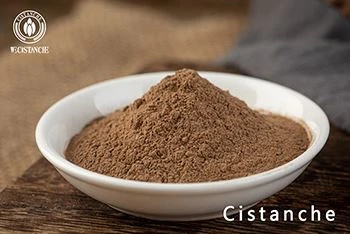
The abundance of essential minerals in Cistanche has direct implications for human nutrition. Calcium, magnesium, iron, zinc, and manganese all play critical roles in the body. Calcium builds bones and teeth and supports nerve and muscle function. Magnesium powers hundreds of enzymatic reactions. Iron carries oxygen through the bloodstream. Zinc supports immunity and healing, and manganese contributes to bone formation and metabolism.
Because these elements are present in meaningful amounts, Cistanche functions not only as a traditional remedy but also as a genuine dietary source of minerals. The study explicitly noted that Cistanche can serve as a dietary supplement, helping provide the mineral elements the body needs for normal metabolism.
This nutritional dimension is part of why Cistanche has found a place in wines, teas, and health supplements across Asia. Consumers are not just seeking tradition; they are seeking measurable nutritional benefit, and the mineral data gives them a scientific reason to value the herb.
14. Cistanche's Broader Pharmacological Potential
The mineral content of Cistanche matters not only for nutrition but also for the plant's broader pharmacology. Modern research has linked Cistanche to a wide range of biological activities, including anti-tumor effects, nerve protection, anti-inflammatory and liver-protective properties, anti-aging potential, and immune regulation. The study noted that Cistanche is rich in at least eleven mineral elements, including potassium, magnesium, zinc, iron, and boron.
These minerals are more than passive passengers; they are thought to contribute to the plant's effects. Iron and zinc, for example, have been linked in separate research to glucose metabolism, while iron, copper, zinc, and manganese all possess antioxidant and immune-modulating properties. Potassium and sodium contribute to osmotic regulation within the body.
In other words, the mineral profile is not separate from the plant's medicinal value. It is part of it. Understanding which elements are present, and in what amounts, helps researchers connect the plant's chemical makeup to its observed biological activities, and it guides the search for the compounds and minerals responsible for its effects.
15. Sustainability and the Future of the Gansu Cistanche Industry
Beyond science, the study carries an important economic and ecological message. Demand for Cistanche has surged in recent years as the traditional medicine and health industry has grown. Yet wild Cistanche regenerates slowly, and over-harvesting has pushed wild populations toward depletion. The digging process itself has damaged the fragile desert ecosystem, including in Gansu's main growing areas.
The core value of any medicinal plant lies in its active ingredient content, which is influenced by environmental factors such as temperature and moisture at the place of cultivation. By mapping the elemental composition of Cistanche from different Gansu regions, this study provides a scientific basis for quality evaluation and development. It helps growers understand which areas produce the best-quality material, supports the development of a distinctive local industry, and offers a reference for sustainable cultivation that can reduce pressure on wild populations.
For a region like Gansu, where desert conditions limit many economic activities, Cistanche represents a rare opportunity: a high-value crop that thrives where little else can. Studies that clarify its quality and support responsible cultivation can help the industry grow while protecting the very environment that makes the plant special.

16. Limitations and the Need for Further Research
As with any single study, it is important to read the findings with appropriate caution. The study analyzed 54 samples across eight regions, which is a solid foundation but still a modest dataset. Some element correlations were weak or absent, a result the researchers themselves attributed at least in part to the limited sample size. Larger sampling campaigns across more growing seasons would strengthen the conclusions.
The composite ranking reflects elemental profiles, but it does not measure every dimension of Cistanche quality. Active organic compounds, appearance, and other characteristics also matter, and future research may wish to combine elemental analysis with phytochemical studies for a fuller picture. The relationship between specific elements and the plant's medicinal efficacy also remains an area for deeper investigation.
Still, the value of this work is clear. It demonstrates that the elemental fingerprint of Cistanche is real, measurable, and region-dependent, and it shows how modern statistics can turn raw measurements into practical rankings. These are exactly the tools needed to move herbal medicine toward evidence-based quality control.
17. Conclusion
This study offers a detailed look inside Gansu's Cistanche through the lens of its mineral content. Using the powerful technique of ICP-MS, researchers measured 20 elements in samples from eight regions and found that elemental composition varies substantially with location. Calcium, magnesium, iron, and aluminum dominated the profile, while trace and heavy elements painted a complex regional picture.
Total element content ranked Dunhuang first among the eight regions, followed by Jinta, Minqin, Guazhou, Gulang, Jingtai, Jingyuan, and Linze. When the data were refined through principal component analysis, the composite quality ranking became Dunhuang, Guazhou, Gulang, Jingtai, Jingyuan, Jinta, Linze, and Minqin, with five principal components capturing nearly 79 percent of the variation in the dataset.
Equally important, all tested samples met the pharmacopoeia limits for the regulated heavy metals lead, copper, arsenic, and mercury, confirming that the Gansu Cistanche examined here is both nutritious and safe on these measures. The correlations between elements revealed a coherent, structured mineral system, and the regional differences provided a basis for authenticating the plant's origin.
For consumers, the takeaway is reassuring: the desert ginseng is a mineral-rich herb with genuine nutritional value. For growers and the industry, the findings offer a scientific foundation for choosing cultivation sites, controlling quality, and building a sustainable Cistanche sector. And for scientists, the study shows how combining multi-element analysis with statistical methods can unlock the hidden story inside a single desert plant, turning centuries of tradition into verifiable, data-backed knowledge.
Disclaimer This article is an educational summary of a published scientific study and is provided for information only. It does not constitute medical advice, diagnosis, or treatment recommendations. Results described are from a specific analytical study of Cistanche deserticola samples from Gansu Province, China, and may not apply to products from other regions or to individual health outcomes. Always consult a qualified healthcare professional before using any herb or supplement, especially if you have a medical condition or are taking medication. Statements about nutrition and safety refer to the tested samples and should not be taken as general guarantees for commercial products.