Activity And Industrialization Status Of Components in Cistanche Herba Within The Food–Medicine Homology Framework
Dec 02, 2025
Abstract
Cistanche Herba, a traditional Chinese medicinal herb first recorded in Shennong's Classic of Materia Medica, is primarily distributed in the northwestern deserts of China, including Inner Mongolia, Xinjiang, and Ningxia. Its bioactive constituents include phenylethanoid glycosides, cyclic enol ether terpenes and their glycosides, lignans and their glycosides, saccharides, and other compounds. These confer tonic and aphrodisiac effects, hepatoprotection, anti-fatigue activity, and laxative properties, earning it the nickname "Desert Ginseng." According to the Flora of China, there are five species within the Cistanche genus. Among them, Cistanche deserticola was added to China's 2023 List of Substances for Both Food and Traditional Chinese Medicine (food–medicine homology), accelerating its use in health foods and TCM product development. This paper summarizes advances in the biological activities and industrial development of Cistanche Herba, detailing its chemical composition, pharmacological effects, product development status, and existing challenges, providing a theoretical foundation and practical direction for future development.
Keywords: food–medicine homology; Cistanche Herba; chemical composition; physiological effects; biological activity; product development status
Research Status
1.1 Chemical Constituents of Cistanche
Cistanche contains a diverse array of bioactive compounds with significant medicinal value. More than one hundred compounds have been isolated and identified to date, most commonly phenylethanoid glycosides (PhGs), cyclic enol ether monoterpenes and their glycosides (iridoids/related types), lignans and lignan glycosides, and saccharides. Alkaloids, volatile oils, amino acids, nucleosides, and organic acids are also present.
Table 1: The types and general structural formulas of representative compounds of Cistanche Herba

1.1.1 Phenylethanoid glycosides (PhGs)
PhGs are the core active constituents of Cistanche. They are phenolic glycosides typically comprising one or more sugar moieties and characteristic acyl groups such as caffeoyl and feruloyl (see representative structures in Table 1). Using mass spectrometry, over 70 PhGs were identified from Cistanche deserticola, including 14 monoglycosides, 41 diglycosides, and 25 triglycosides; common representatives include cistanoside C, verbascoside (acteoside), isoverbascoside, echinacoside, cistanoside F, and 2′-acetylcistanoside F. Silica gel chromatography (normal- and reversed-phase) has yielded additional PhGs such as isochionanthoside, chionanthoside, and tubuloside B. Because PhGs are discriminant markers across species and for content determination, UPLC methods have been established. Under 70% ethanol extraction, UPLC quantitation of five PhGs-echinacoside, verbascoside, tubuloside A, isoverbascoside, and 2′-acetylverbascoside-found echinacoside to be most abundant, followed by verbascoside, together accounting for approximately 1.9% of total glycosides. Across multiple batches, echinacoside and verbascoside consistently dominate the PhG profile. In Cistanche tubulosa, HPLC profiling showed relatively stable PhG composition with echinacoside, verbascoside, and isoverbascoside each exceeding 1%. In Cistanche sinensis (Sha Cistanche), UPLC analyses identified cistanoside F and 2′-acetylcistanoside F as the most abundant PhGs, suggesting their utility as chemotaxonomic markers distinguishing C. sinensis from other Cistanche species.
Fig.1 Mechanism of Cistanche Herba in resisting exercise fatigue.

Fig.2 Protective mechanism of Cistanche Herba on the intestinal tract

1.1.2 Cyclic enol ether terpenes and their glycosides
This class, structurally related to monoterpenes (often occurring as glycosides), is widespread in plants. Twenty-six such compounds have been isolated from Cistanche: 4 aglycones (e.g., cistancheol, cistanche chlorogenol analogs) and 22 glycosides, including geniposidic acid, 6-deoxycatalpol, 8-epiloganic acid, and gardenoside (see Table 1). Reversed-phase/hydrophilic interaction LC–MS/MS analyses identified 6-deoxycatalpol, 8-epiloganic acid, and gardenoside in aqueous extracts across 20 samples. From cultivated Cistanche salsa (syn. C. salsa sensu lato), 8-epiloganic acid and leonuride were first reported. From C. sinensis, geniposide, leonuride A, 8-epiloganic acid, and methyl ester of eucommiol glycoside-type compounds were isolated. HPLC assays comparing C. deserticola, C. tubulosa, and C. salsa showed the highest geniposide content in C. tubulosa and none detected in C. salsa, supporting geniposide as a differentiating marker.
Herb Cistanche Tea

Click the pic get more listing details
1.1.3 Lignans and lignan glycosides
Two lignans and 14 lignan glycosides have been isolated, including (+)-pinoresinol, dehydrodiconiferyl alcohol-4-β-D-glucoside, (+)-pinoresinol diglucoside, and (+)-lariciresinol-4-O-β-D-glucoside. From cultivated C. deserticola, 11 lignan-type compounds such as orobol A and Alashan glycoside A were obtained. From C. tubulosa, coniferin and related lignan glycosides were isolated. A total of 16 lignan-type compounds have been profiled in C. deserticola by MS (representatives in Table 1).

1.1.4 Saccharides
Saccharides include polysaccharides and free monosaccharides. Ion chromatography with integrated pulsed amperometry identified glucose, fructose, and mannose as free sugars in water extracts; Cistanche polysaccharides are composed mainly of fucose, arabinose, rhamnose, galactose, and glucose, with glucose and fructose being relatively abundant. In Cistanche lanzhouensis polysaccharides, neutral sugar was predominantly glucose (88.62%), while galactose was the major acidic sugar (13.30%). UV–Vis analyses showed higher soluble polysaccharide content in spring and autumn harvests, peaking in autumn (up to 13.7%). Among C. deserticola, C. salsa, and C. tubulosa, spectrophotometry indicated higher polysaccharide levels in C. deserticola.
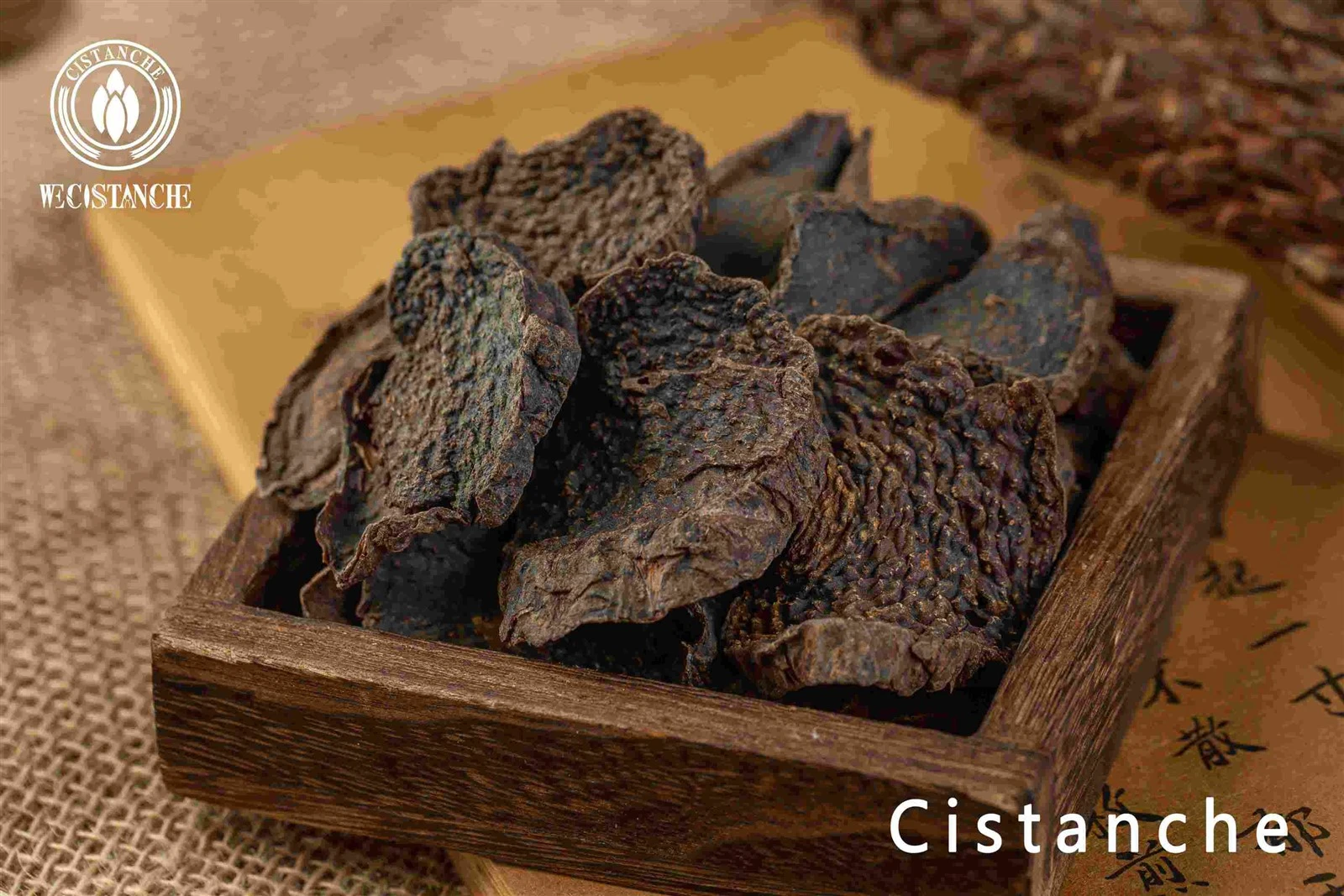
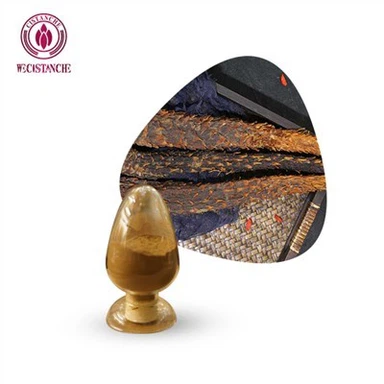
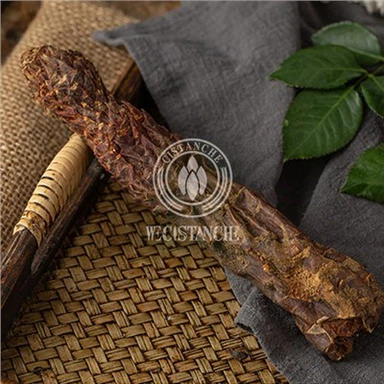
Herb cistanche raw materials
Click the pic get more listing details
1.1.5 Other constituents
An alkaloid, betaine, has been identified by HPLC–MS. HPLC–ELSD comparisons found no detectable betaine in C. tubulosa while present in C. deserticola, supporting its use as a differentiating marker. Organic acids (nicotinic, succinic, ferulic), nucleosides (guanosine, inosine, uridine, adenosine), and amino acids (including phenylalanine) are also present.
1.2 Physiological Functions and Bioactivities
1.2.1 Anti-exercise fatigue
Cistanche alleviates exercise fatigue by modulating metabolism in the brain, liver, and blood (see Figure 1). In D-galactose-induced aging mice, Cistanche reduced serum urea nitrogen and lactic acid while increasing hepatic and muscular glycogen. In exercise- and sleep-deprivation mouse models, total oligosaccharides from C. tubulosa improved both central and peripheral fatigue, potentially via lowering hypothalamic/cortical serotonin and norepinephrine (central) and reducing post-exercise metabolites (LDH, BUN) (peripheral). Total polyphenols also improved fatigue markers by elevating hepatic/muscle glycogen and LDH while suppressing lactate formation. Under intense exercise, excessive H+, ROS, and lactate can damage hepatic and myocardial cells; C. deserticola mitigated this by inhibiting LDH5 and upregulating NOS3, promoting glycogen precursor transport and recovery. Ethanol extracts reduced malondialdehyde and increased SOD and GSH-Px, improving redox balance and protecting myocardial mitochondria; an optimal effect was observed at 6.01 g/kg in rats.
Practical implication for product developers: multiple bioactive classes (polysaccharides, oligosaccharides, polyphenols) show convergent anti-fatigue benefits via metabolic, antioxidant, and nitric oxide pathways-supporting multi-component formulations and standardized extracts.

Herb cistanche Supplement for anti-fatigue
1.2.2 Anti-osteoporosis
Water extracts and echinacoside promoted T-lymphocyte proliferation and IL-2 expression, suggesting modulation of the OPG/RANK/RANKL axis to enhance osteoblast proliferation. C. deserticola polysaccharides (CDP) improved postmenopausal osteoporosis in OVX mice by modulating the gut microbiota–SCFAs–Th17/Treg axis: increasing Ileibacterium abundance and fecal SCFAs, lowering the Th17/Treg ratio, and elevating Treg-derived anti-inflammatory cytokines (TGF-β, IL-10), thereby enhancing osteoblast activity. Cistanoside A inhibited osteoclast differentiation and bone resorption by downregulating TRAP, NFATc1, DC-STAMP, and downstream proteins in the JNK/MAPK pathway.
Product development note: both immune–bone crosstalk and gut–bone axes are validated targets; co-standardizing for echinacoside/verbascoside and polysaccharides may yield synergistic anti-resorptive and pro-osteogenic effects.

1.2.3 Gastrointestinal protection
Key active components include saccharides and PhGs such as echinacoside, oligosaccharides, galactitol, and polysaccharides. Cistanche polysaccharides, after fermentation by the gut microbiota, generate SCFAs and beneficial polymers, enriching beneficial taxa and simultaneously enhancing intestinal absorption of echinacoside. Total alditols from C. deserticola alleviated functional constipation in mice by increasing excitatory enteric neurotransmitters, promoting motility, and reducing bile acid synthesis, thereby attenuating gut inflammation (see Figure 2).
Formulation insight: pairing polysaccharides with PhGs may improve both barrier/motility outcomes and the bioavailability of PhGs, supporting synbiotic-style designs.
1.2.4 Other activities
Antioxidant capacity varies with origin, host plant, and polysaccharide composition. In vitro, neutral polysaccharides showed stronger antioxidant activity than acidic and crude fractions. Samples parasitizing Atriplex cana (four-wing saltbush) demonstrated higher antioxidant activity, informing germplasm and cultivation choices for antioxidant-oriented products.
Reproductive health: total PhGs, polysaccharides, and oligosaccharides improved sexual behavior and biochemical indices in reproductive damage models; PhGs were the principal drivers. In ovarian aging, polysaccharides reduced ovarian cell damage and increased primordial follicle counts, improving fertility.
Immune modulation: aqueous extracts acted as a polysaccharide adjuvant to promote dendritic cell activation and balanced Th1/Th2 responses. PhGs from C. tubulosa activated macrophages by upregulating iNOS, increasing NO production, and promoting TNF-α and IL-6 release, enhancing phagocytic activity.
Neuroendocrine and neuroprotection: polyphenolic PhGs including echinacoside, verbascoside, and isoverbascoside have been associated with endocrine modulation, anti-neurodegenerative, anti-tumor, and anti-inflammatory effects, with reported benefits to learning and memory in Alzheimer's models.
Implications for global herbal developers
Standardization targets:
PhGs: echinacoside, verbascoside (isoverbascoside), cistanoside F (and 2′-acetyl derivatives) as chemomarkers and efficacy correlates.
Polysaccharides: define monosaccharide composition and molecular weight ranges; neutral fractions may drive antioxidant activity.
Differentiation markers: geniposide (high in C. tubulosa; absent in C. salsa); betaine (present in C. deserticola; absent in C. tubulosa).
Sourcing and authentication:
Species: mainly C. deserticola (on China's 2023 food–medicine homology list), C. tubulosa, C. salsa, C. sinensis, C. lanzhouensis.
Host plant and terroir significantly influence actives; document parasitic host and origin for batch consistency.
Use UPLC/HPLC and LC–MS/MS for identity and quantitation; consider chemometric profiling across batches.
Formulation strategies:
Anti-fatigue: combine PhGs + polysaccharides + polyphenols; target metabolic and antioxidant pathways.
Bone health: pair PhGs (e.g., cistanoside A, echinacoside) with polysaccharides; consider microbiome-supportive excipients.
GI motility/comfort: leverage total alditols and polysaccharides; design for SCFA generation (prebiotic pairing).
Immune support: utilize polysaccharide-rich aqueous extracts as adjuvants; monitor Th1/Th2 balance.
Quality and safety:
Comply with food and dietary supplement regulations in target markets (e.g., GRAS/NDI in the U.S., Novel Food in the EU, health food in China).
Establish specifications for PhGs content (e.g., echinacoside ≥ X%, verbascoside ≥ Y%), polysaccharides (% and profile), residual solvents, heavy metals, pesticides, and microbial limits.
Consider stability studies for PhGs (sensitivity to pH, heat, light) and polysaccharides (molecular weight degradation).
Industrialization status and gaps:
Multiple extraction technologies (ultrasound-assisted deep eutectic solvents, macroporous resin, Sephadex LH-20) enable scalable isolation of PhGs and polysaccharides.
Health foods and TCM products are expanding; however, standardized, multi-marker QC and clinically oriented trials (especially outside China) remain limited.
Differentiation by species- and host-specific fingerprints can support premium positioning.
Future work: robust human clinical studies for anti-fatigue, bone health, GI function, and immune modulation; mechanism-guided standardization; global regulatory dossiers.
References
Wei YP et al., 2023. Food Industry Science and Technology 44(16): 246–254.
National Pharmacopoeia Commission, 2020. Pharmacopoeia of PRC, Vol. I: 140–141.
Song QQ et al., 2020. Analytical Chemistry 48(11): 1573–1593.
Liang JS et al., 2021. Journal of Pharmaceutical Analysis 41(2): 226–235.
Gu JN et al., 2023. Journal of Functional Foods 109: 105811.
Dong JT et al., 2024. Journal of Traditional Chinese Medical Sciences 11(2): 222–231.
Yin HM et al., 2024. Journal of Ethnopharmacology 320: 117420.
Feng SS et al., 2021. Journal of Ethnopharmacology 277: 114256.
Additional Chinese theses and journals cited provide in-depth compositional and mechanistic data supporting the above statements.
Transition to next section
In the following section, we will:
Map species-specific chemistry to application niches (e.g., C. deserticola for GI and anti-fatigue; C. tubulosa for bone/immune),
Propose standardized extract specifications and analytical methods (marker panels, acceptance ranges),
Outline regulatory pathways and clinical evidence packages for major markets (US/EU/China), and
Present case studies of scalable extraction and formulation, including stability and bioavailability enhancements for PhGs and polysaccharides.