Multidisciplinary Chinese Expert Consensus On Diabetes Mellitus Combined With Male Sexual Dysfunction
Nov 07, 2024
I. Introduction
Diabetes is a group of metabolic diseases characterized by chronic hyperglycemia caused by relative or absolute insulin deficiency and/or insulin dysfunction due to the combined effects of genetic and environmental factors. Its pathological characteristics are mainly abnormally elevated blood sugar concentrations, often accompanied by metabolic disorders of fat, protein, water, electrolytes, etc., and may be complicated by chronic complications of multiple organs/systems such as eyes, kidneys, nerves, and cardiovascular systems.
In the past 40 years, with the changes in people's lifestyles, the increase in overweight and obese people, the aging of the population, and the acceleration of urbanization, the prevalence of diabetes in China has exploded.

NEW HERBAL CISTANCHE CAPSULES
Since 1980, China has conducted six nationwide large-scale diabetes surveys, and the results showed that the prevalence of diabetes in adults over 18 years old has rapidly increased from 0.67% to 11.2% [1-4]. Epidemiological data released by the International Diabetes Federation show that the absolute number of diabetes patients aged 20 to 79 in China is about 140.9 million, accounting for one-quarter of the global diabetes population during the same period [5]. The incidence of diabetes in China is tending to be younger, with a high proportion of overweight and obesity. The prevalence rate in men is higher than that in women. The undiagnosed rate of diabetes is as high as 52%, and the treatment rate and control rate are only 36.5% and 49.2% respectively [4]. This is bound to bring huge challenges to the treatment of diabetes and the prevention and treatment of complications in China. The impact of diabetes on male sexual dysfunction has also received increasing attention from the medical community in various countries around the world. In male clinics, sexual dysfunction is often the first symptom of diabetic patients. Male diabetic patients often have multiple system and organ damage, especially the impact of diabetes on blood vessels, nerves, muscles and gonadal axis, which often affects sexual function, resulting in low libido, erectile dysfunction, ejaculatory dysfunction and lack of orgasm. In this consensus, these various male sexual dysfunctions related to the condition and course of diabetes are collectively referred to as diabetes combined with male sexual dysfunction.

NEW HERBAL FORMULATION FOR DIABETES PATIENTS WITH MALE SEXUAL DYSFUNCTION
Compared with the general population of the same age, sexual dysfunction occurs earlier in the diabetic population and the incidence rate is significantly increased. There are many studies on erectile dysfunction in diabetic patients. A foreign meta-analysis showed that the overall prevalence of erectile dysfunction in diabetes was 52.5%, of which type 1 diabetes was 37.5% and type 2 diabetes was 66.3% [6]. A multi-center survey study based on diabetes clinics in China showed that the incidence of erectile dysfunction was 75.1% [7]. Several studies in different regions have shown that the incidence of ejaculatory dysfunction, lack of orgasm, and low sexual desire in diabetic patients is significantly higher than that in the general population [8-11].

Diabetes combined with male sexual dysfunction has become a public health issue that cannot be ignored. In current clinical work, the understanding of the occurrence and development mechanism of diabetes combined with sexual dysfunction is still insufficient, the concept of screening and prevention is still weak, and the use of related treatment methods and drugs is not standardized. In view of this, some experts from andrology, endocrinology, traditional Chinese medicine, general practice, and psychiatry and psychology in the country discussed and formulated the "Multidisciplinary Chinese Expert Consensus on Diabetes Combined with Male Sexual Dysfunction" in order to provide a reference for clinical prevention and treatment.
2. Pathophysiological Mechanism of Diabetes Combined with Male Sexual Dysfunction
Diabetes is a chronic, systemic metabolic disease that can cause pathophysiological changes in multiple systems and organs throughout the body through oxidative stress response, advanced glycation end products (AGEs), polyol pathways, protein kinase C (PKC) pathways, etc., including nerves, blood vessels, endocrine, corpus cavernosum and psychology, thereby having an important impact on sexual function (sexual desire, erectile function, ejaculation function, orgasm) (Figure 1).
(I) Diabetes combined with male sexual desire disorder
Sexual desire disorder is mainly manifested as decreased libido. On the one hand, it is because diabetic patients often have decreased androgen levels. In patients with type 2 diabetes, high blood sugar can inhibit the secretion of gonadotropin-releasing hormone (GnRH) by the hypothalamus or the secretion of luteinizing hormone (LH) and follicle-stimulating hormone (FSH) by the pituitary gland, causing hypogonadism and thus leading to a decrease in total testosterone levels [12,13]. Studies have also shown that the free testosterone content in patients with type 1 diabetes is reduced [10,14]. On the other hand, changes in androgen receptors that may exist in diabetic patients can also affect sexual desire. In elderly men with type 2 diabetes, in addition to decreased serum total testosterone and free testosterone, and changes in sex hormone-binding globulin, the number of androgen receptors is reduced and the number of CAG copies of the androgen receptor exon sequence is increased, resulting in decreased androgen receptor sensitivity [15,16]. Low testosterone levels and reduced receptor sensitivity are closely related to sexual fantasies, reduced sexual activity or lack thereof. At the same time, anxiety and depression caused by diabetes can also lead to reduced sexual desire and apathy.

NEW HERBAL CISTANCHE
(II) Diabetes combined with erectile dysfunction
1. Hemodynamics and vascular wall damage:
Diabetic patients have abnormal blood sugar metabolism, blood viscosity, and dysregulation of vasoconstriction and relaxation factors. In addition, AGEs produced by high blood sugar covalently bind to vascular collagen, which increases blood vessel thickness, reduces vascular elasticity, narrows the vascular lumen, and even forms plaques or thrombi, which seriously hinders penile blood circulation and leads to a decrease in cavernous blood perfusion [17-19].
2. Dysfunction of vascular endothelial cells:
Abnormal glucose metabolism can produce excessive oxygen free radicals, causing oxidative damage to cells and inhibiting the synthesis of nitric oxide (NO), reducing cyclic guanosine monophosphate (cGMP), and ultimately leading to endothelial dysfunction and impaired relaxation of cavernous artery smooth muscle [20]. Increased plasma endothelin (ET) levels in diabetic patients also further cause endothelial cell dysfunction [21,22].
3. Neuropathy:
Abnormal glucose metabolism can cause nervous system lesions through sorbitol accumulation/abnormal insulin signaling pathway/oxidative stress/mitochondrial dysfunction/chronic mild inflammation/hypoxia caused by microcirculatory disorders [23-26]. Neuropathy can lead to degeneration of pudendal sensory nerves (S2-S4) and weakened sexual stimulation impulses [27]. Neuropathy causes a decrease or loss of parasympathetic nerve activity required for cavernous smooth muscle relaxation, an increase in norepinephrine levels, a decrease in nitric oxide synthase (NOS) activity, and a reduction in the synthesis of neurogenic NO[20].
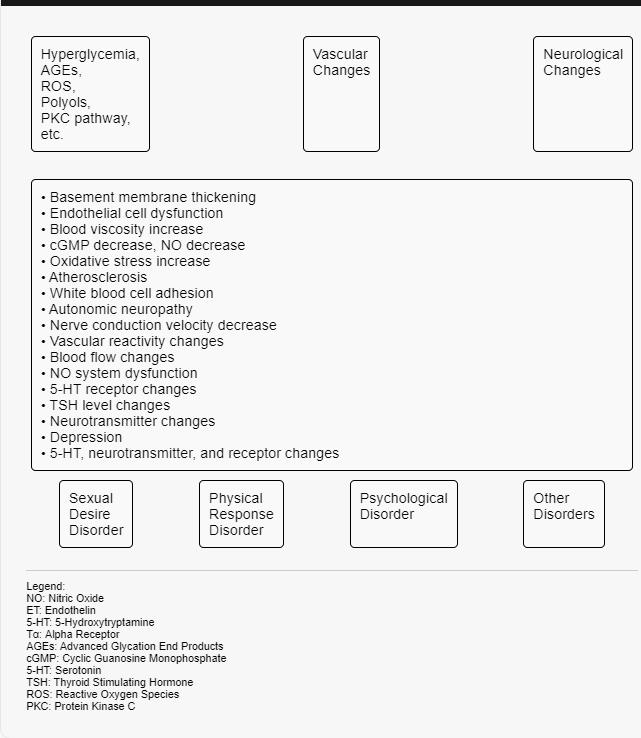
Figure 1 Schematic diagram of the pathophysiological mechanism of diabetic male sexual dysfunction
4. Endocrine disorders: Diabetes leads to hypogonadism [20,28]. At the same time, the reduced sensitivity of androgen and androgen receptors will also reduce the NOS of the penile cavernous blood vessels and inhibit the control of the bulbocavernosus and ischiocavernosus muscles. Spinal motor neuron activity [10, 15, 29] O5. Cavernosal smooth muscle injury: High blood sugar and other factors significantly reduce the smooth muscle

NEW HERBAL CISTANCHE CAPSULES
The expression of muscle connexin and the permeability of its derived gap junctions [30-32]; High blood sugar levels affect each isoform of smooth muscle myosin (myosin II heavy chain SM-B, SM2, light chain LC17a) and The composition ratio of their alternatively spliced isomers [33]; At the same time, the expression of √-actin and caveolin-1 in the smooth muscle tissue of the corpus cavernosum of the diabetic penis is significantly reduced [34], and elastic fibers are destroyed and relaxed. Damage, smooth muscle atrophy, and collagen deposition [35, 36].
6. Albuginea fibrosis: Abnormal glucose metabolism causes extracellular matrix remodeling, resulting in tunica albuginea fibrosis and combined with Peyronie's disease. Severe penile deformity and abnormal penile blood flow are prone to occur [37, 38], leading to the occurrence of erectile dysfunction. Increased risk.
(III) Diabetes combined with ejaculation dysfunction
1. Premature ejaculation
Premature ejaculation is a common ejaculation disorder. Diabetes can lead to abnormalities in the autonomic nervous system and its central and peripheral neurotransmitters involved in ejaculation control. Insulin resistance is associated with NO metabolism disorders, and NO metabolism participates in ejaculation control by regulating sympathetic nervous system activity. In experimental animal studies, NO has been shown to relieve premature ejaculation [12, 39]. At the same time, ejaculation behavior is related to the metabolism of 5-hydroxytryptamine (5-HT). When the sensitivity of 5-HT2C receptors caused by diabetes is reduced, it can promote the occurrence of premature ejaculation [12, 39].
2. Retrograde ejaculation/weak ejaculation
Retrograde ejaculation is mainly caused by nerve dysfunction, which affects the muscles that control ejaculation. Neuropathy caused by diabetes can weaken the contraction force of the perineal striated muscles, and at the same time cause spasm and contraction of the external urethral sphincter, increasing the resistance to ejaculation. Diabetic autonomic neuropathy can damage the sympathetic nerve efferent fibers (innervating the internal urethral sphincter of the bladder). During orgasm, the internal urethral sphincter cannot contract to provide normal high pressure to close the bladder neck, causing semen to enter the bladder with relatively low pressure [20, 27, 40]. At the same time, diabetes can also directly damage the bulbospongiosus muscle, ischiocavernosus muscle and pelvic floor muscle group, making them unable to perform normal rhythmic contraction, and ultimately leading to retrograde ejaculation or weak ejaculation.

NEW HERBAL CISTANCHE
3. Delayed ejaculation / anejaculation
Delayed ejaculation is relatively rare in ejaculation disorders caused by diabetes. In severe cases, anejaculation may occur. The destruction of the complex pathways between the spinal ejaculation center and the sympathetic and parasympathetic organs may be the main cause. Diabetes causes autonomic neuropathy, resulting in vas deferens peristalsis disorders, weak contraction of the prostate and seminal vesicle tissues, and decreased androgen levels leading to reduced semen secretion, which cause delayed ejaculation and anejaculation [41, 42]. In addition, studies have reported that the concentrations of thyroid stimulating hormone (TSH) and free thyroid hormone in diabetic patients are reduced, while the level of thyroid hormone and ejaculation latency are significantly negatively correlated. Therefore, changes in thyroid hormone levels in some diabetic patients may be involved in delayed ejaculation [42, 43].
(IV) Diabetes combined with male orgasm deficiency
Under normal circumstances, sperm, seminal vesicle fluid, and prostatic fluid enter the posterior urethra. As fluid accumulates, the pressure in the posterior urethra gradually increases, the smooth muscles of the accessory glands and urethral bulbs contract, and the pressure in the posterior urethra further increases, causing semen to be ejected from the urethral orifice. The sensory stimulation transmitted by the pudendal nerve forms a feeling of orgasm in the brain. Diabetic autonomic nerve damage weakens the stimulation transmitted by the pudendal sensory nerve, resulting in orgasm deficiency [27]. 5-HT is a neurotransmitter that transmits pleasant emotions. Reduced sensitivity of its receptor 5-HT2A or decreased activity of brainstem 5-HT neurons may lead to orgasm deficiency [44]. In addition, endocrine changes caused by diabetes, such as decreased testosterone secretion and decreased thyroid hormone secretion, may lead to lack of orgasm in patients [45]. In addition, pathological and physiological changes of diabetes itself and psychological stress caused by diabetes (such as physical fatigue, lack of vitality, reduced activity, poor self-image, etc.) can lead to anxiety and depression disorders [46-48]. Diabetes, mood disorders, and psychological stress interact with each other by activating the hypothalamus-pituitary-adrenal axis (HPA), the autonomic nervous system, and the immune system, which increases the secretion of cortisol, adrenaline, and inflammatory factors, reduces the sexual desire of male diabetic patients, and reduces the willingness to initiate and maintain sexual activity, accompanied by decreased orgasm and erectile dysfunction [49].
3. Clinical manifestations of diabetes combined with male sexual dysfunction
Diabetes combined with male sexual dysfunction often occurs after the diagnosis of diabetes. As the course of diabetes prolongs, the risk of sexual dysfunction increases. However, some diabetic patients have sexual dysfunction as the first symptom. Diabetes is discovered when seeking medical treatment for sexual dysfunction. There is a lack of typical manifestations of diabetes, which is easy to be ignored.
Typical symptoms of diabetes are manifested as "three more and one less", that is, polyuria, polydipsia, polyphagia, and weight loss, which are more common in type 1 diabetes; due to the insidious onset of type 2 diabetes, the vast majority of type 2 diabetes patients do not have typical "three more and one less" symptoms. Type 1 or type 2 diabetes can be accompanied by chronic complications. For example, diabetes involving the peripheral nervous system can manifest as glove-like, sock-like paresthesia, pain and temperature paresthesia, postural hypotension, gastrointestinal nerve dysfunction, muscle weakness or muscle atrophy, etc.

NEW HERBAL CISTANCHE CAPSULES
Among men with diabetes and sexual dysfunction, the most common sexual dysfunctions are erectile dysfunction and ejaculation dysfunction, but low libido and lack of orgasm are also common in diabetic patients. The occurrence of sexual dysfunction is related to the condition and course of diabetes. Erectile dysfunction often occurs after a course of diabetes of about 7 to 10 years, mainly manifested by a gradual decrease in the hardness of the penis erection and a gradual shortening of the duration of erection hardness, which eventually leads to an inability to complete sexual life satisfactorily, or even a complete loss of erectile function, which increases the mental and psychological burden on the man and affects the relationship between the couple. Ejaculation dysfunction in diabetic patients is mainly manifested as retrograde ejaculation, weak ejaculation and no ejaculation. Patients with diabetes and retrograde ejaculation have ejaculation movements during sexual intercourse, but no semen is ejected from the urethra. After ejaculation, sperm or urine fructose test is often positive in urine centrifugation. When combined with weak ejaculation, semen flows out of the urethra, not in a jet-like state, and the patient's sexual pleasure is reduced. When combined with no ejaculation, it is due to more serious erectile dysfunction or nervous system disease. Despite certain penile friction stimulation, the patient still cannot reach orgasm or produce orgasmic feelings, and cannot ejaculate, or the erectile function is normal, but dry ejaculation occurs (there is an ejaculation movement, but no semen enters the bladder, and no semen flows out of the urethra). Patients with orgasm deficiency cannot ejaculate or produce orgasmic feelings during sexual arousal and sexual stimulation [45]. In addition, some diabetic patients also experience a shortened intravaginal ejaculation latency time (IELT) or lack of orgasm due to delayed ejaculation or weak ejaculation, which causes mental and psychological problems in patients.
Life pressure, such as worry, worry, confusion, and even avoidance of sexual intimacy. Due to the adverse effects of endocrine, psychological and other types of sexual dysfunction, diabetic patients will also experience decreased libido, that is, under the influence of various internal and external factors, the subjective psychological activities of initiating and maintaining sexual behavior are weakened, and the response to sexual fantasies and potential sexual cues before the start of sexual behavior is weakened.
In addition to the above clinical manifestations, diabetic patients with male sexual dysfunction often have mental and psychological problems, mainly manifested as prominent and persistent depression or a significant decrease in interest or pleasure in all or almost all activities (depressive disorder), or panic attacks or anxiety (anxiety disorder). These problems cannot be better explained by other mental disorders, and will cause social and professional pain, leading to or aggravating the occurrence and development of sexual dysfunction.