Why Recurrent Urinary Issues Are So Common In Diabetes
Jul 09, 2026
In real-world practice, urinary discomfort can keep coming back-especially when blood sugar control is unstable, fatigue accumulates, or the body's "terrain" is weakened.
In Traditional Chinese Medicine (TCM), diabetes is often discussed under "Xiaoke" (wasting-thirst patterns), while urinary difficulty/irritation is often grouped under "Lin syndrome." Professor Wei Zixiao-one of China's senior TCM endocrinology clinicians-summarizes a practical way to understand why these two conditions so often overlap and recur:
Root problem (Ben): weakened functional systems of Taiyin and Shaoyin
Branch manifestation (Biao): damp-heat accumulating in the lower body, irritating urinary function
For people searching online, this is the deeper logic behind many "tcm herb for urinary frequency" or "tcm herb for recurrent uti" conversations: symptoms may look like 'heat', but recurrence often reflects deficiency + impaired fluid regulation.

The Taiyin–Shaoyin Framework
TCM's "Spleen" and "Kidney" here are functional systems, not the anatomical organs.
Taiyin (Spleen system) = digestion + fluid distribution
Taiyin governs how the body transforms food into usable energy and moves fluids upward and outward.
When Taiyin is weak, fluids don't circulate cleanly-dampness tends to accumulate and sink.
Shaoyin (Kidney system) = core vitality + "Qi transformation" of fluids
Shaoyin governs deep reserves and the body's ability to regulate water pathways and support bladder function (TCM calls this Qi transformation).
When Shaoyin is weak, urination may become inefficient (dribbling, incomplete emptying, nighttime urination), and the lower body becomes more prone to lingering dampness.
Professor Wei's core mechanism:
Spleen–Kidney deficiency → impaired fluid regulation → dampness → damp-heat → urinary irritation + recurrence.

Four TCM Patterns Used Clinically
Professor Wei does not treat every case as the same "heat infection." Instead, he categorizes patients into four common patterns and matches strategy accordingly.
1) Taiyin Pattern: "Low symptoms, obvious deficiency"
Common signs: fatigue, low appetite, loose stools, mild recurrent urinary urgency/frequency; sometimes urine tests show leukocytes while symptoms feel mild.
Strategy: strengthen the "middle," lift and restore regulation, transform dampness.
Classical formula direction: Bu Zhong Yi Qi Tang modifications.
Keyword fit: tcm herb for fatigue and urinary frequency
2) Shaoyin Cold Transformation: "Cold + weak bladder regulation"
Common signs: nighttime urination, weak stream, dribbling, cold limbs, low back cold soreness; little burning.
Strategy: warm and activate urinary regulation (without overdrying).
Classical formula direction: Jisheng Shen Qi Wan modifications.
Keyword fit: tcm herb for nighttime urination / tcm herb for weak bladder
3) Shaoyin Heat Transformation: "Yin deficiency with deficient heat"
Common signs: dryness, night sweats, hot palms/soles, burning or short/scant urination; possible cloudy urine or blood in urine.
Strategy: nourish Yin, clear deficient heat, support urination.
Classical formula direction: Zhi Bai Di Huang Wan + Zhu Ling Tang modifications.
Keyword fit: tcm herb for burning urination / tcm herb for cloudy urine
4) Taiyin–Shaoyin Combined Pattern: "The recurrence pattern"
Common signs: fatigue + digestive weakness + urinary recurrence, slow recovery, mixed cold/damp signs.
Strategy: rebuild both systems gradually; lift + drain; long-term consolidation.
Classical formula direction: combined Bu Zhong Yi Qi Tang + Kidney Qi formula logic.
Key principle across all types:
Professor Wei warns against overusing harsh bitter-cold herbs. The goal is root support + targeted clearing, so recovery capacity improves instead of being depleted.

A Real Case Example (What "Root Support + Targeted Clearing" Looks Like)
Professor Wei reports a female patient (51) with a 2-year history of urinary urgency/frequency, who experienced an acute flare with fever after travel, diet disruption, and stopping glucose meds. She presented with both:
strong acute signs (fever, burning urination, abnormal urine results) and
strong Taiyin deficiency signs (fatigue, poor appetite, swollen tongue with teeth marks)
His diagnosis prioritized Taiyin deficiency as the root, with damp-heat as the branch, using a tonify-and-regulate core plus carefully chosen symptom herbs, coordinated alongside necessary biomedical infection and glucose management.
Outcome: symptoms resolved; urine normalized; follow-up suggested no recurrence over a longer interval with consolidation support.
Takeaway for product developers: the most compelling TCM narrative is not "herbs replace antibiotics," but rather:
support the root terrain so recurrence tendency decreases.


Where Cistanche tubulosa (Rou Cong Rong) Fits - Ingredient Logic for Capsule Development
In TCM, Rou Cong Rong (Cistanche) is classically associated with supporting the Shaoyin (Kidney) system, especially when weakness shows up as low vitality, cold tendency, or functional decline.
That maps most naturally to:
Shaoyin cold transformation pattern support
Taiyin–Shaoyin combined "recurrence terrain" support
This makes Cistanche relevant to readers searching phrases like:
tcm herb for nighttime urination
tcm herb for low vitality and urinary weakness
tcm herb for recurrent urinary discomfort
Your key differentiatio
We supply factory-direct Cistanche tubulosa extract suitable for capsules, positioned for brands that require high potency + consistent standardization:

40% Echinacoside
16% Acteoside (Verbascoside)
Compared with generic Cistanche powders/extracts, this specification supports a stronger "high-actives" story for:
premium positioning
smaller capsule count targets
tighter QC requirements for the US supplement channel

Supportive Service Of Wecistanche-For more details about cooperation
Email:wallence.suen@wecistanche.com
Inquiry angle (B2B): If your brand is building a "root-support" formula inspired by TCM pattern logic (Shaoyin support / terrain support), high-actives standardization is often the difference between a commodity ingredient and a signature hero ingredient.
Capsule Product Concepts
To stay compliant in the US, frame benefits as structure/function support:
Concept 1: "Shaoyin Support" Capsule (Nighttime urination + vitality support)
Hero: Cistanche tubulosa extract (40% echinacoside, 16% acteoside)
Supporting: gentle vitality + urinary flow support botanicals (non-antibiotic positioning)
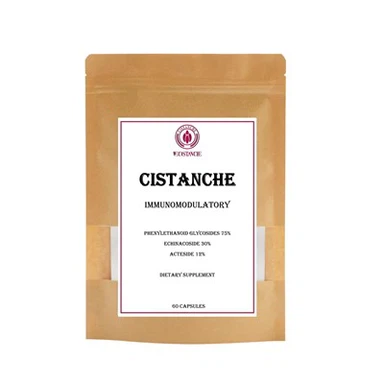
75glycoside, 30% Echinacoside, 12% Acteoside Cistanche Extract Capsules For Prostate And Kidney Health

Visit The Listing Of Cistanche Extract Pills
Positioning lines (examples):
Supports healthy urinary function and nighttime comfort*
Supports vitality and healthy aging*
Concept 2: "Taiyin–Shaoyin Terrain" Capsule
Hero: Cistanche tubulosa extract
Supporting: digestive/transport support (Taiyin narrative) + dampness transformation support
Positioning lines (examples):
Supports metabolic vitality and fluid balance*
Supports resilience during seasonal or lifestyle stress*
*Structure/function wording suggestions-final claims should be reviewed by your compliance team.
FAQ
Is this a "tcm herb for UTI"?
UTIs require medical diagnosis and treatment. In TCM literature, herbs are often used to support urinary comfort and the body's internal balance; Professor Wei emphasizes root support to reduce recurrence tendency, not just symptom chasing.
Why use high-actives Cistanche tubulosa extract in capsules?
US buyers often demand standardized markers and consistent potency. A high-echinacoside/acteoside extract can support premium formulations and clearer QC specs.

What types of brands is this ingredient best for?
urinary comfort / nighttime support SKUs
vitality / healthy aging lines
metabolic wellness stacks that want a TCM-inspired hero ingredient narrative
Call to Action
If you're building a capsule product featuring high-potency Cistanche tubulosa extract, we can support:
ingredient spec sheet & COA guidance
standardization targets (40% echinacoside / 16% acteoside)
production/QC documentation for US brand sourcing workflows
sample requests for formulation trials

Tell us your target:
capsule size (e.g., 00 / 0) and max fill weight
daily serving concept (1–4 caps/day)
desired positioning (nighttime support vs vitality vs "terrain" support)
and we'll propose a fit-for-purpose ingredient recommendation.
Compliance Disclaimer
This content is for educational purposes only and does not provide medical advice. Supplements are not intended to diagnose, treat, cure, or prevent any disease. Seek professional care for fever, flank pain, blood in urine, pregnancy, kidney disease, or persistent/worsening symptoms.