Clinical Observation On The Protection Of Residual Renal Function By Cistanche Tubulosa: A Systematic Discussion From Traditional Medicinal Properties To Modern Mechanisms
Jul 20, 2026
Introduction: Clinical value and challenges of residual renal function (RRF)
During the progression of chronic kidney disease (CKD) to end-stage renal disease (ESRD), the preservation of residual renal function (RRF) is considered one of the most critical indicators for improving patient prognosis. Whether for non-dialysis chronic kidney disease patients or those who have entered maintenance hemodialysis (MHD) or peritoneal dialysis, RRF is not only related to solute clearance (especially the clearance of medium and large molecule toxins such as β 2-microglobulin), but also directly participates in volume control, blood pressure regulation, nutritional status maintenance, and anemia correction. Clinical data show that the rate of RRF decline is significantly positively correlated with the mortality rate of dialysis patients. For every 1ml/min increase in RRF, the survival benefits of patients will significantly increase.
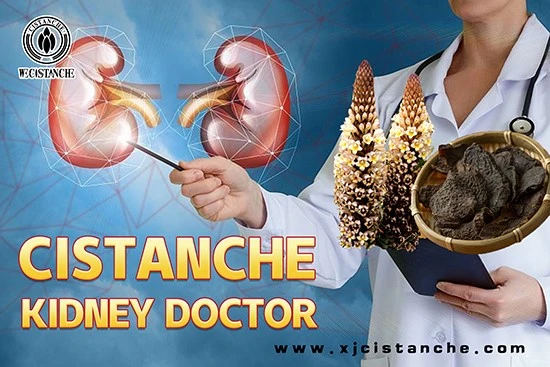
Effects of Cistanche: Improve Kidney Function
However, in clinical practice, RRF is often rapidly lost due to factors such as progression of the primary disease, use of nephrotoxic drugs, dialysis-related hypotension, and inflammatory response. How to find safe, effective, and multi-target protective adjuvant drugs based on conventional Western medicine treatment has become a research hotspot in the field of kidney disease. Cistanches Herba, as a traditional Chinese medicine for tonifying the kidneys and nourishing essence, has gradually gained attention in clinical observation and experimental research on protecting residual kidney function in recent years due to its characteristics of "tonifying without steepness, moistening without greasiness, and combining tonifying and tonifying". This article systematically summarizes the application value of Cistanche tubulosa in protecting residual renal function based on existing clinical observation data and pharmacological mechanism research.
1, From the perspective of traditional Chinese medicine theory: the pathological mechanism compatibility between Cistanche tubulosa and kidney deficiency with turbid toxins
In traditional Chinese medicine theory, chronic kidney failure belongs to the categories of "edema", "guan ge", "xu lao", etc., and its core pathogenesis is the deficiency of the root and the excess of the target. The main causes of this deficiency are spleen kidney qi deficiency, kidney yang deficiency, and insufficient essence and blood; The essence of the label is dampness, blood stasis, and the accumulation of toxins. The kidney controls water and stores essence. When the kidney qi and yang weaken, there is no power to gasify, leading to metabolic disorders of water, leakage of essence (egg white urine), and internal cessation of turbidity and toxicity.
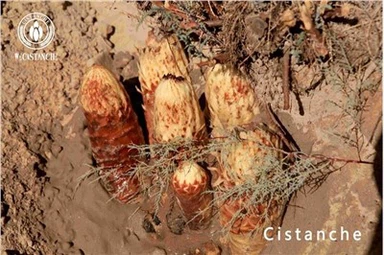
Cistanche tubulosa has a sweet and salty taste, a warm nature, and belongs to the kidney and colon meridians. It has the effects of tonifying kidney yang, nourishing essence and blood, moisturizing the intestines, and promoting bowel movements. The "Shennong Bencao Jing" lists it as a top-grade product, stating that it is "mainly used for five labor and seven injuries, replenishing the middle, removing cold, heat, and pain from the stem, nourishing the five organs, strengthening yin, and nourishing essence and qi". Its medicinal properties are gentle, warm but not dry, and nourishing but not greasy. It can not only tonify the kidneys and promote yang to restore qi, but also nourish essence and blood to fill the root of kidney deficiency. At the same time, it is moist and juicy, can moisten the intestines and clear the organs, and open the orifice for the downward flow of turbid toxins.

Effects of cistanche-improve kidney function
For common symptoms such as stubborn constipation, malnutrition, fatigue, and chills in dialysis patients, Cistanche tubulosa can precisely target the pathogenesis. By promoting the excretion of intestinal endotoxins (such as urea nitrogen and creatinine precursors) through promoting diuresis and promoting bowel movements, the burden on the kidneys can be reduced, indirectly protecting residual nephrons. This is precisely the embodiment of the traditional Chinese medicine theories of "separation of front and back elimination" and "clearing the organs and eliminating turbidity" in RRF protection.
2, Clinical observation and empirical evidence: the protective effect of Cistanche tubulosa on residual renal function
Multiple clinical observation studies have confirmed that adding Cistanche tubulosa or a compound containing Cistanche tubulosa to conventional treatment can significantly improve patients' renal function indicators and RRF-related parameters.
1. Observation of Application in Maintenance Hemodialysis Patients
A clinical observation involving multiple centers (Hebei Geriatric Hospital, Hebei University Affiliated Hospital, Peking University Third Hospital, etc.) included 90 maintenance hemodialysis patients. Based on regular dialysis (3 times a week, 4 hours each time), the treatment group was treated with Cistanche tubulosa. The observation results show that:
Changes in residual urine volume: From the second month onwards, the residual urine volume in the Cistanche tubulosa treatment group increased significantly, while there was no significant change in the blank control group (P>0.05 vs P<0.05).
Dialysis-related indicators: The ultrafiltration volume, dry body mass, and mean arterial pressure of the treatment group were significantly reduced compared to before, indicating better control of volume load.
Biochemical metabolic indicators: decreased levels of blood urea nitrogen (BUN), blood phosphorus, and low-density lipoprotein (LDL); The levels of albumin (ALB) and hemoglobin (Hb), which reflect nutritional status, have significantly increased.
Safety and compliance: During the observation period, there were no adverse reactions such as abdominal pain, diarrhea, rash, etc. Among the original 76 constipation patients, 64 showed significant improvement.

Superman herbs cistanche-improve kidney function
The conclusion is that Cistanche tubulosa can promote the clearance of water and solutes, improve dialysis adequacy, alleviate inflammation and nutritional status, thereby stabilizing and protecting residual renal function.
2. Auxiliary intervention for the non-dialysis period of chronic kidney failure
Clinical observations have found that the decoction or extract of Cistanche tubulosa can reduce blood creatinine (Scr) and urea nitrogen (BUN) levels and delay the rate of glomerular filtration rate (eGFR) decline in patients with chronic kidney failure (CRF) in both compensatory and decompensated phases. Its effect may be related to improving renal blood flow and inhibiting the high metabolic status of renal tubules. Some studies have pointed out that Cistanche tubulosa has a certain protective effect on renal function in CRF caused by different primary diseases, such as chronic glomerulonephritis, hypertensive kidney damage, diabetes nephropathy, etc., especially in improving kidney yang deficiency symptoms such as waist and knee tenderness, cold fear of cold limbs, dry stool, etc.
3, Modern pharmacological mechanism analysis: multi-target delay of RRF loss
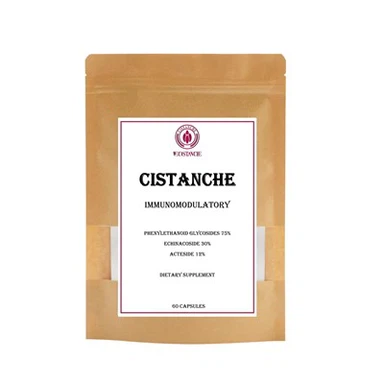
Cistanche tubulosa contains various active ingredients such as phenylethanoid glycosides (such as echinacroside and verbascoside), polysaccharides, cyclohexene ether terpenes, betaine, etc. The protective mechanism of residual renal function is mainly reflected in the following dimensions:

Main Chemical Constituents of Cistanche tubulosa
1. Antioxidative stress and anti-apoptosis
Oxidative stress is an important mechanism that accelerates residual nephron sclerosis and fibrosis. The phenylethanoid glycosides in Cistanche tubulosa, especially pinealoside and verbascoside, have strong free radical scavenging ability and can significantly increase the activity of superoxide dismutase (SOD) and glutathione peroxidase (GSH Px), reduce the content of malondialdehyde (MDA), and alleviate the damage of lipid peroxidation to renal tubular epithelial cells.
In the study of the diabetes nephropathy (DN) model, the water extract of Cistanche tubulosa can upregulate the expression of anti-apoptotic protein Bcl-2 and downregulate the expression of pro-apoptotic protein Bax and Caspase-3, thus reducing the apoptosis of renal tubular epithelial cells (HK-2) in a high glucose environment and protecting the residual renal tubular function.
2. Inhibit renal interstitial fibrosis (Tubointerstitial Fibrosis)
Renal fibrosis is the ultimate common pathway for the progression of CKD. Transforming growth factor - β 1 (TGF - β 1) is a core factor that induces epithelial-mesenchymal transition (EMT) and extracellular matrix (ECM) accumulation. Experimental studies have shown that:
The extract of Cistanche tubulosa and its active ingredients (such as 8-epideoxyquercetin and geniposide) can significantly inhibit the overactivation of the TGF - β 1/Smad signaling pathway.
Downregulate the expression of fibrosis markers α - smooth muscle actin (α - SMA), type I collagen (Collagen I), and fibronectin (FN), and upregulate the epithelial marker E-cadherin.
In a rat model of unilateral ureteral obstruction (UUO) and 5/6 nephrectomy, formulations containing Cistanche tubulosa (such as Cistanche fushen formula) can alleviate renal interstitial inflammatory infiltration, reduce Col IV deposition, and alleviate the progression of renal interstitial fibrosis.
3. Anti-inflammatory effect and immune regulation

What does cistanche do-anti-inflammatory
Chronic microinflammatory state is a risk factor for RRF loss in dialysis patients. Cistanche polysaccharides (CDPs) can regulate the balance of gut microbiota, inhibit the activation of TLR4/NF - κ B signaling pathway, reduce the release of lipopolysaccharides (LPS) and the secretion of inflammatory factors (IL-1 β, TNF - α, IL-6).
In addition, Cistanche tubulosa can enhance the phagocytic ability of macrophages, promote T lymphocyte transformation, improve the common immune dysfunction in kidney disease patients, and not excessively activate autoimmune reactions. It has potential pathological damage reduction effects on immune-related nephritis such as IgA nephropathy.
4. Improve renal microcirculation and hemodynamics
Cistanche tubulosa has a mild hypotensive and vasodilatory effect, and its components such as betaine and β - sitosterol help improve renal microcirculation, increase renal blood flow (RBF), and alleviate ischemia and hypoxia in residual nephrons. For patients with hypertensive kidney damage, this improvement in hemodynamics helps to reduce the transmembrane pressure of residual glomeruli and delay glomerulosclerosis.
5. Regulation of gut-kidney axis: promoting bowel movements, detoxification, and reducing renal burden
About 30% of urea nitrogen is excreted through the intestine. The components of galactitol, dietary fiber, and anthraquinone in Cistanche tubulosa can stimulate intestinal peristalsis, increase intestinal fluid secretion, and significantly improve refractory constipation in patients with uremia. By increasing the excretion of intestinal toxins and reducing the reabsorption of toxins into the bloodstream, an "intestinal dialysis" effect is formed, indirectly reducing the solute clearance burden of residual nephrons, which is also an important bypass mechanism for protecting RRF.

Chinese herb cistanche-improve kidney function
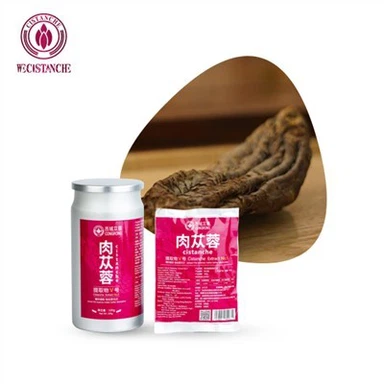
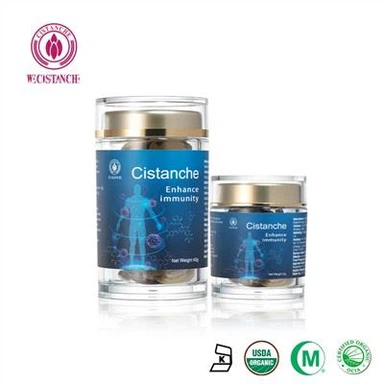
Click here to view Cistanche for Kidney disease products
【Ask for more】 Email:cindy.xue@wecistanche.com / WhatsApp: 0086 18599088692 / WeChat: 18599088692
To gain a clearer understanding of its mechanism of action, the following outlines the core components and pathways:
Echinacoside and Acteoside:
Main functions: antioxidant, anti-apoptotic, inhibition of TGF - β/Smad pathway, anti-fibrotic, and hypoglycemic.
Related indicators: reduced Scr, BUN, and urinary microalbumin; Upregulation of SOD and Bcl-2; Downregulate α - SMA and Bax.
Cistanche polysaccharides (CDPs):
Main functions: regulate gut microbiota, inhibit TLR4/NF - κ B inflammatory pathway, and enhance immunity.
Related indicators: reduce TNF - α and IL-1 β; Improve intestinal barrier integrity.
Betaine:
Main functions: regulate osmotic pressure, protect cells from serious osmotic and oxidative damage, and improve lipid metabolism.
Core signaling pathway:
PI3K Akt pathway: regulates cell survival and apoptosis, and inhibits kidney damage in high glucose environments.
TGF - β 1/Smad pathway: inhibits EMT and ECM accumulation, and inhibits renal fibrosis.
NF - κ B pathway: inhibits cytokine storm and reduces chronic inflammation of renal tissue.
5, Clinical application strategies and precautions
Although the clinical observation results are positive, when using Cistanche tubulosa to protect residual renal function, strict differentiation and medication standards still need to be followed:
The premise of dialectical treatment is:
Cistanche tubulosa is warm and moist in nature, suitable for kidney yang deficiency, insufficient essence and blood, and constipation caused by intestinal dryness. For those with yin deficiency and excessive heat (such as hot flashes, night sweats, and hot hands, feet, and heart), as well as damp heat accumulation (such as yellow and greasy tongue coating and yellow and red urine), it is not advisable to use it alone to avoid aiding in the generation of heat; This type of patient needs to be prescribed with nourishing yin and reducing fire or clearing heat and dampness drugs.
Usage, dosage, and dosage form:
The commonly used amount in clinical observation is 6 – 10g of dry product, which can be boiled with water, tea, or Congee. In modern times, there are also formulations such as Cistanche tubulosa total glycosides capsules and extraction granules. If maintenance hemodialysis patients use tea as an adjunct, attention should be paid to controlling the amount of fluid intake to avoid exacerbating the volume load.
Irreplaceable basic treatment:
Cistanche tubulosa belongs to the category of auxiliary protection and dialectical regulation drugs and cannot replace core treatment options such as RAS blockers (ACEI/ARB), hypoglycemic drugs, antihypertensive drugs, iron supplements, EPO, etc. Its value lies in synergistically delaying the decline of RRF and improving complications such as constipation, malnutrition, and microinflammation.
Monitoring and Follow-up:
Long-term users are recommended to have their liver and kidney function and electrolytes rechecked every 3 months. Although literature reports that its toxicity and side effects are extremely low, due to the special metabolism of patients with renal failure, potential drug accumulation or electrolyte (such as potassium and phosphorus) fluctuations still need to be prevented.
The protection of residual kidney function is a long-term battle against time. The existing clinical observations have preliminarily confirmed that Cistanche tubulosa can effectively increase residual urine volume, improve nutritional and inflammatory indicators, and enhance dialysis adequacy in dialysis patients by combining its traditional effects of nourishing kidney yang essence and blood, clearing organs, eliminating turbidity and detoxifying, with modern pharmacological mechanisms of antioxidant, anti-fibrosis, anti-inflammatory, and regulating the gut-kidney axis.
Future research requires further large-scale, randomized, double-blind, multicenter controlled clinical trials to more accurately quantify the effect of Cistanche tubulosa on the slope of eGFR decline. At the same time, we will delve into the dose-response relationship and long-term safety of its monomeric components (such as pinealoside) in different stages of CKD. With the development of network pharmacology and multi-omics technology, the complex network of "multi-component, multi-target, multi-pathway" protection of RRF in Cistanche tubulosa will be more clearly revealed, providing solid evidence support for its standardized application in the full process management of chronic kidney disease.