Research Progress On The Molecular Mechanism Of Traditional Chinese Medicine Cistanche Tubulosa in The Treatment Of Oligoasthenozoospermia
Jul 20, 2026
Introduction: Clinical dilemma of oligoasthenozoospermia and traditional positioning of Cistanche tubulosa
Oligoasthenozoospermia is one of the most common causes of male infertility, which refers to a pathological state in which the sperm concentration in semen is below 15 × 10 ⁶/ml (oligospermia) and/or the proportion of forward-moving sperm is below 32% (asthenozoospermia). Modern lifestyle, environmental endocrine disruptors (such as bisphenol A), oxidative stress, metabolic abnormalities, and other factors contribute to a rising incidence rate year by year. In clinical practice, patients often present with traditional Chinese medicine syndromes of kidney yang deficiency and insufficient essence and blood. Symptoms include soreness and weakness in the waist and knees, chills in the limbs, and decreased libido.

Effects of Cistanche: Improve Kidney Function
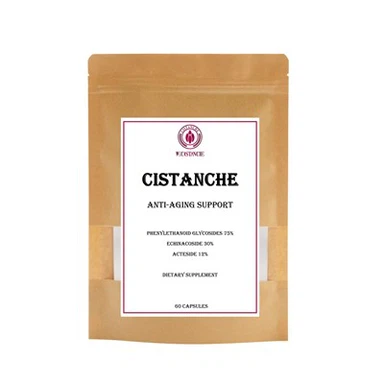
Click here to view Cistanche for Kidney disease products
【Ask for more】 Email:cindy.xue@wecistanche.com / WhatsApp: 0086 18599088692 / WeChat: 18599088692
Cistanches Herba was first recorded in the "Shennong Bencao Jing" and is classified as a top-grade herb, known as the "desert ginseng". Its traditional effects include tonifying kidney yang, nourishing essence and blood, moistening intestines, and promoting bowel movements. It is a core medicine for treating impotence and infertility caused by kidney deficiency and essence deficiency. In recent years, with the deepening of plant chemistry and molecular biology, the modern scientific connotation of Cistanche tubulosa in treating oligoasthenozoospermia has gradually been revealed. Its mechanism of synergistic regulation of reproductive function through multiple components, targets, and pathways has become a research hotspot. This article systematically reviews the research progress on the active ingredients of Cistanche tubulosa and their molecular mechanisms in endocrine regulation, antioxidant defense, cell apoptosis inhibition, sperm maturation microenvironment remodeling, and metabolic reprogramming.
Basic active chemical components of Cistanche tubulosa
The Cistanche genus is a member of the Brassicaceae family, mainly including C. deserticola and C. tubulosa. The material basis for its protective effect on spermatogenesis is mainly concentrated in the following categories:
Phenylethanolic glycosides (PhGs) are the most active components, with the highest content and deepest research, including Echinacoside, Acteoside/Verbascoside, and Isoverbascoside. Pinecone chrysanthemum glycoside is considered a key biomarker component for anti-reproductive damage.

Main Chemical Constituents of Cistanche tubulosa
Polysaccharides: Cistanche tubulosa polysaccharides (CDPs) have immunomodulatory, antioxidant, and energy metabolism-improving functions, and their homogeneous oligosaccharide components (such as CDOS-A1) show outstanding performance in protecting supporting cells.
Other components, including cyclohexene ether terpenes, lignans, betaine, amino acids, and trace elements, synergistically participate in maintaining the homeostasis of the reproductive microenvironment.
Regulating the hypothalamic pituitary gonadal axis (HPG axis) and steroid synthesis mechanism
Sperm production is precisely regulated by the hypothalamic pituitary gonadal axis (HPG axis), and any negative feedback imbalance in any link can lead to insufficient testosterone (T) synthesis and spermatogenic arrest. Cistanche tubulosa mainly restores endocrine balance through the following molecular pathways:
1. Interaction between Echinochlorin and Androgen Receptor (AR)
Research has found that pineal glycoside can penetrate the blood-brain barrier and enter the hypothalamus, targeting the androgen receptor (AR), with binding sites involving Met-894 and Val-713. After binding to AR inhibition, pineal glycoside can inhibit the negative feedback regulatory pathway of hormones and stimulate the hypothalamic pituitary system to increase the secretion of luteinizing hormone (LH). Elevated LH then acts on Leydig cells, promoting the expression of key enzymes involved in steroid synthesis, including steroid acute regulatory protein (StAR), CYP11A1, CYP17A1, 3 β - HSD, and 17 β - HSD. Ultimately, it significantly increases serum and testicular testosterone (T) levels, providing the necessary androgen microenvironment for spermatogenesis.

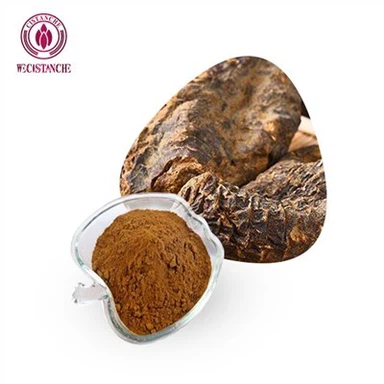
Echinoside the main chemical component of Cistanche tubulosa
2. Global upregulation of hormone synthesis by phenylethanoid glycosides
Cistanche tubulosa phenylethanolic glycoside can significantly reduce T and LH levels, lower urinary HCG levels, and downregulate abnormal expression of Y chromosome microdeletion-related gene Dzip1 in kidney yang deficiency model rats induced by adenine or Tripterygium wilfordii glycosides, improving spermatogenic disorders at the transcriptional level.
3. Bidirectional regulation of estrogen receptor (ER)
Pinecone chrysanthemum glycoside and verbascoside can competitively bind to estrogen receptors ER α and ER β, exerting selective estrogen receptor modulator (SERM) activity. Under low estrogen conditions, it exhibits weak estrogen-like effects, while under high estrogen conditions, it antagonizes excessive activation, thereby maintaining the positive and negative feedback balance of the reproductive axis and avoiding the inhibition of spermatogenesis caused by excessive estrogen.

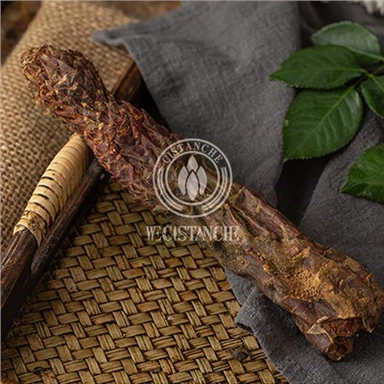
Acteoside, the main chemical component of Cistanche tubulosa
Activate the Nrf2/ARE signaling pathway-mediated antioxidant defense system
The sperm membrane is rich in polyunsaturated fatty acids and extremely sensitive to oxidative stress. Excessive reactive oxygen species (ROS) can lead to membrane lipid peroxidation, DNA fragmentation, and mitochondrial dysfunction, which are the core pathological mechanisms of oligoasthenozoospermia. Cistanche tubulosa is a potent natural antioxidant, and its core mechanism is to activate the Nrf2/ARE pathway:
Nrf2 nuclear translocation and downstream effects: Under normal conditions, Nrf2 binds to its cytoplasmic partner Keap1; The water extract and oligosaccharides of Cistanche tubulosa (CDOS-A1) can interfere with the Keap1-Nrf2 interaction, promote Nrf2 nucleation, bind to antioxidant response elements (ARE), and significantly upregulate the mRNA and protein expression of heme oxygenase-1 (HO-1), NAD (P) H quinone oxidoreductase 1 (NQO-1), and gamma glutamylcysteine synthase (GCL).
Enzyme activity and product regulation: Experiments have shown that intervention with Cistanche tubulosa can significantly increase the activity of superoxide dismutase (SOD) in testicular tissue and reduce the content of malondialdehyde (MDA). In the cyclophosphamide-induced testicular injury model, the expression of Nrf2, HO-1, and NQO-1 in the Cistanche tubulosa treatment group significantly increased, MDA decreased, and the structure of the seminiferous tubules was repaired.
Mitochondrial protection: Cistanche tubulosa polysaccharides improve mitochondrial energy metabolism, reduce abnormal release of cytochrome C, and maintain the ATP supply required for sperm flagellar movement, thereby directly improving sperm motility.
Inhibiting apoptosis of spermatogenic cells and maintaining the integrity of the blood-testis barrier
The excessive apoptosis of spermatogenic cells is the direct cause of oligospermia. Cistanche tubulosa exerts anti-apoptotic effects by regulating the Bcl-2 family and the caspase cascade reaction:

Desert ginseng improves immunity
Reprogramming of apoptosis-related proteins: Total glycosides and water extracts of Cistanche tubulosa can significantly upregulate the expression of anti-apoptotic proteins Bcl-2 and Bcl-w, downregulate the expression of pro-apoptotic protein Bax, oncogene c-jun, and death receptor Fas, thereby inhibiting the dual apoptotic signaling of the mitochondrial pathway and the death receptor pathway.
Inhibition of Caspase-3: In cyclophosphamide and high glucose models, Cistanche tubulosa significantly downregulates the activation levels of Caspase-3 mRNA and protein, reduces programmed cell death of spermatogenic epithelial cells, and restores clear and tightly arranged levels of seminiferous tubules.
Sertoli Cell Protection: Sertoli cells form the blood-testis barrier (BTB) and provide nutrients for germ cells. Cistanche tubulosa oligosaccharides CDOS-A1 alleviate serious glucose-induced damage to TM4 supporting cells through the Keap1-Nrf2/HO-1 pathway; The total glycosides of Cistanche tubulosa promote the secretion of key factors by GC-2spd cells, maintain the supporting cytoskeleton and tight junctions, and ensure the selective permeability function of BTB.
Activation of the NELL2 Lumine pathway and reshaping of the sperm maturation microenvironment
In recent years, breakthrough research has found that Cistanche tubulosa total glycosides capsules (CTGC) promote sperm maturation through the NELL2 Lumine pathway, which is a new mechanism perspective for traditional Chinese medicine to improve reproductive function:
NELL2-ROS1 cascade reaction: NELL2 (Neural EGF-like molecule 2) is a neurotrophic factor-like protein secreted by testicular Sertoli cells, transported via the lumen to the epididymis, and bound to the receptor ROS1. CTGC can significantly upregulate the expression of NELL2 protein in the testes (up to 4.2-fold), while simultaneously increasing the expression of ROS1, OVCH2 (oocyte-specific protein), and ADAM3 (sperm fertilization-related disintegrin metalloproteinase) in the epididymis.
Functional significance: This cascade reaction regulates the maturation process of sperm in the epididymis to acquire forward motility and fertilization ability. CTGC directly promotes sperm morphology and functional maturation through the "VB/ECH (total glycosides of Cistanche tubulosa) - NELL2-ROS1-OVCH2-ADAM3" axis, reducing the abnormality rate by 37.5% and increasing the fertilization rate to 83.3%.
Metabolic reprogramming: network regulation of lipid, energy, and amino acid metabolism

Effects of Cistanche: Improve Kidney Function
Metabolomics research has found that the improvement of oligoasthenozoospermia by Cistanche tubulosa is not a single target, but the result of systematic metabolic network reconstruction:
Lipid metabolism (linoleic acid and ether lipids): Cistanche tubulosa significantly reduced differential metabolites in the kidney yang deficiency model, such as 13-hydroxyperoxylinoleic acid and lysophosphatidylcholine, correcting the disorder of linoleic acid metabolism and ether lipid metabolism. Ether lipid is an important component in the reaction between the sperm cell membrane and the acrosome, and its recovery enhances membrane fluidity and stability.
Energy metabolism (pantothenic acid/CoA pathway): Pantothenic acid, as a precursor of coenzyme A (CoA), participates in the tricarboxylic acid cycle and fatty acid beta oxidation. Cistanche tubulosa upregulates the biosynthesis pathways of pantothenic acid and coenzyme A, enhances the activity of succinate dehydrogenase (SDH) in the testes and epididymis, and optimizes the energy supply efficiency of spermatogenic cells.
Amino acid and phenylalanine metabolism: Serum metabolomics shows that CTGC regulates phenylalanine metabolism and cofactor biosynthesis, and key differential metabolites are significantly correlated with FSH and LH levels, forming a chain mechanism of "metabolic regulation endocrine axis improvement reproductive function recovery".
Protection against environmental toxin damage and epigenetic level
Bisphenol A (BPA) and cyclophosphamide, which are widely present in modern environments, have reproductive and developmental toxicity. Cistanche tubulosa exhibits excellent chemical protective effects:
Antagonistic effect of bisphenol A (BPA) toxicity: BPA disrupts the HPG axis by mimicking estrogen. Pinecone chrysanthemum glycoside can effectively restore the decrease in sperm count and vitality caused by BPA, and inhibit the oxidative stress and hormonal negative feedback imbalance caused by BPA.
Plant-derived vesicles and miRNA regulation: Recent studies suggest that plant-derived extracellular vesicles of Cistanche tubulosa carry small-molecule RNAs such as miR159b-3p, which can target the P21/CDK1 pathway, regulate cell cycle progression, and exert pro-testicular and anti-germ cell degeneration effects, providing new evidence for the cross-border regulation of epigenetics in traditional Chinese medicine.