Effect Of Lycium Barbarum L. Extract On IR Drosophila Induced By High Glucose Diet Ⅱ
Apr 18, 2024
2 results
2. 1 Evaluation of the rat model of menopausal hypertension and dryness syndrome
The menopausal hypertensive dry syndrome model rats showed obvious characteristics such as aggressiveness, irritability, and impatience. The animal's diet decreased and its hair was dry. These symptoms are consistent with clinical characteristics.

HOW LONG DOES IT TAKE FOR CISTANCHE TO WORK?
2. 2 Changes in blood pressure levels of rats in each group before and after drug intervention

It can be seen from Table 1: Compared with the SHR group, the blood pressure of the sham operation group did not change significantly, and the difference was not statistically significant (P > 0. 05); the blood pressure of the rats in the model group was significantly higher than that of the SHR group, and compared with the sham operation group. The difference is statistically significant (P < 0. 05).
2. 3 Changes in serum endocrine levels of rats in each group before and after drug intervention
It can be seen from Table 2: Compared with the rats in the sham operation group and the SHR group, the endocrine hormone levels of the rats in the model group were higher, and the difference between the groups was obvious (P <0. 05), which was reflected in the significant decrease in E2 levels and FSH. , LH expression levels increased significantly, indicating that the endocrine indicators of rats in the model group were disordered, which was consistent with the clinical characteristics of menopausal hypertension. After drug intervention, the endocrine levels of rats in the positive group and the CDPS high- and low-dose groups were improved to varying degrees. The positive group had a more obvious improvement effect, while the CDPS high- and low-dose groups had a slightly weaker improvement in E2 levels. Compared with the model group, the difference was not statistically significant (P>0.05), but the FSH and LH indicators were significantly improved, and the difference was statistically significant (P<0.05).

2. 4. Changes in serum neurotransmitter contents of rats in each group before and after drug intervention
It can be seen from Table 3: Compared with the sham operation group, the expression levels of each neurotransmitter are significantly different in the rats in the model group (P < 0. 05), indicating that the expression levels of neurotransmitters in the rats in the model group are abnormal and the symptoms It is consistent with the clinical characteristics of menopausal hypertension and dryness syndrome. After drug intervention, the results were similar to those of the model group.

Compared with the CDPS low-dose group, except that the CDPS low-dose group has a slightly weaker regulatory effect on DA (P > 0. 05), the positive group and the CDPS various dose groups can adjust the expression levels of each neurotransmitter to varying degrees, and the difference is statistically significant ( P <0.05), among which the effect intensity of the positive group was stronger than that of the CDPS high-dose group.

3 Discussion
Menopausal syndrome (MPS) refers to menopausal women whose ovarian function declines, resulting in decreased E2 secretion and weakened negative feedback regulation of the hypothalamic-pituitary system, inducing pulse-type secretion of gonadotropes in the arcuate nucleus of the hypothalamus and the paraventricular nucleus. hormone-releasing hormone
(GnRH) to the portal circulation system, stimulating the pituitary gland to secrete FSH and LH to increase, causing hypothalamic-pituitary-ovarian axis (HPOA) dysfunction [7], thereby affecting hypothalamic monoamine neurotransmission qualitative balance. Neurotransmitters play a very important role in the transmission of information between nerve cells and between nerve cells and the endocrine and immune systems. Neurotransmitters are mainly monoamine neurotransmitters, including catecholamines (such as DA), and indole (such as 5-HT), and 5-HT is the most important substance that controls human emotional changes and directly affects the body's physiological and psychological functions. Abnormal changes in neurotransmitters in menopausal women will
It leads to abnormal autonomic nervous function of the body, which in turn affects personal emotions and normal physiological functions, producing symptoms such as insomnia, dreaminess, irritability, and other symptoms [8]; some studies have confirmed [9] that the decrease in serum E2 expression level is associated with the increase in FSH and LH. High levels are significantly related to the onset of menopause in women. In traditional Chinese medicine, menopause has a clear name corresponding to it. According to the patient's clinical symptoms, the disease can be associated with diseases such as "dryness", "night sweats" and "dizziness". Traditional Chinese medicine believes that women use the liver as a congenital source and use blood as a function. In menopausal women, the Tiangui is about to be extinguished but has not yet been extinguished. The yin and blood are deficient, the liver loses its nourishment, and the liver qi is not smooth due to ineffective drainage. Therefore, "liver stagnation" occurs during menopause. mark; if the liver loses its function, the qi movement will be sluggish and the blood circulation will be unfavorable, which may lead to blood stasis, so "blood stasis" is the main pathological manifestation; if the liver loses its nourishment, the kidneys will be tired over time, and the kidney qi will weaken and the essence will decline. Insufficient blood and imbalance of yin and yang, so "kidney deficiency" is the root cause; according to syndrome differentiation, methods of eliminating phlegm, relieving stagnation, and purging fire are also used; "menopause" is actually a syndrome of primary deficiency and excess, and the treatment should be Mainly "nourishing the liver and kidneys" [10]. Based on this, when experimentally replicating animal models, the dryness syndrome model was replicated on the basis of the menopausal hypertension model, which is more consistent with the characteristics of menopause.

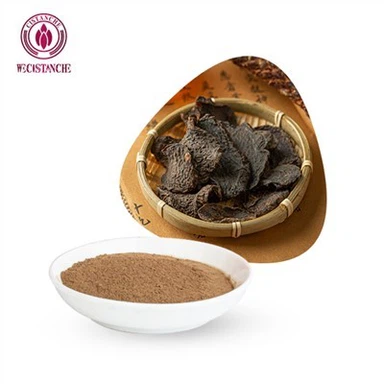
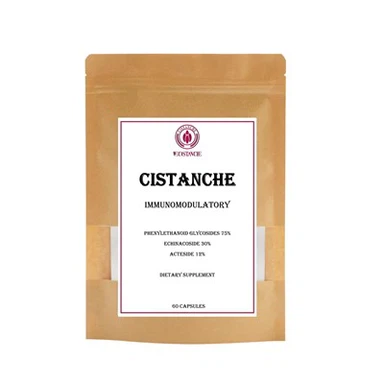
Cistanche deserticola belongs to the "top grade" traditional Chinese medicine in the "Shen Nong's Materia Medica". It is the dry fleshy stem with scaly leaves of Cistanche deserticola Y. C. Ma. It has the functions of nourishing kidneys and strengthening yang, adding essence and marrow, nourishing blood and moisturizing, the effect of pleasing color and prolonging life, due to the lack of resources, it has been listed as a national second-level protected plant. Modern pharmacological research has confirmed that Cistanche deserticola has a variety of biological activities. The main active ingredients that exert this biological activity are polysaccharides, such as promoting the body's production of interleukin-2, promoting immune cell proliferation, promoting phagocytosis of the reticuloendothelial system, and promoting Immunomodulatory effects such as release of mature thymic cells to the periphery [11-13]. Kuntai Capsule (formerly known as Gengnian Ningxin Capsule) is used for menopausal syndrome, especially for menopausal patients in the transitional period of menopause. It is suggested that this preparation can directly act on ovarian tissue, promote intraovarian microcirculation, and enhance ovarian blood supply function. Effectively improve ovarian function; at the same time, the traditional Chinese medicines such as rehmannia glutinosa and donkey-hide gelatin in the prescription can stimulate atretic follicles, restore the function of ovarian hormone secretion, and regulate the balance of hormone secretion; prolong the vitality of ovaries and delay women's menopause [14 - 15], so this article Kuntai capsule was used as a positive drug to participate in the control.
Judging from the research results: there was no significant change in the systolic blood pressure of the tail artery in the model group of rats before and after ovariectomy (P > 0. 05), indicating that the stress stimulus of ovariectomy on SHR rats has not affected the fluctuation of blood pressure; There were abnormal changes in endocrine indicators in rats. After the rats were ovariectomized, the expression level of estrogen E2 in the serum decreased significantly (P < 0.05), suggesting that the negative feedback effect of the hypothalamus-pituitary gland was weakened at this time, and FSH was compensated. , LH content increased (P < 0. 05), leading to endocrine function disorders. This change is consistent with the characteristics of menopause, and endocrine disorders will affect to the balance of monoamine neurotransmitters in the hypothalamus; research shows that CDPS high- and low-dose groups significantly down-regulated the expression levels of FSH and LH (P < 0. 05), but the adjustment effect on the expression level of E2 was not obvious, which was slightly lower than that of the model group. High, the comparison between groups showed that the difference was not statistically significant (P > 0. 05). From the perspective of neurotransmitters: the serum 5-HT and 5-HIAA contents of rats in the model group increased significantly, and the NPY, NE, and DA contents decreased significantly. This change is consistent with the changes in neurotransmitters in menopausal women; the main reason may be The anabolism of catecholamine transmitters is inhibited and the catabolism is enhanced. This will lead to a corresponding increase in the metabolism and neural activity of 5-HT in the brain, breaking the dynamic balance of 5-HT/NE, and 5-HT is in the body. The main effect is to suppress excitement, and abnormal elevation of its indicators can cause low mood, depression, and unhappiness. This is also one of the pathophysiological bases of 5-HT that can cause low neurological function and lead to depression.
In summary, Cistanche deserticola polysaccharide can regulate epinephrine and corticosteroids by enhancing HPOA function. The downregulation of FSH and LH indicators and the recovery of E2 content suggest that Cistanche deserticola polysaccharide can significantly improve the body's endocrine regulation mechanism and correct hypothalamic neurotransmitters. Disorders, improve autonomic nervous function, stabilize the body's internal environment, promote the improvement of endocrine function, accelerate metabolism, and play a role in improving menopausal symptoms.

References:
[1] Zulihumar Yusufu, Guo Wei, Xu Yan, etc. Chinese and Western Medicine Prevent and Treat Women's Menopausal Hypertension
Research progress on blood pressure diseases[J]. China Medical Herald, 2015, 33(12): 46-50.
[2] Marnocha SK, Bergstrom M, Dempsey LF. The lived experience of perimenopause and menopause[J]. Contemp Nurse, 2011, 37(2): 229-240.
[3] Duan Xianchun, Wang Yongzhong, Fang Zhaohui, etc. Therapeutic effect of Yuangui Yishen Granules on diabetic nephropathy model rats[J]. Chinese Patent Medicine, 2015, 37(3): 473-477.
[4] Liu Xin. Study on the effects of Cistanche deserticola on the reproductive endocrine function of female mice with kidney deficiency[D]. Guangzhou: Sun Yat-sen University, 2010.
[5] Ge Li, Lin Xue, Li Hongxia, etc. Construction of a rat model of menopausal hypertension and dryness syndrome[J]. Chinese General Medicine, 2015, 18(30): 3692-3696.
[6] Lin Xue, Zhou Bin, Gan Qinglei. Study on the effect of Xuzao Gengping Powder on blood pressure variability of sphygmomanometer in menopausal hypertensive rats[J]. Chinese General Medicine, 2013, 16(5): 567-571.
[7] Yang Songwei, Guo Jiansheng, Wang Xiaoqian, etc. Effect of Bushenzhugeng extract on neuroendocrine dysfunction in ovariectomized menopausal model rats[J]. Chinese Patent Medicine, 2016, 38(3): 651-654.
[8] Otrmann O, Doren M, Windler E, et al. Hormone therapy in perimenopause and postmenopause (HT) interdisciplinary S3 guideline, association of the scientific medical scientists in germany AWMF 015/062- short version[J]. Arch Gynecol Obstet, 2011, 284(2): 343-355.
[9] Xu Fengquan, Zheng Yu, Xu Linjie, etc. A review of research on the relationship between female menopausal depression and the hypothalamus-pituitary-ovary axis[J]. Journal of Psychiatry, 2016, 29(1): 69-72.
[10] Xu Fengquan, Xu Linjie, Zhang Ying. Clinical study on the distribution pattern of TCM symptoms in 98 female patients with menopausal depression[J]. World Journal of Integrated Traditional Chinese and Western Medicine, 2014, 9(10): 1056-1058