Efficacy And Mechanisms Of An Angelica Sinensis Cistanche Fiber Compound For Constipation Relief
Apr 19, 2024
Abstract: Constipation is a prevalent ailment that might significantly impact the quality of people's lives and raise some associated disease risks. In this study, a chronic constipation mouse model was established using loperamide hydrochloride. Mice were gavaged an Angelica sinensis Cistanche Fiber Compound, comprised of Dang Gui [Angelica sinensis (Oliv.) Diels], Rou Cong Rong (Cistanche deserticola Y.C.Ma), wheat fiber, and low-molecular-weight xylan at high dosage (3.6 g·kg-1, 30 times the recommended human dose) and low dosage (0.6 g·kg-1, 5 times the recommended human dose) for 14 days. The study assessed the therapeutic efficacy of the compound by observing fecal morphology, measuring water content, and conducting small intestine motility experiments. Furthermore, enzyme-linked immunosorbent assays (ELISA) were conducted to evaluate the serum levels of gastrointestinal hormones including motilin (MTL), gastrin (GAS), the inflammatory factors interleukin-1β (IL-1β), and tumor necrosis factor-α (TNF-α). Histopathological examination with H&E staining was employed to evaluate colonic tissue damage. Additionally, Western blot and immunohistochemistry experiments were conducted to examine the expression levels of aquaporin-3 (AQP3) and c-Kit in the colon. The results indicated that the Angelica sinensis Cistanche Fiber Compound could improve fecal morphology, increase fecal water content, and enhance small intestinal transit rates in mice. Additionally, there was a significant elevation in the serum levels of gastrointestinal hormones and a notable reduction in the levels of inflammatory factors. The improvement in colonic histopathological damage was accompanied by a marked decrease in the expression of the colonic water channel protein AQP3 and a significant increase in c-Kit expression. These results collectively suggested the presence of a dose-response relationship. These findings indicate that the Angelica sinensis Cistanche Fiber Compound effectively alleviates constipation in mice. Its action is associated with the regulation of colonic water channel protein AQP3 and c-Kit expression, along with the modulation of serum inflammatory factors and gastrointestinal hormones. This experiment was approved by the Animal Experiment Ethics Committee of Jinan University.
Keywords: constipation; intestinal lubrication and constipation relief; functional food; colon; traditional Chinese medicine

HOW LONG DOES IT TAKE FOR CISTANCHE TO WORK?
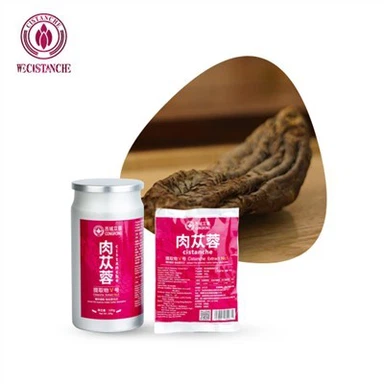
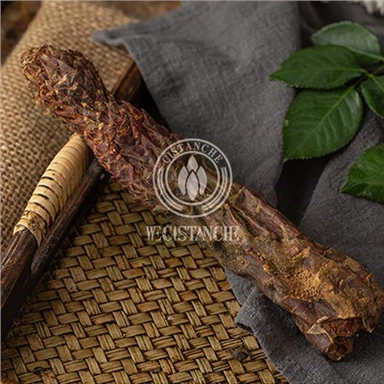
Constipation is a common gastrointestinal disease. The global prevalence of constipation in the elderly (>60 years old) is 18.9%[1], and the prevalence is often higher in women[2]. It is characterized by difficulty in defecation and frequent constipation. reduction and hardening of feces, etc., leading to physical discomfort and gastrointestinal dysfunction, and even inducing or aggravating gastrointestinal diseases, cardiovascular diseases [3], etc., seriously affecting the quality of life. Traditional Chinese medicine prescriptions are widely used to improve constipation and have good and definite clinical effects [4,5]. The Angelica and Cistanche deserticola fiber compound used in this study is prepared from Cistanche deserticola, Angelica sinensis, wheat fiber, and xylooligosaccharides. Cistanche deserticola and Angelica sinensis are two commonly used traditional Chinese medicines in laxatives, which have the effect of regulating intestinal function and improving constipation. [6-9], two traditional Chinese medicines have the same origin as medicine and food in my country. Their combined use can achieve the effect of replenishing qi and blood and harmonizing yin and yang. Wheat fiber is rich in insoluble and soluble dietary fiber, which can promote intestinal peristalsis and defecation, and is often used as an auxiliary drug to treat constipation; xylo-oligosaccharide is a functional oligosaccharide that can regulate intestinal flora, thereby stimulating intestinal peristalsis. , increase the moistness of feces [10], combine the four flavors, and treat the root cause of the disease. This study aimed to evaluate the efficacy of this angelica and cistanche deserticola fiber compound on constipated mice and explore its possible mechanism of action.

Materials and Methods
Experimental animals: 40 specific pathogen-free (SPF) grade male Kunming mice, 4 to 5 weeks old, were purchased from Beijing Weitong Lihua Experimental Animal Technology Co., Ltd., license number SCXK (Guangdong) 2021-0011, The ambient temperature is 22 ± 2 ℃, the humidity is 50% ± 10%, and the day and night cycle is 12 h/12 h. The experimental protocols and procedures complied with the ethical principles of animal use and care and were approved by the Animal Experimentation Ethics Committee of Jinan University.
The test substance: Angelica sinensis and Cistanche deserticola fiber compound preparation is made from Angelica Sinensis and Cistanche deserticola, which are extracted with water, concentrated, dried, and crushed to obtain a dry paste powder (the paste yield is 52.95%). The dry paste powder is mixed with wheat fiber and xylo-oligosaccharide for later use. Angelica sinensis (batch number 230404CP108) and Cistanche deserticola (batch number 230303CP109) were purchased from Hebei Wanxiu Pharmaceutical Co., Ltd., and were tested to comply with the 2020 edition of the Chinese Pharmacopoeia. Xylo-oligosaccharides were purchased from Shandong Bailong Chuangyuan Biotechnology Co., Ltd. The batch number is 20210829026, and the inspection complies with GB/T35545; the wheat fiber comes from J. Rettenmaier & Söhne GmbH + Co KG, and the batch number is 07501230126. Based on a 60 kg adult, the recommended dosage of angelica and cistanche fiber compound for humans is 7.118 g·d-1, of which the dosage of wheat fiber is 3.5g·d-1. The compatibility of this compound is angelica: cistanche: wheat fiber: xylooligosaccharides = 2:2:3:2 (the dosage of decoction pieces is based on the crude drug). Take 30 times the recommended human dosage as the high-dose group and 5 times the recommended human dosage as the low-dose group, respectively 3.6 and 0.6 g·kg-1·d-1. Prepare a suspension with pure water, mix well, and set aside.
Drugs and Reagents Loperamide Hydrochloride (loperamide, LOP), specifications: Each tablet contains loperamide hydrochloride
Amine 2 mg, 12 capsules/box, product batch number: MIJ3102, purchased from Xi'an Janssen Pharmaceutical Co., Ltd.; Mosapride Citrate Tablets (Quali), specifications: Each tablet contains 5 mg of Mosapride Citrate, 24 tablets/box, product batch number: 25220603, purchased from Lunan Beite Pharmaceutical Co., Ltd.; activated carbon powder, specification: 200 mesh brown powder, batch number A805337, purchased from Shanghai McLean Biochemical Technology Co., Ltd.; gum arabic, specification: powder, batch number A108975, purchased from Shanghai Aladdin Biochemical Technology Co., Ltd.
Absolute ethanol (Tianjin Damao Chemical Reagent Factory, 64-17-5); Ammonium persulfate (Shanghai McLean Biochemical Technology Co., Ltd., A6295-500g); Tris-Base (FD2010), 5× loading buffer (FD002) , β-actin antibody (FD0060), goat anti-rabbit secondary antibody (FDR007), goat anti-mouse secondary antibody (FDM007), and ECL color development kit (FD8020) were all purchased from Hangzhou Fude Biotechnology Co., Ltd.; RIPA lysis buffer ( Shanghai Biyuntian Biotechnology Co., Ltd., P0013B); 4% paraformaldehyde (Biosharp Company, BL539A); Immunohistochemistry kit (Jiangsu KGI Biotechnology Co., Ltd., KGOS60); bicinchoninic acid (BCA) Protein quantification kit (Thermo Fisher Scientific, SLZ60212); motilin (MTL), gastrin (GAS), and inflammatory factors interleukin-1β (IL-1β), tumor necrosis factor α ( tumor necrosis factor-α, TNF-α) ELISA kit (Shanghai Enzyme Biotechnology Co., Ltd., YJ201829, YJ037432, YJ002095, YJ301814); aquaporin 3 (aquaporin 3, AQP3) antibody (Affinity Company, AF5222); c -Kit antibody (Cell Signaling Technology, 3074S).

Instrument: Super pure water meter (Millipore Company, USA, Milli Q); Electronic balance (Sartorius, Germany)
The company, BS224S); Electronic analytical balance (Shanghai Benpu Instrument Technology Co., Ltd., FA2204N); High-speed refrigerated centrifuge (Sigma Company, Germany, 3K15); Microplate reader (Thermo Company, USA, Multiskan Mk 3); Paraffin microtome (Leica, Germany) Company, RM2255); Constant temperature metal bath (Shanghai Yiheng Technology Co., Ltd., TU-100C); Fully automatic sample rapid grinder (Shanghai Jingxin Technology Co., Ltd., JXFSTPRP-24); Electrophoresis instrument (Beijing Liuyi Biotechnology Co., Ltd., DYY-6C); scanning microscope (Precipoint Company, Precipoint M8); chemiluminescence imaging system (Shanghai Tianneng Technology Co., Ltd., Tanon 5200).
Grouping and model establishment: 40 mice were adaptively raised for 5 days and then randomly divided into negative control groups.
(control), model group (LOP), compound high and low dose groups (LOP+PF-H, OP+PF-L), positive control group (mosapride citrate, LOP+MOS). At 9 to 10 am every day, all groups except the negative control group were given 10 mg·kg-1 loperamide hydrochloride by gavage to establish a mouse constipation model, and the negative control group was given an equal amount of pure water by gavage. From 14 to 15 hours, the compound high-dose and low-dose groups were given compound 3.6 and 0.6 g·kg-1 respectively, and the positive control group was given mosapride citrate (MOS) 5 mg·kg-1.
, the negative control group and the model control group were given equal amounts of pure water by gavage for 14 consecutive days.
The status and feces characteristics of mice were observed and recorded during the drug intervention period. The basic status and feces of mice in each group were recorded.
Characters, weigh 3 times a week and adjust dosage. On days 3, 7, 10, and 14 after administration, 3 to 4 pellets of fresh feces from each mouse were collected, weighed immediately, and recorded as wet weight, dried in an oven, and recorded as dry weight, and the fecal moisture content was calculated. Calculate fecal moisture content (%) = (wet weight − dry weight)/wet weight × 100%.
The determination of small intestinal propulsion function was carried out according to the experimental methods required by the reference literature [11] and "Methods for Testing and Evaluation of Functional Functions of Health Foods (2023 Edition)". After the last dose, mice in each group were fasted and water-free for 16 hours. Model group, compound formula The high- and low-dose groups and the positive control group were given loperamide hydrochloride suspension (10 mg·kg-1) by gavage, and the negative control group was given an equal amount of pure water by gavage. 0.5 h later, the compound high-dose and low-dose groups and the positive control group were given ink (containing 5%) containing the corresponding test sample doses (3.6 g·kg-1, 0.6 g·kg-1, 5 mg·kg-1) respectively. (activated charcoal powder, 10% gum arabic), and equal amounts of ink were administered to the negative and model groups. The animals were killed immediately after 0.5 h by cervical dislocation, and the "total length of the small intestine" and "ink advancement length" were measured. Calculate the ink advancement rate = ink advancement length (cm)/total length of small intestine (cm) × 100%.

To detect the levels of MTL, GAS, TNF-α, and IL-1β in the serum, blood was taken from the mouse eyeballs, centrifuged at 4°C, 3 500 r·min-1 for 10 minutes, the upper serum was taken, and the MTL and GAS in the mouse serum were determined according to the ELISA kit. and TNF-α, IL-1β levels.
H&E detects pathological changes in colon tissue. The colon of mice is washed with normal saline and incubated in 4% paraformaldehyde.
They were fixed in aldehyde, embedded routinely after 24 hours, sectioned, baked, and H&E stained, and the pathological changes of the colon tissue were observed under a light microscope.
The immunohistochemical method was used to detect the expression of AQP3 and c-Kit in colon tissue. Colon tissues of mice from each group were collected.
Paraffin sections, dewaxing, hydration, antigen retrieval, blocking endogenous catalase, blocking with 2% goat serum, adding AQP3 and c-Kit antibodies respectively, and incubating overnight at 4°C, phosphate buffered saline, PBS) for 5 min Hematoxylin counterstaining, gradient ethanol dehydration, xylene transparency, neutral gum sealing, scanning under a scanning microscope, and using Image J software to analyze the results.
Western blot method was used to detect the expression of AQP3 and c-Kit in colon tissue. Take 10 mg of frozen mouse colon tissue and place it in a centrifuge tube with 150 μL of RIPA lysis buffer containing 1% protease inhibitor. Use a rapid grinder to homogenize the tissue. , centrifuge the homogenate with a low-temperature centrifuge at 10 000 r·min-1 for 10 minutes, take the supernatant, determine the protein concentration by BCA protein quantification method, mix it with the loading buffer, denature the protein, and analyze the results according to each sample. 30 μg protein was loaded, subjected to SDS-PAGE electrophoresis, wet transfer to membrane, and then blocked with 5% skimmed milk powder at room temperature for 1.5 h, washed three times with TBST, placed the primary antibody on a shaker and incubated overnight 4°C, then removed, and washed with TBST buffer Wash 3 times with solution, incubate with secondary antibody for 1 h at room temperature and then wash 3 times with TBST. ECL chemiluminescence working solution is used for color development, and a fully automatic chemiluminescence imaging system is used for development. Image J software is used to analyze the results.
Statistical methods All data involved in this experiment are expressed in the form of mean ± standard deviation. GraphPad Prism was used to plot experimental data, and comparison between groups was performed using one-way ANOVA or two-way ANOVA; when differences between groups were statistically significant, the least significant difference (LSD) method was used. ) Make pairwise comparisons between groups, and P < 0.05 is considered a statistically significant difference.