From Despair To Hope: Cistanche Deserticola Phenylethanoid Glycosides CPhGs Light Up The Light Of Life For Cancer Patients!
Sep 06, 2024
On average, over 10000 people are diagnosed with cancer every day, with about 9 people diagnosed with cancer every minute;
On average, over 7000 people die from cancer every day, and about 5 people die from cancer every minute.
This shocking set of data was jointly calculated by the National Cancer Center and the International Agency for Research on Cancer (IARC), and released in February 2024 as the 2022 burden of malignant tumors in China.
The data shows that there are approximately 4.8247 million new cases and a total of approximately 2.5742 million deaths. Among them, lung cancer has the highest incidence rate and mortality.
Moreover, the incidence rate of cancer is also gradually getting younger. Data shows that the incidence rate has increased significantly since the age of 35-40, reaching its peak at the age of 80-85. After 55, the incidence rate of men is significantly higher than that of women.
Age distribution of incidence rate of malignant tumors in China in 2022
Do you feel a tingling sensation on your scalp when you see this?

Cistanche deserticola-Antitumor
01 | Why is cancer so frightening to talk about?
Because in most people's understanding, cancer equals death.
Even many people often confuse tumors with cancer. When they see words such as "tumor" and "nodule" on their physical examination report, they feel like the sky is falling, as if they have already seen death beckoning. Tumors are not equal to cancer.
Tumors are generally divided into two categories: benign and malignant.
Benign tumors grow slowly, do not metastasize, and can usually be resolved by surgery without recurrence, causing minimal harm to the body.
Malignant tumors are what we often refer to as cancer.

Desert ginseng-Antitumor
02 | Where is the 'evil' of malignant tumors?
Firstly, malignant tumors can proliferate infinitely.
Normal cells are regulated by genes, and there are strict regulations on how much they should grow, what they should look like, where they should grow, and when they should undergo apoptosis.
However, a very small number of "rebellious" cells do not obey, grow at will, and not only fail to function but also affect the work of other normal cells. We call these uncontrolled and infinitely proliferating cells cancer cells.
Cancer cells are so arrogant that the immune system can't sit still.
The immune system recognizes, monitors, and ultimately "eliminates" the vast majority of cancer cells, but unfortunately, there are occasional cases of missed cells.
These cancer cells that escape by chance will disguise themselves through various methods and lurk, entering the immune balance stage, keeping the body in a subtle state of balance without any abnormal reactions.
When the right opportunity arises, cancer cells will "make a comeback", break this surface balance, successfully escape from the hands of the immune system, and achieve immune escape.
As time goes by, cancer cells grow longer and more, and their original territory can no longer accommodate them. So cancer cells began to invade nearby tissues and seize others' territory.
After expanding their territory, the ambitions of cancer cells also grew stronger. They will send out "scouts" to "lurk" in lymphatic vessels, blood vessels, or body cavities, following the blood flow and lymphatic vessels to other parts or organs, taking root and sprouting, and continuing the bloodline.
This is the invasiveness and metastasis of cancer cells.
Like normal cells, cancer cells also require sufficient nutrition and oxygen supply to survive. But what if there are too many cancer cells and the nutrients in the blood are not evenly distributed?
Cancer cells have come up with a solution, which is to create more blood vessels. So they secrete some cytokines that can turn on the switch of angiogenesis, and through a series of complex processes, induce angiogenesis, further providing nutrients for the wild growth of cancer cells.

effects of cistanche-Antitumor
03 | If diagnosed, does it mean there is no hope?
Once afflicted with malignant tumors, it will pose a certain threat to health, but it does not mean that it is hopeless. Do not equate cancer with death.
At different times and for different diseases, there are corresponding treatment methods, such as surgery, chemotherapy, radiotherapy, targeted therapy, biological therapy, and so on.
With the advancement of technology, scientists are also exploring and developing new drug candidate compounds that have strong anti-tumor effects, minimal adverse reactions, and are not easily resistant to drugs, especially bioactive molecules derived from traditional Chinese medicine.
04 | Cistanche deserticola phenylethanoid glycosides (CPhGs)
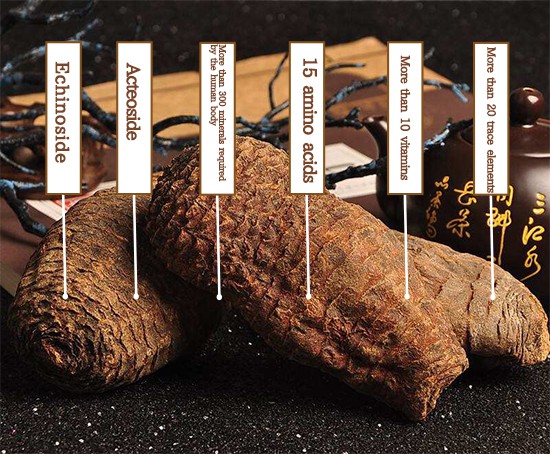
Main Chemical Constituents of Cistanche deserticola
Modern pharmacological research has found that Cistanche deserticola phenylethanol glycosides (CPhGs) can enhance immunity and anti-tumor effects by affecting multiple cellular signaling pathways and regulating gene expression.
CPhGs are the main active ingredients of the traditional Chinese medicine material Cistanche deserticola. Cistanche deserticola is known as the "Desert Ginseng" and is one of the "Nine Immortal Herbs of China".
Cistanche deserticola was first used to treat infertility, impotence, and other conditions. At present, in clinics, CPhGs are also used as adjunctive therapy drugs for liver cancer, breast cancer, ovarian cancer, and other cancers, and have good effects.
How do CPhGs combat tumors?

Phenylethanol glycoside is the main active component of Cistanche deserticola
Click here to view Cistanche Enhance Immunity products
【Ask for more】 Email:cindy.xue@wecistanche.com / Whats App: 0086 18599088692 / Wechat: 18599088692
① Inhibit tumor cell proliferation and induce apoptosis
CPhGs induce tumor cell apoptosis through various signaling pathways, including activation of cysteine protease (Cas pase), downregulation of Bcl-2 family proteins, upregulation of Bax, inhibition of PI3K/Akt signaling pathway, and inhibition of tumor cell proliferation.
② Inhibit tumor cell migration and invasion
CPhGs can inhibit tumor migration and invasion in various cells such as human lung cancer and liver cancer, which is related to their ability to inhibit extracellular matrix metalloproteinases (MMPs) and proteases.
③ Promote immune function
CPhGs can enhance the immune function of the body, such as increasing the activity of NK cells and T cells, improving lymphocyte proliferation and activation, enhancing humoral immunity, etc., thereby accurately identifying and clearing tumor cells, inhibiting their growth and metastasis.
④ Anti-angiogenesis
Angiogenesis is one of the key processes in tumor development, and CPhGs inhibit tumor cell angiogenesis and nutrient supply by blocking the expression and secretion of vascular endothelial growth factor (VEGF), ultimately achieving anti-cancer effects.
Overall, with the revival of traditional Chinese medicine culture, traditional Chinese medicinal herbs such as Cistanche have undergone a complete transformation and are no longer confined to the records of medical classics such as "Compendium of Materia Medica" and "Huangdi Neijing". They play an increasingly important role in anti-tumor, cardiovascular health maintenance, and immune enhancement, and their mechanisms of action are gradually becoming clearer. When used in combination with other chemical drugs, they can also improve treatment efficacy.