Cistanche Polysaccharides: The Nemesis Of Lung Cancer Cells?
Dec 03, 2024
1, Research background on polysaccharides from Cistanche deserticola and lung cancer cells
Lung cancer, as a serious threat to human health, has always been an important topic in the medical field for its treatment. In recent years, research on the effects of natural medicines on the biological behavior of lung cancer cells has gradually increased. Among them, the effect of polysaccharides from Cistanche deserticola on lung cancer cell line A549 has attracted widespread attention.
At present, some progress has been made in the study of the effects of polysaccharides from Cistanche deserticola on the biological behavior of lung cancer cells. Studies have shown that polysaccharides from Cistanche deserticola can inhibit the proliferation, colony formation, migration, and invasion of lung cancer cell line A549, and promote cell apoptosis in a dose-dependent manner. In addition, polysaccharides from Cistanche deserticola may exert their inhibitory effect on lung cancer cells by reducing the expression of LINC01410.
Cistanche polysaccharides also have significant anti-tumor effects on Lewis lung cancer in pure C57/BL mice and sarcoma S180 in ICR mice, while increasing the activity of natural killer cells (NKC) and interleukin-2 (IL-2). These research results provide a theoretical basis for the application of polysaccharides from Cistanche deserticola in the treatment of lung cancer.

effects of cistanche-antitumor
As a professional journal in the scientific research field of traditional Chinese medicine, traditional Chinese patent medicines and simple preparations also provides a platform for the research of Cistanche deserticola polysaccharide on lung cancer cells. The relevant research results published in it further enrich our understanding of the mechanism of action of polysaccharides in Cistanche deserticola.
In summary, the effect of polysaccharides from Cistanche deserticola on the biological behavior of lung cancer cells has important research value, providing new ideas and methods for the treatment of lung cancer.
2, The specific effects of polysaccharides from Cistanche deserticola on lung cancer cells

effects of cistanche-antitumor
(1) Inhibit cell proliferation
Cistanche polysaccharides have a significant inhibitory effect on the proliferation of lung cancer cell line A549, and it is dose-dependent. Research has shown that when lung cancer cells A549 are divided into a control group and different concentrations of Cistanche polysaccharide groups, the proliferation rate of A549 cells gradually decreases with the increase of Cistanche polysaccharide concentration. This result provides important evidence for the application of polysaccharides from Cistanche deserticola in the treatment of lung cancer.
(2) Inhibit clone formation
Cistanche polysaccharides can effectively inhibit the cloning ability of lung cancer cells. Through cloning experiments, it was found that compared with the control group, the number of lung cancer cell clones significantly decreased after treatment with polysaccharides from Cistanche deserticola. This indicates that polysaccharides from Cistanche deserticola can hinder the clonal formation of lung cancer cells, thereby inhibiting tumor growth.
(3) Promote cell apoptosis
Cistanche polysaccharides have a promoting effect on apoptosis of lung cancer cells. The results of flow cytometry analysis showed that the apoptosis rate of A549 cells significantly increased after treatment with polysaccharides from Cistanche deserticola. This may be due to the fact that polysaccharides from Cistanche deserticola can regulate apoptosis related signaling pathways within cells, inducing apoptosis in lung cancer cells.
(4) Inhibit migration and invasion
Cistanche polysaccharides have a significant inhibitory effect on the migration and invasion ability of lung cancer cells. The Transwell assay results showed that the migration and invasion ability of A549 cells significantly decreased after treatment with polysaccharides from Cistanche deserticola. This may be because polysaccharides from Cistanche deserticola can affect the expression of adhesion molecules and the activity of extracellular matrix degrading enzymes in lung cancer cells, thereby inhibiting the migration and invasion of lung cancer cells.

Desert ginseng-Improve immunity
3, Exploration of the mechanism by which polysaccharides from Cistanche deserticola affect lung cancer cells
(1) Reduce LINC01410 expression
One of the mechanisms by which polysaccharides from Cistanche deserticola affect the biological behavior of lung cancer cells may be achieved by reducing the expression of LINC01410. Previous studies have shown that polysaccharides from Cistanche deserticola can inhibit the expression of LINC01410 mRNA in lung cancer cells A549 in a dose-dependent manner. After inhibiting the expression of LINC01410, the growth, migration, and invasion ability of A549 cells were inhibited. This suggests that polysaccharides from Cistanche deserticola may inhibit the activity, colony formation, migration, and invasion ability of lung cancer cells, and promote cell apoptosis by reducing the expression of LINC01410.
(2) Increase natural killer cell and interleukin-2 activity

Desert ginseng-Improve immunity
Click here to view Cistanche Enhance Immunity products
【Ask for more】 Email:cindy.xue@wecistanche.com / Whats App: 0086 18599088692 / Wechat: 18599088692
Cistanche polysaccharides can significantly increase the activity of natural killer cells (NKC) and interleukin-2 (IL-2), and have an impact on lung cancer cells. Experimental results have shown that continuous administration of polysaccharides from Cistanche deserticola for 10 days has a significant anti-tumor effect on Lewis lung cancer in pure C57/BL mice and sarcoma S180 in ICR mice. At the same time, it was found that the drug can significantly increase the activity of natural killer cells (NKC) and interleukin-2 (IL-2). Cistanche polysaccharides may enhance the immune function of the body by increasing the activity of NKC and IL-2, thereby exerting inhibitory effects on lung cancer cells.
4, Prospect of Cistanche polysaccharides in the treatment of lung cancer
Cistanche polysaccharides have shown great potential in the treatment of lung cancer, bringing new hope for future lung cancer treatment.
From current research, polysaccharides from Cistanche deserticola have significant inhibitory effects on lung cancer cell line A549, including inhibiting cell proliferation, colony formation, migration, and invasion, while promoting cell apoptosis. These mechanisms of action provide a solid theoretical basis for their application in the treatment of lung cancer.
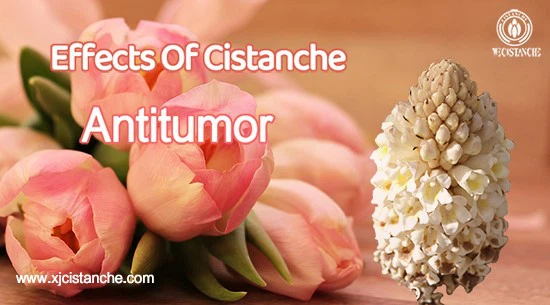
Benefits of cistanche tubulosa-Antitumor
In the future, with in-depth research on the mechanism of action of polysaccharides from Cistanche deserticola, more effective lung cancer treatment drugs are expected to be developed. On the one hand, further exploration can be conducted on the combined application of polysaccharides from Cistanche deserticola with other treatment methods, such as chemotherapy, radiotherapy, immunotherapy, etc., to improve the therapeutic effect of lung cancer. On the other hand, optimizing the extraction process and formulation technology of polysaccharides from Cistanche deserticola can improve its bioavailability and stability, enabling it to better exert its therapeutic effects.
In addition, polysaccharides from Cistanche deserticola may also inhibit the development of lung cancer by regulating the body's immune function. Research has shown that polysaccharides from Cistanche deserticola can increase the activity of natural killer cells (NKC) and interleukin-2 (IL-2), enhancing the body's immune function. In the future, we can conduct in-depth research on the regulatory mechanism of Cistanche polysaccharides on the immune system and develop lung cancer treatment strategies based on immune regulation.
In summary, polysaccharides from Cistanche deserticola have broad application prospects in the treatment of lung cancer and are worthy of further in-depth research and development.