Hotan Uyghur Medicine | Xinjiang Is Rich in Cistanche Deserticola, Which Is An Excellent Nourishing Medicinal Herb in Uyghur Medicine
Sep 04, 2023
Around the BC, with the prosperity of the Silk Road, trade, economic, and cultural exchanges between the Western Regions and the Central Plains became closer. Especially during the Western Han Dynasty, Han historian Zhang Qian visited the Western Regions twice, further promoting the communication relationship between the Western Regions and the Central Plains.
Zhang Qian not only engaged in political, economic, and cultural activities in the Western regions but also engaged in medical exchanges. He introduced advanced medical and health knowledge from the Central Plains to the Western Regions, while also bringing back the rich medical and health knowledge from the Western Regions to the Central Plains.

Chinese herb cistanche
The specialty plants of the Western Regions, such as pomegranate, cistanche, alfalfa, flax, scallions, and walnuts, have been introduced to the Central Plains. These plant medicinal materials from the Western Regions have enriched the content of traditional Chinese medicine.
Uyghur medicine, abbreviated as Uyghur medicine or Uyghur medicine, is a medical system created by the Uyghur ethnic group in Xinjiang, China, through their long medical practice and continuous struggle against diseases. Having rich experience and unique theories is one of the important components of traditional Chinese medicine.

Chinese herb cistanche
In history, this medicine has gradually formed a relatively complete medical theoretical system and unique clinical treatment experience through extensive exchanges with brother ethnic medicine. Uyghur medicine, like other ethnic medicine, is an important component of the treasure trove of Chinese medicine and a precious cultural heritage of our country.
According to the "Shennong Materia Medica Classic", at that time, there were already red flowers, cistanche, pomegranate, aloe vera, sunflower, fruit kernels, antelope horn, alfalfa, sesame, and other herbs originating from the Western Regions in mainland China, which were widely used for medicinal treatment.
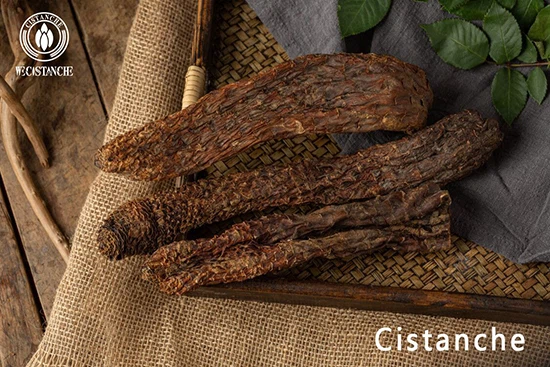
Desert living cistanche tubulosa
Click here to view Cistanche products
【Ask for more】 Email:cindy.xue@wecistanche.com / Whats App: 0086 18599088692 / Wechat: 18599088692
In 1972, 78 volumes of medical brochures were unearthed from the Han Tomb in Wuwei, detailing the causes, names, pathologies, symptoms, prescriptions, dosage, dosage forms, and other texts of various diseases. Among them were commonly used medicines in ancient Uyghur medicine, such as camel perilla (butter), salt, and "white sheep".
As is well known, Xinjiang Hotan is rich in Cistanche deserticola, so various ethnic groups have had a deep understanding of this magical medicine for a long time.
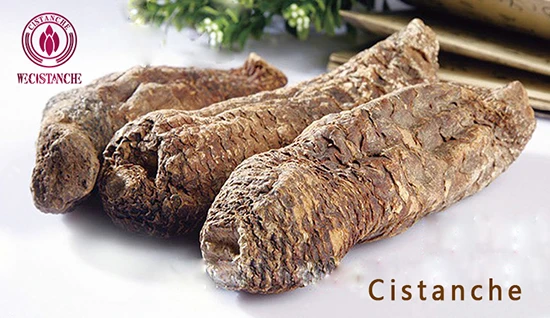
superman herbs cistanche
Cistanche deserticola is known as "Bu Re Sa Mu Hui Yi Ao" in Uyghur medicine, and Uyghur doctors also list it as a nourishing medicine. Nowadays, people attach great importance to the development of ethnic medicine and have used modern technological means to study the infrared fingerprint of Cistanche tubulosa in Uyghur medicine.
In the wild, because Cistanche deserticola is the favorite food for rabbits, the Uyghur people call it "Tushi Ganzhai Daike" (meaning yellow radish eaten by rabbits).
Uyghur people have long recognized the health value of Cistanche deserticola and often drink it by soaking it in tea and wine or adding it to dishes for consumption. There are many centenarians with white hair and youthful appearance here, with the highest longevity rate in the country. The centenarian village was born in Hotan.
But it is important to pay attention to the large and small mining, and the dense and sparse mining. There is also a certain amount of excavation in autumn, but the yield is relatively low, and it should be mainly in spring. The harvested Cistanche deserticola should have its inflorescence or head removed to avoid consuming nutrients from the stem. Afterwards, it should be dried on a clean beach. After more than a month, the Cistanche deserticola should change from yellow to brownish flesh, which is called Sweet Big Cloud. After excavation, the meat and ground stems are turned over and dried in the hot summer sun before packaging and transportation.
The harvesting and hollowing period of the autumn-growing tubular cistanche is from September to October. Its size is slightly smaller than that of the spring tubular cistanche, and its water content is similar to that of the spring tubular cistanche. Collected Cistanche deserticola needs to be cleaned of impurities, soaked in clean water, changed water 1-2 times a day, then sliced (sliced) and dried in the sun.

In Uyghur medicine, many dietary remedies use Cistanche herb, such as Xiongfeng Pot.
[ Ingredients ] 10g Cistanche deserticola, 10g Saussurea involucrata, 10g Lycium barbarum, 150g Chinese yam, one Roast squab, 50g scallion white cut into sections, a little shredded ginger, and some salt and soy sauce.
【 Preparation 】 Add an appropriate amount of oil to the pot, heat it, pour in yams, stir fry until golden brown, filter out the remaining oil, and set aside. The Roast squab is slaughtered, depilated, and eviscerated, then cut into small pieces. The cistanche is soaked in hot water and sliced. It is mixed with Chinese wolfberry and Chinese yam in a casserole. Add a small bowl of water, some scallions, salt, and soy sauce, and simmer for 15 minutes. The Roast squab is crispy and rotten.
【 Function 】 Antidote and cure scabies. Tonify the kidney and essence, nourish the liver improve eyesight, and resist aging. Indications: Deficiency and weakness, soreness and weakness in the waist and knees, and infertility in women.
Cistanche has been used as a medicine in China for over 1800 years, and its magical effects are widely recognized. Not only the Han ethnic group, but also the Uyghur, Kazakh, Mongolian, and Tibetan ethnic groups consider it an excellent tonic medicine.