Kidney Patients Should Not Only Focus On Lowering Creatinine, But Also Need To Understand The Two Toxins That Accelerate The Progression Of Kidney Disease!
Sep 02, 2024
Chronic kidney disease (CKD) is a major chronic disease with high incidence, poor prognosis, and complex complications, which poses a great threat to our human health.
When kidney disease develops to a certain stage, patients will pay close attention to the changes in creatinine values, believing that renal virus toxins are creatinine, and the culprit of physical discomfort is creatinine. The main purpose of treatment is to remove creatinine from the body.

Click to Cistanche for kidney disease
Reducing creatinine is certainly important, but here I would like to remind kidney friends that they must not ignore the existence of another type of toxins-heterogeneous toxins!
Indoxyl-sulfate (IS) and p-cresol sulfate (PCS) are two typical estrogenic uremic toxins, which are produced by the co-metabolism of intestinal flora and the host. As chronic kidney disease progresses, enterogenic uremic toxins such as IS and PCS in chronic kidney disease patients will continue to accumulate, and will further accelerate the progression of chronic kidney disease (CKD).
1. Indoxyl sulfate (IS)
IS is a protein-bound uremic toxin and is a key uremic toxin that promotes the progression of CKD. Animal experimental studies have shown²´³ that indoxyl sulfate (IS) can induce renal tubular cells into an oxidative stress state, accelerate renal tubular cell damage and apoptosis, and lead to renal interstitial fibrosis and glomerular sclerosis.

2. p-cresyl sulfate (PCS)
p-cresyl sulfate (PCS) is the most studied enterogenic uremic toxin. The intestine and liver are important sites for PCS metabolism in the body. Anaerobic bacteria in the intestine can decompose protein in food into tyrosine, and further convert tyrosine into 4-hydroxyphenylacetic acid. 4-hydroxyphenylacetic acid is decarboxylated by intestinal bacteria such as Clostridium difficile to produce PCS precursor p-cresol (PC). Most p-cresol is absorbed by the intestinal mucosa and converted into PCS by sulfotransferase (SULT) in the intestinal epithelium or liver. PCS is mainly secreted into the renal tubular lumen through OAT on the side of the renal tubular basement membrane and excreted through urine.
Under normal renal function, PCS can be completely excreted by the kidneys, and the PCS content in the blood is extremely low. However, due to impaired renal excretion function in CKD patients, PCS cannot be fully excreted by the kidneys, and the PCS concentration in the blood circulation increases significantly. A large number of PCS molecules accumulated in the body are transported into renal tubular cells under the action of renal organic anion transporters (OAT1 and OAT3), activating the PKC/PI3K-Nox4-ROS signaling pathway, generating a large number of oxygen free radicals, inducing oxidative stress response in the kidney, causing tubular damage and renal interstitial fibrosis.
PCS accumulation in the body can accelerate the progression of CKD, induce cardiovascular complications in CKD patients, affect prognosis, and increase the mortality rate of CKD patients.
Of course, there are more than the two types of enterogenic toxins mentioned above. By explaining the two common estrogenic toxins, I hope to attract the attention of kidney friends to these types of toxins.

So, the current methods for removing enterogenic uremic toxins mainly include lifestyle intervention, probiotic regulation, adsorbent adsorption, Chinese medicine enema, hemodialysis, peritoneal dialysis, and kidney transplantation.
How Does Cistanche Treat Kidney Disease?
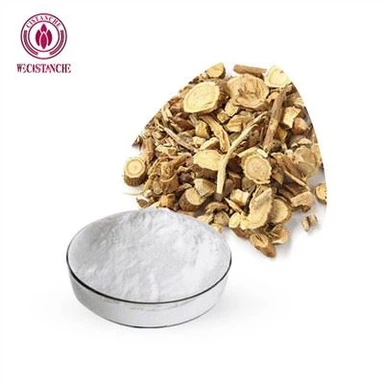
Cistanche is a traditional Chinese herbal medicine used for centuries to treat various health conditions, including kidney disease. It is derived from the dried stems of Cistanche deserticola, a plant native to the deserts of China and Mongolia. The main active components of cistanche are phenylethanoid glycosides, echinacoside, and acteoside, which have been found to have beneficial effects on kidney health.
Kidney disease, also known as renal disease, refers to a condition in which the kidneys are not functioning properly. This can result in a buildup of waste products and toxins in the body, leading to various symptoms and complications. Cistanche may help treat kidney disease ase through several mechanisms.
Firstly, cistanche has been found to have diuretic properties, meaning it can increase urine production and help eliminate waste products from the body. This can help relieve the burden on the kidneys and prevent the buildup of toxins. By promoting diuresis, cistanche may also help Reduce high blood pressure, a common complication of kidney disease.
Moreover, cistanche has been shown to have antioxidant effects. Oxidative stress, caused by an imbalance between the production of free radicals and the body's antioxidant defenses, plays a key role in the progression of kidney disease. ies help neutralize free radicals and reduce Oxidative stress, thereby protecting the kidneys from damage. The phenylethanoid glycosides found in cistanche have been particularly effective in scavenging free radicals and inhibiting lipid peroxidation.
Additionally, cistanche has been found to have anti-inflammatory effects. Inflammation is another key factor in the development and progression of kidney disease. Cistanche's anti-inflammatory properties help reduce the production of pro-inflammatory cytokines and inhibit the activation of inflammation mandatory pathways, thus alleviating inflammation in the kidneys.
Furthermore, cistanche has been shown to have immunomodulatory effects. In kidney disease, the immune system can be dysregulated, leading to excessive inflammation and tissue damage. Cistanche helps regulate the immune response by modulating the production and activity of immune cells, such as T cells and macrophages. This immune regulation helps reduce inflammation and prevent further damage to the kidneys.

Moreover, cistanche has been found to improve renal function by promoting the regeneration of renal tubes with cells. Renal tubular epithelial cells play a crucial role in the filtration and reabsorption of waste products and electrolytes. In kidney disease, these cells can be damaged, leading to damaged renal function. Cistanche's ability to promote the regeneration of these cells helps restore proper renal function and improve overall kidney health.
In addition to these direct effects on the kidneys, cistanche has been found to have beneficial effects on other organs and systems in the body. This holistic approach to health is particularly important in kidney disease, as the condition often affects multiple organs and systems. che has been shown to have protective effects on the liver, heart, and blood vessels, which are commonly affected by kidney disease. By promoting the health of these organs, cistanche helps improve overall kidney function and prevent further complications.
In conclusion, cistanche is a traditional Chinese herbal medicine used for centuries to treat kidney disease. Its active components have diuretic, antioxidant, anti-inflammatory, immunomodulatory, and regenerative effects, which help improve renal function and protect the kidneys from further damage. , cistanche has beneficial effects on other organs and systems, making it a holistic approach to treating kidney disease.