Mechanistic Study Of Cistanche-Based Herbal Formula in The Treatment Of Benign Prostatic Hyperplasia: A Network Pharmacology And Experimental Validation Approach Ⅱ
Jun 17, 2025
2. Results
2.1 Potential Therapeutic Targets of Cistanche Compound in Treating BPH
A total of 218 targets related to the active ingredients of the Cistanche-based formulation were retrieved from databases, and 42 additional targets were identified through literature mining, yielding 260 unique targets. Meanwhile, BPH-related disease targets were collected from GeneCards (843), CTD (951), DrugBank (7), and DisGeNET (37), resulting in 1,584 unique BPH-associated targets after deduplication.
By intersecting the compound-related targets with BPH-related targets, 125 potential therapeutic targets for Cistanche in the treatment of benign prostatic hyperplasia (BPH) were identified. The Venn diagram is shown in Figure 1.

Cistanche Based Herbal Formula With High Active Ingredient in the treatment of benign prostatic hyperplasia (BPH)
Go Product Listing Get More Details
2.2 PPI Network Analysis of Potential Targets
The protein-protein interaction (PPI) network of the 125 potential targets is illustrated in Figure 2. In this network, thicker and darker edges indicate stronger interactions between targets, while larger and darker nodes signify greater centrality and relevance to the disease.
Key targets with high connectivity and relevance included AKT1, TNF, TP53, IL1β, EGFR, CASP3, and PTGS2, which may play major roles in the mechanism of action of Cistanche against BPH.

2.3 GO and KEGG Pathway Enrichment Analysis
Figure 3 presents the GO and KEGG enrichment results. Larger dots indicate higher enrichment levels, while color intensity reflects statistical significance.
GO analysis revealed that Cistanche may affect BPH via biological processes such as defense response to lipopolysaccharide, bacterial stimuli, and oxidative stress, as well as cellular components like the cytoplasm and extracellular space.
KEGG pathway analysis showed significant enrichment in IL-17, HIF-1, TNF, and PI3K-Akt signaling pathways, suggesting that inflammation, immune modulation, and cell proliferation/apoptosis are key mechanisms.
2.4 Herb-Compound-Target-Pathway Network Construction
As shown in Figure 4, the "herb-compound-target-pathway" network contains 172 nodes and 626 edges. Node size and color reflect the degree of connectivity.
The top 6 key compounds (by degree) were:
Luteolin
Apigenin
Plantain glycoside
Mangiferin
Shafotaxin
Isovitexin
These compounds originate from herbs commonly used in the formulation, with Cistanche derivatives like shafotaxin and isovitexin playing prominent roles.
Key pathways like IL-17, HIF-1, TNF, and PI3K-AKT were linked to core targets such as PTGS2, AR, CASP3, IL6, PTGS1, and AKT1. These targets showed strong associations with the active compounds, indicating multi-target and multi-pathway synergy.

2.5 Molecular Docking Verification
As shown in Figure 5A, 24 compound-target pairs had binding energies ≤ –6 kcal/mol, suggesting strong binding affinity.
Figure 5B illustrates the top 6 docking models. Highlights include:
PTGS2 showed strong binding with luteolin and apigenin.
AKT1 demonstrated good affinity with plantain glycoside, mangiferin, shafotaxin, isovitexin, luteolin, and apigenin.
This confirms the molecular basis for the interactions observed in pharmacological and pathway analyses.
2.6 Effects of Cistanche on Body Weight, Prostate Weight, and Prostate Index in BPH Rats
Throughout the experiment, no significant differences in body weight were observed among groups (P > 0.05), indicating the safety of the treatment.
Compared with the control group, the model group showed significantly increased prostate wet weight and prostate index (P < 0.01), confirming successful BPH induction.
Treatment with Cistanche compound (medium and high doses), as well as Qianlie Shutong, significantly reduced prostate weight and index (P < 0.05, P < 0.01), as shown in Table 1, suggesting that Cistanche inhibits prostate hyperplasia in BPH rats.

12% Acteoside Cistanche use intro
2.7 Histopathological Effects on Prostate Tissues
Figure 6 shows histological changes:
Control group: Normal prostate tissue architecture with flat or low columnar epithelium, uniform glandular lumens.
Model group: Significant hyperplasia, hypertrophic basal cells, thickened smooth muscle, irregular epithelial cells.
Cistanche-treated groups: Improved structure, reduced cellular proliferation, more regular glandular cavities, especially in medium and high-dose groups.

Supportive Service Of Wecistanche-The Contact Us To Get A Sample Or Wholesale Price
Email:wallence.suen@wecistanche.com
Whatsapp/Tel:+86 15292862950

2.8 Effects on Serum COX-2, VEGF, and PGE2 Levels
As shown in Table 2:
The model group had significantly elevated levels of COX-2, VEGF, and PGE2 (P < 0.01).
Treatment with Cistanche granules (medium and high doses) and Qianlie Shutong significantly reduced inflammatory markers (P < 0.05, P < 0.01).
This indicates that Cistanche exerts anti-inflammatory and anti-angiogenic effects, which may underlie its therapeutic action against BPH.
SEO Keywords: COX-2 VEGF PGE2 BPH, Cistanche anti-inflammatory, herbal modulation of cytokines
2.9 Effects of Cistanche Compound on AKT1, p-AKT1, PI3K, p-PI3K, COX-2, and VEGF Expression in Prostate Tissue
As shown in Figure 7, protein expression levels of p-AKT1, p-PI3K, PI3K, COX-2, and VEGF were significantly upregulated in the BPH model group compared with the control group (P < 0.05, P < 0.01). Treatment with Cistanche-based compound at medium and high doses significantly downregulated these protein levels (P < 0.05, P < 0.01), suggesting that Cistanche may exert anti-proliferative effects by modulating the PI3K/AKT inflammatory signaling cascade.
3. Discussion
Benign prostatic hyperplasia (BPH) is a common age-related urological condition in men. In traditional Chinese medicine (TCM), it is classified under syndromes such as "Long Bi" or "Jing Long", and is considered to be caused by Qi stagnation in the bladder and dysfunction of the Sanjiao (Triple Burner). Treatment principles typically involve tonifying the kidney, promoting urination, and activating blood circulation.
Although the exact mechanism of BPH pathogenesis remains unclear, current theories include hormonal imbalance, inflammation, growth factor overexpression, epithelial-stromal interactions, and apoptosis dysregulation [3,15]. Excessive proliferation and abnormal apoptosis of epithelial and stromal cells-driven by hormones and inflammation-are recognized as central pathological processes in BPH [16–18].
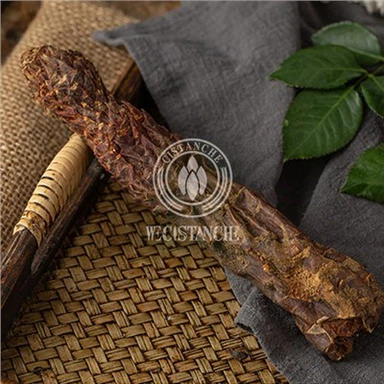
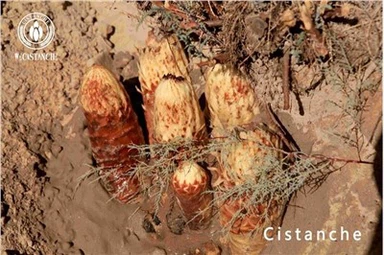
This study focused on a Cistanche-based herbal compound for the treatment of BPH. Cistanche (肉苁蓉) is a renowned Yang-tonifying herb in TCM, known for its kidney-reinforcing, anti-inflammatory, and prostate-nourishing properties. Previous studies have demonstrated its effects in improving urinary flow, reducing prostate size, and regulating androgen metabolism.
Network Pharmacology and Molecular Mechanism Insights
By integrating network pharmacology, we identified 125 overlapping targets between the active constituents of Cistanche and BPH-related genes. PPI network analysis highlighted AKT1, TNF, TP53, IL1β, EGFR, CASP3, and PTGS2 as central hub proteins.
The "herb-compound-target-pathway" network identified plantain glycoside, mangiferin, luteolin, apigenin, shafotaxin, and isovitexin as key bioactive compounds in the formula. These compounds showed strong interactions with core targets including PTGS2, AR, CASP3, IL6, PTGS1, and AKT1.
Molecular docking analysis confirmed favorable binding (binding energy ≤ –6 kcal/mol) between these compounds and the core targets, particularly:
PTGS2 with luteolin and apigenin
AKT1 with plantain glycoside, mangiferin, luteolin, apigenin, shafotaxin, and isovitexin
Key Signaling Pathways Involved
KEGG enrichment analysis revealed that the anti-BPH effects of Cistanche are closely associated with four key pathways:
IL-17 signaling pathway
HIF-1 signaling pathway
TNF signaling pathway
PI3K-AKT signaling pathway
Among them, PTGS2 (COX-2) and AKT1 were common nodes across all four pathways, suggesting they are pivotal regulatory targets in the Cistanche-mediated treatment of BPH.
PI3K/AKT Signaling and BPH Progression
The PI3K/AKT pathway is a well-established regulator of cell growth, proliferation, metabolism, and angiogenesis [19–20]. In BPH, abnormal activation of this pathway leads to excessive proliferation of prostate epithelial and endothelial cells.
PI3K acts as an upstream modulator, and AKT1 is the primary downstream effector.
PTGS2 (COX-2), a pro-inflammatory enzyme, is often overexpressed in BPH tissues, promoting PGE2 synthesis.
Elevated PGE2 levels stimulate VEGF expression, resulting in angiogenesis and tissue hyperplasia [21–22].
Our in vivo findings corroborate this mechanism: Cistanche administration downregulated p-AKT1, p-PI3K, COX-2, PGE2, and VEGF levels in prostate tissue and serum, thereby inhibiting cellular proliferation and vascular growth.\
Conclusion
In summary, the Cistanche-based herbal formulation exerts preventive and therapeutic effects against BPH through a multi-target, multi-pathway approach:
Active compounds like plantain glycoside, mangiferin, luteolin, apigenin, shafotaxin, and isovitexin
Targeting core proteins: AKT1, PTGS2, CASP3, IL6, AR
Modulating key signaling pathways: PI3K/AKT, TNF, IL-17, and HIF-1
Suppressing inflammatory mediators: COX-2, PGE2, VEGF
Inhibiting pathological angiogenesis and epithelial proliferation in the prostate
These findings provide a scientific basis for the use of Cistanche as a natural therapeutic agent for benign prostatic hyperplasia, highlighting its potential to serve as a low-toxicity, multi-functional alternative to conventional BPH therapies.