Ni Haixia: “When Kidney Qi Is Strong, Illnesses Disappear.” A Practical Way To Tonify Yang Qi
Aug 26, 2026
What to do when a man's sperm count is too low?
Ni Haixia: "Use Cuscuta seed (Tu Si Zi) together with Cistanche (Rou Cong Rong). Tonifying Yang is the root."
Someone asked me:
"Teacher Ni, I've learned that Rou Cong Rong and Tu Si Zi are both herbs that 'build long-lasting essence.' Is that right?"
I said: "Yes."
He asked again:
"Then if I only use Tu Si Zi and it still can't 'stand up,' what should I do?"
I said: "Then add Rou Cong Rong. Rou Cong Rong is used to strengthen and reinforce. When you pair these two, one supports Yang and the other secures essence-the result shows."
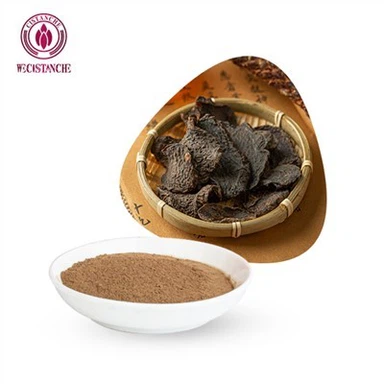
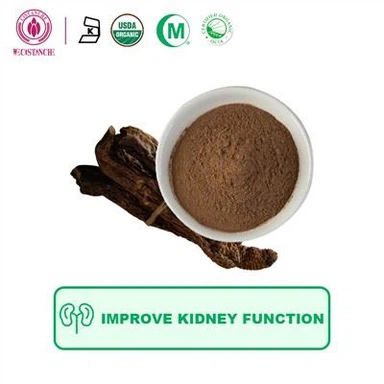
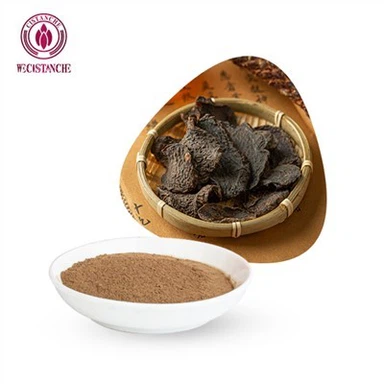
Rou Cong Rong is an excellent medicinal for nourishing and strengthening Yang. When the body's Yang qi is insufficient, it can be used.
Cistanche Supplements For Prostate Health

1) When Yang is insufficient, "Yin accumulation" appears
I keep emphasizing this: when Yang is deficient, Yin accumulates. When Yin accumulates too much, it becomes what TCM calls "Yin excess" (yin shi).
What is "Yin excess"? It means things that shouldn't be there have piled up inside the body-tumors, cysts, and fibroids are all considered "Yin excess" in this way of thinking.
So when we write a prescription, on the surface we may be using herbs that strengthen Yang, tonify the kidneys, and secure essence. It can look like we are "only" addressing sexual function. But think deeper: these herbs are also, in a sense, herbs used for treating masses.
Why? Because when Yang is strong, Yin does not accumulate. When Yang qi is abundant, qi and blood can circulate; things inside the body are less likely to become blocked, congested, or piled up.
When Yang qi is sufficient, qi and blood flow freely.
When qi and blood flow freely, "Yin excess" disperses.
That is the root.

2) Tonifying Yang is not the end goal-the goal is to free qi and blood
Many people hear the words "strengthen Yang" and immediately think only in a sexual sense. But in Chinese medicine, "Yang" refers to the body's vital drive-its functional momentum and operating energy.
When Yang qi is adequate, the body can metabolize normally. When Yang qi is insufficient, "waste" accumulates there; over time, it becomes illness.
That's why the same herbs can produce different results in different people. In a person who truly lacks Yang, the effect is "tonifying Yang." In a person with "Yin excess," the effect is to disperse nodules, move stasis, reduce swelling, and 'resolve masses.'
This is the wisdom of Chinese medicine: it doesn't treat only the symptom in front of you. It aims for the root-once the root is addressed, many problems open up at once.

A brief note for Western readers (how to understand this, practically)
In TCM language, "Kidney" is not only the anatomical kidney. It often refers to a broader functional system associated with vitality, reproduction, and foundational strength.
"Yang qi" is not a hormone or a single measurable substance. It's a functional concept: warmth, drive, circulation, and the body's ability to transform and move fluids and nutrients.
When the text says "tonify Yang," the practical claim being made is: improving the body's "functional engine" helps restore normal flow and normal metabolism, which in TCM is thought to reduce "stagnation/accumulation."
Safety reminder: infertility, erectile dysfunction, low sperm count, or any suspected lump/mass should be evaluated medically. Herbs can interact with medications and may be inappropriate for some conditions-use them under guidance from a qualified clinician.