Protecting Your Arteries: How Cistanche Tubulosa Supports Endothelial Health And Prevents Atherosclerosis
Aug 31, 2026
Cardiovascular disease remains the leading cause of death worldwide, claiming more lives than cancer, respiratory disease, and accidents combined. The silent killer behind most heart attacks and strokes is atherosclerosis-the progressive narrowing and hardening of arteries driven by endothelial dysfunction, oxidative stress, and chronic inflammation. What makes atherosclerosis particularly insidious is its silence: plaque accumulates for decades without symptoms, until a rupture triggers a catastrophic clot. The key to prevention is not waiting for symptoms but protecting the endothelium-the single layer of cells lining every blood vessel-from the earliest stages of damage. Cistanche tubulosa, through its active ingredients echinacoside and acteoside, is demonstrating multi-targeted cardiovascular protection: enhancing the production of nitric oxide, the molecule that keeps arteries relaxed and flexible; shielding endothelial cells from oxidative injury; and suppressing the inflammatory signals that drive plaque formation.

The Endothelium: The Guardian of Vascular Health
The endothelium is far more than a passive barrier. It is an active endocrine organ that regulates vascular tone, blood flow, clotting, and inflammation. Its primary weapon is nitric oxide, a gas molecule produced by endothelial nitric oxide synthase (eNOS). NO diffuses into the smooth muscle layer of arteries, triggering relaxation and vasodilation. This reduces blood pressure, improves blood flow, and prevents the adhesion of platelets and white blood cells to the vessel wall-the earliest steps in atherosclerosis.
When the endothelium is healthy, NO production is robust, and the arteries remain flexible and resistant to disease. When the endothelium is damaged-by high blood pressure, high blood sugar, smoking, oxidized LDL, or chronic stress-eNOS becomes uncoupled. Instead of producing NO, it produces superoxide, a damaging free radical. This uncoupling initiates a vicious cycle: superoxide further damages the endothelium, inflammation ensues, and NO production collapses. The result is endothelial dysfunction, the earliest measurable stage of atherosclerosis.
Endothelial dysfunction is reversible in its early stages, but if left unchecked, it progresses to structural damage. Oxidized LDL particles infiltrate the vessel wall, macrophages engulf them and become foam cells, and vascular smooth muscle cells proliferate, forming a fibrous cap over the lipid core. This is the atherosclerotic plaque. An ideal cardiovascular protective agent would therefore enhance eNOS function, protect the endothelium from oxidative stress, suppress vascular inflammation, and inhibit the smooth muscle proliferation that builds plaque. Cistanche tubulosa's phenylethanoid glycosides are demonstrating all four.
How Cistanche Tubulosa Protects the Cardiovascular System
1. Enhancing eNOS Activity and NO Production
Acteoside and echinacoside have been shown to enhance eNOS activity through multiple mechanisms. They increase eNOS phosphorylation at its activating serine residue, directly boosting enzymatic activity. They protect eNOS from oxidative uncoupling by scavenging the ROS that cause it. And they upregulate the expression of eNOS in endothelial cells. The functional result is increased NO bioavailability-the foundation of vascular health.
A study on isolated rat aortic rings demonstrated that Cistanche phenylethanoid glycosides induced significant endothelium-dependent vasorelaxation that was completely abolished when NO synthesis was blocked. This proves that the extract works through the body's own NO machinery to support healthy vascular tone and blood flow. The same mechanism underlies its benefits for erectile function, which we have explored in previous articles.
2. Protecting Endothelial Cells from Oxidative Damage
Oxidative stress is the primary driver of endothelial dysfunction. ROS from hyperglycemia, oxidized LDL, and inflammation damage endothelial cell membranes, impair mitochondrial function, and oxidize the tetrahydrobiopterin cofactor that eNOS requires for proper function. Echinacoside, through Nrf2 activation, upregulates the endothelial cell's own antioxidant enzymes-superoxide dismutase, glutathione peroxidase, heme oxygenase-1, and catalase-that neutralize ROS before they can damage eNOS or other cellular components. Acteoside provides additional direct radical scavenging. This dual antioxidant protection helps maintain eNOS in its coupled, NO-producing state.

3. Suppressing NF-κB to Calm Vascular Inflammation
Vascular inflammation is both a consequence and a driver of atherosclerosis. Inflammatory cytokines activate NF-κB in endothelial cells, which increases the expression of adhesion molecules (VCAM-1, ICAM-1) that capture circulating monocytes and recruit them into the vessel wall. Once inside, these monocytes become foam cells, and the inflammatory cascade accelerates. Acteoside, through its potent NF-κB inhibition, suppresses the expression of these adhesion molecules and the production of inflammatory cytokines. By calming endothelial inflammation, it helps break the vicious cycle that drives plaque progression.
4. Inhibiting Vascular Smooth Muscle Cell Proliferation
The growth of atherosclerotic plaque depends on the abnormal proliferation and migration of vascular smooth muscle cells from the media into the intima. Acteoside has been shown to inhibit this proliferation, reducing the cellular mass that forms the fibrous cap. By limiting smooth muscle cell accumulation, it may help slow plaque growth and stabilize existing plaques, reducing the risk of rupture and thrombosis.
5. Protecting Against LDL Oxidation
Native LDL is relatively inert; it becomes atherogenic only after oxidation. Oxidized LDL is the primary trigger for foam cell formation and vascular inflammation. Acteoside's lipophilic antioxidant activity allows it to embed within LDL particles and protect them from oxidation. In vitro experiments have demonstrated that acteoside significantly extends the lag time of copper-induced LDL oxidation, indicating a direct protective effect. By reducing the formation of oxidized LDL, acteoside starves the atherosclerotic cascade at its root.
6. Mild ACE Inhibition and Blood Pressure Support
Acteoside has also been shown to mildly inhibit angiotensin-converting enzyme in vitro. ACE generates angiotensin II, a potent vasoconstrictor and promoter of vascular inflammation. By inhibiting ACE, acteoside helps tilt the balance away from vasoconstriction and toward vasodilation, providing gentle physiological support for blood pressure regulation. This effect complements the NO-mediated vasorelaxation and contributes to the overall cardiovascular protective profile.
A comprehensive 2022 review in Frontiers in Pharmacology catalogs the vasodilatory, antioxidant, anti-inflammatory, and lipid-protective properties of Cistanche tubulosa, confirming the multi-targeted basis for its cardiovascular benefits. (Frontiers in Pharmacology review on Cistanche tubulosa)
The Active Ingredients for Cardiovascular Protection
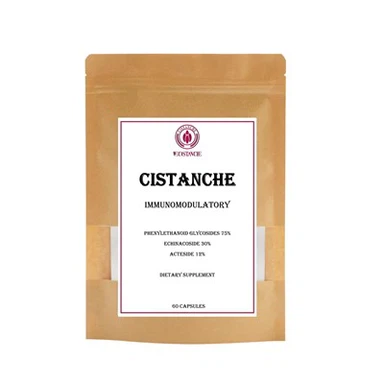
The cardiovascular benefits are driven by echinacoside and acteoside. Echinacoside is the primary Nrf2 activator and endothelial cell protector. Acteoside is the primary eNOS enhancer, NF-κB inhibitor, ACE inhibitor, and LDL oxidation protector. Together, they address every stage of the atherosclerotic process, from endothelial dysfunction to plaque formation. A standardized extract containing 20–40% total phenylethanoid glycosides is essential. The evidence-informed dose for cardiovascular support is 400–600 mg daily, taken with a meal.
Integrating Cistanche for Cardiovascular Health
Cardiovascular protection is a lifelong commitment. Cistanche should be taken consistently-daily, with a meal-as a preventive measure, particularly for those with risk factors such as hypertension, dyslipidemia, diabetes, or a family history of heart disease. It pairs well with other evidence-based cardiovascular nutrients: omega-3 fatty acids reduce triglycerides and stabilize plaques; Coenzyme Q10 supports cardiac energy metabolism and may counteract statin-induced depletion; magnesium helps regulate blood pressure and cardiac rhythm. Lifestyle practices-a Mediterranean-style diet, regular aerobic exercise, smoking cessation, stress management, and adequate sleep-remain the foundation, and Cistanche amplifies their benefits at the cellular level.
For those seeking reliable, research-grade cardiovascular support, explore our Cistanche tubulosa extract product line - every batch is standardized and third-party tested to ensure consistent potency of echinacoside and acteoside, the active ingredients behind the research.

Safety and Medical Context
Cistanche tubulosa is well tolerated with a centuries-long safety record. It does not cause the side effects associated with pharmaceutical antihypertensive or lipid-lowering drugs. However, because it may exert a mild blood pressure-lowering effect through NO production, individuals already taking antihypertensive medications-especially nitrates or PDE5 inhibitors-should exercise caution and consult their physician to avoid additive effects. Anyone with diagnosed cardiovascular disease should be under the care of a cardiologist. This botanical is a preventive, supportive tool for vascular health, not a substitute for medical management of established cardiovascular disease.