Qi And Blood Deficiency, These 4 Herbal Tea Can Help You
Nov 03, 2022
Among the organs of the human body, the heart ranks first. Indeed, the heart is the engine of the body. The lungs may be the second most important organ in the body, after the heart. Therefore, Huangdi Neijing is satisfied to be the "master", and the lung is the "phase Fu". "Yellow Emperor Neijing · Su Wen · Linglan Secret Treatise," said: "lung, phase Fu of the official, rule section out of Yan." It means the lungs are like the prime minister, that's all.

Click to buy Cistanche and Cistanche tea
It is the lung that controls the operation of Qi and blood. It is like a "great steward", controlling the distribution of Qi and blood in the whole body. If the lungs have a slight accident, it will make the body qi and blood operation not smooth, directly affecting the normal work of the viscera. As for the relationship between the lungs and the blood vessels of the body, Huangdi Neijing says, "The lungs are directed towards all veins." So, what is "lung toward 100 veins"? What does it say about the lung? Here, I need to explain this to you in detail.
Modern people, most understanding of "lung toward Baimai" is wrong, think that "Chao" the meaning of orientation, and "lung toward Baimai" is the lung toward all the blood vessels, that is, "pulse" as a blood vessel. Indeed, the lungs are closely related to the circulation of the blood, because the oxygen that we breathe into the lungs, will combine with the blood in the capillaries of the lungs, making the blood oxygen-rich blood, and when this blood enters the heart, the heart pumps it around the body for use by the whole body.
But it's not the lungs that play a major role in this process, it's the heart. So, what exactly does the "pulse" in "lung toward 100 veins" mean? The lungs mainly face the meridians. That is to say, the lungs not only help the heart to transport blood to the blood vessels but also distribute blood to the whole body to nourish the human meridians.

The ancient medical book "Difficult Classics" says that "a person's pulse moves three inches when he exhales, three inches when he breathes, and six inches when he breathes and rests." Daoist rope therapy suggests that "mai" here means meridians, not blood vessels. In addition to blood, there is tissue fluid in our body. According to traditional Chinese medicine, meridians are the channels of tissue fluid in the human body. For example, when our skin breaks, sometimes the outflow is not red blood, but light yellow or translucent liquid, which is called tissue fluid, also known as body fluid in Chinese medicine.
When nutrients are transported to the body, not only the blood in the blood vessels is transporting nutrients, but also the tissue fluid in the meridians, and the meridians are closely related to the functions of the viscera of the human body. So, where do the power of the human body's meridian and collaterals come from? Their power comes from their lungs, and it's the breath and breath of their lungs that propel them along. This is the true meaning of "lung toward all veins".
Traditional Chinese medicine also believes in the "lung attending section". What does this verse mean?
Figuratively, a "knot" is like a bamboo knot, with a certain rhythm, which means that the lungs regulate the rhythm of our body. It is also because of the work of "treating the joint" of the lung that the human body's breathing will be a breath and a breath, peaceful and even. Here, we can compare the Qi and blood in the human body to a bowl of water. If the lungs breathe unevenly, it is like shaking the water in the bowl very fast, and it is difficult to shake the water out. So what if you could shake the water out of the bowl?
This requires rhythmic shaking, and the more even the frequency, the more its force will add up, and the water in the bowl will soon overflow.
Similarly, if our lungs do not breathe evenly, the power to push the meridians will be very weak, which is not conducive to the delivery of nutrients by the meridians; On the contrary, if the lungs breathe evenly and strongly, the force pushing the meridians increases, and sweat is expelled from the body. Therefore, many health exercises, such as Qigong, meditation, and yoga, are mainly to regulate the breathing rhythm of the human body, to make the operation of qi and blood in our body more powerful.
Before we talk about is "lung towards 100 veins", that is to say, the lung not only assists the heart to carry blood to the blood vessels but also distributes blood to the human body's various meridians and collaterals. In turn, the completion of the function of "regulating the joints" of the lung also requires the care and maintenance of painstaking efforts. Only when "lung" and "heart" coordinate with each other, and "qi" and "blood" interact, can the lung better complete the function of "lung toward all veins" to control the distribution of blood.
On the contrary, if the organism appears "LUNG QI IS weak" or "blood is insufficient", will bring about "100 veins" running abnormally. For example, our common chronic bronchitis, emphysema, tuberculosis, bronchiectasis, and other conditions may lead to the occurrence of pulmonary heart disease. Therefore, if we want "the lung" to be the steward of good Qi and blood, to better nourish our body and serve our internal organs, we should start by replenishing qi and blood. If you want to supplement Qi and blood, food therapy is a good choice, such as drinking tea in food therapy, which is not only money-saving, labor-saving, but also convenient and effective.
I know a friend Lao Zhang, due to work pressure, suffered from high blood pressure in his early forties. Since the disease, he is often dizzy, brain confused, serious low pressure of 120, and 180, taking blood pressure medicine has no obvious effect. As a technical developer in the unit, these symptoms have seriously affected his work. Since medicine didn't work, Lao Zhang wanted to try the traditional Chinese diet. On my recommendation, he took Astragalus Qi and blood-nourishing tea every day. After about half a year, his blood pressure was lowered, his face was ruddy, and his spirit and energy were also improved.

"Huangdi Neijing," said: "the loss of harmony between qi and blood, all diseases are born of change". This sentence means that only when the body's qi and blood are filled and harmonious, can the limbs and organs of the body be nourished; If Qi and blood are insufficient, there will be many diseases. The reason why my friend Lao Zhang will appear dizziness, dizziness, and has other symptoms are because of Qi and blood deficiency, there is not enough qi and blood to nourish the brain.
4 kinds of tea to nourish qi and blood
1. Astragalus Qi and blood tonic tea
【 Raw material 】 Astragalus 10 ~ 15 grams, American ginseng 3 ~ 5 grams, wolfberry 6 ~ 10 grams, 10 grams of yellow essence.
[Method] Put the tea ingredients into a cup, brew with an appropriate amount of boiling water, and then soak for 5-10 minutes before drinking. Taoist rope therapy.
Drink frequently on behalf of tea. 1 dose per day.
[Efficacy] Regulating Qi and blood, regulating meridians and collaterals, nourishing kidneys and lungs, nourishing qi and blood, etc.
[Indications] Hypertension, qi and blood insufficiency, and other diseases.
2. Longan and date tea
[Raw material] Longan 10 grams, 10 red dates, brown sugar, honey amount.
[Method] the red jujube is washed to the core, longan shell to the core; With scissors will be red dates, longan cut into pieces (the more broken the better), to boil; Put the cut red dates and longan into the pot, add 2 bowls of water, bring to a boil and then reduce the fire, braising until the water is dried; Add the brown sugar and stir with a spoon until melted. Boil good juice into a clean bottle, such as if the bottle is not hot add a little honey; Put the longan red date tea into the refrigerator and dilute it with water when drinking.
Drink frequently on behalf of tea.
[Efficacy] Tonify the heart and spleen, Qi and blood, calm the mind, moisten the lung, etc.
[Indications] Patients with fatigue and weakness, insomnia and forgetfulness, hemorrhoid bleeding, iron deficiency anemia, and other long-term drinking.
3. Leek juice brown sugar drink
【 Raw material 】 Fresh leek 300 grams, 100 grams of brown sugar.
[Making method] the leek pick clean, drain water, mince, and mash its juice; Put brown sugar into the pot, add a little water boil, to brown sugar melted into leek juice, tea drinking.
Drink frequently on behalf of tea.
[Efficacy] Warm meridian, qi, blood, and so on.
[Indications] Regulate dysmenorrhea caused by deficiency of qi and blood, and make skin ruddy and smooth.
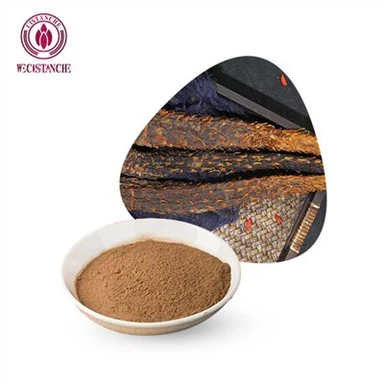
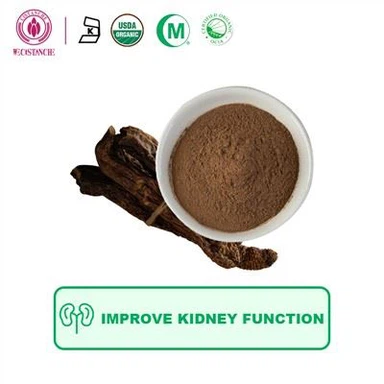
4. Cistanche tea
Cistanche tea is sweet, mild, and non-toxic. It has the following functions:

1. Treat injuries.
The Five laboos: In the Yellow Emperor Neijing, Su Wen, there is a record of "the injury caused by the five laboos", which refers to "prolonged viewing hurts blood, prolonged lying hurts Qi, prolonged sitting hurts flesh, prolonged standing hurts bone, and prolonged walking hurts tendons".
Seven injuries: it refers to "excessive satiation hurts the spleen, excessive anger hurts the liver, heavy weightlifting and sedentary wetland damage the kidney, cold shape and cold drink damage the lung, form labor and mental damage, wind and rain cold weather damage the shape, fear is not moderate damage the mind".
2 Removing lump, removing cold and heat pain from the stem, nourishing the five organs, strengthening Yin, improving essence, multiplying the child, removing lump. Long clothes make light clothes.
3. In addition to bladder evil low back pain, dysentery.
4. Benefit the marrow, pleasant color, prolong years, big Yang, treat women's blood collapse.
5. Men never Yang xing, women never Yin production, run the five viscera, long muscles, warm waist knee, men ejaculation urine blood residual leach, women with lower Yin pain.
for more information:ali.ma@wecistanche.com