Regarding Parkinson's Disease, It's Not Just About Hand Tremors
Sep 12, 2024
Parkinson's disease is a common degenerative neurological disorder in middle-aged and elderly individuals. Epidemiological research shows that the incidence rate of disease among people aged 65 and above in China is 1.7%. China is the most populous country in the world, and the number of Parkinson's disease patients in China is expected to increase from 1.99 million in 2005 to 5 million in 2030, accounting for almost half of the global Parkinson's disease population.
Although this disease is a geriatric disorder, it is different from tumors and cardiovascular and cerebrovascular diseases and does not affect the normal course of life itself. But as the disease progresses, if patients do not receive timely and reasonable treatment, their clinical symptoms will gradually worsen, and they may even find it difficult to take care of themselves, seriously affecting their quality of life and bringing great medical and economic burdens to themselves and their families.
Three Questions and Three Answers to Guide You in Understanding Parkinson's Disease Correctly
Q: Hand tremors indicate Parkinson's disease?
Many reasons can cause hand tremors, and Parkinson's disease is one of them, but not the main cause.
Early hand tremors in Parkinson's disease are mainly characterized by static tremors, which only occur when the limbs are in a static state, and are exacerbated by mental tension. They can be reduced or stopped during voluntary movement, and can completely stop during sleep or anesthesia. The limb tremors of this type of patient usually have a certain rhythm, manifested as continuous pronation and supination at the wrist, with the thumb and flexed index finger shaking like kneading a pill, presenting a typical "pill-like motion".
However, not all Parkinson's patients will experience hand tremors.
Q: What are the symptoms of Parkinson's disease?
Mainly including motor symptoms and nonmotor symptoms. Nonmotor symptoms often appear earlier than motor symptoms. When the three core motor symptoms (shaking, hardness, and slowness) appear simultaneously, even if the symptoms are mild, it indicates Parkinson's disease.
Three core motor symptoms
Shake - Trembling
Early symptoms include static tremors. Tremors first appear at the distal end of the limbs, often starting from the distal end of one upper limb, namely the fingers, and gradually expanding to the lower limb on the same side and the upper and lower limbs on the opposite side. When both upper and lower limbs are affected, the amplitude of upper limb tremors is often greater than that of lower limbs, and only a few patients have mild tremors in the lower limbs. The lower jaw, head and face, lips, tongue, etc. are usually the last to be affected.

Desert living cistanche herb-Anti Parkinson's disease
Hard - rigid
The muscles in the affected area become tense, and there is significant resistance during passive movement. Severe muscle rigidity and stiffness can cause discomfort such as pain. Limbs, trunk, neck, and face can all be affected. When facial muscles are involved, it can be seen that the patient's facial muscle movement decreases, blinking decreases, and facial expressions become stiff, like wearing a mask, medically known as a "masked face"; When involving the trunk, limbs, etc., over time, the patient's head tilts forward, trunk bends, elbow joints bend, forearm retracts, hands are placed in front of the trunk, hip, and knee joints of the lower limbs are slightly bent, and when standing, the body is hunched and hunched, resembling a "monkey posture". When the patient's forearm is vertically placed on the table, a "landmark hand" can also be seen.
Slow - Slow movement
Despite the presence of muscle strength in the patient, the rigidity and stiffness of the muscles themselves result in slow or reduced completion of corresponding movements. Due to stiff facial muscles, facial expressions gradually decrease, resulting in a "masked face"; Due to stiffness in the arm and finger muscles, patients may find it difficult to perform fine motor actions such as writing, resulting in difficulty in writing with curved and smaller fonts. This is medically known as the "lowercase sign"; The changes in gait are particularly prominent, such as walking with less flexibility in lifting legs, starting with dragging, without swinging arms in the upper limbs, and coordinated movements. Once a step is taken, the patient will take small, fragmented steps forward and walk faster, unable to stop in time, medically known as "panic gait". Patients feel that running is easier than walking; Severe patients may suddenly feel their feet being attracted like magnets when walking or preparing to start, making it difficult to lift and take steps, usually lasting for a few seconds, occasionally up to 30 seconds, and even requiring assistance from others or crutches. They may also experience some degree of leg tremors, which is medically known as "frozen gait".

Superman herbs cistanche-Anti Parkinson's disease
Nonmotor symptoms
Like sleep disorders, nearly 70% of Parkinson's patients may experience symptoms such as excessive sleep during the day and not sleeping at night, with a small number of patients experiencing intense movements such as punching, kicking, and shouting during sleep. And mental disorders such as anxiety, depression, hallucinations, cognitive decline, etc. Autonomic nervous system dysfunction, such as decreased olfactory and gustatory function, orthostatic hypotension, urinary disorders, defecation disorders, sexual dysfunction, excessive sweating, and excessive oil secretion.
Q: Who is more likely to develop Parkinson's disease?
① Gender factors: male incidence rate is generally higher than female;
② Age factor: The older the person, the higher the risk of developing the disease;
③ Ethnic factors: white people have the highest incidence rate, and yellow people have the highest incidence;
④ Genetic factors: Relatives of Parkinson's patients have a higher risk of developing the disease compared to the general population;
⑤ Environmental factors: Exposure to certain toxic substances or heavy metals may increase the risk of disease.
The specific reasons and mechanisms for the onset of Parkinson's disease are not yet fully understood. It is generally believed that this disease is formed under the combined action of many factors.
Treatment of Parkinson's disease
Although current treatment methods cannot effectively prevent the progression of Parkinson's disease itself, let alone cure it. However, interventions such as medication, surgery, exercise therapy, and psychotherapy can improve some symptoms, delay disease progression, enhance patients' quality of life, and help them return to a normal life.
If you have the above symptoms, it is recommended to seek timely medical attention from a neurology specialist, assess your condition, and achieve early diagnosis and treatment. For patients who have already taken Parkinson 's-related medications, it is necessary to follow the advice of a specialist physician and not adjust the dosage or stop medication at will.
【 Prevention of Parkinson's Disease 】 - Eating Cistanche deserticola regularly

Benefits of cistanche tubulosa-Treatment of Parkinson's disease
Parkinson's disease is a common neurodegenerative disease characterized by motor dysfunction such as tremors, muscle stiffness, and motor delay. The pathogenesis of this disease is complex, involving a decrease in dopamine neurons, oxidative stress, neuroinflammation, and mitochondrial dysfunction.
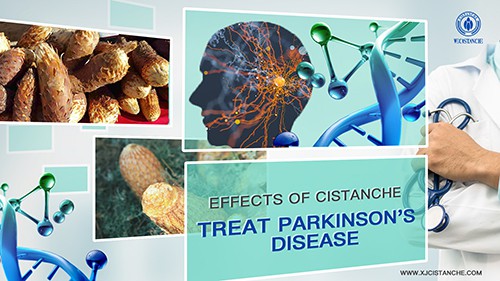
Cistanche deserticola contains abundant phenylethanol glycosides, which have been proven to have significant neurodegenerative effects. The research by Tu Pengfei/Zeng Kewu's team found that Echinacoside (ECH) in Cistanche deserticola can activate the Wnt signaling pathway and promote mitochondrial fusion by specifically modifying the CK2 α 'protein, thereby exerting neuroprotective effects. In addition, Cistanche deserticola can also treat Parkinson's disease through various pathways such as antioxidant stress, regulation of neuroinflammation, regulation of cell autophagy, and inhibition of neuronal apoptosis.
Superman herbs cistanche-Anti Parkinson's disease
Click here to view Cistanche powder products
【Ask for more】 Email:cindy.xue@wecistanche.com / Whats App: 0086 18599088692 / Wechat: 18599088692
Network pharmacology research further reveals the multi-target mechanism of Cistanche deserticola in treating Parkinson's disease. Research has found that multiple active ingredients in Cistanche deserticola can exert a comprehensive therapeutic effect by regulating multiple targets related to Parkinson's disease, such as dopamine receptors, acetylcholinesterase, angiotensin-converting enzyme, etc. These targets involve multiple aspects such as the regulation of neurotransmitters, inhibition of inflammatory responses, and control of cell apoptosis.
In addition, it has been found that Cistanche deserticola can regulate gut microbiota, inhibit mitochondrial autophagy and oxidative damage, inhibit neuroinflammation and dopaminergic neuron apoptosis, and thus play a role in the treatment of Parkinson's disease. These findings provide new perspectives and strategies for the application of Cistanche deserticola in the treatment of Parkinson's disease.

chinese herb cistanche
In summary, as in traditional Chinese medicine, the potential of Cistanche deserticola in the treatment and prevention of Parkinson's disease cannot be ignored.