Renal Protection Drugs Cause Elevated Serum Creatinine Instead. What Is The Reason And How To Solve It?Renal Protection Drugs Cause Elevated Serum Creatinine Instead. What Is The Reason And How To Solve It?
Jul 14, 2023
The current guidelines recommend that four types of drugs can reduce urine protein and delay kidney damage (kidney protection) and can be used for the treatment of most chronic kidney diseases. These four types of drugs are pril-type antihypertensive drugs, sartan-type antihypertensive drugs, sartan-type antihypertensive drugs, and finerenone, but they have a common side effect, that is, they may cause blood creatinine to rise. high.

Click to echinacea for kidney disease
Isn't it contradictory how to protect the kidney when the blood creatinine is high?
Because of this side effect, many patients are afraid to use these renal protection drugs at a respectful distance. This worry is unnecessary. The increase in serum creatinine caused by these renal protection drugs is transient, and most of them can be relieved by themselves. Long-term use can delay renal failure.
Basic concepts of kidney protection
Kidney protection means delaying kidney damage rather than reversing kidney function. The renal function of kidney patients is declining year by year. If it is not effectively controlled, the renal function will decline rapidly and enter the uremia period. After treatment, the renal function remains stable or declines slowly, which is considered to protect the kidney. After verification by big data, these four types of drugs can delay kidney damage and reduce the occurrence of uremia.
The basic concept of blood creatinine
Serum creatinine is the metabolic waste of meat in the muscles and food in the body. It is excreted through the kidneys. It is mainly the kidney function that affects the blood creatinine level, so the blood creatinine value is used to judge the kidney function. Generally speaking, an increase in serum creatinine means a decrease in renal function.
Like blood pressure, blood sugar, heart rate, and other indicators, the blood creatinine value is not static but fluctuates. It does not mean that if it rises a little, the kidney function will deteriorate, and if it drops a little, the kidney function will get better. It is normal for blood creatinine to fluctuate within the normal range, and it is reasonable for blood creatinine to fluctuate no more than 30% of the baseline value within a certain period.
For example, the serum creatinine was 200 μmol/L before the medication, but it rose to 230 μmol/L after the medication. This does not mean that the renal function has deteriorated, but a reasonable fluctuation. However, if the serum creatinine exceeds 30% of 200 within 2 weeks, that is, 260 μmol/L, there is a problem, and the drug should be reduced or stopped.

In addition, some non-drug reasons can also lead to elevated blood creatinine, such as severe infection, severe dehydration, high protein intake, etc. Therefore, when serum creatinine is found to increase, these reasons should be screened and eliminated in time.
The Mechanism of Drugs Protecting the Kidney
In layman's terms, the glomerulus is like a reservoir, with an entrance (access arteriole) and an exit (exit arteriole), and it maintains a balance of entry and exit under normal circumstances.
Various reasons lead to glomerular hyperfiltration, hyperperfusion, and high pressure (three highs), which will cause glomerular damage. For example, high blood sugar causes glomerular hyperfiltration and hyperperfusion, and high blood pressure leads to glomerular high pressure, and finally causes glomerular sclerosis and necrosis, renal failure.
And reducing the "three highs" of the glomeruli will protect the glomeruli, reduce urine protein, and delay kidney damage.
Both sartan-type antihypertensive drugs and pupil-type antihypertensive drugs have expansion effects on the glomerular efferent and afferent arterioles, but the expansion effect on the efferent arterioles is stronger. High" reduces, so protects the kidney.
In the state of high glucose, the glomerular afferent arteriole is over-expanded, and the internal pressure of the glomerulus increases, and the antidiabetic drugs of the class of nets can shrink the over-expanded afferent arteriole back to normal, and reduce the glomerular "three highs". kidney.
Excessive activation of aldosterone receptors causes glomerular afferent and afferent arterioles to contract, glomerular ischemia, sclerosis, and necrosis, while the third-generation aldosterone receptor antagonist finerenone dilates afferent and afferent arterioles, but does not affect efferent arterioles. The dilation effect of small arteries is stronger, so it not only improves the blood supply to the glomerulus, and protects the glomerulus, but also does not increase the internal pressure of the glomerulus.
Mechanism of elevated serum creatinine
The so-called success is Xiao He, and failure is Xiao He. The rise of blood creatinine caused by these four types of drugs is precisely related to their mechanism of action.

Sartan-type antihypertensive drugs and pril-type antihypertensive drugs dilate the efferent arterioles more strongly, so they cause an unbalanced glomerular blood supply, transient hypoperfusion of blood, affect excretion ability, and temporarily increase blood creatinine.
Listed hypoglycemic agents constrict afferent arterioles, which may affect glomerular blood supply and transiently increase blood creatinine at the initial stage of medication.
Finerenone is also an unbalanced expansion of the glomerular outlet and afferent arterioles, resulting in an imbalance in blood supply to the glomerulus and a transient increase in serum creatinine.
How to deal with elevated serum creatinine?
The increase in serum creatinine caused by these four types of drugs often occurs at the beginning of the medication or after the dose is increased, and most of them are transient and usually recover on their own after 2 to 4 weeks. Several large-scale studies have also verified this result. This is not an acute kidney injury, so don't worry too much.
Elevated serum creatinine can be treated as follows:
1. If the increase in serum creatinine does not exceed 30% of the basic value within 2 weeks after medication, no treatment is required;
2. If the blood creatinine rises by more than 30% within 2 weeks after taking the medicine, the dose should be reduced or the medicine should be stopped, and other reasons should be screened, such as hypotension, systemic ischemia, excessive diuresis, and painkillers taken at the same time. Renal drugs, etc.;
3. If there are other reasons for the increase of serum creatinine, these four types of kidney-protecting drugs can be resumed according to the situation after eliminating these reasons.
To reduce the occurrence of elevated serum creatinine, generally start the drug with a small dose, gradually increase the dose, and closely observe the condition. Improve the blood supply of the whole body before medication, and avoid the use of drugs that damage the kidneys.
All in all, it is the basic principle of medication to maximize strengths and avoid weaknesses. Don't be afraid to use drugs because of their side effects, so that your kidney function will be unprotected. However, do not take it lightly during the medication period, observe closely at an early stage, and deal with problems promptly.
How does Cistanche treat kidney disease?
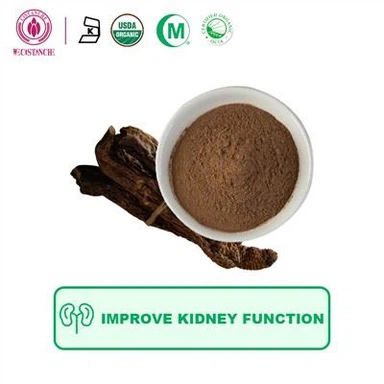
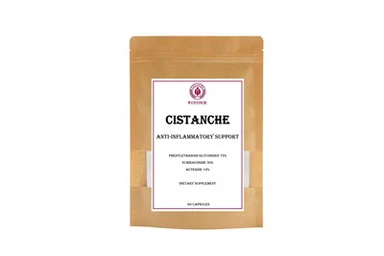
Cistanche is a traditional Chinese herbal medicine used for centuries to treat various health conditions, including kidney disease. It is derived from the dried stems of Cistanche deserticola, a plant native to the deserts of China and Mongolia. The main active components of cistanche are phenylethanoid glycosides, echinacoside, and acteoside, which have been found to have beneficial effects on kidney health.
Kidney disease, also known as renal disease, refers to a condition in which the kidneys are not functioning properly. This can result in a buildup of waste products and toxins in the body, leading to various symptoms and complications. Cistanche may help treat kidney disease ase through several mechanisms.
Firstly, cistanche has been found to have diuretic properties, meaning it can increase urine production and help eliminate waste products from the body. This can help relieve the burden on the kidneys and prevent the buildup of toxins. By promoting diuresis, cistanche may also help Reduce high blood pressure, a common complication of kidney disease.
Moreover, cistanche has been shown to have antioxidant effects. Oxidative stress, caused by an imbalance between the production of free radicals and the body's antioxidant defenses, plays a key role in the progression of kidney disease. ies help neutralize free radicals and reduce Oxidative stress, thereby protecting the kidneys from damage. The phenylethanoid glycosides found in cistanche have been particularly effective in scavenging free radicals and inhibiting lipid peroxidation.
Additionally, cistanche has been found to have anti-inflammatory effects. Inflammation is another key factor in the development and progression of kidney disease. Cistanche's anti-inflammatory properties help reduce the production of pro-inflammatory cytokines and inhibit the activation of inflammation mandatory pathways, thus alleviating inflammation in the kidneys.
Furthermore, cistanche has been shown to have immunomodulatory effects. In kidney disease, the immune system can be dysregulated, leading to excessive inflammation and tissue damage. Cistanche helps regulate the immune response by modulating the production and activity of immune cells, such as T cells and macrophages. This immune regulation helps reduce inflammation and prevent further damage to the kidneys.

Moreover, cistanche has been found to improve renal function by promoting the regeneration of renal tubes with cells. Renal tubular epithelial cells play a crucial role in the filtration and reabsorption of waste products and electrolytes. In kidney disease, these cells can be damaged, leading to damaged renal function. Cistanche's ability to promote the regeneration of these cells helps restore proper renal function and improve overall kidney health.
In addition to these direct effects on the kidneys, cistanche has been found to have beneficial effects on other organs and systems in the body. This holistic approach to health is particularly important in kidney disease, as the condition often affects multiple organs and systems. che has been shown to have protective effects on the liver, heart, and blood vessels, which are commonly affected by kidney disease. By promoting the health of these organs, cistanche helps improve overall kidney function and prevent further complications.
In conclusion, cistanche is a traditional Chinese herbal medicine used for centuries to treat kidney disease. Its active components have diuretic, antioxidant, anti-inflammatory, immunomodulatory, and regenerative effects, which help improve renal function and protect the kidneys from further damage. , cistanche has beneficial effects on other organs and systems, making it a holistic approach to treating kidney disease.