Research Progress On Anti-aging Function Of Cistanches
Mar 09, 2022
Contact: emily.li@wecistanche.com
Abstract
Cistanche belongs to the homologous substance of medicine and food. It is a perennial herbaceous parasitic plant of Ledangaceae and has the effects of anti-oxidation and anti-fatigue. Cistanche, known as "desert ginseng", is described as anti-aging in many ancient books of traditional Chinese medicine. The anti-aging effect of Cistanche has attracted much attention and become one of the hot spots in health food research. This paper discussed the mechanism of anti-aging from the aspects of free radical theory, telomere theory, immune theory, brain-center theory, stem cell transplantation, heat restriction, traditional Chinese medicine aging-theory, and so on, and discussed the anti-aging effects of bioactive components of Cistanches in detail from the aspects of polysaccharides, total glycosides, phenylethanoid glycosides, and extracts, to provide some references for the development of anti-aging products of Cistanches.
Keywords: Cistanches; anti-aging; aging theories; polysaccharides; phenylethanoid glycosides;
Background:
Cistanche deserticola (Cistanche) is a perennial herb parasitic plant of lie angle. Studies have proved that Cistanche deserticola and its effective components have the effects of anti-oxidation, anti-fatigue, anti-aging, anti-tumor, antibacterial, liver protection, immune regulation, sexual function improvement, central nervous system regulation, endocrine regulation, memory improvement, prevention of Alzheimer's disease, anti-osteoporosis, and bone formation.
In 1993, the news was released at the Geneva annual meeting of the International Medical Association: chaganxire of China's Alashan League ranked among the hometown of longevity in the world. The investigation team composed of Chinese and foreign experts did not hesitate to spend four months investigating chaganxire. It was found that there were four centenarians in chaganxire (Gacha) village with only 139 people, with an average life expectancy of 87.5 years; The incidence rate of common diseases such as hypertension, stomach disease, kidney disease, and prostatic hypertrophy is very low. The expert group found that this is related to the dietary structure of residents. Two of them are that people here stew mutton put Cistanche deserticola into it, and drink their own homemade Cistanche wine. Therefore, the anti-aging effect of Cistanche deserticola has attracted much attention and become one of the hot spots in the research of healthy food.
This paper mainly summarizes the anti-aging efficacy of Cistanche deserticola, distinguishes the anti-aging mechanism of Cistanche deserticola from the aspect of aging theory, and analyzes the relationship between aging theory and Cistanche deserticola and its active components, to provide a reference for the development of healthy food of Cistanche deserticola.

Cistanche has an anti-aging function
1 aging theory
Human aging is influenced by a variety of genetic and environmental factors. With time, it shows systemic integrity, gradual, degenerative, and irreversible changes, and functional disorders. Aging can also cause gene mutation accumulation, abnormal metabolism, low immune function, and so on.
1.1 free radical theory
Abnormally active charged molecules or groups are called free radicals. Common free radicals mainly include superoxide free radicals, lipid peroxide, argon peroxide, singlet oxygen, and hydroxyl free radicals. Self radicals have strong biological activity, can destroy DNA, protein, and lipid, and cause cell mutation, aging, and apoptosis, which indicates that the gradual accumulation of oxidized cells is the basic driving factor of cell aging. In addition, the free radical theory has made great progress in the study of aging over time. The free radical theory was first proposed by Harman in 1956. It is believed that excessive free radicals can lead to lipid peroxidation of unsaturated fatty acids on cell membrane through peroxidation; DNA mutation or replication abnormality caused by attacking nucleic acid; Destroy protein polypeptide chain and change protein structure; Reduce enzyme activity; They will destroy the integrity of cell membrane structure, cause serious damage to cell function, and eventually lead to cell aging and even death, thus causing damage to the body, leading to aging or death. With the deepening of research, the free radical theory emphasizes more and more mitochondrial DNA (mt DNA) mutation and mt DNA deletion accumulation.
1.2 telomere theory
Telomere is a small DNA protein complex at the end of the chromosome. The special "hat" structure can maintain the integrity of chromosomes and control the cell division cycle. Professor Alexei Olovnikov of the former Soviet Union first put forward the "telomere theory" of aging in 1973 ", it is considered that due to the dysfunction of DNA polymerase, cells can not completely replicate their chromosomes in each division process, and telomere DNA will lose 40 ~ 100 bp every time DNA is copied. With the increase of cell division times, telomere DNA is shortened to a certain limit, it is difficult to maintain the stability of chromatin, and cells lose the ability of division and proliferation and aging until death. Telomere length is regarded as Biomarkers of biological aging that are related to various aging-related diseases. Some studies have found that the increase of telomerase in germ cells and stem cells can prolong telomeres, to delay aging.
2 anti-aging effects of bioactive components of Cistanche deserticola
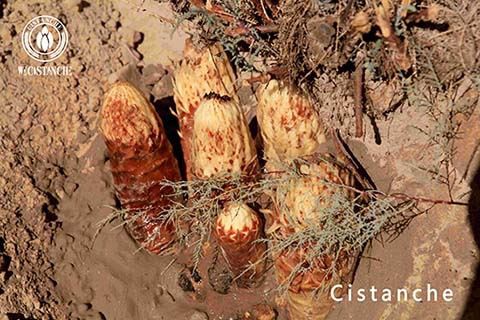
Cistanche deserticola contains a variety of bioactive components, mainly including phenylethanoid glycosides, iridoids, and their glycosides, lignin, and their glycosides, polysaccharides, proteins, amino acids, betaine, etc. there are also a small number of other compounds, such as monoterpenes, steroids or their glycosides, fatty acids and some trace elements.
2.1 polysaccharides
Research shows that Cistanche deserticola polysaccharide has an anti-aging function, mainly through anti-oxidation, improving learning and memory, enhancing immune function, and telomerase activity.
Ma Hui and other researchers have proved that polysaccharide can improve the learning and memory ability of aging mice, and its mechanism may be related to the binding of cyclic adenosine monophosphate (cAMP) response element-binding protein (CREB) to cAMP response element in the brain Wu Yan et al found that Cistanche deserticola polysaccharide can affect brain-derived neurotrophic factor (BDNF) through camp / protein kinase A (PKA) CREB signal pathway Xu Hui et al found that Cistanche deserticola polysaccharide can significantly reduce the content of malondialdehyde (MDA) and phospholipase (PLA2) Activity, improve Ga2 + - ATPase activity, liver mitochondrial membrane fluidity, improve mitochondrial energy metabolism, and improve the activities of respiratory chain complexes i1ii and i1ii, indicating that Cistanche deserticola polysaccharide can delay the aging of rats by improving the antioxidant capacity of liver mitochondria and improving mitochondrial energy metabolism in aging rats. Wu Bo et al. Found that Cistanche deserticola polysaccharide can enhance the anti-lipid of aging mice Superoxide dismutase (SOD) in serum and liver due to peroxidation The increase of activity and the decrease of lipid peroxidation content indicate that Cistanche deserticola polysaccharide can prevent lipid peroxidation damage in subacute mice. Sun Yun et al. Made mice inhale ozone for 4 weeks to establish a lung aging model, and tested the hypoxia tolerance of Cistanche deserticola polysaccharide. The results show that Cistanche deserticola polysaccharide can prolong the hypoxia tolerance time of aging mice, increase SOD activity, reduce MDA content and delay lung cell mitochondria At the same time, Cistanche deserticola polysaccharide can reduce the concentration of no and inhibit the apoptosis of lung tissue cells, to improve the degenerative changes of lung tissue cells in aging mice. In addition, Sun Yun et al. Used D-galactose model mice to observe the antioxidant effect of Cistanche deserticola polysaccharide on the lungs of aging mice It was found that the activity of glutathione peroxidase (GSH Px) in lung and plasma increased, indicating that Cistanche deserticola polysaccharide has certain antioxidant capacity on lung tissue and can delay lung aging. Zhang Hongquan et al. Established D-galactose subacute aging mouse model to detect the content of MDA, telomerase activity, and interleukin-2 in mice fed with Cistanche deserticola polysaccharide (interleukin-2, IL-2) The results showed that Cistanche deserticola polysaccharide could antagonize free radical damage, enhance telomerase activity, and immune ability of heart and brain tissues of aging mice, delay the aging speed of aging mice induced by D-galactose, and demonstrate that Cistanche deserticola polysaccharide has the effect of delaying aging from many aspects. In addition, Cistanche deserticola polysaccharide also has an anti-fatigue effect; it can significantly improve the survival rate of sam-p8 mice and improve the intestinal flora disorder of sam-p8 mice; it can be used as an antioxidant to inhibit lipid oxidative modification and protect cells from oxidative molecules in the skin of aging rats.

2.2 phenyl alcohol glycosides
Phenyl ethanol glycosides are the main active components of Cistanche deserticola and have an obvious anti-aging effect. Guodong et al. Gavaged mice with phenylethanoid glycosides extracted from Cistanche deserticola for 4 weeks. They found that phenylethanoid glycosides can improve the learning and memory ability of mice and significantly improve the spleen coefficient of mice, indicating that phenylethanoid glycosides may play a role in delaying aging by regulating the immune function of the body. In addition, some studies have found that phenylethanoid glycosides of Cistanche deserticola have the anti-fatigue effect, which can increase the swimming time of mice, improve the level of tissue glycogen and improve the level of blood biochemistry. It can also effectively prevent osteoporosis caused by estrogen deficiency. These effects show that phenylethanoid glycosides can delay aging,
At present, 70 phenylethanoid glycosides have been isolated from Cistanche deserticola, including Echinacea, Mullein glycoside, Mullein glycoside, Cistanche deserticola a, tubuloside B, halogenated Cistanche deserticola D, among which Echinacea takes Echinacea and Mullein glycoside as reference materials for quality control of Cistanche deserticola, and it is stipulated that the total amount of Cistanche deserticola (dry products) should not be less than 0.30%, Cistanche tubulosa (dry product) shall not be less than 1.5%. Many studies have proved that Echinacea and Mullein glycoside has a certain anti-aging effect. Chen and other studies have found that Echinacea is an effective component of Cistanche deserticola to delay aging. It can prolong the life of Caenorhabditis elegans through reactive oxygen species signaling pathway, dietary restriction signaling pathway, and insulin / insulin-like growth factor signaling pathway; At the same time, it is found that Echinacea can induce rat pituitary cells to secrete growth hormone. In the future, it can be considered to develop into a non-peptide analog of growth hormone (endogenous hormone) releasing peptide. At the same time, Peng et al. 53 found that Echinacea can play the role of antioxidant, anti-inflammatory, anti-apoptosis, and anti activated microglia by activating peroxidase proliferator-activated receptor (ppar-y) signal, and reducing the cognitive impairment caused by sevoflurane anesthesia; In addition, Echinacea can also reduce the blood glucose and blood lipid levels of DB / DB mice, delay the deterioration of cardiac function, improve the myocardial tissue of DB / DB mice, and significantly reduce the oxidative stress level of cardiomyocytes. In addition, Echinacea can also inhibit PPAR-a / m-CPT-1 signal transduction. And prevent lipid accumulation.
Zhang Hongquan et al. Tested the anti-aging effect of Mullein glycoside on aging mice induced by D-galactose and found that Mullein glycoside can reduce the MDA content in the heart, liver, and brain of aging mice, improve the activity of telomerase, improve lymphocyte proliferation and phagocytosis of peritoneal macrophages, which shows that Mullein glycoside can prevent free radical damage Improve telomerase activity and regulate immune function to delay aging. Peng et al. Found that Mullein glycoside can reverse some cognitive impairment and improve spatial learning in aging mice induced by D-galactose and AI Ci3, and its mechanism may be related to neurons that prevent oxidative stress
It is related to apoptosis or the increase of the expression of nerve growth factor (NGF) and Trk A in the hippocampus, which proves that Mullein glycoside is an effective treatment for mild neurodegenerative diseases. For example, as an early treatment for Alzheimer's disease.
3 conclusion
Aging is a complex and irreversible molecular process in human life. It is a comprehensive manifestation of physiological function decline and degradation, including physiological aging, psychological aging, and pathological aging. The research on pathological aging mainly aims to delay aging from the aspects of reducing disease occurrence, enhancing immunity, and improving their antioxidant capacity. Cistanche deserticola is one of the most popular homologous substances of traditional food and medicine. It is described as anti-aging in many ancient books of traditional Chinese medicine. Cistanche deserticola and its active components play an anti-aging role mainly from four aspects:
(1) Reduce brain injury, prevent Alzheimer's disease and improve learning and memory ability;
(2) Improve the antioxidant capacity of the body, reduce free radical damage and alleviate the oxidation degree of tissues and organs;
(3) Enhance immunity, improve the phagocytosis of peritoneal macrophages and the proliferation of lymphocytes;
(4) Increase telomerase activity and reduce DNA sequence loss during DNA replication.
At present, the research on the anti-aging efficacy and mechanism of Cistanche deserticola and its active components is not comprehensive, especially in improving telomerase activity, increasing telomere length, improving intestinal tract, metabolomics technology, genomics technology, and so on. At the same time, the development prospect of Cistanche deserticola health food is considerable, such as approved Cistanche deserticola wine, tea, tablets, granules, capsules, oral liquid, etc. 1661. Enterprises and scientific research institutions also need to translate relevant research results into the ground, develop real anti-aging functional food of Cistanche deserticola, and implement the "healthy China" action.