Do you know oral capsule mRNA vaccines?
Mar 29, 2022
Contact: Audrey Hu Whatsapp/hp: 0086 13880143964 Email: audrey.hu@wecistanche.com
Like most vaccines, mRNA vaccines also require the use of a syringe to administer, which can be a hindrance for people who are afraid of needles. If mRNA vaccines can be delivered orally, it will undoubtedly help people to accept them more easily.
However, nucleic acids are easily degraded, and RNA, in particular, is easily degraded, especially in the digestive tract. If the degradation of nucleic acids in the digestive tract can be overcome, in addition to oral mRNA vaccines, it can also be used to deliver RNA or DNA drugs directly to the digestive tract, making it easier to treat gastrointestinal diseases.

Anti-virus: mRNA vaccines & Cistanche supplement
On January 31, 2022, Professor Robert Langer and Professor Giovanni Traverso of the Massachusetts Institute of Technology (MIT) published a research paper entitled: Oral mRNA delivery using capsule-mediated gastrointestinal tissue injections in the Matter journal [1].
The research team has developed a new way to say goodbye to needles and can deliver mRNA vaccines through oral capsules. The research team conducted experiments on pigs. The capsules can deliver up to 150 micrograms of mRNA into the stomach of pigs, which is more than mRNA. The use of the new crown vaccine is even greater. The team believes that oral administration of this mRNA could facilitate the rapid deployment of intermittent interventions such as vaccines and support long-term treatment.

For the past few years, Professors Robert Langer and Professor Giovanni Traverso have been developing new methods of delivering drugs into the gastrointestinal tract.
In February 2019, they published a research paper in the journal Science entitled: An ingestible self-orienting system for oral delivery of macromolecules [2].
They developed a blueberry-sized capsule that can lower blood sugar by injecting insulin into the stomach lining after reaching the stomach orally. Importantly, the capsule is able to correct itself, ensuring accurate injection of the drug into the stomach wall.

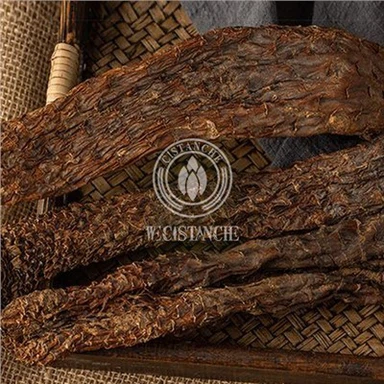
what is cistanche
The principle of capsules
Inside the capsule, the needle is attached to a compression spring, which is held in place by a disc made of sugar. When the capsule is swallowed, the water in the stomach dissolves the sugar disc, releasing the spring and injecting the needle into the stomach wall. Because the stomach wall has no pain receptors, the patient cannot feel the pain from the injection. To ensure that the drug is injected into the stomach lining, the researchers designed a capsule that could be used in the stomach, where the needle may come into contact with the lining of the stomach.
Once the needle tip is injected into the stomach wall, the insulin dissolves at a rate controlled by the researchers when making the capsule. In this study, it took about an hour for all insulin to be fully released into the bloodstream.

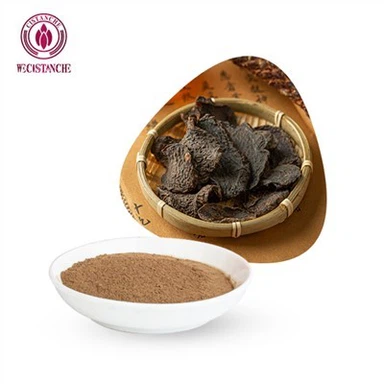
cistanche powder
Source of inspiration
The research team said the inspiration came from the self-positioning features of a species of tortoise known as the leopard tortoise. Found in Africa, this tortoise has a high, steep dome for its shell, which allows it to roll over and quickly return to its normal posture. The research team used computer modeling and designed the shape of the capsules so that they could also be repositioned in the dynamic environment of the stomach to ensure accurate injection. In 2021, the research team showed that the capsule could be used to deliver protein-based macromolecules, such as monoclonal antibodies, in liquid form. Next, they began experimenting with using the capsule to deliver nucleic acids.
It is well known that nucleic acids are easily degraded after entering the human body, so they need to be carried by protective particles. A novel polymer nanoparticle capable of delivering RNA with high efficiency has been recently developed by Prof. L Robert Langer and Prof. Giovanni Traverso. The nanoparticles are made of poly(beta-aminoester), and they found that the branched form of the polymer protects nucleic acids and allows them to enter cells better than the linear form.
The research team first tested the effect of the branched poly(β-aminoester) nanoparticles. The experimental results showed that after injection, the mRNA carried by the nanoparticles was delivered to the stomach, liver, and other organs, and was effectively expressed.
Next, the research team lyophilized the mRNA-nanoparticle complexes and packaged them into capsules. Working with scientists at Novo Nordisk, they loaded each capsule with about 50 micrograms of mRNA and delivered 3 capsules at a time into the pig's stomach via the oral form. This delivery amount exceeds the currently used mRNA new crown vaccine, which has about 30-100 micrograms of mRNA in a single injection.

In the study of pigs, the team found that cells in the pig's stomach successfully produced the reporter protein, but other organs and tissues did not see it. The team said that in follow-up studies, the nanoparticle composition will be improved or higher doses will be given to increase the uptake of the delivered mRNA to other organs. The team also said that it is also possible that delivering mRNA to the stomach alone is enough to induce a strong immune response, because there are many immune cells in the gastrointestinal tract, and stimulating the immune system in the gastrointestinal tract can generate an immune response.
In addition, the research team also said that this capsule delivery method of mRNA, in addition to delivering vaccines, can also be used to target the treatment of gastrointestinal diseases. It is difficult to deliver nucleic acid drugs to the gastrointestinal tract by intravenous or subcutaneous injection of drugs, and this capsule undoubtedly opens up a new way for gastrointestinal diseases that are difficult to treat by traditional methods.

The traditional Chinese medicinal herb: cistanche
Note: The traditional Chinese medicinal herb cistanche (also known as the "dragon herb" and "desert ginseng"), grows only in arid and warm deserts. As one of the nine immortal herbs, Cistanche (cistanche tubulosa/cistanche deserticola/desertliving cistanche/cistanche salsa)contents with rich effective ingredients such as echinacoside, acteoside, total phenylethanoid glycosides, flavonoids, polysaccharides, etc. these effective ingredients made cistanche a precious nourishing herb and food material for people's immunity, internal organs, and brain cells and neurons, etc. Modern pharmacological studies have confirmed the following effects of cistanche(benefits of cistanche): improve immunity; improve sexual function and kidney function; anti-fatigue; anti-aging; improved memory; anti-Parkinson's disease; anti-Alzheimer's disease; antioxidation; ease-constipation; anti-inflammatory; promote bone growth, whitening skin; protect liver; etc.

cistanche herb
Paper link:
https://doi.org/10.1016/j.matt.2021.12.022
http://science.sciencemag.org/content/363/6427/611