Standard Decoction Of Cistanche Deserticola: Unlocking The Password For Quality Research
Jul 16, 2025
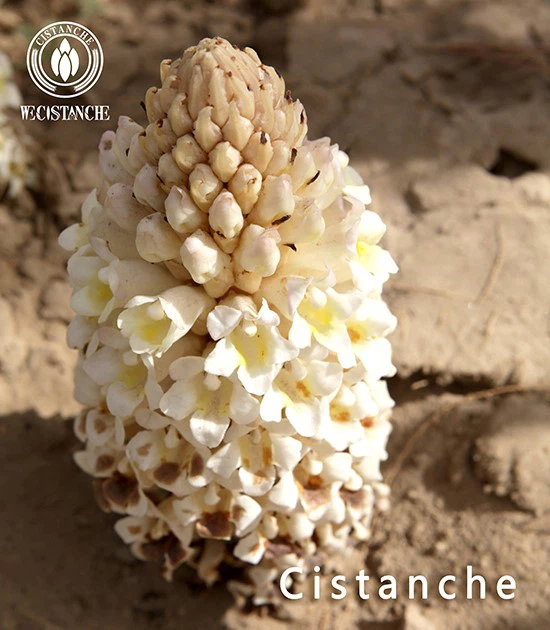
Cistanche deserticola, a traditional Chinese medicine with the reputation of "desert ginseng", occupies a pivotal position in the treasure trove of traditional medicine. It grows in the desert, drawing on the mysterious power of the desert, and is a precious gift from nature to humanity.
In traditional Chinese medicine theory, Cistanche deserticola has a sweet, salty, and warm nature, and belongs to the kidney and large intestine meridians. It has excellent effects in tonifying kidney yang, nourishing essence and blood, moisturizing the intestines, and promoting bowel movements. People with insufficient kidney yang and deficiency of essence and blood often experience symptoms such as impotence, infertility, soreness of the waist and knees, and weakness of the muscles and bones. Cistanche deserticola is like a gentle guardian, bringing them hope. It can warm and nourish kidney yang, replenish the body's increasingly depleted essence and vitality, and rejuvenate the body.
Cistanche tubulosa benefits and side effects
Cistanche deserticola can also play a unique role in constipation caused by intestinal dryness, especially in elderly people with insufficient kidney yang and deficiency of essence and blood. It is not simply pushing the intestinal peristalsis with strong force, but with its gentle nature, it slowly nourishes the intestines, replenishes the body fluids needed by the intestines, and enables dry stool to be discharged smoothly, just like injecting gurgling water into a dry river, making the "river" of life unobstructed again.
Throughout history, countless medical classics have highly praised the medicinal value of Cistanche deserticola. From the classification of it as a top-grade herb in the "Shennong Bencao Jing" to the praise in the "Compendium of Materia Medica" that it is a "calming and nourishing agent, warm but not hot, nourishing but not steep, warm but not dry, smooth but not leaking, with a calm and soothing appearance, hence the name Cistanche", all fully demonstrate the importance of Cistanche in traditional Chinese medicine treatment system. In practical applications, it is often cleverly combined with other medicinal herbs to form various classic formulas, accurately addressing different diseases, helping patients relieve pain and regain health.

Cistanche deserticola efficacy- Tonifying the kidney
Standard decoction: a key step in the modernization of traditional Chinese medicine
Before understanding the standard decoction of Cistanche deserticola, let's first understand the concept of standard decoction. Standard decoction is a single traditional Chinese medicine decoction prepared by standardized techniques, guided by traditional Chinese medicine theory and based on clinical application, concerning modern extraction methods. Its birth is to meet the demand for standardized clinical medication, ensuring the accuracy of medication and consistency of dosage.
The word 'standard' has a profound meaning. It covers the representativeness of the feed decoction pieces, and only by selecting the most representative decoction pieces as raw materials can the authentic efficacy of the decoction be ensured; The consistency between the preparation process and traditional methods is a respect and inheritance of traditional Chinese medicine wisdom, ensuring the continuation of the essence of decoction preparation; There is also the rigor of quality control, which strictly controls every link from raw materials to finished products, ensuring the stability and uniformity of the efficacy and quality of the formula. Moreover, the standard decoction has not undergone a drying process, which maximizes consistency with traditional decoction in clinical practice, allowing patients to take the most authentic and traditional therapeutic decoction.
Standard decoctions play a pivotal role in the quality control and standardization of traditional Chinese medicine. In the past, the preparation of traditional Chinese medicine decoctions was often influenced by various factors, such as the origin of the herbs, processing methods, decoction time, and heat, which led to uneven quality of the decoctions. This is like the same dish, but different chefs may produce vastly different flavors. And standard decoctions provide precise "cooking guidelines" for the preparation of traditional Chinese medicine decoctions through unified standards and specifications, enabling each batch of decoctions to achieve stable quality and efficacy, just like standardized food production, the taste is consistent no matter where it is tasted. In this way, doctors can more accurately grasp the dosage and efficacy of clinical medication, and patients can have more confidence in the treatment effect.

Main Chemical Constituents of Cistanche deserticola
From the perspective of inheriting and developing traditional Chinese medicine, standard decoctions are an indispensable bridge. It inherits the medicinal wisdom of traditional Chinese medicine for thousands of years, fully preserves the advantages of traditional decoctions, and actively embraces modern technology. With advanced extraction techniques, analytical instruments, and quality control methods, it conducts scientific research and improvement on decoctions, allowing ancient traditional Chinese medicine to radiate new vitality and vigor in modern society. It provides an important basis for the modernization research of traditional Chinese medicine. Whether it is the research and development of traditional Chinese medicine formula particles, traditional Chinese patent medicines, and simple preparations, or the creation of new traditional Chinese medicine, it can not be separated from the support of standard decoction. It is like a seed, nurturing infinite possibilities for the future development of traditional Chinese medicine, enabling it to better enter the world and contribute to the health of all humanity.
Method and process for quality research of the standard decoction of Cistanche deserticola
(1) Preparation of multiple batches of soup
In order to further study the quality of the standard decoction of Cistanche deserticola, researchers strictly followed the preparation requirements of the standard decoction and carefully prepared 14 batches of Cistanche deserticola standard decoction. In terms of raw material selection, they adhere to a strict attitude and carefully screen each batch of Cistanche deserticola decoction pieces to ensure their pure source and excellent quality, laying a solid foundation for the quality of the decoction from the source. In terms of preparation technology, we strictly follow the traditional decoction method and optimize it with modern scientific technology. From soaking time, boiling temperature to boiling time, every step is precisely controlled to maximize the extraction of effective ingredients from Cistanche deserticola while preserving its traditional medicinal properties. For example, in the soaking process, the soaking time should be strictly controlled within a certain range to allow the medicinal herbs to fully absorb moisture and prepare for subsequent decoction; When boiling, the method of slow and gentle frying is used to allow the ingredients in the medicinal herbs to dissolve slowly and fully, just like carefully cooking a dish, every step cannot be taken lightly.
(2) Determination of key component content
After the preparation of these 14 batches of standard decoction of Cistanche deserticola, researchers used HPLC (high-performance liquid chromatography) to determine the content of key components, mainly focusing on two components: echinacoside and verbascoside. HPLC is a highly sensitive and efficient analytical method that acts as an accurate "ingredient detector", capable of accurately identifying and determining the content of target components in complex mixtures. The principle is based on the difference in distribution coefficients of different components between the stationary phase and the mobile phase. Through the driving of the mobile phase, different components are separated in the chromatographic column, and then the separated components are detected and quantitatively analyzed by a detector.
In the actual operation process, researchers first need to prepare a reference solution and a test solution. For the reference solution, they will precisely weigh an appropriate amount of pinealoside and verbascoside reference, and then add a specific proportion of solvent to prepare a standard solution of known concentration. The preparation of the test solution is relatively complex, requiring a certain amount of standard decoction of Cistanche deserticola to be taken and subjected to a series of processing steps such as filtration and dilution to meet the requirements of HPLC determination. Afterwards, inject the prepared reference solution and test solution into the high-performance liquid chromatograph and analyze them according to the set chromatographic conditions. These chromatographic conditions include the selection of chromatographic columns, composition of mobile phase, flow rate, detection wavelength, etc. Each condition has been carefully optimized to ensure accurate and reliable measurement results. For example, selecting an appropriate chromatographic column can improve the separation efficiency, enabling clear separation of the peaks of echinacoside and verbascoside; Optimizing the composition of the mobile phase can adjust the retention time of components in the chromatographic column, thereby improving the accuracy of analysis.

Phenylethanol glycoside is the main active component of Cistanche deserticola
Click here to view Organic Cistanche Extract Powder products
【Ask for more】 Email:cindy.xue@wecistanche.com / WhatsApp: 0086 18599088692 / Wechat: 18599088692
The determination of the content of these two components is of crucial importance for the quality control of the standard decoction of Cistanche deserticola. Pinecone chrysanthemum glycoside and verbascoside are the main active ingredients in Cistanche deserticola, and their content directly affects the efficacy of the standard decoction of Cistanche deserticola. By accurately measuring the content of these two components, it is possible to effectively evaluate whether the quality of the decoction is stable and meets the standards, providing strong guarantees for the safety and effectiveness of clinical medication. Just like measuring the quality of a cup of coffee, the type and degree of roasting of coffee beans are certainly important, but the content of caffeine and aromatic substances is a key indicator, which directly determines the taste and quality of coffee. Similarly, the content of echinacroside and verbascoside is an important "indicator" for measuring the quality of standard decoction of Cistanche deserticola.

cistanche benefits for men
(3) Calculation of key indicators
After completing the determination of the content of echinacoside and verbascoside, the researchers immediately calculated the transfer rates of these two components. The calculation method for transfer rate is to compare the content of echinacoside and verbascoside in the standard decoction with the content of these two components in the raw material Cistanche deserticola slices, and calculate them through a specific formula. The specific formula is: transfer rate (%)=(ingredient content in standard decoction ÷ ingredient content in raw decoction pieces) × 100%. This transfer rate data is like a mirror, which can intuitively reflect the transfer of active ingredients from raw materials to soup during the preparation process, and is an important basis for evaluating the quality of soup preparation technology. If the transfer rate is high, it indicates that the preparation process can effectively extract the active ingredients from the raw materials into the soup, and the process is relatively ideal; On the contrary, if the transfer rate is low, it is necessary to optimize and improve the preparation process to increase the transfer rate of active ingredients. For example, by adjusting factors such as decoction time, temperature, or solvent dosage, the optimal preparation process conditions can be found to ensure that more effective ingredients can be transferred to the decoction, thereby improving the quality and efficacy of the decoction.
In addition to the transfer rate, paste yield, and pH value are also important indicators for quality control of the standard decoction of Cistanche deserticola. The method for determining the paste yield is to concentrate and dry the prepared standard decoction, then weigh the resulting dry paste weight and compare it with the weight of the raw material, Cistanche deserticola slices, to calculate the paste yield. The extraction rate can reflect the content of solid substances in the soup, which is of great significance for controlling the concentration and dosage of the soup. Different extraction rates may affect the efficacy and administration of the decoction; therefore,e strict control is necessary. The pH value is obtained by directly measuring the acidity and alkalinity of the standard decoction with a pH meter, which can reflect the stability and chemical properties of the decoction. A suitable pH value can ensure the stability of the active ingredients in the soup, avoid degradation and failure of the ingredients, and also ensure the safety of the soup during storage and use. If the pH value is too high or too low, it may hurt the quality of the decoction and even affect the safety of patients' medication. Therefore, in the quality control of standard decoction of Cistanche deserticola, the determination and control of paste yield and pH value are indispensable links.
(4) Construction of fingerprint map
To comprehensively and accurately evaluate the quality of the standard decoction of Cistanche deserticola, researchers also established the UPLC fingerprint (ultra-high performance liquid chromatography fingerprint) of the standard decoction of Cistanche deserticola. The UPLC fingerprint spectrum is like the "chemical ID card" of the standard decoction of Cistanche deserticola. It depicts the chromatographic peak information of various chemical components in the decoction, showing the overall chemical composition characteristics of the decoction, and can comprehensively reflect the relative content and proportion relationship of various components in the decoction.
The process of establishing the UPLC fingerprint spectrum is rigorous and complex. Firstly, it is necessary to preprocess the standard decoction of Cistanche deserticola and prepare it into a test solution suitable for injection analysis. Then, ultra-high-performance liquid chromatography was used to analyze the test solution under specific chromatographic conditions. These chromatographic conditions include selecting suitable chromatographic columns, such as octadecylsilane bonded silica gel packed columns, which can effectively separate various components in the decoction; Optimize the composition of the mobile phase, usually using acetonitrile and 0.1% acetic acid solution as the mobile phase, and perform gradient elution to achieve separation of different components at different times; Set appropriate parameters such as flow rate, detection wavelength, column temperature, etc. to ensure clear and accurate chromatographic peak information can be obtained. During the analysis process, the instrument will record the retention time and response signal of each component in the chromatographic column, forming a series of chromatographic peaks. By analyzing multiple batches of Cistanche deserticola standard decoction, common peaks were identified, which are the characteristic peaks of Cistanche deserticola standard decoction and represent its main chemical components.
In the fingerprint spectrum of the standard decoction of Cistanche deserticola, researchers identified six common peaks, and determined peak 1 as echinacoside, peak 3 as tubulin A, peak 4 as verbascoside, and peak 5 as isoverbascoside. The identification of these peaks is achieved through comparison with standard samples and the use of various spectroscopic techniques and data analysis methods. By identifying common peaks, the distribution of the main components in the standard decoction of Cistanche deserticola can be more clearly understood, providing a more specific basis for quality evaluation.
After obtaining fingerprint spectra and identifying common peaks, researchers used a traditional Chinese medicine chromatographic fingerprint similarity evaluation system to evaluate the similarity of 14 batches of standard decoction of Cistanche deserticola. The system calculates similarity values by comparing the fingerprint spectra of each batch with the reference fingerprint spectra. The higher the similarity value, the more similar the chemical composition between the batch of soup and the control soup, and the more stable and reliable the quality. Through similarity evaluation, the quality consistency of different batches of Cistanche deserticola standard decoction can be quickly and intuitively determined, and batches with quality abnormalities can be detected promptly, so as to take corresponding measures for adjustment and improvement. This method provides a comprehensive, scientific, and effective means for the quality control of the standard decoction of Cistanche deserticola, greatly improving the level and efficiency of quality control.

Cistanche deserticola slice
Interpretation of Research Results
(1) Component transfer rate analysis
In the study of 14 batches of standard decoction of Cistanche deserticola, we found that the average transfer rates of echinacoside and verbascoside were 22.99% and 17.09%, respectively. At first glance, this data may raise some doubts as to why the transfer rate is not very high. There are many complex factors involved in this.
From the perspective of medicinal material quality, the growth environment of Cistanche deserticola is very unique, with significant differences in soil, climate, light, and other conditions in different production areas. These factors will significantly affect the content and types of effective ingredients in Cistanche deserticola. For example, Cistanche deserticola grown in areas with relatively abundant water sources on the edge of the desert may have higher levels of echinacroside and verbascoside than Cistanche deserticola grown in arid environments deep in the desert. Moreover, the harvesting time of Cistanche deserticola is extremely critical. Harvesting too early or too late can lead to changes in the content of active ingredients. If harvested too early, Cistanche deserticola has not fully grown and developed, and the accumulation of effective ingredients is insufficient; If harvested too late, some components may decompose or transform, which also affects their content.
The decoction process is also an important factor affecting the transfer rate. The length of decoction time directly affects whether the effective ingredients can be fully dissolved. If the decoction time is too short, the components such as echinacoside and verbascoside in the medicinal herbs may not have enough time to fully dissolve into the decoction; However, if the decoction time is too long, it may cause some components to degrade or transform, reducing the transfer rate. The heat during decoction cannot be ignored, as the alternating use of low and high heat, as well as the stirring method during the decoction process, can affect the transfer of ingredients. For example, proper stirring can ensure full contact between medicinal herbs and solvents, promoting the dissolution of active ingredients. However, if stirring is too intense, it may damage the cell structure of medicinal herbs, causing some impurities to mix into the soup and affect its quality.
(2) Analysis of Paste Yield and pH Value
The extraction rate range of 14 batches of standard decoction of Cistanche deserticola is 25.1% -56.6%, and the pH value range is 4.30-5.15. The extraction rate, to a certain extent, reflects the content of solid substances in the decoction, and its stability plays a crucial role in ensuring the quality and efficacy of the decoction. If the ointment yield is unstable, there may be differences in the amount of effective ingredients ingested by patients when taking different batches of decoctions, which can affect the therapeutic effect. For example, a high extraction rate may indicate that there are more impurities in the soup or that the active ingredients are overly concentrated, which not only affects the taste of the soup but may also increase the risk of medication for patients; If the ointment yield is too low, it may lead to insufficient content of active ingredients and fail to achieve the expected therapeutic effect.
The pH value reflects the acidity and alkalinity of the soup, and it has a significant impact on the stability of the soup. A suitable pH value can ensure that the active ingredients in the soup remain stable and are not easily decomposed or converted. In the standard decoction of Cistanche deserticola, the pH range is relatively stable, indicating that the acidity and alkalinity of the decoction are suitable for the preservation of active ingredients. But if the pH value fluctuates significantly, it may cause a series of problems. For example, when the pH value is too high or too low, it may cause changes in the chemical structure of components such as echinacoside and verbascoside, thereby reducing their biological activity and affecting drug efficacy. The differences in paste yield and pH value between different batches may be caused by various factors. In addition to the quality of medicinal materials and decoction techniques mentioned earlier, the pre-treatment methods and storage conditions of medicinal materials may also have an impact on them. For example, if medicinal herbs become damp or moldy during storage, it may cause changes in their composition, thereby affecting the yield and pH value of the paste.
(3) Fingerprint similarity analysis
By evaluating the similarity of fingerprint spectra of 14 batches of standard decoction of Cistanche deserticola, we obtained a similarity range of 0.789-0.999. Among them, the batch with the lowest similarity is RCR-9 standard soup, which is only 0.789, while the similarity of most other batches is above 0.98. From the fingerprint chromatogram of RCR-9 standard soup, it is evident that there are two distinct peaks at retention times of 12.278 and 15.466 compared to other samples, indicating differences in the chemical composition of this batch of soup compared to other batches.

Cistanche deserticola slice
The main reasons for this difference are related to the growth environment, harvesting time, and processing methods of medicinal herbs. The chemical composition of traditional Chinese medicine is extremely complex, and different growth environments can affect the accumulation of substances in medicinal materials. For example, Cistanche deserticola grown in high-altitude areas may synthesize some special chemical components in its body due to strong ultraviolet radiation and large temperature differences between day and night, or the content of certain components may be different from that of Cistanche deserticola grown in low-altitude areas. The different harvesting times can also lead to changes in the composition of medicinal herbs. The content and proportion of components in Cistanche deserticola may vary in different seasons and growth stages. The processing method is equally crucial, as drying methods, processing techniques, etc., can all affect the material accumulation and component content of the decoction pieces. For example, using two different drying methods, sun drying and oven drying, may result in varying degrees of loss of certain volatile components in Cistanche deserticola, leading to changes in the composition of the decoction pieces and ultimately affecting the similarity of the fingerprint spectra of the standard decoction.
Through the study of multiple batches of standard decoction of Cistanche deserticola, we have achieved fruitful results. The research results indicate that the preparation process of the standard decoction of Cistanche deserticola is standardized, with good overall uniformity and controllable quality. In terms of the determination of key components, whether it is the precise determination of the content of echinacoside and verbascoside by HPLC method, or the comprehensive display of the overall chemical composition characteristics of the decoction by UPLC fingerprint spectrum, all provide reliable methods and basis for the quality control of standard decoction of Cistanche deserticola. This is like creating a strict "quality inspection system" for the standard decoction of Cistanche deserticola. From the screening of raw materials to the preparation of decoction, and then to the testing of finished products, every link is precisely controlled to ensure that every bottle of Cistanche deserticola standard decoction can meet high-quality standards.