Suoyang Vs. Cistanche (Cistanche Tubulosa): How To Choose? The Original Plant, Pharmacopeial “marker” Indices For Extracts, Testing Essentials, And The Standout Differences in Freshly Dug Material—explained in One Article
Sep 26, 2025
Keywords: cistanche benefits; which is better, Suoyang or Cistanche?
Overview
Suoyang (Cynomorium songaricum) and Cistanche (this article focuses on Cistanche tubulosa) are both often labeled "kidney yang–tonifying, anti‑fatigue," but they are not the same thing: they belong to different families, parasitize different hosts, and have different principal active constituents (markers). Below, in plain language and with an illustrative figure, we explain their biological and visual differences, which marker compounds pharmacopeias/industry standards look for in extracts, what to watch for in testing, and-based on published research-answer "which works better, Suoyang or Cistanche?"
Who are they? Two core biological differences
Different taxonomic origins
Cistanche (e.g., C. tubulosa) belongs to the Orobanchaceae; it is a holoparasitic plant with little to no chlorophyll. (en.wikipedia.org)
Suoyang (Cynomorium) belongs to the independent family Cynomoriaceae and is placed in the order Saxifragales in modern systematics. (mobot.org)
Different hosts and ecology
Cistanche (C. tubulosa) commonly parasitizes the roots of halophytic or salt‑tolerant shrubs (e.g., Tamarix chinensis) and occurs in coastal saline‑alkali lands and arid regions. (environmentalmicrobiome.biomedcentral.com)
In China, Suoyang often parasitizes jujube rootstocks and white thorn and other halophytic/xerophytic shrubs (e.g., Nitraria spp.); its spikes are deep red to purplish‑brown, with a sweet, vegetable‑like odor. (en.wikipedia.org)
What do freshly dug raw materials look like? One figure to understand (illustrated)
Fresh Cistanche (C. tubulosa): fleshy spicate inflorescences "emerge" from the ground; yellow‑brown to golden; tightly imbricated scale leaves; cut surface juicy, pale yellow to light brown. (floraofqatar.com)
Fresh Suoyang: short, club‑shaped fleshy spikes; deep red/purplish‑brown, often turning black after flowering; slightly sweet odor. (en.wikipedia.org)
Suoyang vs. Cistanche (C. tubulosa): Morphology at a Glance
Suoyang - Cynomorium songaricum
Deep red/purplish-brown spike Short, club-shaped Common host: Nitraria (white thorn)- Fresh cut: dark red to purplish-brown, dense; low free juice.
- Harvest window: spring (spiking stage); off-season quality fluctuates.
-
-

Dry Cynomorium songaricum
Cistanche - Cistanche tubulosa
Golden/yellow-brown spike Tight scale leaves; juicy tissue Common host: Tamarix- Fresh cut: pale yellow to light brown; high moisture; visible fiber bundles.
- Harvest window: around spiking; common in saline-alkali/sandy soils.
-

Cistanche Tubolosa Plant In Desert

Fresh Cistanche

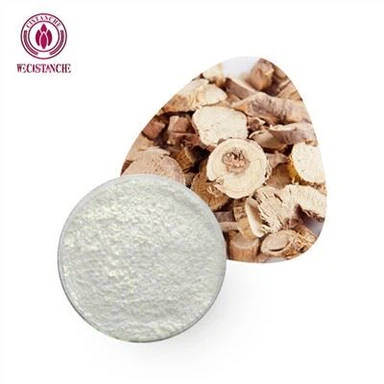
Dry Cistanche Tubolosa
3.Extracts: which components do pharmacopeias/industry standards look at?
Cistanche (Cistanche tubulosa)
Chinese Pharmacopoeia and industry‑common methods: use echinacoside and acteoside/verbascoside as marker compounds, quantified by HPLC at about 330 nm; many labs also report "total phenylethanoid glycosides (UV)," but that is a different basis from monomer HPLC-consumers should prioritize HPLC monomer content. (hplcx.com)

Suoyang (Cynomorium songaricum)
Quality research focuses on polyphenols and triterpenes: gallic acid, protocatechuic acid/aldehyde, catechin, plus indices like total flavonoids and total polysaccharides for quantitation or fingerprint control; multiple method papers use HPLC (often 270–280 nm) or NIR for rapid models. The Suoyang pharmacopeial monograph has been under revision in recent years-use the current effective version and request the exact method from suppliers. (ywfx.nifdc.org.cn)
Note: the 2025 edition of the Chinese Pharmacopoeia has been issued and will take effect on 2025‑10‑01; details for items such as Suoyang may be updated. For purchasing and filing, verify the latest text. (zh.wikipedia.org)
Testing and purchasing tips (for consumers and brand owners)
Cistanche (C. tubulosa)
Always ask for the "Method": the COA should specify "HPLC (330 nm)" and include peak order, retention times, and integration tables for echinacoside/acteoside; treat "UV total glycosides only" with caution. (hplcx.com)
Adulteration control: products adulterated or substituted with Suoyang or other botanicals have been reported; DNA barcoding/species‑specific nucleotide signatures can help authenticate. (pmc.ncbi.nlm.nih.gov)
Safety and compliance: check heavy metals and pesticide residues (per pharmacopeial general chapters and multi‑residue limits); run third‑party re‑tests when needed. (m.antpedia.com)
Suoyang
Track HPLC quantitation of gallic acid, protocatechuic acid/aldehyde, catechin, and indices such as total flavonoids/polysaccharides; high tannin content can interfere-methods should document specificity and recovery. (ywfx.nifdc.org.cn)
Species–origin–ecology cause wide compositional variability; ask for batch chromatograms/fingerprints and harvesting details when possible. (pubmed.ncbi.nlm.nih.gov)
Freshly dug vs. processed dry/extract-are they very different?
Yes. During storage/transport of fresh material, endogenous enzymes and oxidation can change soluble sugars and some markers; processing often uses "rapid drying/enzyme deactivation" to lock in target indices. Public patents also note that air‑drying fresh material can cause loss of actives. (patents.google.com)
Which works better-Suoyang or Cistanche? Let the strength of evidence speak
Cistanche (C. tubulosa):
Human randomized controlled trials (often in combination with ginkgo) report statistically significant improvements in chronic fatigue complaints, quality of life, sexual health scales, and cognitive scales in older adults (MMSE, MoCA, etc.); however, some studies have small samples or multi‑ingredient formulas, so larger trials are still needed to define effect sizes. (pubmed.ncbi.nlm.nih.gov)
Numerous animal/mechanistic studies cover antidepressant‑like effects, HPG axis, hepatoprotection, etc., with phenylethanoid glycosides (e.g., echinacoside, acteoside) as the major active group. (pubmed.ncbi.nlm.nih.gov)


100% organic HPLC Testing 30% Echinacoside 12% Acteoside 80% Total Glycoside Cistanche Extract Pills
Suoyang:
Evidence is mainly from animal and in‑vitro studies, touching on antioxidant, neuroprotective, and male reproductive endpoints, but high‑quality, adequately powered human RCTs are lacking. (pubmed.ncbi.nlm.nih.gov)
Straightforward conclusion (for "cistanche benefits" readers)
If your goals include physical performance/fatigue, cognition, and sexual health, then based on "standardized markers + human RCTs," Cistanche (Cistanche tubulosa) currently has the more complete evidence and clearer testing conventions. When buying, prioritize products that state "HPLC monomers (echinacoside, acteoside) + batch chromatograms + third‑party lab reports" before discussing price and dosage. (hplcx.com)
References & sources
HPLC wavelengths and monomer quantitation: simultaneous HPLC of four phenylethanoid glycosides (Chinese Pharmacopoeia 2020 uses ~330 nm for E/A); xjcistanche technical note; hplcx chromatographic data entry "CP 2020-Cistanche content assay." (xjcistanche.com)
Species authenticity and adulteration: species‑specific nucleotide signatures used to detect substitution/adulteration (including Suoyang). (pmc.ncbi.nlm.nih.gov)
Suoyang quality indices: NIR and multi‑origin HPLC studies (gallic acid, protocatechuic acid/aldehyde, catechin; total flavonoids/polysaccharides). (ywfx.nifdc.org.cn)
Fresh‑material processing and loss of actives: patent on processing fresh Cistanche (discusses E + A control and losses from natural air‑drying). (patents.google.com)
C. tubulosa human trials: randomized, double‑blind, placebo‑controlled trials (some with ginkgo); see originals for methods and conclusions. (pubmed.ncbi.nlm.nih.gov)
Biological differences and morphology: taxonomy, morphology, hosts for Cistanche and Cynomoriaceae; parasitic system of C. tubulosa on Tamarix. (en.wikipedia.org)
Version note: effective date of the 2025 Chinese Pharmacopoeia and public notices of Suoyang standard revisions. (zh.wikipedia.org)
Last‑mile insight for readers
Both are "desert tonics," but the "evidence density" differs: Cistanche (Cistanche tubulosa) aligns better with global supplement‑grade evidence-standardized marker quantitation (HPLC E + A), authenticity tools, and human data. Suoyang research is advancing, but still a step behind for consumer‑level, reproducible evidence. If you truly want to feel cistanche benefits, start by "checking HPLC monomers + batch chromatograms + third‑party reports," instead of being swayed by an implausibly high "total glycosides %." If helpful, I can provide a one‑page "buying and acceptance checklist" tailored to your budget and goals to minimize pitfalls.
Learn more:
Cistanche
Saxifragales
Parasitic plant Cistanche tubulosa shapes the bacterial community structure and functional composition of the salt‑tolerant host Tamarix chinensis across different parasitic statuses | Environmental Microbiome | Full Text
Cynomorium
Orobanchaceae - Flora of Qatar
Chinese Pharmacopoeia 2020 - Cistanche content assay | hplcx chromatographic data index
Rapid NIR quantification of multiple indices in Suoyang
Pharmacopoeia of the People's Republic of China
Detection of Cistanches Herba (Rou Cong Rong) Medicinal Products Using Species‑Specific Nucleotide Signatures - PMC
"Agilent" series on the 2020 Chinese Pharmacopoeia | Stronger multi‑residue pesticide standards for TCMs
Content analysis and quality evaluation of main active components and mineral elements of Cynomorium songaricum in different habitats -
PubMed
CN105663261A - Fresh product Cistanche salsa raw material processing method - Google Patents
A Botanical Product Containing Cistanche and Ginkgo Extracts Potentially Improves Chronic Fatigue Syndrome Symptoms in Adults - PubMed
Phenylethanol glycosides from Cistanche tubulosa improved reproductive dysfunction via CYP450‑3β‑HSD pathway - PubMed
Extracts of Cynomorium songaricum protect SK‑N‑SH human neuroblastoma cells against staurosporine‑induced apoptosis - PubMed
HPLC for simultaneous determination of four phenylethanoid glycosides in Cistanche decoction pieces and Cistanche tubulosa extracts - News (xjcistanche.com)