Xinjiang, The Land Of Longevity, Is Accompanied By Cistanche
Sep 15, 2025
Xinjiang, this vast and magical land, has long attracted the world's attention due to its unique geographical features and diverse ethnic cultures. However, you may not be aware that Xinjiang is still one of the world's renowned longevity regions. Whether in villages on the edge of the Taklamakan Desert or in small towns at the foot of the Tianshan Mountains, there are many long-lived elderly people living, and their lifestyle and dietary habits have always been the key to people's exploration of the mystery of longevity. Among the many secrets to longevity, a special phenomenon has attracted people's attention - many long-lived elderly people in Xinjiang have a particular preference for Cistanche deserticola. What kind of magical plant is this? Why has it become a favorite for the health and wellness of long-lived elderly people in Xinjiang? Today, let's step into the world of Cistanche deserticola and uncover the mysterious veil between it and the long-lived elderly in Xinjiang.

Old Man and Cistanche deserticola
Cistanche deserticola: the 'golden treasure' in the desert
Cistanche deserticola, a mysterious plant growing deep in the desert, is known as the "desert ginseng" and is a perennial, tall, parasitic herbaceous plant of the Cistanche genus in the family Liliaceae. Its growth environment is extremely unique and harsh, mainly distributed in desert areas such as Xinjiang, Inner Mongolia, Gansu, and Ningxia in China. It often parasitizes the roots of desert plants such as red willows, absorbing nutrients and water from its host to maintain its own growth. In Xinjiang, it is mostly rooted in the vicinity of the Taklamakan Desert and the Gurbantunggut Desert, where the climate is extremely dry, with long sunshine hours, large temperature differences between day and night, scarce annual precipitation, and sandstorms that make it difficult for ordinary plants to survive. However, Cistanche deserticola grows tenaciously here, forming a unique symbiotic relationship with the harsh natural environment.

The villagers of Hetian Village in Xinjiang are digging and harvesting Cistanche deserticola
From the appearance, most of the Cistanche deserticola is buried underground, and the exposed part is generally 40-160 centimeters high. Its stem is fleshy and cylindrical, covered with spirally arranged pale yellow scale-like leaves, as if wearing a mysterious armor. At the flowering period, Cistanche deserticola will draw spike-like inflorescences from the top of its stem, with tightly arranged small flowers ranging in color from pale yellow to light purple, resembling a strange flame blooming in the desert, standing out particularly in the desolate sand sea. And when the flowers wither, they will bear spherical capsules containing countless tiny and precious seeds.
Due to its special requirements for growth environment and parasitic characteristics, the yield of Cistanche deserticola is relatively scarce. In addition, due to long-term overexploitation, wild Cistanche deserticola resources are becoming increasingly scarce. It has now been listed as a second-class protected wild plant in China, which makes it even more precious. However, with the gradual maturity of artificial cultivation technology, artificially cultivated Cistanche deserticola has begun to emerge in the market, providing the possibility for more people to understand and use Cistanche deserticola.
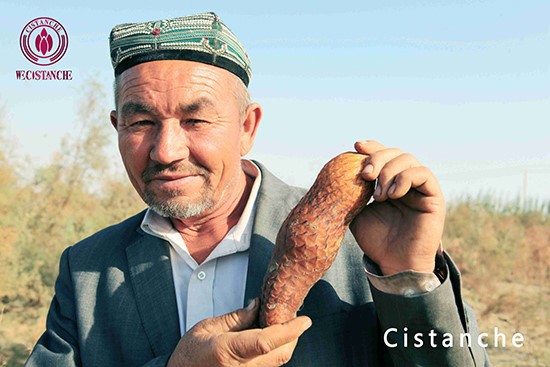
Harvest of Cistanche deserticola
The nutritional treasure trove of Cistanche deserticola
The reason why Cistanche deserticola is highly favored is closely related to its rich nutritional content. It is like a natural treasure trove of nutrients, containing a variety of substances that are extremely beneficial to human health.
In the composition list of Cistanche deserticola, alkaloids are an important member. Although their content is relatively low, these alkaloids have unique physiological activities and play a potential role in regulating the human nervous and endocrine systems, helping to maintain the stability and balance of the internal environment.
Polysaccharides are also one of the key components of Cistanche deserticola. Cistanche polysaccharides are composed of various monosaccharides such as xylose, fructose, ribose, glucose, mannose, galactose, rhamnose, fucose, arabinose, as well as galacturonic acid, glucuronic acid, etc. These polysaccharides have strong biological activity and significant effects in enhancing immunity, antioxidation, and regulating gut microbiota. Research has shown that polysaccharides from Cistanche deserticola can activate macrophages, enhance their phagocytic ability, thereby improving the body's immune defense function and helping the body resist the invasion of various pathogens; At the same time, it can also eliminate free radicals in the body, slow down oxidative damage to cells, and play a role in delaying aging; In the intestine, polysaccharides from Cistanche deserticola can promote the growth and reproduction of beneficial bacteria, improve the intestinal microbiota environment, and maintain intestinal health.

Main Chemical Constituents of Cistanche deserticola
The rich amino acids are also a major highlight of Cistanche deserticola. Sixteen amino acids have been measured from Cistanche deserticola, including seven essential amino acids and nine non-essential amino acids. The amino acid composition is comprehensive and nutritionally balanced. These amino acids play an indispensable role in the metabolism of the human body. They are the basic raw materials for protein synthesis and participate in the construction and repair of body tissues. For example, glutamic acid and aspartic acid are rich in content. Glutamic acid is not only an important raw material for protein synthesis, but also participates in nitrogen metabolism in the human body and plays a role in physiological processes such as liver detoxification. Aspartic acid helps promote energy metabolism in the body and has a positive impact on heart function and muscle movement.
In addition, Cistanche deserticola is also rich in various minerals such as potassium, sodium, magnesium, calcium, iron, zinc, manganese, etc. Potassium is crucial for maintaining electrolyte balance and normal heart function in the human body. It can regulate the osmotic pressure inside and outside cells, ensuring the normal beating of the heart; Sodium is involved in maintaining the acid-base balance of the human body and transmitting nerve impulses; Magnesium plays an important role in bone health, neuromuscular function, and stable heart rhythm; Calcium is the main component of bones and teeth, and plays a crucial role in physiological processes such as blood clotting and nerve transmission; Iron is an important component of hemoglobin, involved in oxygen transport, and has significant implications for preventing and improving iron deficiency anemia; Zinc plays an indispensable role in human growth and development, immune regulation, reproductive function, and other aspects; Manganese is involved in the composition and activation of various enzymes, playing a role in antioxidant and bone development processes. These minerals work together to maintain the normal functioning of various physiological systems in the human body.
Extraordinary efficacy, helping longevity
Dual verification of traditional wisdom and modern science
The value of Cistanche deserticola in the field of health and wellness is not just a discovery by modern people; it has a deep historical origin in traditional medicine. As early as the Han Dynasty's "Shennong Bencao Jing", Cistanche deserticola was listed as a top-grade medicinal herb. The book records that it has a "sweet taste and a slight warmth". It is used to nourish the five organs, relieve cold and heat pain in the stems, nourish the five viscera, strengthen yin, nourish essence and qi, have more children, and treat women's ailments. Long-term consumption can lighten the body. This indicates that in ancient times, people had already recognized the important effects of Cistanche deserticola in tonifying the kidneys, nourishing essence, and regulating the body.

Cistanche deserticola improves immunity
Click here to view Cistanche Enhance Immunity products
【Ask for more】 Email: Email:cindy.xue@wecistanche.com / WhatsApp: 0086 18599088692 / Wechat: 18599088692
In the Ming Dynasty, Li Shizhen provided a more detailed description of Cistanche deserticola in his "Compendium of Materia Medica", stating that it was "nourishing but not steep, hence it was called calm. Its calm and gentle appearance highly praised the mild and nourishing properties of Cistanche deserticola. In traditional Chinese medicine theory, Cistanche deserticola has a sweet and salty taste, a warm nature, and belongs to the kidney and large intestine meridians. It has the effects of tonifying kidney yang, nourishing essence and blood, moistening the intestines, and promoting bowel movements. It is often used to treat symptoms such as kidney yang deficiency, essence and blood deficiency, impotence and infertility, soreness and weakness of the waist and knees, muscle and bone weakness, intestinal dryness and constipation. In the long-term practice of traditional Chinese medicine, many classic combinations and usage methods of Cistanche deserticola have been summarized, such as stewing Cistanche deserticola with lamb, which can not only nourish kidney yang, but also benefit essence and blood. It is a nourishing dish suitable for winter consumption. The combination of Cistanche deserticola and medicinal herbs such as Lockyang and Goji berries can be used to make medicinal wine, which has the effects of warming and tonifying kidney yang and strengthening the body.
In modern times, with the rapid development of science and technology, researchers have conducted in-depth research on Cistanche deserticola, revealing its health secrets from multiple perspectives, such as molecular biology and pharmacology. Modern scientific research has shown that the phenylethanoid glycosides in Cistanche deserticola have strong antioxidant effects, which can clear excessive free radicals in the body, reduce the damage of free radicals to cells, and thus delay aging. Relevant experimental data show that in vitro cell experiments, the extract of phenylethanolic glycosides from Cistanche deserticola can significantly increase the activity of intracellular antioxidant enzymes, such as superoxide dismutase (SOD), glutathione peroxidase (GSH Px), etc., and reduce the content of malondialdehyde (MDA), which is a product of lipid peroxidation. The decrease in MDA content means that the degree of oxidative damage to cells is reduced. In animal experiments, after administering phenylethanolic acid glycosides of Cistanche deserticola by gavage to aging model mice, their learning and memory abilities were improved, their hair became smoother and shinier, and their organ indices were also increased. All of these indicate that Cistanche deserticola has a positive effect on delaying animal aging.
In terms of immune regulation, polysaccharides from Cistanche deserticola play a crucial role. Research has found that polysaccharides from Cistanche deserticola can activate immune cells such as T lymphocytes and B lymphocytes, promote their proliferation and differentiation, and enhance the body's immune function. A clinical study targeting immunocompromised individuals showed that after taking health supplements containing polysaccharides from Cistanche deserticola for a period of time, subjects' immunoglobulin levels significantly increased, and the incidence of diseases such as colds and infections significantly decreased. This fully demonstrates the significant efficacy of Cistanche deserticola in enhancing human immunity.
Cistanche deserticola also has a certain protective effect on the nervous system. The active ingredients contained in it can regulate the release of neurotransmitters, improve the function of nerve cells, and have potential value for the prevention and treatment of neurological diseases such as senile dementia and Parkinson's disease. In animal experiments, extracts of Cistanche deserticola can alleviate neurological symptoms in animal models of nerve damage, promote the repair and regeneration of nerve cells, and provide new ideas and directions for the treatment of neurological diseases.
In addition, Cistanche deserticola also plays a certain role in regulating intestinal function and improving cardiovascular health. It can promote intestinal peristalsis, increase the number of beneficial bacteria in the intestine, improve the intestinal microbiota environment, and thus alleviate constipation symptoms. Meanwhile, some components in Cistanche deserticola can also lower blood lipids and blood pressure, inhibit platelet aggregation, and have a protective effect on the cardiovascular system. These modern scientific research achievements provide a solid theoretical basis and scientific basis for the widespread application of Cistanche deserticola in the field of health care, and also allow us to have a deeper understanding of the reasons why Xinjiang's long-lived elderly prefer Cistanche deserticola.

Cistanche male benefits
Eating with moderation, accompanied by health
After understanding the many benefits of Cistanche deserticola, I believe everyone is eager to know how to integrate it into their daily lives. In fact, there are various ways to consume Cistanche deserticola, each with its own unique flavor and efficacy.
Boiling soup is one of the most common ways of consumption. Pairing Cistanche deserticola with various meats such as chicken, pork ribs, lamb, and adding some goji berries, red dates, yams, and other ingredients, simmering over low heat, the nutritional components of Cistanche deserticola will be fully integrated into the soup. The resulting soup not only tastes delicious, but also has the effects of nourishing the liver and kidneys, nourishing essence and blood. For example, in the soup of Cistanche deserticola and mutton, wash 15-30 grams of Cistanche deserticola and 250 grams of mutton, cut them into pieces, put them in a clay pot, add an appropriate amount of water, ginger slices, scallions and other seasonings, bring to a boil over high heat, then simmer over low heat for 1-2 hours until the mutton is cooked to perfection. This soup is particularly suitable for consumption in the cold winter, as it can warm the body, nourish the kidneys, and strengthen yang. For people with insufficient kidney yang, weak waist and knees, and a fear of cold, it is an excellent nourishing soup.
Cooking Congee is also a good choice. Cut Cistanche deserticola into small pieces and cook it with rice, millet, and other grains into Congee, which is simple and nutritious. Cistanche and medlar Congee is a popular health Congee. Prepare 10-15 grams of Cistanche, 10 grams of medla, and some rice. Wash and slice Cistanche deserticola, put it into a pot with rice, add some water, boil it over high heat, turn to low heat, and cook it until the Congee is cooked, and finally add medlar and cook it for 5-10 minutes. This Congee has the functions of tonifying the kidney and essence, nourishing the liver and eyesight, moistening the intestines, and relieving constipation. It is suitable for breakfast or dinner. Taking it for a long time will help improve the body and improve the quality of sleep.
For busy office workers, brewing tea with Cistanche deserticola is the most convenient way. Cut the Cistanche deserticola into thin slices, take 3-5 grams each time, brew with boiling water, and simmer for 5-10 minutes before drinking. It can be brewed repeatedly until the taste becomes lighter. Cistanche deserticola tea has the effects of nourishing the kidneys and yang, moisturizing the intestines, nd promoting bowel movements. Drinking a cup every day can not only refresh the mind but also nourish the body, making it a good helper for daily health preservation.
Soaking Cistanche deserticola in wine is also a traditional way of consumption. Wash and dry Cistanche deserticola, cut it into small pieces, soak it in Baijiu, and drink it after 15-30 days. Cistanche deserticola wine has the effects of warming and tonifying kidney yang, and strengthening the body. Moderate consumption can alleviate symptoms such as soreness and weakness in the waist and knees, and weakness in the limbs. However, it should be noted that high-level Baijiu should be selected when brewing, and it should be sealed to avoid alcohol volatilization and bacterial pollution. In addition, drinking alcohol should be moderate and not excessive.
However, although Cistanche deserticola is good, it is not suitable for everyone, and there are also some precautions when consuming it. Cistanche deserticola has a warm nature and is not suitable for people with yin deficiency, excessive fire, and constipation due to excess heat. Otherwise, it may worsen the symptoms of dryness and heat in the body, leading to problems such as dry mouth and tongue, sore throat, and worsening constipation. Pregnant and lactating women should also consume with caution, as certain components of Cistanche deserticola may have potential effects on fetuses or infants. When consuming Cistanche deserticola, it is also important to control the dosage. Generally speaking, the daily intake should not exceed 10 grams, as excessive consumption may cause adverse reactions such as overheating and gastrointestinal discomfort. At the same time, Cistanche deserticola should not be taken together with some drugs, such as antihypertensive drugs, hypoglycemic drugs, etc., to avoid drug interactions, affect drug efficacy, or produce adverse reactions. If you are taking other medications, it is best to consult a doctor before consuming Cistanche deserticola.