The Antidepressant Effect Of Cistanche Tubulosa
Mar 10, 2022
Contact: Audrey Hu Whatsapp/hp: 0086 13880143964 Email: audrey.hu@wecistanche.com
As a parasitic plant, the hosts of Cistanche tubulosa are desert sand-fixing plants, such as pike and tamarisk. By planting Cistanches and driving the planting of pike, red willow, and other sand-fixing plants, it can not only prevent sand and fix sand, but also improve the environment in the west, and drive the local minority people out of poverty and get rich.

The dried fleshy stem with scaly leaves of Cistanche tubulosa is warm in nature, sweet and salty in taste, and is an important medicine for kidney and yang, laxative and laxative, and is known as "desert ginseng". Insufficient kidney yang will lead to malfunction of the body's consciousness, stagnation of qi, and depression, manifesting symptoms such as depression, loss of interest, and sentimentality; this is similar to the symptoms of depression in modern medicine, suggesting that traditional kidney yang tonic drugs may have potential antidepressant activity. Professor Li Xiaobo's group at the School of Pharmacy of Shanghai Jiaotong University has been engaged in the research of traditional Chinese medicine and modernization of Chinese medicine for a long time, and it has been confirmed that the kidney-yang tonic herb Cistanche has indeed significant antidepressant activity, but its specific active substance and mechanism of action are still unclear.

The flowering period of Cistanche is May-June
This study is the first to clarify the antidepressant potency of total Cistanche glucoside (TG), which contains phenylethanoid glycosides (mainly including echinacoside, verbascoside, isophorbasin, etc.) and cyclic enetylether terpene glycosides (mainly including 8-epi-strychnine acid, kynurenine glycosides, etc.) that can synergistically regulate the hypothalamic-pituitary-adrenal (HPA) axis, inflammation, neurotransmitter levels, and other components. At the same time, the study further elucidated the key role of intestinal flora in the efficacy of TG: on the one hand, TG could alleviate the activation of the HPA axis and inflammation level by regulating a series of genera in Erysipelotrichacea, Peptococcaceae, and Muribaculaceae families, On the other hand, hydroxytyrosol (HT), a product of TG metabolism by intestinal flora, has been shown to be one of its active substances in vivo.

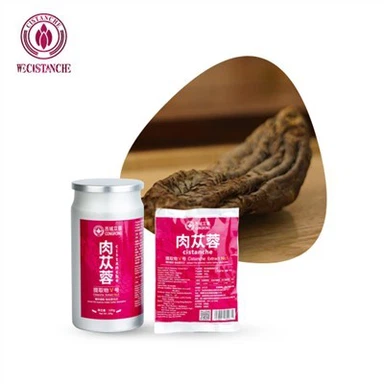
Succulent stems of dried Cistanche tubulosa
In addition, this study also found that Cistanche total glycosides (TG) can alleviate hypothalamic-pituitary-gonadal axis and cyclic nucleotide abnormalities in depression-like rats, reflecting the scientific connotation and advantages consistent with the traditional efficacy of Cistanche for nourishing the kidney and yang. Cistanche is a valuable Chinese medicine that regulates the immune function of the body. It can excite the pituitary gland and adrenal cortex or have a similar effect as adrenal cortex hormones.

Cistanche tubulosa can regulate the body's immune function