The Three Major Drinking Habits That Damage The Kidneys, And You May Also Have…
Sep 15, 2023
1、 The Three Drinking Habits of "Kidney Destruction"

cistanche supplement benefits
1. Drink water again when thirsty
When we are thirsty, the amount of water lost in our body has reached 1% of our body weight, and our bodily functions have begun to be affected. Long term this is not good for the kidneys. It is recommended that everyone drink water at different times every day.
2. Drink as water
Drinking beverages such as water all year round can lead to the loss of calcium in the human body due to the sugar and phosphate content in the beverages. The calcium content in urine also increases, which may lead to the formation of kidney stones and have a certain impact on the renal microenvironment.
3. Long-term consumption of strong tea
Too strong tea is not good for the body, not only does it harm the stomach, but it is also detrimental to kidney health. Long-term consumption of large amounts of beverages, including sugars, electrolytes, pigments, spices, etc., can exacerbate the burden of glomerular filtration and detoxification, damaging kidney function.
2、 How is it best to drink water?
1. 1500-1700 milliliters of water per day
Generally speaking, a healthy adult's body excretes 2500ml of water every day through urination, respiration, defecation, and skin evaporation.
In addition to obtaining approximately 1000ml of water from food, the 2016 edition of the Chinese Dietary Guidelines recommends that adults drink 1500 to 1700 milliliters of water per day. Generally, the cup size is around 200 to 250 milliliters, which translates to 7 to 8 cups of water. However, the number of cups is for reference only, and the key is to meet the needs of the body.
Many times, drinking 8 cups may not be enough. For example, sweating is common in summer or high-temperature environments, and the climate is dry in autumn and winter. Before, during, and after exercise, if you want to drink more, drink more. Don't stick to numbers. For some kidney disease patients, it is necessary to follow medical advice to control the amount of water consumed. Because drinking it and not being able to expel it can cause edema and easily exacerbate hypertension. For patients with urinary tract infections, such as acute pyelonephritis and cystitis, drinking more water and urinating more is very beneficial for the recovery of the disease.
2. Take a sip of water
To drink water, first take a sip, soak the entire mouth, and then drink around 200ml each time. This can utilize biological feedback mechanisms to convey the thirst center, allowing body cells to know that water is entering the body for full absorption.
3. It's best to drink warm water
Warm water is milder and less irritating to the body compared to cold water and is more conducive to the body's absorption and utilization.
Here's a watering schedule for you
6: 30- After a night's sleep, the body will start to lack water. After waking up, you can drink a small glass of water to promote bowel movements.
8: The morning time is usually tight and emotional. You can drink a glass of water to relieve dehydration and prevent dehydration.
11: 00- After working all morning, you can get up and move around at this time, and drink a glass of water to replenish the lost water.
12: 50- After half an hour of lunch, you can drink a glass of water to strengthen your digestive function.
15: 00- After a day of study and work, 3 pm in the afternoon belongs to the period of fatigue. You can drink a glass of water to refresh your mind, recover consciousness, and continue studying.
17: 30- Before work, you can drink a glass of water to replenish water and alleviate hunger, waiting for the arrival of dinner.Cistanche deserticola tonifying kidney

Chinese herb cistanche
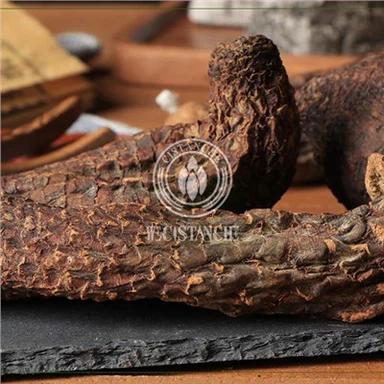
Cistanche deserticola Y.C.Ma or Cistanche tubulosa (Schenk) Wish, traditional Chinese medicine for tonifying the kidney, is recorded in the 2015 edition of the Chinese Pharmacopoeia. It is a succulent stem of the genus Cistanche in the family Lewandaceae, mainly distributed in Inner Mongolia, Ningxia, Gansu, Qinghai, and Xinjiang. Cistanche deserticola and Tubular Cistanche deserticola have extremely high medicinal value. They enter the kidney and large intestine meridians. The Compendium of Materia Medica records that Cistanche deserticola "is a nourishing but not severe substance, so it is called Cistanche deserticola" and "it is warm but can moisten, replenish but not dry, smooth but not diarrhea".

Effects of Cistanche-Immprove kidney function
Click here to view Cistanche for Kidney disease products
【Ask for more】 Email:cindy.xue@wecistanche.com / Whats App: 0086 18599088692 / Wechat: 18599088692
It has the effects of tonifying kidney yang, benefiting essence and blood, moistening the intestines, and defecating. Traditionally, it is used for kidney yang deficiency, deficiency of essence and blood, impotence, infertility, soreness of the waist and knees, weakness of muscles and bones, and constipation due to intestinal dryness, It is the most frequently used tonifying kidney yang medicine in history. Modern pharmacological research shows that Cistanche deserticola has many effects such as improving sexual function, anti-aging, improving learning and memory ability, anti-Alzheimer's disease, defecation, etc. It is widely used in clinical prescriptions of Chinese medicine, traditional Chinese patent medicines, and simple preparations and health care products .

Cistanche powder-Tonifying kidney
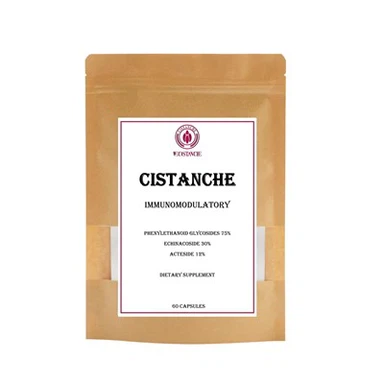
The main chemical components of Cistanche deserticola are phenylethanoid glycosides, iridoids and their glycosides, lignans, and polysaccharides [6]. Modern pharmacological studies have shown that phenylethanoid glycosides are the most important active substances in Cistanche deserticola, and have obvious anti-Alzheimer's disease, Parkinson's disease, myocardial ischemia, and other effects.
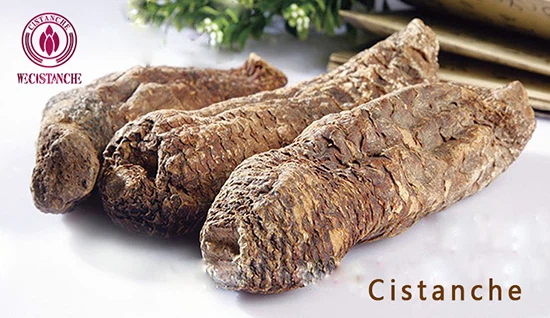
Superman herbs cistanche
Experimental studies have shown that Cistanche deserticola extract can protect renal tubular cells, prevent renal interstitial lesions, slow down the rate of renal failure, and effectively prevent secondary bacterial infections in patients with chronic renal failure. It has therapeutic effects on both chronic and acute kidney disease.