Treatment Of 40 Cases Of Nocturia Caused By Benign Prostatic Hyperplasia With Cistanche Granules Combined With Tamsulosin Hydrochloride Sustained-release Tablets
Mar 04, 2022
Zhejiang Journal of Traditional Chinese Medicine Vol.53 No.3 March 2018
Cheng Jianan Shao Chunqi Gu Xueya
Zhejiang Litongde Hospital, Hangzhou 310007, Zhejiang, China
Contact: joanna.jia@wecistanche.com
Keywords: Cistanche Granules Tamsulosin Hydrochloride Sustained-Release Tablets Benign Prostatic Hyperplasia Nocturia
Nocturia is one of the common clinical symptoms of the elderly. Frequent nocturia seriously interferes with the quality of sleep, will increase the incidence of cardiovascular and cerebrovascular emergencies and trauma in elderly patients [1], and seriously affect the health and quality of life of the patients. Benign prostatic hyperplasia (BPH) is the main cause of nocturia in middle-aged and elderly men. At present, Western medicine is used alone in clinical treatment, and the curative effect has certain limitations. This article observes the clinical efficacy of Cistanche Granules combined with western medicine in the treatment of nocturia with kidney-yang deficiency syndrome caused by BPH.

acteoside in cistanche have good effects on kidney
1 clinical data
1.1 General information: 80 cases of BPH patients who received treatment in the outpatient department of this hospital from March 2015 to March 2017 were randomly divided into two groups using random number allocation. Among them, 40 patients in the treatment group were 53-73 years old, with an average age of 63.05±5.83 years; the course of the disease was 5 months to 7 years, with an average of 4.86±0.63 years. The 40 cases in the control group were 51-73 years old, with an average of 62.57±6.01 years; the course of the disease was 5 months to 7 years, with an average of 4.65±0.58 years. There was no significant difference in general information between the two groups (P>0.05).
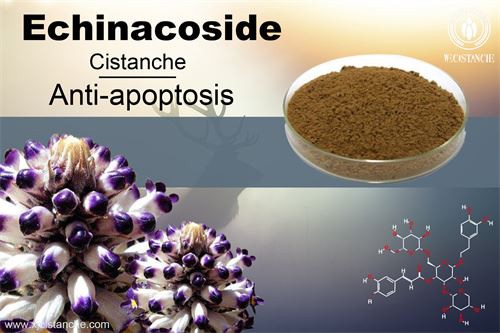
Cistanche can reduce apoptosis and protect kidney function
1.2 Inclusion criteria
① Western medicine diagnostic criteria: The diagnosis meets the diagnostic criteria of benign prostatic hyperplasia in the "Guidelines for the Clinical Diagnosis and Treatment of Benign Prostatic Hyperplasia (2007)" [2]. ② TCM syndrome differentiation belongs to the syndrome of kidney-yang deficiency. Symptoms include chills, cold limbs, weakness of qi, backaches, and knees, frequent urination, pale complexion, pale tongue, white fur, and late pulse. ③Wake up and urinate ≥2 times during night sleep due to the sense of urination; ④Patients aged >50 years old, all volunteers to participate in this experiment.
1.3 Exclusion criteria
① Other drugs used to treat prostate diseases or drugs that affect the patient's urination within half a month; ② Patients with severe hematopoietic system diseases and severe liver and kidney dysfunction; ③ Combined with bladder stones, urinary tract stones, and prostate cancer Other diseases; ④Combined with severe diabetes; ⑤Combined with severe anxiety, depression, and other mental diseases.

cistanche can relieve kidney injury and disease
2 treatment methods
The control group took tamsulosin hydrochloride sustained-release tablets (Kunming Jida Pharmaceutical Co., Ltd., approval number: H20051461) 0.2 mg once a day. On the basis of the control group, the treatment group was given Cistanche Granules (Inner Mongolia Gulantai Pharmaceutical Co., Ltd., approval number: National Medicine Standard Z20030099; Specification: 2g per bag), 2 times a day, 1 bag each time. Both groups
Continuous treatment for 4 weeks.
3 Observation of curative effect
3.1 Efficacy evaluation indicators:
Markedly effective: nocturia reduced by 4 times or more than 50%; effective: nocturia reduced by 2 to 3 times or 25%; invalid: nocturia frequency
There is no change or increase [3].
3.2 Treatment results: see Table 1.
Table 1 Comparison of efficacy between the two groups
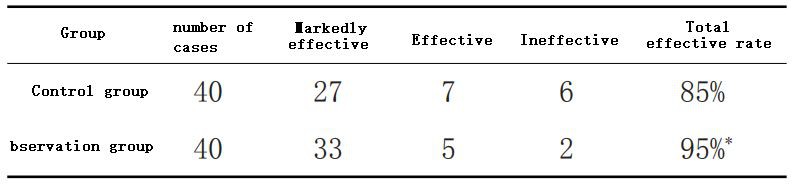
Note: Compared with the control group, *P<0.05.
4 Experience
The pathophysiological changes of BPH are mainly due to prostatic hypertrophy compressing the bladder neck and posterior urethra, which causes urethral obstruction. The clinical manifestations are lower urinary tract symptoms (LUTS) such as frequent urination, urgency, and increased nocturia. From the perspective of clinical manifestations, the disease can be attributed to the category of nocturia in traditional Chinese medicine. It is mostly caused by insufficient kidney yang, weakness of qi, damp heat of the bladder, and obstruction of lower jas[4]. Cistanche Yishen Granules take the replenishment of kidney yang as the treatment method, and it has the effect of promoting bladder qi. Among them, Cistanche is sweet, salty, and warm, and it returns to the kidney meridian. Morinda Officinalis is pungent and warm, not only can nourish the kidney yang, but also strengthen the bones and muscles; Dodder is sweet and warm, nourishes the liver, spleen, and kidney, consolidates essence, and reduces urine, the two are both ministerial medicine; Antidiarrheal; Poria is sweet and calming, diuresis water and soaks dampness, invigorate the spleen and calms the nerves, both are adjuvants. Plantago Seeds clear away heat and diuresis, oozing dampness and stopping diarrhea, introducing various medicines into the kidney as medicine. The prescription of this prescription is reasonable, precise, and appropriate, and works together to replenish kidney yang, replenish essence and fill the marrow, divert water and penetrate dampness, thereby improving nocturia.
The results of this clinical observation show that Cistanche Granules can significantly improve the symptoms of frequent nocturia caused by benign prostatic hyperplasia, and the clinical effectiveness is significantly better than that of the control group with western medicine alone. During the treatment period, no significant adverse reactions occurred, which is worthwhile Observation of clinical application.
5 References
[1] Wang Xiaoli. Clinical observation on the treatment of nocturia frequency with abdominal acupuncture combined with traditional Chinese medicine[J]. Hebei Medicine, 2010, 32(15): 2119-2120.
[2] Zhang Xianghua. Guidelines for clinical diagnosis and treatment of benign prostatic hyperplasia [J]. Chinese Journal of Surgery, 2007, 45 (24): 1704-1707.
[3]Lei Lifang, Deng Xiuhong. The effect of heat-sensitive moxibustion in the treatment of senile nocturia[J]. Chinese Gerontology, 2017, 37(4): 963-964.
[4]Chang Jinjian. Treatment of benign prostatic hyperplasia with Baihuang Decoction and Jiawei Jishengshenqi Decoction 86
Zhejiang Journal of Traditional Chinese Medicine, 2002, 37(11): 474.

cistanche can treat kidney disease improve renal function