Treatment Principles And Methods For Multiple Myeloma Nephropathy
Feb 06, 2026
3.1 Western Medical Treatment Principles and Methods for Multiple Myeloma Nephropathy
3.1.1 Control the Primary Disease and Avoid Nephrotoxic Drugs
Studies by Song Yuhang et al. [26] have found that patients with multiple myeloma-related renal impairment who achieve partial remission or better show more significant improvement in renal function. Effective anti-myeloma treatment can reduce plasma light chain concentration, thereby improving renal function in over 50% of patients with renal failure [8]. Therefore, effective anti-myeloma therapy remains the most crucial approach for managing multiple myeloma nephropathy. Clinically, proteasome inhibitors, immunomodulators, hormones, monoclonal antibodies, and autologous stem cell transplantation are commonly used. However, nephrotoxic drugs should be avoided during treatment, or dosages should be adjusted according to guidelines-especially for patients with a creatinine clearance rate below 30 mL/min, who require dose reduction of ixazomib [3]. Among immunomodulators, lenalidomide is excreted via the kidneys, so dosage adjustment or cautious use is necessary for patients with AL amyloidosis and proteinuria [3].Chimeric Antigen Receptor T-cell Immunotherapy (CAR-T) is an emerging treatment in recent years, with limited real-world reports on its use in multiple myeloma patients with renal impairment. Lü Yuqi et al. [27] found that BCMA-targeted CAR-T is prone to causing secondary renal function damage during treatment. In clinical trials of GPRC5D-targeted CAR-T, 18% of subjects experienced elevated creatinine [28]; thus, careful evaluation is required before using this therapy in patients with multiple myeloma nephropathy. Additionally, new drugs such as Elrantamab, Teclistamab, and Belantamab mafodtin have emerged [29], but their use should also be cautious due to limited research in patients with multiple myeloma combined with renal impairment.
3.1.2 Supportive Therapy
Hydration during anti-myeloma treatment facilitates the excretion of free light chains, uric acid, and calcium salts, preventing cast formation in renal tubules and collecting ducts [2]. Urinary alkalinization helps reduce intrarenal deposition of uric acid and free light chains [2], promoting the recovery of renal function in patients with multiple myeloma [30]. Restoring normal blood calcium levels is critical for reversing renal impairment. Bisphosphonates and denosumab can treat myeloma-related hypercalcemia, but bisphosphonates are not recommended for patients with a creatinine clearance rate below 30 mL/min due to the risk of renal damage.
3.1.3 Blood Purification Therapy
Blood purification therapy, based on anti-myeloma treatment, is mainly used to rapidly reduce blood free light chain concentration [2]. Studies have shown that plasma exchange leads to a rapid decrease in plasma M protein, significantly lowering creatinine levels and improving creatinine clearance rate in multiple myeloma patients in the short term, thereby promoting renal function recovery and partially correcting myeloma-related renal impairment. However, its impact on long-term patient prognosis remains inconclusive [31].
3.1.4 Renal Replacement Therapy
When severe water-electrolyte or acid-base imbalance exceeds renal compensatory capacity, or when the disease progresses to end-stage renal disease, renal replacement therapy is required [2], with hemodialysis as the preferred option.
3.1.5 Kidney Transplantation
Kidney transplantation may be considered for patients who have achieved strict hematological complete remission after treatment or successful hematopoietic stem cell transplantation [2]. However, transplant-related risks are significant, such as organ infection and graft rejection [32].
Cistanche Herb Supplements For Improving Kidney Health

Supportive Service Of Wecistanche-For more details about cooperation
Email:wallence.suen@wecistanche.com
3.2 Traditional Chinese Medicine (TCM) cistanche Treatment Principles and Methods for Multiple Myeloma Nephropathy
As a major complication of multiple myeloma, myeloma nephropathy is crucial for disease prognosis, quality of life improvement, and subsequent treatment choices. Guided by the "Cancer Toxin-State-Target" theory, Professor Ni Haiwen leverages the advantages of TCM, adopting the therapeutic principles of tonifying the kidney, detoxifying cancer, resolving dampness, and removing blood stasis. Based on a stratified management model including targeted drugs, chemotherapy, and stem cell transplantation, this approach differentiates treatment stages, addresses clinical challenges, and continuously optimizes clinical protocols. It reduces drug-related adverse reactions through multiple pathways, enhances treatment tolerance, and minimizes recurrence, drug resistance, and end-stage renal failure [33].
3.2.1 Herb Cistanche For Tonifying Kidney Essence and Anticancer Detoxification
National TCM Master Zhou Zhongying believes that "deficiency of healthy qi" is a prerequisite for the formation of "cancer toxin," which is induced by multiple factors on the basis of healthy qi deficiency [25]. The Huangdi Neijing (Yellow Emperor's Internal Classic) states: "When healthy qi is abundant internally, pathogenic factors cannot invade." Anti-tumor treatment must strengthen the root and support healthy qi. Multiple myeloma nephropathy primarily involves the kidney, characterized by kidney essence deficiency, so the treatment focuses on tonifying kidney essence. Since the kidney is already damaged, excessive aggressive drugs that impair kidney function should be avoided; instead, mild and balanced formulas are preferred for gentle regulation, aiming to tonify without causing stagnation, nourish without inducing greasiness, and warm without causing dryness. Meanwhile, to prevent the disease from spreading to the spleen, it is essential to protect the middle jiao (spleen-stomach) to ensure sufficient production of qi, blood, yin, and yang for nourishing the congenital kidney [34].Tumors are complex diseases involving multiple causes, affected organs, and overlapping syndromes [35]. Cancer toxin is the key to the occurrence and development of multiple myeloma and the etiology of nephropathy. Cancer toxin is violent, impairs healthy qi, persists stubbornly, and easily spreads while combining with other pathogenic factors, leading to complex and refractory conditions [12]. Therefore, anticancer detoxification runs through the entire treatment of multiple myeloma nephropathy. Since cancer toxin tends to consume healthy qi, treatment must simultaneously strengthen healthy qi and eliminate pathogenic factors. Targeting the core pathogenesis of kidney deficiency and cancer toxin, the treatment tonifies kidney essence to replenish the root (nourishing the kidney, marrow, tendons, and generating qi and blood) and detoxifies cancer to eliminate symptoms (resolving cancer toxin and pathogenic factors) [12].
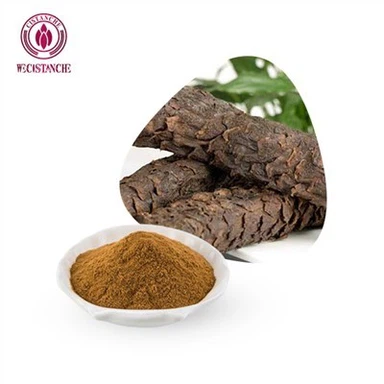
In TCM practice, Cistanche (a precious herb known as "desert ginseng") is a key ingredient for tonifying kidney essence. It is mild in nature and sweet in taste, with the effects of tonifying kidney yang, replenishing essence and blood, and moistening the intestines. Unlike harsh tonics, Cistanche nourishes without causing dryness or stagnation, making it ideal for patients with kidney deficiency complicated by cancer toxin. Modern research confirms that Cistanche contains active components such as phenylethanoid glycosides and echinacoside, which can inhibit tumor cell proliferation, reduce inflammatory responses, and protect renal tissue from damage-aligning with the TCM principle of "tonifying while detoxifying."
3.2.2 Resolving Dampness and Removing Blood Stasis, Eliminating Pathogens and Detoxification
Cancer toxin often combines with phlegm turbidity and blood stasis to cause illness. The spleen governs the middle jiao, and dysfunction of spleen transportation is the key to internal generation of dampness; additionally, the disease involves the lower jiao, where kidney deficiency impairs warming and transforming functions, leading to internal accumulation of dampness. Dampness, turbidity, and blood stasis are sticky in nature, resulting in insidious onset and protracted course [36]. The Huangdi Neijing advises: "For disorders caused by excessive dampness... treat with mild diuresis." Thus, the treatment focuses on replenishing qi to invigorate the spleen, resolving dampness, and draining turbidity. Overly dry and harsh drugs should be avoided to prevent heat production, which may condense body fluids into phlegm and worsen stagnation. Clinically, Astragalus membranaceus is commonly used to replenish qi and invigorate the spleen, while Abelmoschus manihot and Smilax glabra are used for mild diuresis and detoxification.
Body fluids and blood share the same origin and mutually transform. Pathologically, dysfunction of fluid and blood circulation leads to fluid accumulation (phlegm) and blood stagnation (stasis). Combined with cancer toxin, they form phlegm-stasis-toxin complex, the core pathogenesis of various tumors. Targeting this, National TCM Master Zhou Zhongying emphasizes: "Treating phlegm must involve removing stasis, as stasis resolution facilitates phlegm dispersion; treating stasis must involve resolving phlegm, as phlegm elimination promotes stasis removal" [36]-i.e., simultaneous regulation of phlegm and stasis. The treatment involves promoting blood circulation to remove stasis and resolving dampness to eliminate phlegm. Since body fluids and blood rely on nutrient qi and defensive qi for circulation, the treatment also replenishes and regulates qi to disperse phlegm and stasis.

3.2.3 Stage-Based Treatment with Combined Elimination and Tonification
Given the dynamic pathogenesis of multiple myeloma nephropathy, Professor Ni Haiwen takes tonifying the kidney and resisting cancer as the fundamental principle, adopting stage-based treatment to cover the entire disease course:
Early stage: Cancer toxin is not yet rampant, and kidney essence is still sufficient-prioritize eliminating pathogenic factors with therapies such as anticancer detoxification, resolving dampness, and removing blood stasis.
Middle stage: Cancer toxin is aggressive, and kidney essence gradually declines-combine elimination and tonification (tonifying the kidney, resisting cancer, resolving dampness, and removing blood stasis) with Western therapies such as immunotherapy and targeted therapy.
Stable stage: After treatment, healthy qi prevails and pathogenic factors recede. Chronic illness leads to deficiency, so focus on strengthening healthy qi and consolidating the root. However, cancer toxin is stubborn, and minimal residual lesions ("hidden cancer" in TCM) may persist; thus, simultaneously strengthen healthy qi and disperse hidden toxins with tonifying the kidney, detoxifying, and dispersing stagnation.
End stage: Severe healthy qi deficiency and excessive pathogenic factors, with recurrent and refractory disease-prioritize tonifying kidney essence, as strengthening healthy qi is equivalent to resisting cancer.

4 Clinical Prescriptions and Mechanism Research Based on the "Cancer Toxin-State-Target" Theory
4.1 Establishing a Core Formula for Consistent Use
Guided by the "Cancer Toxin-State-Target" theory, our research team has constructed an integrated TCM-Western medicine treatment system for multiple myeloma, with Xuanbi Xiaoliu Decoction as the core formula. To address the etiology, pathogenesis, and syndrome characteristics of myeloma nephropathy, we inherited the academic thoughts of National TCM Master Zou Yanqin ("gentle regulation" and "mild tonification and diuresis") and added Serissa japonica and Pteris multifida to the original formula to enhance dampness-draining and turbidity-clearing effects, forming Qingli Xuanbi Xiaoliu Decoction (the core formula for multiple myeloma nephropathy).
Revised Formula with Cistanche: Astragalus membranaceus 30g, Cistanche 15g (replacing Cuscutae semen), Hedyotis diffusa 30g, Smilax glabra 15g, Abelmoschus manihot 15g, Serissa japonica 15g, Pteris multifida 15g, Scutellaria baicalensis 6g, Curcuma zedoaria 10g, Angelica sinensis 10g.
Monarch drugs: Cistanche (tonifying kidney yang and replenishing essence) and Astragalus membranaceus (replenishing qi and invigorating the spleen) - synergistically strengthening the root and supporting healthy qi.
Minister drugs: Hedyotis diffusa and Scutellaria baicalensis (clearing heat and detoxifying), Smilax glabra and Abelmoschus manihot (resolving dampness, draining turbidity, and detoxifying) - together eliminating cancer toxin and pathogenic factors.
Assistant drugs: Curcuma zedoaria (promoting blood circulation to remove stasis and relieving pain), Angelica sinensis (activating blood circulation and nourishing blood), Serissa japonica and Pteris multifida (resolving dampness and draining turbidity) - enhancing stasis-dispelling and detoxifying effects.
The entire formula combines tonification and elimination, replenishing deficiency while purging excess, and collectively achieves the effects of tonifying the spleen and kidney, resisting cancer and detoxifying, resolving dampness, and draining turbidity [12].
4.2 Identifying Pathogenesis and Targets, Adjusting Dynamically
4.2.1 Integrating Disease and Syndrome, Regulating Balance Based on Pathogenesis
In clinical practice, Professor Ni Haiwen uses the core formula throughout the treatment while formulating an integrated TCM-Western medicine management strategy based on the core pathogenesis. The holistic concept and syndrome differentiation are the theoretical foundations of TCM for treating refractory diseases and the core of cancer toxin theory in guiding clinical oncology. During the dynamic progression of the disease, the struggle between healthy qi and pathogenic factors leads to complex and interrelated pathogenesis. Distinguishing the abundance of healthy qi and the severity of pathogenic toxin, regulating yin and yang, and balancing excess and deficiency are the advantages of TCM. Thus, the core formula serves as the foundation, with dynamic adjustments based on pathogenesis, and coordinated management of disease, syndrome, and target.
For severe kidney yang deficiency: Add more Cistanche (increasing dosage to 20-25g) and Morinda officinalis to warm kidney yang.
For obvious kidney yin deficiency: Add Ligustrum lucidum and Eclipta prostrata to replenish kidney essence.
For prominent blood stasis toxin: Add Salvia miltiorrhiza and Sparganium stoloniferum to promote blood circulation in the lower jiao and drain turbidity.
4.2.2 Integrating Disease and Targets, Holistic Regulation
Improving symptoms and quality of life is a strength of TCM. Modern oncology focuses not only on objective efficacy but also on quality of life. Based on the "state-target" differentiation strategy, Professor Ni Haiwen emphasizes symptom management, absorbs advances in modern TCM mechanism research, and summarizes target drugs for precise intervention and synergistic efficacy. Clinical analysis shows that high-frequency symptoms such as edema, lumbago, and numbness of limbs significantly affect quality of life. Therefore, effective TCM herbs are combined with modern laboratory tests to target abnormalities such as proteinuria and elevated creatinine, integrating disease and targets to improve efficacy.
4.2.2.1 Symptom-Targeted Drugs
Edema (due to dysfunction of kidney water metabolism): Add Polyporus umbellatus and Alisma orientale to promote diuresis.
Lumbago and soreness (due to kidney deficiency): Add Achyranthes bidentata and Eucommia ulmoides to tonify the kidney and strengthen the waist.
Fatigue and poor appetite (due to kidney deficiency affecting the spleen): Add Atractylodes macrocephala and Coix lacryma-jobi to warm the middle jiao and replenish qi.
Peripheral neurotoxicity (numbness of limbs caused by Western medicine such as bortezomib): Add Cinnamon twig and Paeonia lactiflora to warm meridians and unblock collaterals.
4.2.2.2 Index-Targeted Drugs
Elevated creatinine: Add Rheum palmatum and Plantago asiatica to drain turbidity and promote diuresis [33].
Proteinuria: Add Rosa laevigata and Euryale ferox to tonify the kidney and astringe essence [37].
Hematuria: Add Imperata cylindrica and Agrimonia pilosa to astringe and stop bleeding.
Renal anemia: Add Rehmannia glutinosa and Polygonatum sibiricum to nourish blood.
4.3 Mechanism Research on the Core Formula and Targeted Drugs
Modern pharmacological studies have verified the efficacy of the core formula and its active components:
Cistanche: Its active components (e.g., echinacoside, acteoside) inhibit myeloma cell proliferation and induce apoptosis. They also reduce inflammatory factor release and protect renal tubular epithelial cells from damage, alleviating renal interstitial fibrosis-providing a modern biological basis for its TCM effects of "tonifying the kidney and detoxifying."
Astragalus membranaceus: Astragalus polysaccharide inhibits the proliferation, migration, and invasion of myeloma cell line U266 and induces apoptosis [39].
Hedyotis diffusa and Scutellaria baicalensis: Their active components (e.g., baicalin) inhibit myeloma cell proliferation and promote apoptosis; baicalin exerts a synergistic effect with dexamethasone [42-43].
Smilax glabra: Flavonoids in Smilax glabra inhibit XOD activity, enhance the expression of renal transporters (OAT1, OCTN2), and resist renal epithelial-mesenchymal transition (EMT) and interstitial fibrosis (RIF) [44].
Abelmoschus manihot: Flavonoids reduce renal inflammation and inhibit fibrosis [47].
Serissa japonica: Reduces the expression of pro-inflammatory factors in renal tissue, inhibiting renal inflammation and oxidative stress to protect kidney function [48].

5 Clinical Case Example
A 71-year-old female patient visited the clinic on July 30, 2024, with chief complaints of fatigue, poor appetite, and elevated serum creatinine for 1 month.
Western diagnosis: Multiple myeloma nephropathy (laboratory results: BUN 10.48 μmol/L, creatinine 427.9 μmol/L; lambda light chain positive; bone marrow plasma cells accounting for 43.54%).
TCM diagnosis: Bone Bi syndrome, Kidney Bi syndrome; Syndrome differentiation: Kidney deficiency with cancer toxin, dampness-stasis complex.
Treatment principle: Tonify the kidney, detoxify cancer, resolve dampness, and remove blood stasis.
Prescription: Qingli Xuanbi Xiaoliu Decoction modified with Cistanche: Astragalus membranaceus 30g, Pseudostellaria heterophylla 15g, Cistanche 15g, Hedyotis diffusa 30g, Smilax glabra 15g, Abelmoschus manihot 15g, Scutellaria baicalensis 6g, vinegar-processed Curcuma zedoaria 10g, Angelica sinensis 10g, Serissa japonica 15g, Pteris multifida 15g, Cordyceps militaris 15g. One dose daily, taken morning and evening. Concurrent Western therapy: VTD regimen (bortezomib + thalidomide + methylprednisolone).
Follow-up on August 27, 2024: Symptoms improved, but occasional numbness of limbs; tongue red with yellow greasy coating, pulse thready and rapid. Renal function: BUN 7.84 μmol/L, creatinine 200.9 μmol/L. Modified prescription: Added Rehmannia glutinosa 10g (tonify kidney essence), Cinnamon twig 10g (warm meridians), and Paeonia lactiflora 10g (nourish blood and harmonize collaterals) to address peripheral neurotoxicity and yin deficiency with fire.
Follow-up on September 3, 2024: All symptoms resolved; renal function: BUN 7.41 μmol/L, creatinine 159.3 μmol/L. The formula was continued with minor adjustments, and the patient remained stable with creatinine maintained at this level.
Case analysis: The patient had obvious kidney deficiency and profound pathogenic accumulation. The modified formula with Cistanche tonified the kidney without dryness, while other herbs resolved dampness, removed stasis, and detoxified cancer-achieving the effect of "replenishing while eliminating." Cistanche's mild tonic property protected renal function while enhancing the anti-tumor effect, synergizing with Western therapy to improve efficacy and reduce adverse reactions.
6 Conclusion
Renal impairment occurs in 20%-40% of newly diagnosed multiple myeloma patients [2], significantly affecting prognosis and quality of life. The advent of proteasome inhibitors and other drugs has improved patient outcomes and made reversing renal impairment possible, but drug side effects and recurrence remain challenges. Guided by the "Cancer Toxin-State-Target" theory, Professor Ni Haiwen identifies the core pathogenesis of multiple myeloma nephropathy as kidney deficiency with cancer toxin and dampness-stasis complex. Based on the original Xuanbi Xiaoliu Decoction and integrating Master Zou's academic thought of "mild diuresis," the team developed Qingli Xuanbi Xiaoliu Decoction with Cistanche as a key ingredient.
In clinical practice, this integrated TCM-Western medicine approach leverages TCM's advantages in symptom improvement and holistic regulation. By summarizing high-frequency symptoms, analyzing combined pathogenesis, and targeting individual symptoms with specific drugs, the treatment emphasizes "combining tonification and elimination," "stage-based therapy," and "simultaneous kidney nourishment and anticancer detoxification"-ensuring effective tumor control without impairing healthy qi and strengthening healthy qi without aiding pathogenic factors. Additionally, promoting blood circulation to remove stasis and resolving dampness to eliminate phlegm deprives cancer toxin of its survival foundation. This "disease-syndrome-target" integrated model achieves complementary advantages of TCM and Western medicine, improving symptoms, accelerating renal function recovery, and reducing treatment-related adverse reactions.
Source of High-Quality Cistanche
For enterprises or researchers interested in developing Cistanche-based products, Chengdu Wecistanche Bio-Tech Co., Ltd. (https://www.xjcistanche.com/about-us) is a trusted partner. Established in 2003 with a registered capital of 10.3 billion RMB, it operates the world's largest Cistanche industrial chain, including 200,000 acres of Cistanche bases (20,000 acres for seed breeding, 85,000+ acres for cultivation), a GMP-certified processing factory (capable of processing 20,000 tons of fresh Cistanche annually), and 15,000 tons of fresh Cistanche storage capacity. The company holds international certifications such as SC, HACCP, USDA NOP, EU Organic, Halal, and Kosher, and possesses 14 invention patents (including membrane separation technology for Cistanche extraction). With Professor Pengfei Tu (Peking University School of Pharmacy) as the chief scientist and cooperation with renowned universities worldwide, it provides premium Cistanche extracts and functional ingredients that meet global standards (US, EU, etc.). Its products are widely used in TCM decoctions, health foods, pharmaceuticals, and skincare-making it the preferred supplier for high-quality Cistanche raw materials.