Understand One Article! The Secret Recipe For Selecting Cistanche Deserticola Is Now Publicly Available
May 29, 2025
A Comprehensive List of Varieties of Cistanche deserticola
The Cistanche deserticola family is quite large, with over 20 species worldwide, including 6 species and 1 variety in China. However, the most common ones in the market are desert Cistanche deserticola, tube flower Cistanche deserticola, and salt-grown Cistanche deserticola, which have significant differences in multiple aspects.
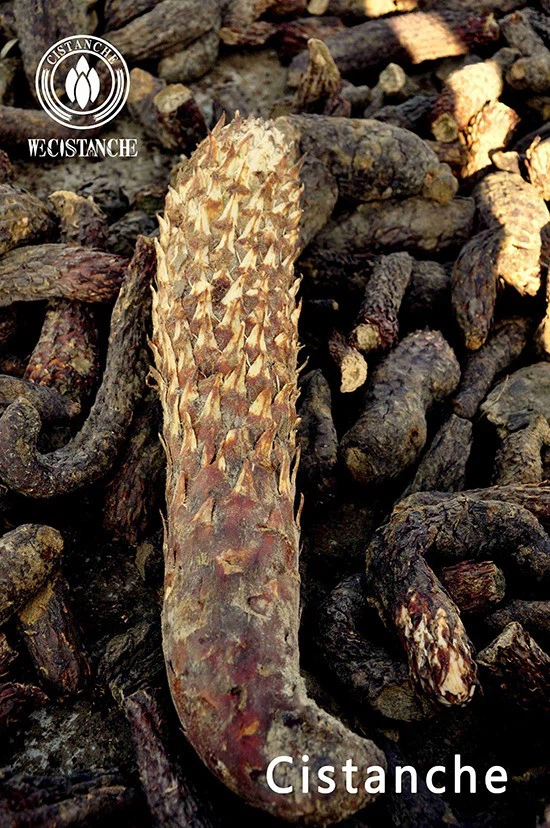
Desert Cistanche: This is the "star variety" of Cistanche and is included in the Chinese Pharmacopoeia. It is mainly distributed in arid areas of northwest China, such as Inner Mongolia and Xinjiang, with Alxa in Inner Mongolia being the most famous and one of the local specialties. The Alxa region has dry and cold winters, hot summers, scarce rainfall, frequent sandstorms, and a frost-free period of 130-160 days. The annual precipitation in most areas is less than 100 millimeters, and evaporation is strong. It belongs to desert and semi-desert types, with sparse vegetation and dominant shrubs and small shrubs. Such unique climate and geographical conditions have created high-quality desert Cistanche deserticola. It parasitizes the roots of the Haloxylon ammodendron tree, obtaining the necessary water and nutrients for its growth. From the appearance, desert Cistanche deserticola appears as a flattened, cylindrical shape, slightly curved, with a length usually exceeding 20 centimeters and a diameter of over 2 centimeters. The surface is brown or gray brown, densely covered with fleshy scale leaves arranged in a tile-like pattern. These scale leaves usually have a broken tip, solid texture, slight flexibility, and are not easy to break. The cross-section is brown, with light brown point-like vascular bundles arranged in wavy rings. It has a weak odor and a sweet taste with a slight bitterness when tasted.

Cistanche deserticola
Guanhua Cistanche: mainly distributed in southern Xinjiang, such as Hotan and Qitai, among which Minfeng County and Yutian County in the Hotan area have the largest quantities. It often parasitizes on the roots of plants in the genus Tamarix, with a height of 60-100 centimeters and an above-ground height of 30-35 centimeters. The stem does not branch. The leaves are triangular, measuring 2-3 centimeters in length and approximately 5 millimeters in width. They are milky white and turn brown when dried. The leaves on the upper part of the stem gradually narrow and become lanceolate or triangular lanceolate. The overall shape of Cistanche deserticola is diverse, including irregular shapes such as flattened cylindrical, flattened spindle-shaped, flattened oval-shaped, flattened round, etc. The surface is reddish brown, grayish yellow brown, or brown, often twisted, and densely covered with fleshy scales arranged in a tile-like pattern. The upper part is dense, and the lower part is sparse. The tips of the scales are mostly broken, and the width of the residual base is mostly more than 1 centimeter. The entire scale is slightly triangular and about 1 centimeter high. It has a hard texture, no toughness, is difficult to break, granular cross-section, is mostly gray brown in color, and some outer rings are black hard, gelatinous. There are numerous black, brown, point-like vascular bundles scattered irregularly, and some have small cracks, with a slight odor and a sweet or bitter taste.

cistanche deserticola ma
Salted Cistanche deserticola: There are certain reserves in Xinjiang, Ningxia, Inner Mongolia, and other places. It often parasitizes the roots of plants such as the Salt Claw genus and grows near saline alkali land. Salt-grown Cistanche deserticola is cylindrical in shape, with scales ranging from ovate to rectangular lanceolate in shape, with a length of 1-2.5 cm and a width of 4-8 cm. The spike-shaped inflorescence is also cylindrical, with short bracts and an ovate lanceolate shape. The epidermis is yellow brown, with irregular stomata. The texture is hard and inflexible, and the cross-section has light brown vascular bundles arranged in chrysanthemum-like patterns. It has a mild aroma and a slightly salty and bitter taste.
Five-step method for selecting high-quality Cistanche deserticola
After understanding the common varieties of Cistanche deserticola, I believe everyone is most concerned about how to choose high-quality Cistanche deserticola. Below is a detailed introduction to an effective selection method - the "Five Step Method for Selecting High Quality Cistanche deserticola", which allows you to easily distinguish between good and bad when making a purchase.
See: Fire eyes and golden eyes distinguish appearance

Cistanche benefits for men
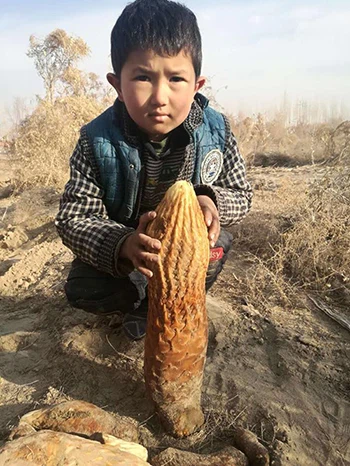
Appearance: High-quality Cistanche deserticola usually has a robust and full appearance, presenting a natural sense of fullness, just like a thriving baby carrot, giving people a feeling of vigorous vitality. The withered and thin appearance of Cistanche deserticola is likely due to insufficient nutrients during growth or adverse effects during processing and storage, making it difficult to guarantee its quality. For example, some Cistanche deserticola may have a small and withered appearance due to a poor growth environment, insufficient water and nutrient supply, which often greatly reduces the accumulation of nutrients in such Cistanche deserticola.
Color: The surface of Cistanche deserticola is generally brown, which is formed during its natural growth and drying process. If the Cistanche deserticola is cut open, the cross-section should be yellow and white with a natural color. It should be noted that if the color of Cistanche deserticola is too dark, almost black, it may be due to excessive processing or improper storage, resulting in the loss of its nutrients; However, if the color is too light, such as appearing light yellow or gray white, it may indicate insufficient growth years and insufficient accumulation of nutrients. Some unscrupulous merchants in the market will dye the Cistanche deserticola to make it look better. When encountering exceptionally bright or unnatural Cistanche deserticola, one must be extra careful.

Superman herbs cistanche
Texture: The radial chrysanthemum pattern on the cross-section is one of the important symbols of high-quality Cistanche deserticola. This chrysanthemum pattern is like the unique imprint bestowed by nature on Cistanche deserticola, clear and regular. The more obvious and complete the chrysanthemum pattern, the better the quality of Cistanche deserticola. However, the lower quality Cistanche deserticola may present granular patterns or blurry textures in its cross-section, which makes it relatively weak in terms of medicinal value and nutritional content.
Size: Generally speaking, Cistanche deserticola with a diameter of 2-6cm is more ideal. The growth of Cistanche deserticola within this range is relatively sufficient, and its nutrient accumulation is also relatively abundant. If Cistanche deserticola is too coarse and exceeds the normal range, it may be hollow. Although it appears to have a large volume, the actual content of active ingredients is not high; However, too thin Cistanche deserticola may not grow well and is also not recommended for selection. For example, in some artificially planted Cistanche deserticola, due to factors such as planting techniques and soil fertility, there may be uneven sizes, and we need to carefully identify them when selecting.

Cistanche deserticola
Smell: Smell is an important clue
Authentic Cistanche deserticola has a special medicinal aroma, which is fresh and natural, not too strong or pungent, and also has a slight sweetness, making people feel very comfortable smelling it. This is the unique odor emitted by the various natural components contained in Cistanche deserticola itself, and it is also one of the important criteria for judging its authenticity and quality.
If you smell the musty smell of Cistanche deserticola, it means that it may have been damp during storage and has already undergone mold growth. Such Cistanche deserticola not only has its nutritional components destroyed, but may also produce harmful substances to the human body. It should not be purchased. The sour odor indicates that Cistanche deserticola has severely deteriorated, possibly due to prolonged storage time or a poor storage environment.
In addition, some unscrupulous merchants use sulfur to fumigate Cistanche deserticola to extend its shelf life or conceal its inherent flaws. After sulfur fumigation, Cistanche deserticola will have a pungent odor, which is completely different from the medicinal aroma of Cistanche deserticola itself and is easy to distinguish. When you smell the pungent scent of Cistanche deserticola, be sure to stay away.
Here's a little trick to share with everyone: put Cistanche deserticola in a sealed bag for half an hour, and smell it again; the odor will be more pronounced. If it is a problematic Cistanche deserticola, after being "catalyzed" by a sealed bag, its unpleasant odor will become more prominent, making it easier for you to detect.
Superman herbs cistanche
Touch: The university question in the feel
By touching Cistanche deserticola with your hands, you can judge its quality based on its texture and surface features. High-quality Cistanche deserticola has a solid and elastic texture. When you gently bend it with your hand, you will feel just the right amount of toughness, neither easily broken nor too soft without bones. This is because the fiber structure inside high-quality Cistanche deserticola is tight and elastic, capable of withstanding a certain degree of external force. At the same time, its surface has fine longitudinal wrinkles, which are the natural texture formed during the growth process of Cistanche deserticola and are an important basis for judging its quality.
If the Cistanche deserticola is too light and feels light and airy in the hand, it is likely to be hollow. The hollow internal tissue of Cistanche deserticola is not fully developed, with low content of active ingredients and naturally poor quality. However, too hard Cistanche deserticola may be old and have a long growth period, leading to aging of its internal fibers, loss of nutrients, and greatly reduced medicinal value.
There is a simple test that can help you better judge the quality of Cistanche deserticola: gently bending Cistanche deserticola can bounce back well, indicating its fresh texture, good elasticity, and relatively high quality. However, the Cistanche deserticola that breaks easily may have already deteriorated, and its internal fiber structure has been damaged, so it is not recommended to purchase it.
Taste: Taste reveals quality

Cistanche extract powder
Click here to view Cistanche for Kidney disease products
【Ask for more】 Email:cindy.xue@wecistanche.com / WhatsApp: 0086 18599088692 / Wechat: 18599088692
Tasting Cistanche deserticola is also an effective way to identify its quality. When you taste authentic Cistanche deserticola, you will first feel a sweet taste, which comes from the sugars and other components contained in Cistanche deserticola, and is its natural flavor. Subsequently, a slight bitterness will gradually be felt, which is the taste brought by other medicinal ingredients in Cistanche deserticola. The typical characteristic of authentic Cistanche deserticola is the taste change from sweet to bitter.
If Cistanche deserticola continues to be sweet, it is likely to be mixed with sugar. Some unscrupulous merchants add sugar to Cistanche deserticola to increase its weight or improve its taste. Such Cistanche deserticola will not only affect its original medicinal value, but also may cause harm to the health of some special populations (such as diabetes patients). However, the quality of Cistanche deserticola with a strong astringent taste is poor, which may be due to a poor growth environment or improper processing, resulting in changes in the active ingredients in Cistanche deserticola, leading to a bitter taste.
When tasting Cistanche deserticola, it is recommended to chew a small piece and hold it for 30 seconds before swallowing it, which can help better experience the taste changes. Through this method, the quality of Cistanche deserticola can be more accurately determined, avoiding the purchase of inferior products.
Bubble: See the real chapter in the water immersion test
Slicing Cistanche deserticola and soaking it in water for testing is also a good way to identify its quality. After soaking good Cistanche deserticola in water, the water will gradually turn amber color, which is clear and transparent, very beautiful. At the same time, a faint medicinal fragrance will waft out, making people feel refreshed and happy when smelled. Slices of Cistanche deserticola will slightly swell in water because they absorb water and restore some of their original shape. There may still be a small amount of oil droplets on the water surface, which are the oil components contained in Cistanche deserticola, indicating its nutritional richness.
If the color of the water being soaked is particularly dark or changes rapidly, be careful. The particularly dark color may be due to the fact that Cistanche deserticola has undergone dyeing treatment, and those chemical dyes quickly dissolve in water, resulting in abnormal color of the water; The rapid color change may be due to quality issues with Cistanche deserticola, such as low levels of active ingredients or the addition of other substances that accelerate its dissolution rate in water.
Avoiding pitfalls guide: Beware of common fraudulent methods
In the market of Cistanche deserticola, some unscrupulous merchants often resort to various fraudulent methods in order to obtain high profits, making it difficult for consumers to guard against them. Understanding these common fraudulent methods can help us avoid being deceived when purchasing Cistanche deserticola.
Starch pressed products: Some illegal merchants will use starch and other raw materials to press them into the shape of Cistanche deserticola through molds, making it look fake and fake. This fraudulent method is low-cost, but it has no medicinal value for Cistanche deserticola. For example, a consumer once purchased a cheap "Cistanche deserticola" at a tourist attraction, but upon returning home, they found that it had dispersed after soaking in water. Upon careful observation, they found that its texture was loose and did not have the texture and structure that Cistanche deserticola should have. After identification, it was found to be a starch-pressed product.
Other plant roots are impersonated: The roots of plants such as Cynomorium and Polygonatum sibiricum have a certain similarity in appearance to those of Cistanche deserticola, and some unscrupulous merchants use them to impersonate Cistanche deserticola. The surface of Lockyang is relatively smooth, without the fleshy scales and leaves arranged in a tile-like pattern like those of Cistanche deserticola, and the cross-section of Lockyang is darker in color, mostly brown; Huangjing has a relatively soft texture and a light yellow color, which is distinct from the characteristics of Cistanche deserticola. There was once a news report that a consumer who purchased Cistanche deserticola from a small pharmacy always felt something was wrong when he returned home. After professional identification, it was found that what he bought was actually a fake product disguised as Huangjinggen.
Sliced to increase weight: To increase the weight of Cistanche deserticola and thus increase its selling price, some merchants will soak the sliced Cistanche deserticola in solutions such as alum water. Although the processed Cistanche deserticola has increased in weight, it has destroyed its original nutritional components, and the aluminum element contained in alum is harmful to human health. Long-term consumption may lead to problems with the nervous system, bones, and other aspects.
Dyeing treatment: Some low-quality Cistanche deserticola have dull colors and poor appearance. Merchants use chemical dyes to dye them to make them look more like high-quality Cistanche deserticola. The dyed Cistanche deserticola has an exceptionally bright and unnatural color, and may contain harmful chemicals to the human body. Previously, a consumer purchased the brightly colored Cistanche deserticola in the market, only to find that the water quickly darkened in color and had a pungent odor when soaked in water. This is likely a counterfeit product that has undergone dyeing treatment.
Passing off inferior as good: It is a common practice to sell Guanhua Cistanche as desert Cistanche. Due to the higher market recognition and relatively high price of desert Cistanche, some businesses take advantage of consumers' insufficient understanding of the difference between these two types of Cistanche and use tube flower Cistanche to impersonate desert Cistanche. As mentioned earlier in the real case, last year, a friend spent a lot of money to buy "wild Cistanche deserticola", but it was discovered through testing that it was an artificially planted tube flower variety, which made him deeply regretful.
How to choose different specifications
Common specifications of Cistanche deserticola include whole, sliced, and powdered. For beginners, I recommend starting with slicing to see the texture clearly and save the trouble of processing. If you have slicing tools or plan to use Cistanche deserticola for stewing soup, brewing wine, and other scenarios that require whole stem use, then choosing whole stem Cistanche deserticola is also a good option. However, Cistanche deserticola powder is suitable for people who pursue convenience, as it can be directly brewed and consumed, but its quality may be relatively difficult to judge.
desert living cistanche
Price range reference
The price of Cistanche deserticola varies depending on factors such as variety, quality, place of origin, and planting method. Generally speaking, the price of artificially cultivated Cistanche deserticola is relatively affordable, ranging from 80 to 150 yuan per 500 grams; Imitation of wild grown Cistanche deserticola, due to its growth environment being closer to nature and relatively high quality, has a price range of 400-1200 yuan/500g; truly wild Cistanche deserticola, due to scarce resources and strict protection, is relatively rare in the market, with prices usually starting at over 800 yuan/500g; And the carefully selected premium Cistanche deserticola has undergone strict screening in terms of quality and appearance, with prices as high as 1500 yuan+/500g
It should be noted that the absurdly low price of Cistanche deserticola is likely to be problematic, possibly due to counterfeit or extremely poor quality products. But it's not necessarily the more expensive the better, the key is still to consider the cost-effectiveness. When making a purchase, don't just be influenced by the price. Consider factors such as the quality and source of Cistanche deserticola, and choose the product that suits you.
Save small tricks
After purchasing high-quality Cistanche deserticola, proper storage is necessary to prevent its nutrients from being lost. Pay attention to sealed storage, preferably with food desiccants, and avoid direct sunlight, as ultraviolet rays in sunlight may damage its active ingredients and affect its efficacy. Cistanche deserticola can be refrigerated but not frozen, as freezing can damage its cellular structure and affect its quality. If it is sliced Cistanche deserticola, try to use it up within 3 months because the contact area between sliced Cistanche deserticola and air increases, making it easier for the active ingredients to oxidize and evaporate. Once mold is found in Cistanche deserticola, it should be discarded immediately. Moldy Cistanche deserticola can produce harmful mycotoxins, which may cause serious harm to health when consumed. I am used to canned Cistanche deserticola with tea leaves, putting a few pieces of food desiccant inside, and storing it in a cool place. This way, it can be stored for six months without any problems.
Quality verification small experiment
In addition to the above selection methods, a few simple tests can be conducted at home to further verify the quality of Cistanche deserticola.
Iodine testing: If there is suspicion that Cistanche deserticola has been mixed with starch, iodine can be dripped onto its cut surface. If it turns blue, it indicates the presence of starch. This is because starch reacts chemically with iodine to form a blue complex, which is a common method for testing starch.
Hot water test: Soak sliced Cistanche deserticola in hot water. The water color produced by soaking high-quality products is clear, while the water produced by soaking counterfeit products may be turbid. This is because the effective ingredients in high-quality Cistanche deserticola dissolve in water without producing too many impurities, resulting in a clear water color. Fake products may contain other impurities or have been mishandled, causing the water to become turbid after soaking.
Burning test: Take a small piece of Cistanche deserticola and ignite it. When the authentic product burns, it has a greasy aroma because Cistanche deserticola contains a certain amount of oil components, which will emit a unique greasy aroma when burned; Fake products may have abnormal odors such as a plastic smell, which is usually because they are made of other chemical materials.
However, it should be noted that these methods are for reference only and cannot replace professional testing. If you still have doubts about the quality of Cistanche deserticola, it is best to seek help from professional institutions or individuals.
Selecting Cistanche deserticola is not an easy task. It requires not only being familiar with the variety differences and mastering the "look, smell, touch, taste, and soak" selection method, but also being wary of fraud traps, understanding the characteristics of different specifications, price ranges, and preservation techniques. Everyone has different constitutions, and their needs and reactions to Cistanche deserticola also vary. Those with yin deficiency and excessive fire should not consume Cistanche deserticola in large quantities alone. It is best to consult a doctor or a traditional Chinese medicine practitioner before consumption.