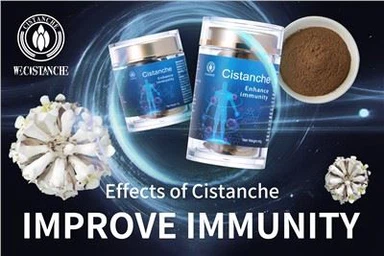
Why Is The Tubular Cistanche Called Desert Ginseng?
Sep 01, 2023
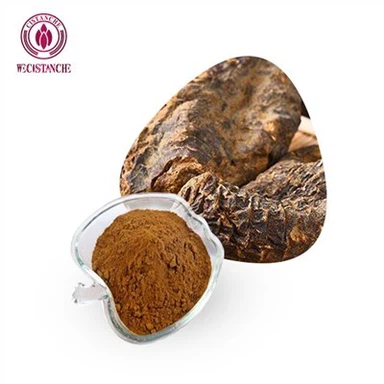
Cistanche tubulosa is a plant that grows in desert areas. Its roots contain rich nutrients and have excellent health benefits. Therefore, in some regions, people also refer to Cistanche deserticola as "desert ginseng". The origin of this name is partly because Cistanche tubulosa grows in deserts and its shape is somewhat similar to ginseng; On the other hand, the nutritional value of Cistanche deserticola is similar to that of ginseng, which can nourish the body, enhance physical strength, promote metabolism, etc. Therefore, it is called "desert ginseng".

Cistanche tubulosa
In addition, there are many other names for Cistanche herb, such as "Da Yun", "Cistanche deserticola", "Guanhua Cistanche deserticola", etc. These names also reflect the different names and cultural backgrounds of Cistanche deserticola in different regions. Overall, Cistanche deserticola is a plant with high nutritional value and health benefits, known as "desert ginseng" due to its unique growth environment in desert areas and similar nutritional benefits to ginseng.
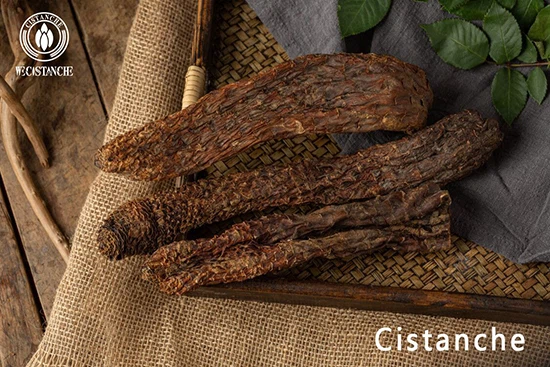
Desert living cistanche
Click here to view Cistanche products
【Ask for more】 Email:cindy.xue@wecistanche.com / Whats App: 0086 18599088692 / Wechat: 18599088692
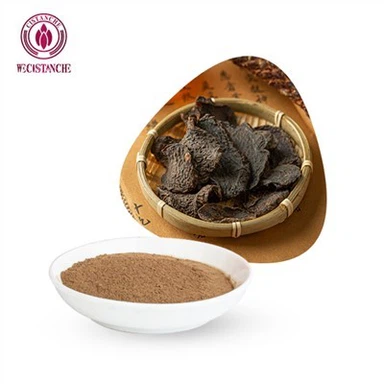
Cistanche deserticola is also widely used in traditional Chinese medicine and is believed to have the effects of tonifying the kidney, strengthening the yang, moistening the intestines, and relieving constipation. Therefore, in the treatment of traditional Chinese medicine, Cistanche deserticola is often used to make traditional Chinese medicine formulas to treat symptoms such as constipation and kidney deficiency. In addition, Cistanche deserticola can also be used as food, and its roots can be processed into powder and added to food to increase nutrition. Its tender buds can also be eaten as vegetables, with a refreshing and refreshing taste.
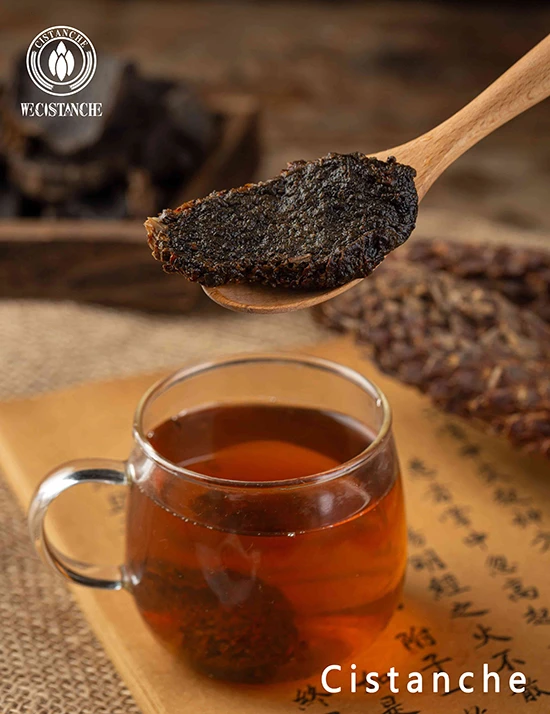
Cistanche tea
The distribution of Cistanche deserticola is mainly in the northwest region of China, including Xinjiang, Gansu, Inner Mongolia, and other regions. In these regions, Cistanche deserticola is an important medicinal plant and has also made certain contributions to the local economic development. In short, Cistanche deserticola is a plant with high nutritional value and health benefits, and its name "Desert Ginseng" also reflects its unique growth environment in desert areas and similar nutritional benefits to ginseng. At the same time, it also has extensive application value in traditional Chinese medicine and the food industry.
【 Commonly used compatibility 】
1. Cistanche deserticola and Cynomorium songaricum have a sweet and warm taste, and belong to the liver, kidney, and large intestine meridians; It has the function of tonifying the kidney and supporting yang, nourishing blood and strengthening tendons, and moistening the intestines and relieving constipation. Cistanche deserticola tends to be warm and moist, with a stronger effect on nourishing the intestines and blood compared to Cynomorium solarium; Suoyang tends to be warm and dry, and its effect of promoting yang and nourishing essence is better than that of Cistanche deserticola. The combination of the two can enhance the effects of tonifying kidney yang, benefiting essence and blood, and moistening the intestines. It is suitable for kidney deficiency, impotence, cold pain in the waist and knees, insufficient essence and blood, as well as dry stool.

Chinese medicines such as ginseng, Cistanche deserticola, and astragalus
2. Cistanche tubulosa, Cornus officinalis, and Cornus officinalis have a sour taste and, slightly warm nature, and belong to the liver and kidney meridians; It has the function of tonifying the liver and kidney, astringent astringency, and consolidating the fetus. Cistanche deserticola is good at tonifying yang and tonifying essence, while Cornus officinalis is good at tonifying kidney and consolidating essence. The combination of the two can enhance the effect of tonifying kidney yang and consolidating essence qi, suitable for kidney deficiency, impotence, waist, and knee weakness, etc.
3. Cistanche tubulosa and Rehmannia glutinosa have a sweet taste, and a slightly warm nature, and belong to the liver and kidney meridians; They can replenish blood nourish yin, and nourish lean marrow. Cistanche deserticola is good for tonifying the kidneys, tonifying the essence, moistening the intestines, and relieving constipation; Rehmannia glutinosa is good at nourishing blood and yin, nourishing essence, and filling marrow. The combination of the two can enhance the effect of tonifying the kidney and tonifying the essence and is suitable for impotence, ejaculation, cold pain in the waist and knees, infertility, etc. caused by kidney deficiency.

Chinese medicines such as ginseng, Cistanche deserticola, and astragalus
4. Cistanche tubulosa, hemp seed, and hemp seed have a sweet taste and a calm nature, which can be directed toward the spleen, stomach, and large intestine meridians; It can moisten the intestines and relieve constipation. Cistanche deserticola grows to nourish the kidneys and essence; Huomaren is good at soothing and tonifying deficiency, moistening dryness, and smoothing the intestines. The combination of the two can enhance the effect of moistening the intestines and relieving constipation, as well as warming and nourishing the yang. It is suitable for elderly patients with qi blood deficiency and constipation.
5. Cistanche deserticola, Morinda officinalis, and Morinda officinalis have a spicy and sweet taste, a slightly warm nature, and belong to the kidney meridian; It has the function of tonifying the kidney, assisting yang, strengthening muscles and bones, and dispelling wind and dampness. Cistanche deserticola is good for tonifying the kidneys, tonifying the essence, moistening the intestines, and relieving constipation. The combination of the two has the functions of tonifying the kidney and supporting yang, moistening the intestines and promoting bowel movements, strengthening tendons and bones, and is suitable for cold pain in the waist and knees, erectile dysfunction and ejaculation, weak muscles and bones, and elderly constipation.