The Long-Misunderstood “Kidney Deficiency”
Sep 22, 2026
The Long-Misunderstood "Kidney Deficiency"Introduction: One Phrase, "Kidney Deficiency," That Has Weighed on Chinese People for Years
Xiao Li, a 28-year-old programmer, was recently confused. He went to a TCM doctor for a sore lower back and fatigue; after feeling his pulse, the doctor said "kidney deficiency." He then went to a top hospital for a full renal workup: negative urine protein, normal serum creatinine, and a normal renal ultrasound showing both kidneys intact-the Western doctor told him his "kidneys are perfectly fine." Faced with two completely different "diagnoses," whom should he believe?
The root of the problem lies in that one Chinese character-"shen" (kidney). What TCM means by "kidney" and what Western medicine means are not the same thing. Equating the two is exactly the source of decades of misunderstanding about "kidney deficiency."
I. Two "Kidneys," Two Completely Different Concepts
1. The Western kidney: a visible, testable physical organ
In Western medicine, the kidney is a concrete, solid organ of the urinary system-a pair of bean-shaped structures roughly the size of a fist, located on either side of the spine in the lower back, beneath the 10th to 12th ribs. It is real "hardware" you can see and touch. Its core job is metabolism, excretion, and endocrine function: it filters the blood, converting creatinine, urea nitrogen, uric acid, excess water, and electrolytes into urine; it regulates water–salt and acid–base balance; and it secretes renin and erythropoietin to help control blood pressure and red blood cell production. Whether it is healthy is judged by objective markers-urine protein, serum creatinine, glomerular filtration rate (GFR), and renal ultrasound. In plain terms, the Western kidney is the body's "water purification plant," checking whether the hardware is damaged.

Effects of Cistanche: Improve Kidney Function
2. The TCM kidney: a "system" covering whole-body function
The TCM "kidney" is far more abstract and far broader. It is not merely the two organs in the lower back, but a set of functions covering the urinary, reproductive, endocrine, parts of the nervous, and skeletal systems-known as the "root of (congenital constitution)." It stores true yang while housing original yin, determining a person's growth, development, reproductive capacity, fluid metabolism, and respiratory regulation throughout life. As the Huangdi Neijing puts it: "The kidney stores essence, governs water, governs the bones, produces marrow, communicates with the brain, and its luster is reflected in the hair." In modern language, it is an "energy system" tied to vitality, concerned with whether function is in balance. Concepts like sexual function, "kidney yang," "kidney yin," and the "fire of the vital gate" have no corresponding single anatomical structure-which is precisely why they cannot be equated with one organ.
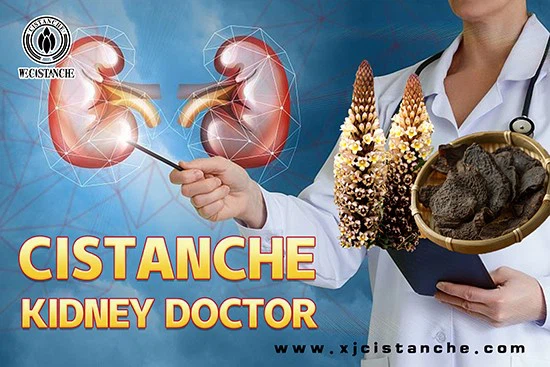
Effects of cistanche-improve kidney function
3. One table to understand the difference
|
Dimension |
The Western Kidney |
The TCM Kidney |
|
Nature |
A concrete, solid organ (a pair) |
A functional system / set of concepts |
|
Scope |
Urination, excretion, endocrine |
Reproduction, growth, fluids, bone, marrow, brain, respiration, etc. |
|
Assessment |
Objective lab & imaging tests |
Inspection, listening, inquiry, pulse-taking |
|
Analogy |
A "water purification plant" (hardware) |
A "vitality system" (function) |
|
Do they conflict? |
On a different dimension; both can be true |
Not contradictory; no need to choose one |
Core conclusion: the Western kidney is an organ; the TCM kidney is a system. They are judgments on different dimensions, so "the TCM doctor says kidney deficiency while the Western tests are normal" is not a contradiction-there is no need to choose one over the other.
II. What Does the TCM Kidney Actually Govern: Four Major Functions
To understand "kidney deficiency," we must first know what the TCM kidney governs. In summary, it is four dimensions.
Storing essence: the source of life
"The kidney stores essence" means it seals and preserves the vital essence-both congenital and acquired-the basic substance that drives growth, development, and reproduction, determining fertility and the pace of aging. When kidney essence is abundant, the bones and sinews are strong, and energy is plentiful; when it is deficient, development is delayed and premature aging sets in.
Governing water: coordinating fluids throughout the body
The kidney presides over the body's entire fluid metabolism. When its qi-transforming function is normal, urine production and excretion are regulated; when it is disordered, problems such as edema, scanty urine, frequent urination, and nocturia may appear.
Governing bone, producing marrow, communicating with the brain; its luster in the hair
"The kidney produces marrow"-marrow nourishes the bones and fills the brain. Abundant kidney essence means strong bones, vigorous mental energy, and lustrous black hair; insufficiency leads to osteoporosis, forgetfulness, and thinning hair with loose teeth. The hair is, in fact, a mirror of kidney essence.
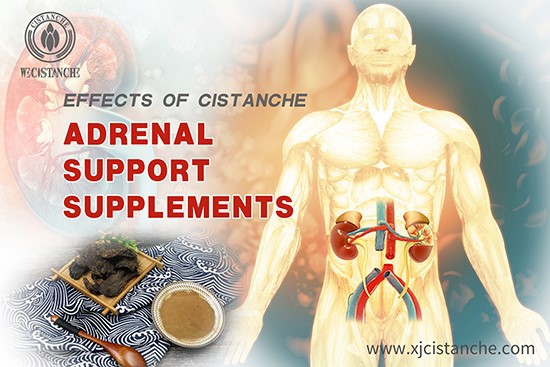
Effects of Cistanche
Click here to view Cistanche for Kidney disease products
【Ask for more】 Email:cindy.xue@wecistanche.com / WhatsApp: 0086 18599088692 / WeChat: 18599088692
Governing intake of qi; opening to the ears and the two lower orifices
"The lung is the master of qi, the kidney is the root of qi." When the kidney is deficient, it loses the power to grasp and hold qi, leading to shortness of breath on exertion, with more exhaling than inhaling. The kidney "opens to the ears and the two lower orifices": deficient kidney essence often manifests as diminished hearing and tinnitus. The opening and closing of defecation and urination are also governed by the kidney-some elderly constipation is not a gastrointestinal problem but a lack of driving force from kidney deficiency, which is exactly where Cistanche shows its value in "tonifying the kidney and unblocking the bowels."
III. The Four Most Common Misconceptions
Misconception 1: Kidney deficiency = kidney disease.
Kidney deficiency is a TCM concept of functional imbalance; kidney disease is a Western organic lesion. Kidney deficiency does not directly turn into uremia, and early kidney disease need not show kidney-deficiency symptoms-the two must not be equated.
Misconception 2: A sore lower back = bad kidneys.
Early Western kidney disease is often "silent and painless"; true renal pain is usually severe colic. Persistent soreness in the lower back is more often related to the lumbar spine, muscles, or prolonged sitting.
Misconception 3: Poor sexual function = kidney deficiency.
TCM does attribute reproduction to the "kidney," but sexual dysfunction has complex causes-psychological, vascular, neurological, and hormonal factors may all be involved, so organic problems should be ruled out first.

The efficacy of Cistanche tubulosa- enhancing sexual function
Misconception 4: Normal tests = no health problem.
Western medicine examines organ structure; TCM reads functional state. These are matters on two different levels. Feeling unwell despite normal tests is precisely the entry point for TCM regulation.
IV. "Kidney Deficiency" Is Not One Disease, but a Group of "Patterns"
"Kidney deficiency" in TCM is not a single specific disease name, but a cluster of symptoms centered on insufficient kidney function. Clinically, it is divided into at least four basic patterns-kidney yang deficiency, kidney yin deficiency, kidney qi deficiency, and kidney essence insufficiency-whose manifestations and treatment directions are entirely different. This is exactly why "kidney deficiency must never be treated as one-size-fits-all, let alone supplemented at random."
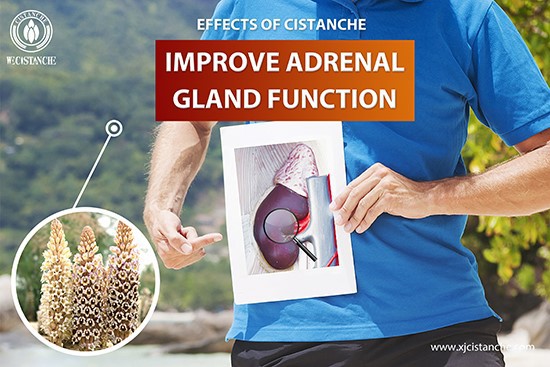
Cistanche tubulosa efficacy: Tonifying the kidney
|
Type |
Core mechanism |
Typical manifestations |
Tonification direction |
|
Yang deficiency |
Yang qi depleted, fails to warm |
Cold/aching low back & knees, cold intolerance, pale/ dark complexion, frequent clear urine at night, reduced libido, pale swollen tongue with white slippery coat, deep slow pulse |
Warm & tonify kidney yang (e.g. Jin Gui Shen Qi Wan, You Gui Wan) |
|
Yin deficiency |
Yin fluids consumed, deficient heat |
Weak, sore low back & knees, dizziness, tinnitus, tidal fever, night sweats, five-palm heat, dry mouth, insomnia, red tongue with little coat, thin rapid pulse |
Nourish kidney yin (e.g. Liu Wei Di Huang Wan, Zuo Gui Wan) |
|
Qi deficiency |
Kidney qi insufficient, fails to hold |
Weak, sore low back & knees, fatigue, shortness of breath, spontaneous sweating, frequent clear urine, dribbling after urination, spermatorrhea/ leukorrhea, pale tongue with white coat |
Tonify qi & consolidate (e.g. Shen Qi Wan, Suo Quan Wan) |
|
Essence insufficiency |
Kidney essence consumed, marrow not replenished |
Delayed development, premature aging, hair loss & loose teeth, forgetfulness, hearing loss, low sperm/ infertility or amenorrhea/ infertility |
Enrich essence & marrow (e.g. He Che Da Zao Wan) |
Tip: Combined patterns (such as dual yin–yang deficiency or dual qi–yin deficiency) are common in practice, and the same symptom can have different root causes. A TCM practitioner must determine the pattern by combining tongue and pulse signs-never "prescribe for yourself because it looks similar."
V. The Key to Nourishing the Kidneys: First Tell the "Two Kidneys" Apart
Once the concepts are clear, the approach to nourishing the kidneys will not be led astray. Here are three essentials.
1. First distinguish "checking the organ" from "regulating function."
If you are concerned about the kidney organ itself, take the Western route: urinalysis, serum creatinine, renal ultrasound, with further evaluation when needed. If your overall state is poor and it is a functional disorder, TCM pattern-based regulation is appropriate. The two can run in parallel without negating each other-under the guidance of specialists, TCM treatment centered on kidney deficiency can also help improve some renal markers and outcomes.
2. Nourishing the kidneys means "nourishing function," not "taking kidney tonics."
TCM says "kidney disease is mostly deficiency," but "tonify what is deficient" is a refined art-gentle supplementation, strengthening the root, progressing step by step; seeking quick results only backfires. Day-to-day care is often more fundamental:
Keep a routine and avoid overwork: moderate sexual activity; avoid chronic physical and mental depletion.
Follow the seasons: "nourish yang in spring–summer, nourish yin in autumn–winter"; keep a consistent schedule.
Exercise moderately: gentle practices like Baduanjin and Tai Chi help consolidate kidney qi.
Regulate emotions: fear drives qi downward, and fright injures the kidney-emotional stability itself nourishes the kidney.
Eat in moderation: with pattern differentiation, use goji berry, Chinese yam, black soybean, walnut, mulberry, and sesame.
3. If the pattern is wrong, a tonic is also a "poison."
This deserves special emphasis: those with kidney yang deficiency benefit from warm tonification, while those with yin-deficiency fire or a damp–heat constitution will only "add fuel to the fire" by taking warm, drying herbs. So the Cistanche discussed below, however mild, is not for everyone.
VI. Nourishing the Kidneys with Cistanche: The "Calm and Gentle" Herb of the Desert
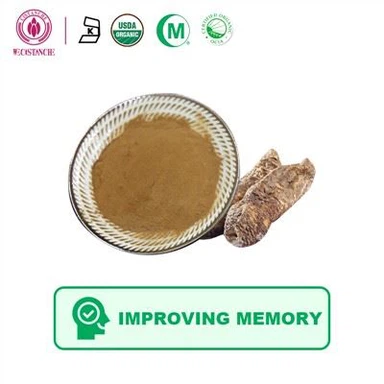
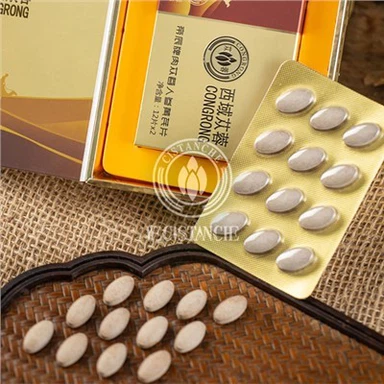
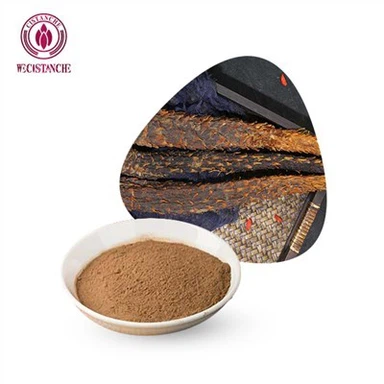
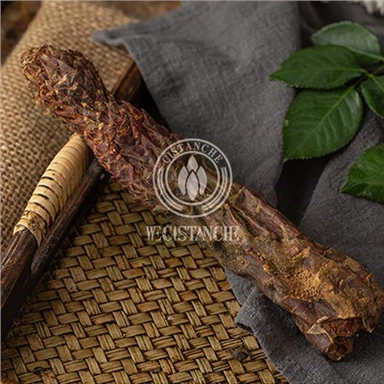
Cistanche is a food–medicine herb that fits "nourishing the kidneys" exceptionally well, with a medicinal history of over two thousand years. It is a parasitic plant growing on the roots of desert shrubs; the Bencao Gangmu describes it as "warming but not heating, tonifying but not harsh, warming but not drying, moistening but not draining." Its tonifying power is gentle and lasting, hence the name "congrong" (calm, unhurried).

Superman Herbs Cistanche
1. What the pharmacopoeia says
The 2025 edition of the Pharmacopoeia of the People's Republic of China records Cistanche as the dried, fleshy, scaly stem of Cistanche deserticola or C. tubulosa (Orobanchaceae). It is sweet and salty in taste, warm in nature, and enters the kidney and large-intestine meridians. Its functions are "tonify kidney yang, benefit essence and blood, moisten the intestines and promote defecation." It treats impotence and infertility, sore, weak low back and knees, and weak bones/sinews due to kidney yang insufficiency and essence–blood deficiency, as well as dry-intestine constipation. By attending to both the kidney and the large intestine, it embodies the TCM principle of "treating different diseases with the same method."
2. Two sources: how to tell them apart
The pharmacopoeia records two plant sources for Cistanche, easily confused when purchasing. The key points are as follows:
|
Comparison |
Deserticola (soft dayun) |
Tubulosa (hard dayun) |
|
Main origin |
Mainly Alxa, Inner Mongolia; parasitic on Saxaul (Haloxylon) |
Mainly southern Xinjiang; parasitic on Tamarisk |
|
Texture |
Soft & pliable; vascular bundles in wavy rings in cross-section |
Relatively hard; vascular bundles scattered as dots |
|
Content limit (echinacoside + verbascoside) |
Not less than 0.30% |
Not less than 1.5% |
|
Character |
Mild, moistening tendency |
Higher active content, more medicinal |
Echinacoside and verbascoside are the marker compounds specified by the pharmacopoeia; their combined total is a mandatory test item. Modern research also shows that Cistanche contains polysaccharides and betaine, with pharmacological activities including antioxidant, anti-aging, anti-fatigue, immune-modulating, neuroprotective, and bowel-moistening effects.
3. Who is Cistanche suitable for: aim for "yang deficiency + essence–blood insufficiency"
Cistanche enters the kidney and large-intestine meridians. Its core positioning is "tonify kidney yang, benefit essence and blood" while also moistening dryness and lubricating the bowels-making it ideal for those with kidney yang insufficiency and essence–blood deficiency accompanied by dry-intestine constipation, especially the elderly with "deficiency-type constipation." The ancients used it with the saying "for dryness and binding in the elderly, it is best taken as a congee." Classical formulas such as Run Chang Wan (from Jisheng Fang) and Ji Chuan Jian (from Jingyue Quanshu) are used for kidney qi weakness with difficult defecation, sore back, and cold sensations.
In daily food therapy, Cistanche-lamb congee (Cistanche, lamb, japonica rice, with a little ginger and scallion) is a long-standing combination that tonifies the kidney, supports yang, and moistens the bowels-especially fitting for yang-deficient constitutions.

Effects of Cistanche-Improve kidney function
4. Who should not take it: contraindications matter more than benefits
Contraindicated in yin-deficiency fire: those who fear heat, have night sweats, dry mouth, and a red tongue with little coat will only be further heated.
Contraindicated in spleen-deficiency loose stools or diarrhea: since it moistens the bowels, it worsens diarrhea.
Not suitable for excess-heat constipation: heat-bound constipation calls for clearing heat and unblocking, not Cistanche.
Pregnant women, children, and those on medication must use it under a doctor's guidance.
Dose must follow medical advice; the pharmacopoeia common dose is 6–10 g, and it should not be taken long-term in large doses on one's own.
In one line: Cistanche "tonifies without being harsh"-a rare, mild, and balanced herb. But "balanced" does not mean "universal." With the wrong pattern, even the best tonic only gets in the way.