Brighter Skin From Within: How Cistanche Tubulosa Inhibits Melanin For A More Even Complexion
Jul 15, 2026
In the global skincare market, "whitening" doesn't mean bleaching. It means achieving a luminous, even-toned, translucent complexion-free from the dark spots, sallow undertones, and patchy hyperpigmentation that age and sun exposure bring. Billions of dollars are spent on topical serums-vitamin C, niacinamide, hydroquinone, kojic acid-all applied to the surface. But the pigmentation process begins deep within the skin, at the melanocyte, and surface treatments alone often fail to address the root biochemical drivers. What if a botanical could suppress melanin production from the inside out? Cistanche tubulosa, a desert herb better known for its anti-fatigue and anti-aging properties, is emerging as a surprisingly comprehensive skin-brightening agent.
The Biology of Melanin Production and Hyperpigmentation
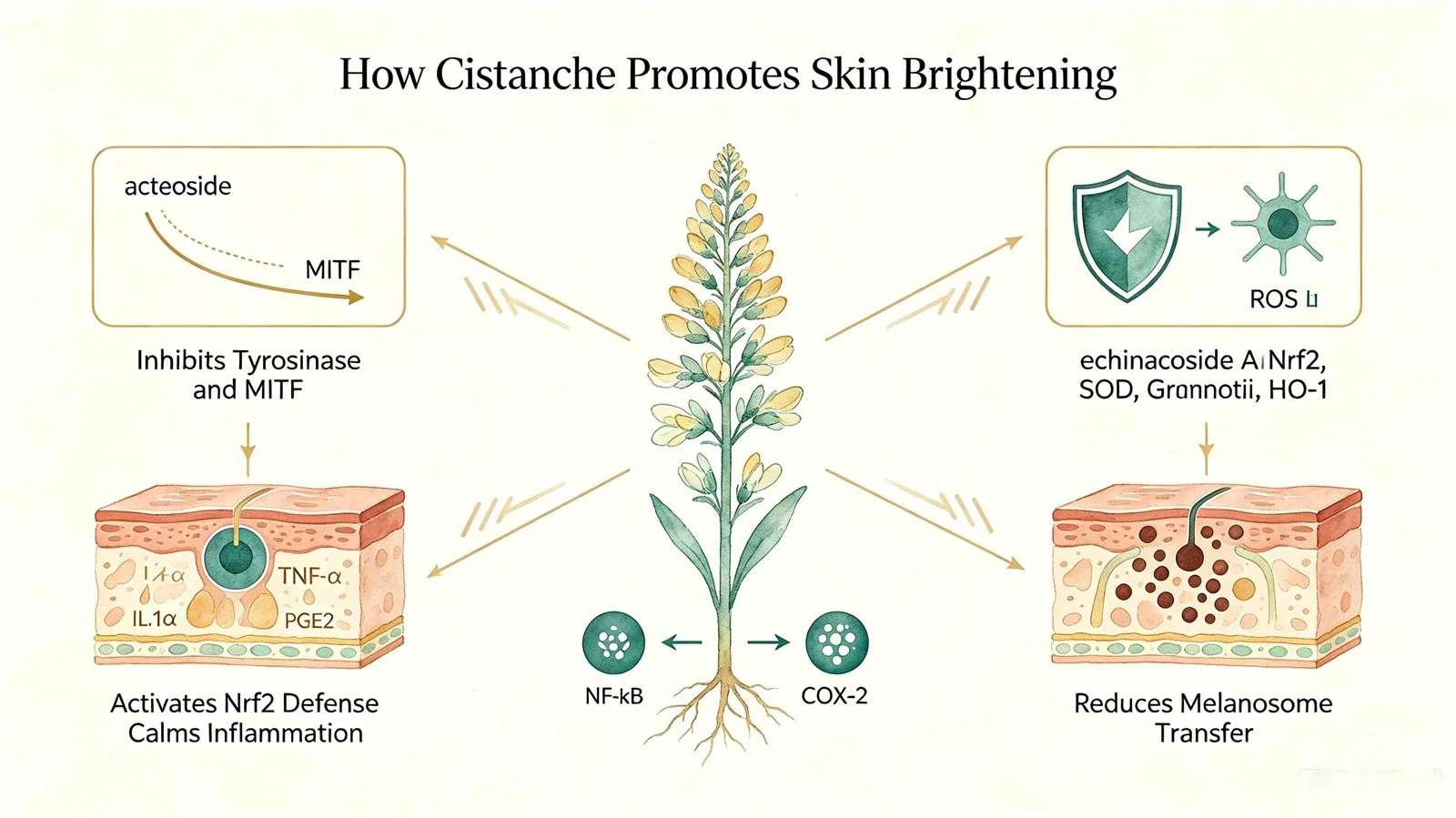
Melanin is produced by melanocytes, specialized cells residing in the basal layer of the epidermis. Inside melanocytes, the amino acid tyrosine is converted by the enzyme tyrosinase into DOPA and then dopaquinone, which polymerizes to form eumelanin (dark brown-black) and pheomelanin (red-yellow). These melanin pigments are packaged into organelles called melanosomes, which are transferred via dendritic processes to neighboring keratinocytes-the predominant cells of the epidermis. This is the process that determines skin color.
Hyperpigmentation-dark spots, melasma, post-inflammatory marks-occurs when this pathway is upregulated. Several triggers converge:
First, UV radiation from the sun is the dominant stimulus. UVB directly damages DNA in keratinocytes, triggering the release of α-MSH (alpha-melanocyte-stimulating hormone), which binds to the MC1R receptor on melanocytes and activates the cAMP/PKA pathway. This leads to the phosphorylation of MITF (microphthalmia-associated transcription factor), the master transcriptional regulator of melanogenesis. MITF turns on the genes for tyrosinase, TRP-1, and TRP-2, ramping up melanin production.
Second, oxidative stress from UV, pollution, and inflammation generates reactive oxygen species (ROS) that directly stimulate melanogenesis. ROS can activate MITF independently of α-MSH and can also damage the skin's natural antioxidant networks, creating a permissive environment for hyperpigmentation.
Third, inflammation triggers post-inflammatory hyperpigmentation (PIH)-the dark marks left after acne, eczema, or injury. Pro-inflammatory cytokines (IL-1α, TNF-α, PGE2) stimulate melanocyte activity, and the inflammatory mediator leukotriene C4 is itself a potent melanogenic signal. This is why spots linger long after the pimple heals.
Topical skin whiteners work at various points: hydroquinone inhibits tyrosinase (but carries risks with long-term use); kojic acid and arbutin also target tyrosinase; niacinamide blocks melanosome transfer; vitamin C is an antioxidant that reduces oxidized melanin. But these act only where applied and in limited concentrations. A systemic agent that could suppress MITF-driven melanogenesis, quench the oxidative stress that triggers it, calm the inflammation that worsens it, and protect skin from UV-induced DNA damage would offer a fundamentally deeper approach to skin brightening. The phenylethanoid glycosides in Cistanche tubulosa-acteoside and echinacoside-are showing activity at all these levels.
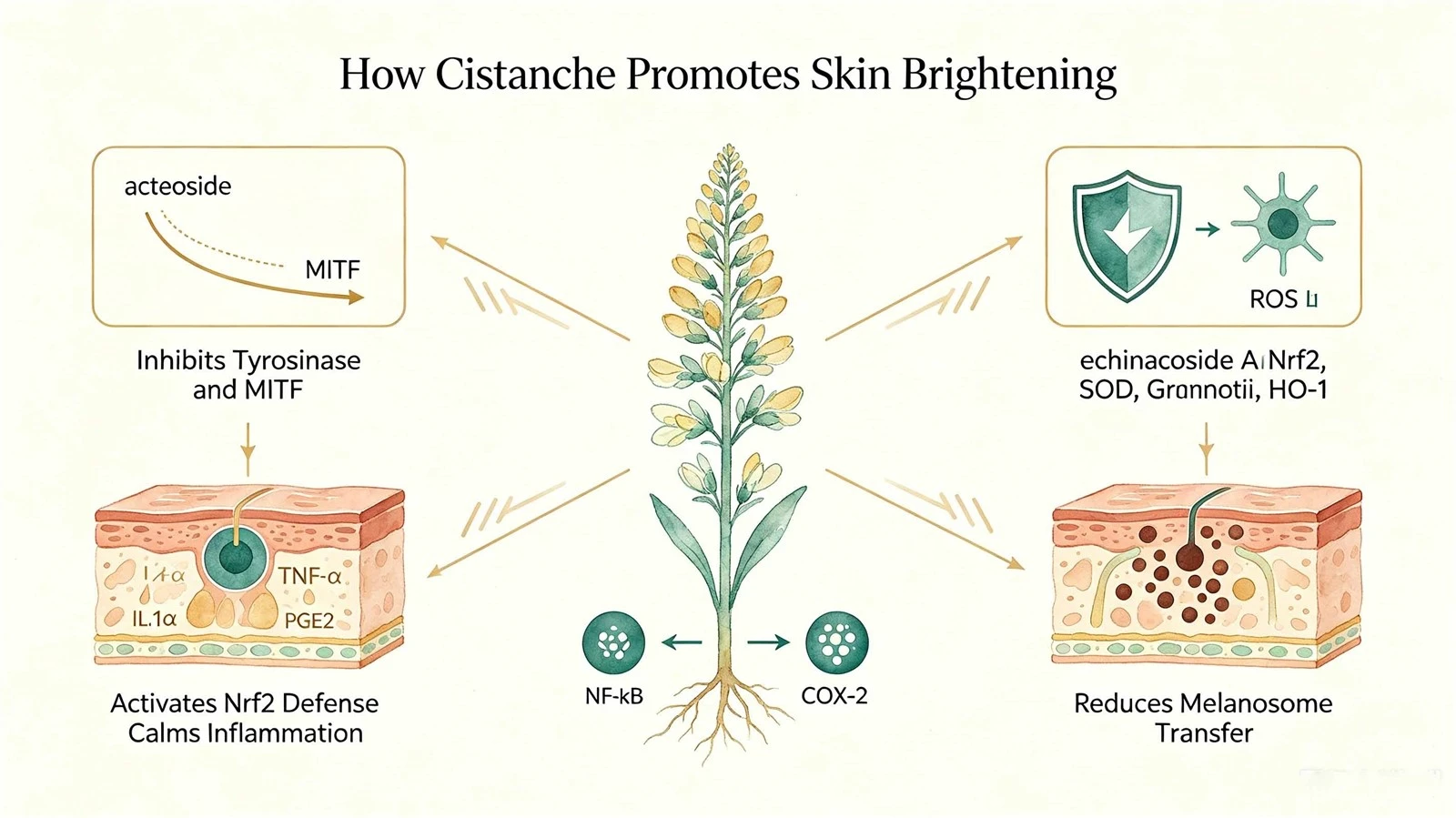
How Cistanche Tubulosa Promotes Skin Brightening
1. Inhibiting Tyrosinase and Suppressing MITF Expression
Acteoside has been shown in enzyme assays to directly inhibit tyrosinase activity, the rate-limiting step in melanin synthesis. But more importantly, it works upstream of tyrosinase-at the transcriptional level. In cultured melanocytes, acteoside has been demonstrated to suppress the expression of MITF, the master transcription factor that drives tyrosinase and TRP-1 gene expression. By reducing MITF levels, acteoside turns down the entire melanogenic program, not just a single enzyme. This effect is mediated through inhibition of the cAMP/PKA/CREB signaling pathway that normally activates MITF transcription in response to UV and α-MSH.
In B16F10 melanoma cells, a widely used model for studying melanogenesis, acteoside treatment significantly reduced both intracellular and extracellular melanin content in a dose-dependent manner, without cytotoxicity. The reduction in melanin was accompanied by decreased tyrosinase protein expression and enzyme activity. These findings position acteoside as a multi-level melanogenesis inhibitor, working at the enzymatic, transcriptional, and signaling levels simultaneously.
2. Antioxidant Protection Against UV-Induced Oxidative Stress
As detailed in our previous article on skin health and photoaging, echinacoside is a potent Nrf2 activator. In skin cells, Nrf2 activation upregulates the endogenous antioxidant shield-SOD, glutathione, catalase, HO-1-that neutralizes the ROS generated by UV exposure. UV-induced ROS are a major driver of hyperpigmentation, and by quenching them, echinacoside removes a key trigger for melanocyte activation. This antioxidant protection also benefits the surrounding keratinocytes and fibroblasts, improving overall skin health and resilience.
Additionally, acteoside has been shown to directly scavenge free radicals and chelate transition metals like copper, which can catalyze oxidative reactions in skin. This broad-spectrum antioxidant activity helps maintain a reducing environment in the skin, where oxidized melanin (which appears darker) is converted back to its reduced, lighter form.

3. Anti-Inflammatory Effects for Post-Inflammatory Hyperpigmentation
Post-inflammatory hyperpigmentation (PIH) is one of the most stubborn and common skin concerns, particularly in Asian skin types. The inflammatory mediators released during acne, eczema, or wound healing-PGE2, leukotrienes, IL-1α-directly stimulate melanocytes and can cause long-lasting dark marks. Acteoside, as a potent inhibitor of NF-κB and COX-2, reduces the production of these pro-inflammatory signals. By calming the inflammatory milieu in the skin, it helps prevent the excessive melanocyte activation that leads to PIH. This anti-inflammatory mechanism is also relevant to melasma, where chronic, subclinical inflammation contributes to the persistence of pigmentation.
4. Inhibiting Melanosome Transfer to Keratinocytes
Even if melanin is produced, it must be transferred to keratinocytes to become visible on the skin surface. Some studies suggest that acteoside may interfere with this transfer process, reducing the amount of melanin that reaches the upper epidermal layers. While the exact mechanism is still being elucidated, this effect-combined with tyrosinase inhibition and MITF suppression-creates a comprehensive blockade of the pigmentation pathway.
5. Synergistic Anti-Aging and Whitening Effects
What makes Cistanche tubulosa uniquely suited for skin brightening is its dual action: it addresses both pigmentation and the underlying aging processes that exacerbate uneven skin tone. As detailed in our articles on anti-aging and photoaging, echinacoside protects dermal collagen from UV-induced MMP-1 degradation, preserving the skin's structural integrity. A healthy dermis provides a better foundation for an even-toned epidermis. The herb's systemic antioxidant and anti-inflammatory effects, discussed in our chronic inflammation article, contribute to a cellular environment in which melanocytes are less reactive and pigmentation is more controlled.
The 2022 comprehensive review in Frontiers in Pharmacology summarizes the antioxidant, anti-inflammatory, and anti-aging properties of Cistanche tubulosa and its active ingredients echinacoside and acteoside, confirming their relevance to skin health and pigmentation control. (Frontiers in Pharmacology review on Cistanche tubulosa)
The Active Ingredients Driving Skin Brightening
The whitening effects of Cistanche are concentrated in its two signature active ingredients: echinacoside and acteoside (verbascoside). These phenylethanoid glycosides are the compounds that inhibit tyrosinase, suppress MITF, activate Nrf2, and calm NF-κB-driven inflammation. A standardized extract containing 20–40% total phenylethanoid glycosides is necessary to deliver the concentrations that research associates with these effects. Raw Cistanche powder, with its low and variable active content, is unlikely to produce visible brightening results.
How to Integrate Cistanche for Skin Brightening
Skin brightening from within requires patience and consistency. Melanin synthesis and turnover are slow processes; the epidermal cycle takes approximately 28–40 days in younger adults and longer with age. Visible improvements in skin tone and spot reduction typically become apparent after two to three months of consistent use. A daily dose of 400–600 mg of a standardized Cistanche tubulosa extract, providing verified levels of acteoside and echinacoside, is a sensible range.
The extract works best as part of a comprehensive skin health regimen: daily broad-spectrum sunscreen (essential-no whitening agent works without sun protection), a diet rich in vitamin C and polyphenols, adequate hydration, and topical products containing complementary brighteners like niacinamide, vitamin C, or azelaic acid. Cistanche's internal approach-reducing melanin production at its source-complements topical treatments that address surface pigmentation.
Our LumiBright Cistanche Extract is sourced from authentic Cistanche tubulosa and standardized for a high concentration of echinacoside and acteoside-the two active ingredients that research links to melanogenesis inhibition and skin brightening. Each batch is third-party tested for purity, because skin deserves only the cleanest ingredients.

Safety and Realistic Expectations
Cistanche tubulosa is well tolerated and safe for long-term oral use. It does not cause the irritation, redness, or photosensitivity associated with some topical whitening agents like hydroquinone or high-concentration retinoids. It does not bleach the skin; it supports a more even, luminous complexion by modulating the natural pigmentation process. However, any dramatic change in skin pigmentation-particularly new, changing, or asymmetrical spots-should be evaluated by a dermatologist to rule out melanoma. For the millions seeking a brighter, more translucent complexion from within, this desert root offers a scientifically grounded, multi-targeted approach to skin whitening and anti-aging.
Supportive Service Of Wecistanche-For more details about cooperation
Business contact: goujinsong@wecistanche.com