Comparison Of Effective Ingredient Content And Quality Evaluation Of Cistanche Tubulosa From Different Origins
Jun 15, 2026
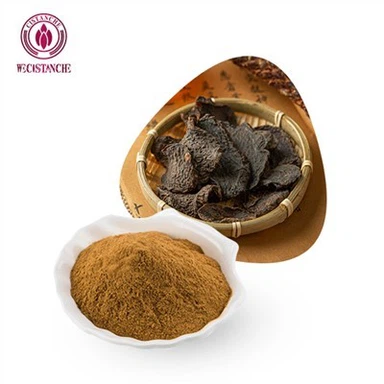
Cistanche tubulosa is a perennial parasitic herbaceous plant belonging to the Cistanche genus in the family Liliaceae. It is a traditional and precious Chinese medicinal herb, known as the "desert ginseng". It was first recorded in the "Shennong Bencao Jing" and is listed as a top-grade herb. It has the core effects of tonifying kidney yang, nourishing essence and blood, moistening the intestines, and promoting bowel movements. It is commonly used in modern clinical practice to regulate diseases such as kidney deficiency, weakness, insufficient essence and blood, intestinal dryness, and constipation. Cistanche tubulosa mainly parasitizes the root systems of desert plants such as Haloxylon ammodendron and Salix matsudana, and is mainly produced in the desert and semi-desert areas of northwest China. There are significant differences in climate conditions, soil properties, planting patterns, and growth cycles among different production areas, which directly affect the accumulation of its effective components and comprehensive quality. At present, the production areas of Cistanche tubulosa in the market are complex, and the quality varies greatly, lacking a unified standard for defining the quality of the production areas. This article takes the core production area of Cistanche tubulosa in China as the research object, compares and analyzes the differences in the content of core active ingredients in samples from different production areas, and conducts a comprehensive quality evaluation based on pharmacopoeia standards and physicochemical indicators, providing a scientific basis for the selection, standardized planting, and market application of authentic medicinal materials of Cistanche tubulosa.

Core active ingredients and quality evaluation standards of Cistanche tubulosa
Modern pharmacological research has shown that the active ingredients of Cistanche tubulosa are mainly phenylethanolic glycosides, polysaccharides, triterpenoids, and flavonoids. The synergistic effects of various components constitute its core medicinal value and are also the core indicators for quality evaluation. According to the 2025 edition of the Chinese Pharmacopoeia, Cistanche tubulosa is divided into two mainstream varieties: desert Cistanche tubulosa and tube flower Cistanche tubulosa. There are clear differences in their quality standards, which are the core basis for this quality evaluation.
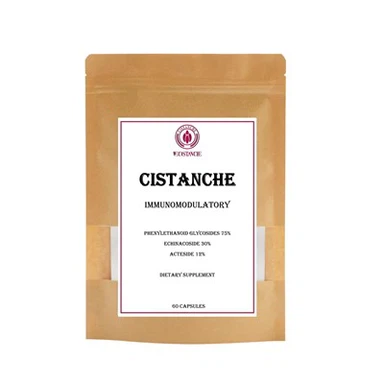
Phenylethanoid glycosides are the most core characteristic active ingredients of Cistanche tubulosa, mainly including echinacroside and verbascoside, which have antioxidant, anti-inflammatory, neuroprotective, and reproductive system function regulating effects. The pharmacopoeia clearly stipulates that the total amount of echinacroside and verbascoside in desert Cistanche tubulosa shall not be less than 0.30%, and the total amount of the two components in tube flower Cistanche tubulosa shall not be less than 1.5%. This indicator is the primary criterion for determining the qualification of Cistanche tubulosa. Cistanche polysaccharides are important functional components that have the effects of regulating immunity, antioxidation, and delaying aging. Their content directly affects the nourishing and regulating effects of Cistanche and is a key auxiliary indicator for distinguishing the quality of different regions. In addition, indicators such as total triterpenoids, total flavonoids, and extracts can reflect the overall accumulation level of effective substances in medicinal materials. The higher the content of extracts, the more abundant the water-soluble active substances in medicinal materials, and the higher the efficacy utilization rate. The Alxa local standard has raised the standard for fresh Cistanche tubulosa extract to 50.0%, far higher than the basic standard of 35.0% in the National Pharmacopoeia, further refining the evaluation dimensions of high-quality Cistanche tubulosa.

Main Chemical Constituents of Cistanche tubulosa
In addition to chemical composition indicators, safety indicators such as appearance, moisture content, impurity level, pesticide residue, etc. of medicinal materials are also important components of comprehensive quality evaluation, which can comprehensively reflect the authenticity and commercial value of Cistanche tubulosa from different origins.
Growth environment and variety characteristics of Cistanche tubulosa in domestic core production areas
The core production areas of Cistanche tubulosa in China are concentrated in the three northwest desert regions of Inner Mongolia, Xinjiang, and Gansu. Different production areas rely on unique geographical and climatic conditions to cultivate Cistanche tubulosa varieties with significant differences in growth cycle and material accumulation characteristics, forming distinctive quality features.
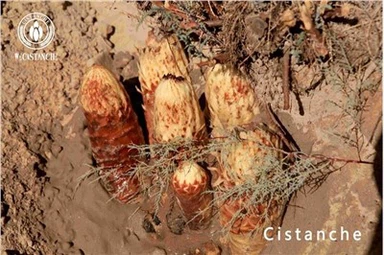
Alxa League in Inner Mongolia is a nationally recognized land area for Cistanche tubulosa and a core production area for desert Cistanche tubulosa. It is also a protected area for national geographical indication products. This region is located in the hinterland of the Asian continent and belongs to an extremely arid desert climate. The annual sunshine duration exceeds 3000 hours, with a large temperature difference between day and night, scarce precipitation, and abundant sandstorms. The soil is mainly sandy desert soil, with excellent breathability and no industrial pollution. The unique natural environment slows down the growth rate of Cistanche tubulosa and prolongs its material accumulation cycle. The desert Cistanche tubulosa produced has thick meat, sufficient oil content, and a compact texture, making it a traditionally recognized, authentic medicinal herb. The local area often adopts a wild parasitic planting mode, where Cistanche tubulosa naturally parasitizes on the root system of Haloxylon ammodendron, with a stable growth cycle and strong quality control.
The Xinjiang production area is the largest production area of Cistanche tubulosa in China, covering core areas such as Hotan, Aksu, and Huocheng. It mainly cultivates Cistanche tubulosa, with a small amount of desert Cistanche tubulosa distributed. The desert areas in Xinjiang have sufficient sunlight, significant temperature differences between day and night, and rich soil mineral content, which helps to rapidly accumulate active ingredients. The growth cycle of medicinal herbs is relatively short, and the yield is high. The ecological environment in the Jia Mu Sha production area of Hotan, Xinjiang, is superior, with unique soil and water conditions, and the accumulation advantage of polysaccharides in the produced Cistanche tubulosa is outstanding. The production areas of Aksu and Huocheng are characterized by a high total amount of phenylethanoid glycosides in Cistanche tubulosa, with abundant medicinal substances and a high degree of commercialization.

Local villagers grow Cistanche tubulosa
The production areas in Gansu are mainly concentrated in the desert areas of the Hexi Corridor, such as Minqin and Guazhou, with desert Cistanche as the main crop. It is an important artificial planting area for Cistanche in China. The climate in this region is relatively mild, with slightly more precipitation than the core desert areas of Inner Mongolia and Xinjiang. The soil fertility is moderate, and the planting mode is mainly artificial large-scale planting. The growth cycle is controllable, and the overall quality of medicinal materials is balanced and stable. However, extreme climate stress is insufficient, and the peak accumulation of active ingredients is slightly lower than that of the core authentic areas.
Comparative analysis of effective ingredient content in Cistanche tubulosa from different origins
By summarizing the testing data of traditional Chinese medicine in recent years and the results of special research on production areas, a systematic comparison was made on the content of core active ingredients in five core production areas of Cistanche tubulosa, namely Alxa in Inner Mongolia, Hotan in Xinjiang, Aksu in Xinjiang, Minqin in Gansu, and Guazhou in Gansu, to clarify the differences in ingredients and quality advantages among each production area.
Comparison of the content of phenylethanoid glycosides
Phenylethanoid glycosides (such as echinacroside and verbascoside) are the core indicators for quality grading of Cistanche tubulosa, with significant differences in content among different production areas. The overall content of Cistanche tubulosa in Xinjiang production areas is much higher than the pharmacopoeia standards. Among them, the content of echinacroside in Hetian production areas of Xinjiang can reach 1.5%~1.8%, and the advantage of the total content of phenylethanolic glycosides is prominent. The proportion of targeted active ingredients is high, and the pharmacological effect is more targeted. The total content of phenylethanolic acid in Aksu and Huocheng production areas in Xinjiang has remained stable and meets the standard, with an overall content at a medium to high level. However, the proportion of core monomer components is slightly lower than that in the Hetian production area.

Phenylethanol glycoside is the main active component of Cistanche tubulosa
The total content of phenylethanoid glycosides in the Alxa Desert Cistanche tubulosa in Inner Mongolia is stable and meets the standard. The total amount of two core components in high-quality wild simulated planting samples is ≥ 1.5g/100g, far exceeding the national basic standard of 0.30%. The composition balance is excellent, with no obvious shortcomings, and it meets the quality characteristics of authentic medicinal materials. The overall content in the Gansu production area is relatively low, with the content of pineal chrysanthemum glycoside in the Minqin production area ranging from 0.8% to 1.2%, and the total content of phenylethanolic glycoside in the Guazhou production area being about 1.5g/100g. The content of verbascoside is relatively weak, and the overall accumulation of active ingredients is lower than that in the core production areas of Xinjiang and Inner Mongolia, only meeting the basic pharmacopoeia compliance standards. Overall, the content of phenylethanolic glycosides shows a distribution pattern of "Hotan in Xinjiang>Alxa in Inner Mongolia>Aksu in Xinjiang>Minqin and Guazhou in Gansu".
Comparison of polysaccharide content
The accumulation of polysaccharides in Cistanche tubulosa is greatly influenced by the soil, water, light, and growth cycle of the production areas, with the most significant differences occurring in these areas. The Jia Mu Sha production area in Hotan, Xinjiang, is the optimal polysaccharide content production area, with a polysaccharide content of 22% to 25%, significantly higher than other production areas. In addition, the proportion of polysaccharide gold active molecular weight is high, and the immune regulation and antioxidant effects are more prominent. The polysaccharide content in the Alxa production area of Inner Mongolia ranges from 10% to 18%, with a large interval. The polysaccharide content of wild perennial plants is higher, while the content of artificially grown samples is lower.

Cistanche tubulosa - a bumper harvest for farmers
The overall polysaccharide content in the Gansu production area is relatively low and stable, while the polysaccharide content in the Guazhou production area is between 9% and 11%. The polysaccharide content in the Minqin production area is at a moderate level and has no significant advantage. The polysaccharide content in Aksu and Huocheng production areas in Xinjiang is between that of Alxa and Gansu production areas, with an overall average performance. The overall distribution pattern of polysaccharide components is "Hotan, Xinjiang>Alxa, Inner Mongolia>Other production areas in Xinjiang>Gansu production area". The polysaccharide advantage of Hetian Cistanche makes it have unique application value in the field of nourishing and health preservation.
Comparison of other active ingredients and physicochemical indicators
The indicators of total triterpenoids, total flavonoids, and extracts can comprehensively reflect the comprehensive quality of medicinal materials. In terms of total triterpenoids, the average content of total triterpenoids in samples from the Alxa production area around the Badain Jaran Desert in Inner Mongolia was the highest, reaching 18.63mg OAE/g DW, with significant advantages in anti-inflammatory and hepatoprotective activities. The total anthocyanin content in the Gurbantunggut Desert production area of Xinjiang is outstanding, with excellent antioxidant capacity. In terms of extract indicators, the extract of fresh processed Cistanche tubulosa from Alxa is ≥ 50.0%, far exceeding the standard of 35.0% in the pharmacopoeia. The water-soluble effective substance has a high dissolution rate and a higher efficacy utilization rate. The total triterpenoid and flavonoid content in the Gansu production area is balanced but without outstanding advantages, and the extract content basically meets the standard without any excess performance.
Comprehensive quality evaluation of Cistanche tubulosa from different origins
Based on the content of active ingredients, appearance, authenticity, stability, and application value, the five core production areas of Cistanche tubulosa are graded and evaluated to accurately define the quality characteristics and applicable scenarios of each production area.
High-quality production areas: Hotan, Xinjiang, Alxa, Inner Mongolia
The main type of Cistanche tubulosa in the Hetian production area of Xinjiang is Cistanche tubulosa, which has the core advantages of extremely high polysaccharide content and abundant active ingredients of phenylethanolic glycosides. Its dual core indicators lead various production areas, with a high-quality component structure and outstanding targeted pharmacological effects. The medicinal herbs have a warm texture, a sweet taste, no bitter or unpleasant odors, and high safety. They are suitable for high-end nourishing, immune-regulating, and daily health scenarios. The only drawback is that the accumulation of triterpenoid components is relatively average.
As an authentic production area, Alxa in Inner Mongolia has a balanced and stable quality of desert Cistanche tubulosa, with core indicators such as phenylethanolic glycosides, triterpenoids, and extracts exceeding the standard. The comprehensive active substances are abundant, and the medicinal materials are oily, compact in texture, and have a deep medicinal heritage, which meets the standards of traditional Chinese medicine authentic medicinal materials. Under the simulated wild planting mode, there are no pesticide or fertilizer residues, and the safety is extremely high. It is suitable for professional medical scenarios such as medicinal compatibility, chronic disease regulation, and kidney deficiency consolidation. The comprehensive quality is the most balanced and comprehensive.

cistanche benefits for men
Click here to view Cistanche for Kidney disease products
【Ask for more】 Email:cindy.xue@wecistanche.com / WhatsApp: 0086 18599088692 / Wechat: 18599088692
Good level production areas: Aksu and Huocheng in Xinjiang
The total content of phenylethanoid glycosides in Cistanche tubulosa from Aksu and Huocheng production areas in Xinjiang meets the standard. The overall active ingredient reserves are sufficient, with high yield, high commercialization level, and good quality stability. The core weakness lies in the uneven proportion of core monomer components and moderate polysaccharide content. The comprehensive efficacy is not as targeted as that of the Hetian production area, and the balance is weaker than that of the Alxa production area. The production area of Cistanche tubulosa has outstanding cost-effectiveness, suitable for general health preservation, food processing, bulk medicinal raw materials, and other common scenarios, and is the main category of market circulation.
Qualified production areas: Minqin and Guazhou in Gansu Province
All indicators of desert Cistanche tubulosa in the Hexi Corridor production area of Gansu Province can meet the basic standards of the National Pharmacopoeia, with balanced quality, strong stability, high standardization of artificial cultivation, low impurities in medicinal materials, and controllable moisture content. However, due to the limitations of the growth environment and insufficient extreme environmental stress, the accumulation of various active ingredients is at a medium level in the industry, with no outstanding advantages. The medicinal strength and nourishing effect are slightly inferior to those in the core production areas of Xinjiang and Inner Mongolia. It is mainly suitable for essential scenarios such as basic medicinal formulas and processing of ordinary health products, and is the main source of affordable raw materials for Cistanche tubulosa.
Analysis of the Causes of Quality Differences and Suggestions for Industrial Optimization
The core causes of quality differences in Cistanche tubulosa from different regions can be summarized into three points. One reason is the difference in the ecological environment. The extreme desert environment with drought, less rainfall, sufficient sunlight, and a large temperature difference between day and night can significantly promote the synthesis of secondary metabolites in Cistanche tubulosa and help accumulate active ingredients. The unique climate of the core production area is the foundation of high quality. The second difference lies in the variety. The content of congenital phenylethanoid glycosides in Cistanche tubulosa is higher than that in desert Cistanche tubulosa, which has a more balanced composition and comprehensive medicinal value. The third difference is the planting and harvesting mode. The accumulation of active ingredients in Cistanche tubulosa is more abundant when planted in a wild perennial and harvested promptly, while artificial fast-growing planting and early harvesting can lead to a significant decrease in the content of active ingredients.
Based on the results of this quality evaluation, suggestions for industrial optimization are proposed: firstly, to promote differentiated development in production areas, Alxa will focus on creating authentic high-end medicinal herbs, Hotan will focus on high polysaccharide nourishing and health products, and ordinary production areas in Gansu and Xinjiang will position general raw material supply to achieve precise resource utilization; The second is to unify the planting and harvesting standards, promote the imitation of wild planting mode, standardize the growth cycle and harvesting time, and reduce human quality loss; The third is to improve the origin traceability system, label the production area, variety, planting mode, and harvest year, and solve the problem of mixed market quality; The fourth is to optimize the processing technology, adopt low-temperature drying and fresh processing techniques, reduce the damage of high temperature, sulfur fumigation and other processes to effective ingredients, and improve the retention rate of raw material quality.

Abundant harvest of Cistanche tubulosa
This article compares the effective ingredient content and comprehensive quality of Cistanche tubulosa from the five core production areas in China, and clarifies the quality advantages and disadvantages of Cistanche tubulosa from different production areas: Xinjiang Hetian Cistanche tubulosa has outstanding polysaccharide and core phenylethanolic glycoside content, and excellent nourishing and health value; Inner Mongolia Alashan Desert Cistanche tubulosa has a balanced composition, the best comprehensive quality, high medicinal safety, and the highest medicinal value; The Aksu and Huocheng production areas in Xinjiang have good quality and outstanding cost-effectiveness, suitable for large-scale circulation; Gansu production area meets quality standards and has strong stability, making it the main production area for basic raw materials. Due to differences in ecological environment, variety, and planting mode, different regions of Cistanche tubulosa have formed differentiated quality characteristics, with no absolute superiority or inferiority, only applicable in different scenarios.
In the future, it is necessary to further rely on the advantages of the real estate area, promote standardized and regulated planting and processing, improve the quality evaluation system of Cistanche tubulosa production areas, achieve precise application of Cistanche tubulosa in different production areas, promote the transformation of the Cistanche tubulosa industry from scale expansion to quality upgrading, and fully utilize its medicinal and health value.