Cytological And Pharmacological Effects Of Cistanche Deserticola On Liver Protection
Jul 22, 2024
The liver is a huge 'chemical factory' in the human body. It has six major functions:

Cistanche deserticola efficacy-Maintaining the liver
1, Metabolic function:
① Sugar metabolism: Starch and carbohydrates in the diet are digested and converted into glucose, which is absorbed by the intestines. The liver synthesizes it into glycogen and stores it; When the body needs it, liver cells can break down liver glycogen into glucose for the body to use.
② Protein metabolism: The liver is the only synthetic organ for albumin in the human corpus cavernosum; The generation, maintenance, and regulation of globulin, enzyme proteins, and plasma proteins other than gamma globulin require the involvement of the liver; Amino acid metabolism, such as deamination reaction, urea synthesis, and ammonia treatment, all occur in the liver.
③ Fat metabolism: The synthesis and release of fat, breakdown of fatty acids, generation and oxidation of ketone bodies, synthesis of cholesterol and phospholipids, and synthesis and transportation of lipoproteins are all carried out in the liver.
④ Vitamin metabolism: The synthesis and storage of many vitamins such as A, B, C, D, and K are closely related to the liver. When the liver is significantly damaged, abnormal vitamin metabolism may occur.
⑤ Hormone metabolism: The liver is involved in the inactivation of hormones, and sexual hormone imbalance may occur when liver function is damaged for a long time.
2, Bile generation and excretion: The intake, binding, and excretion of bilirubin, as well as the generation and excretion of bile acids, are all undertaken by the liver. The bile produced and secreted by liver cells is transported through the bile duct to the gallbladder, where it is concentrated and placed in the small intestine to aid in the digestion and absorption of fat.
3, Detoxification effect: Some harmful waste and foreign toxins, toxins, and drugs produced during the human body's metabolic process are detoxified in the liver.
4, Immune function: The liver is the largest reticuloendothelial cell phagocytic system, which can engulf, isolate, and eliminate various invading and endogenous antigens.
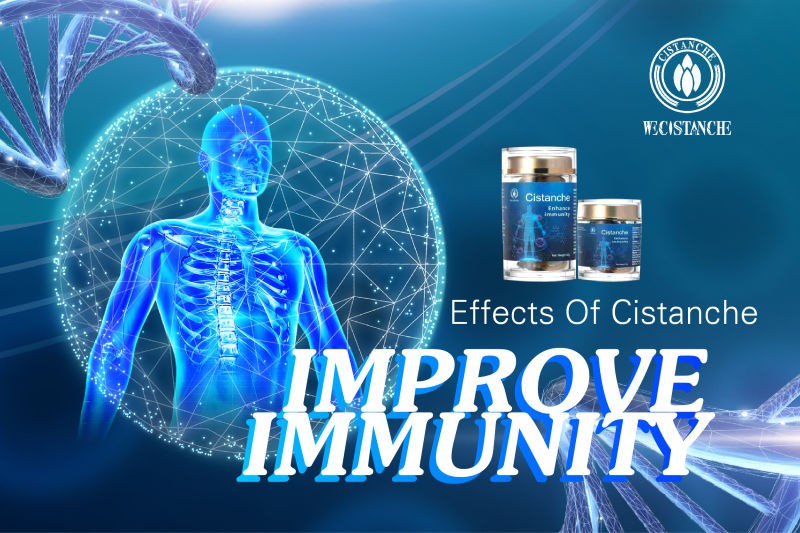
Desert ginseng-Improve immunity
5, Coagulation function: Almost all coagulation factors are produced by the liver, which plays an important regulatory role in the dynamic balance of the body's coagulation and anticoagulation systems. The severity of liver dysfunction is often parallel to the degree of coagulation disorders, and in clinical practice, some patients with cirrhosis often bleed or even die due to liver failure.
6, Other: The liver is involved in regulating human blood volume, generating heat, and regulating water and electrolytes. For example, when the liver is damaged, sodium, potassium, iron, phosphorus, and other electrolytes are out of balance. The common problem is that water and sodium are retained in the body, causing edema and ascites.
In recent years, with the improvement of people's health awareness, the awareness of protecting the liver has gradually increased, and various health products with liver protection effects are also highly favored. Cistanche deserticola is one of them, which is the dried fleshy stem of Cistanche deserticola, a plant in the family Rhamnaceae, and is a traditional Chinese medicinal herb for nourishing the body. Modern pharmacological studies have shown that the hepatoprotective effect of Cistanche deserticola mainly acts at the cellular level. This article explores its hepatoprotective mechanism through different pharmacological experiments.

Desert ginseng-Maintaining the liver
Wang Zhiqiang and others conducted experimental research on the effect of Cistanche deserticola on the activity of liver mitochondrial adenosine triphosphate (ATP) enzyme. Compared with the control group, Cistanche deserticola mainly increased the activity of sodium-potassium ATPase, calcium ATPase, magnesium ATPase, and calcium magnesium ATPase, reaching the level of the sham surgery group, improving arterial pressure, and reducing animal mortality rate; Zhao Zion et al. used HE staining and glycogen and lactate dehydrogenase methods to study the effects of Cistanche deserticola on liver tissue, glycogen, lactate dehydrogenase (LDH), and isoenzyme activity in mice subjected to load exercise. Due to severe damage to the liver tissue structure of mice subjected to load exercise, glycogen decreased and LDH and isoenzyme activity significantly increased. After taking Cistanche deserticola, the liver tissue structure of mice subjected to load exercise tended to be normal, glycogen was abundant, and LDH and isoenzyme activity significantly decreased. This indicates that Cistanche deserticola mainly exerts protective effects on the liver and promotes physical recovery by reducing LDH5 activity, increasing liver glycogen content in mice subjected to load exercise, and promoting liver glycogen synthesis.

Chinese cistanche herb
Click here to view Cistanche deserticola liver protection products
【Ask for more】 Email:cindy.xue@wecistanche.com / Whats App: 0086 18599088692 / Wechat: 18599088692
Research by Wu Yu et al. has shown that extracts from Cistanche deserticola can enhance ATPase activity, maintain mitochondrial membrane potential, and exert protective effects on thymocytes and hepatocytes during septic shock. Pinecone chrysanthemum glycoside mainly reduces the levels of serum ALT (alanine aminotransferase), AST (aspartate aminotransferase), and tissue MDA (malondialdehyde), increases the activity of SOD (superoxide dismutase), and inhibits the activity of caspase-3 (caspase-3) and TNF - α (tumor necrosis factor), effectively reducing the generation of free radicals and anti-lipid peroxidation, thus protecting liver tissue. The study by Xiong QB et al. showed that verbascoside, verbascoside, 2-ethylphenol verbascoside, and pinealoside in the extract of Cistanche deserticola can alleviate liver cell toxicity induced by CCl4 (carbon tetrachloride) and D-GalN (D-galactosamine) by inhibiting NADPH-CCl4 induced lipid peroxidation in liver microsomes and the release of aspartate transaminase in cells. Pinecone chrysanthemum glycoside, verbascoside, verbascoside, and other phenylethanoid glycoside compounds exert a protective effect on the liver by reducing sAST and sALT growth in D-GalN/LPS-induced liver injury model mice.

Echinoside, the main chemical component of Cistanche deserticola
With the continuous in-depth study of the hepatoprotective mechanism of Cistanche deserticola, its related pharmacological mechanisms have gradually become clear. This will not only greatly promote the development of clinical drugs and health products of Cistanche deserticola, but also consolidate its position in the field of traditional Chinese medicine health products and traditional Chinese medicine.