Effects Of Emotion And Semantic Relatedness On Recognition Memory: Behavioral And Electrophysiological Evidence Part 3
Jan 02, 2024
2.3 | Discussion
In Experiment 1 we observed an associative emotional interference effect, which was attenuated by semantic relatedness. Turning to the EEG data, semantic relatedness did not modulate the early associative memory effect, associated with familiarity, nor the late associative memory effect, associated with recollection. That is, the difference waveform for intact vs. rearranged pairs was similar for related and unrelated pairings.
The emotional interference effect means that in a state of high or low mood, memory will be affected, making it difficult for us to maintain clear thinking and recall. When we feel frustrated, angry, or anxious, it causes our mental state to become cluttered, which interferes with our thought processes and can also negatively impact our memory. However, we can overcome the interference effect of emotions and improve our memory through active emotion management.
First, positive emotions enhance our memory. When we feel pleasure, excitement, or gratitude, our brains secrete happy hormones like dopamine, which not only promote thinking and creativity but also strengthen our memory. Therefore, if we can maintain a happy mood through a positive attitude when studying or working, we will be able to better remember the knowledge we have learned and complete work tasks.
Second, emotion management helps reduce stress and anxiety, thereby mitigating the impact of emotional disturbances. We can relieve emotional stress through meditation, rest, and physical exercise. When our mind is relaxed and our emotions are balanced, we can focus better and remember and process information more quickly.
Finally, positive emotional attitudes can also affect our memory performance. For example, when we maintain an optimistic attitude, it is easier to remember successful experiences, and these memories can further stimulate our positive emotions and form a positive cycle.
In short, the emotional interference effect is very closely related to memory. We need to actively face emotions, enrich our memory through positive emotional management, and strengthen our self-confidence and learning ability. Therefore, we should keep our emotions in a positive state and be an optimistic, positive, and confident person. We need to improve memory, and Cistanche deserticola can significantly improve memory because Cistanche deserticola is a traditional Chinese medicinal material with many unique effects, one of which is to improve memory. The efficacy of minced meat comes from the various active ingredients it contains, including acid, polysaccharides, flavonoids, etc. These ingredients can promote brain health in various ways.

Click know supplements to improve memory
Interestingly, however, the associative memory ERP effect was modulated by the valence of the stimuli: the early ERP component showed a frontal modulation for negative pairs (with greater frontal negativity for rearranged vs. intact pairings), suggesting unsuitability of negative stimuli and the contribution of familiarity to their associative recognition.
Nevertheless, even though the modulation of the early ERP effect was similar for related and unrelated pairs, the behavioral attenuation of the associative emotional interference effect was only apparent for pairs that were semantically related.
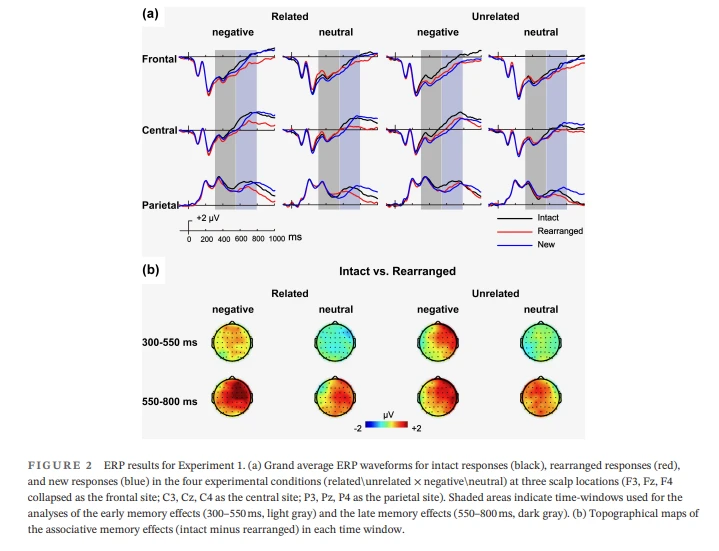
We return to this seeming discrepancy between the behavioral and the ERP results in our General Discussion.
Although somewhat unpredicted, the modulation of the early ERP component for negative (but not neutral) pairs, adheres to the suggestion that valence serves as an organizing principle, i.e., allowing grouping across shared properties. Previous studies (Talmi et al., 2007; Talmi & Moscovitch, 2004) proposed that the common finding of enhanced memory for emotional items can be due to a shared emotional context.
In a series of experiments, they showed that the memory advantage for emotional items is eliminated when these are compared with categorized neutral items, suggesting that valence serves as an organizing principle for the items. This organization, along with the dimension of emotional valence, possibly overshadowed the effect of semantic relatedness.
Indeed, in the current experiment, emotional content was explicitly probed (i.e., during the study participants completed valence judgments for the stimuli), which might have promoted emotional processing and hindered the processing of semantic relations. Notably, a growing body of evidence suggests that modulation of behavior or processing by emotional content is only triggered when emotions are relevant to the task (e.g., Engen et al., 2017; Huang et al., 2008; Pessoa, 2009; Stein et al., 2009; Wei et al., 2015). For example, Stein et al. (2009) conducted the attentional blink task to estimate whether task relevance impacts prioritization.
In this experiment, participants judged either the emotion (relevant condition) or gender (irrelevant condition) of two target facial stimuli depicting different expressions (fearful or neutral). Fearful faces (vs. neutral) induced a stronger attentional blink, but only in the relevant condition. This demonstrates that the processing advantage of emotional stimuli depends on the relevance of emotion to the task.
Similarly, in the context of the current task, situating emotion as task-relevant might have promoted binding along this dimension. In other words, instead of creating unitized links for semantically related (vs. unrelated) items, such links were created for negative (vs. neutral) ones. Experiment 2 was designed to address this possibility.

3 | EXPERIMENT 2
In Experiment 2, we investigated the effect of semantic relatedness on associative recognition of emotional stimuli, when emotions are incidental to the task. To this end, Experiment 2 employed the same behavioral and EEG measures as Experiment 1, but with a different study task. Namely, rather than valence judgment, in Experiment 2 participants were asked to perform a familiarity judgment.
We predicted an overall behavioral pattern similar to Experiment 1, that is, a smaller associative emotional interference effect for semantically related vs. unrelated pairs. We further rationalized that, with emotion being incidental to the task, both unitization and LOP would be promoted for semantically related (vs. unrelated) pairs. We therefore predicted that both the early and the late associative memory ERP effects would be greater for related than unrelated pairs.
3.1 | Method
3.1.1 | Participants
Forty-seven healthy, right-handed native Chinese speakers (32 females; mean age 22.1 ±1.9 years) from Capital Normal University, with the same characteristics as those who participated in Experiment 1, participated in Experiment 2. Data from seven participants were discarded, due to an insufficient number of artifact-free ERP trials in one or more experimental conditions (N trials <16). Our final sample therefore included 40 participants (27 females; mean age 21.9 ±2.0 years).
3.1.2 | Procedure, recording, and analyses
Stimuli were the same as in Experiment 1. The procedure was identical to that of Experiment 1, except that participants were asked to perform a familiarity judgment task in the study, namely, to judge which one of the two objects presented in each trial was more familiar. They were asked to press the 'left arrow key on the keyboard if they thought that the left object was more familiar, to press the 'right arrow' key if they thought that the right one was more familiar, and to press the 'down arrow key if they thought that the two objects do not differ in their familiarity.
EEG recording and preprocessing were the same as in Experiment 1. Mean numbers of related analyzed trials were 38 (intact), 26 (rearranged), and 39 (new) for negative pairs, and 40 (intact), 29 (rearranged), and 43 (new) for neutral pairs. Mean numbers of unrelated analyzed trials were 23 (intact), 29 (rearranged), and 36 (new) for negative pairs, and 28 (intact), 31 (rearranged), and 42 (new) for neutral pairs. Statistical analyses were the same as in Experiment 1.
3.2 | Results
3.2.1 | Behavioral results
Means and SDs for the various behavioral measures of Experiment 2 are shown in Table 2. The ANOVA for associative Pr revealed the main effects of valence, F (1, 39) = 40.31, p <.001, 휂2 p =0.51, and relatedness, F (1, 39) = 220.81, p <.001, 휂2 p =0.85, with greater Pr scores for neutral pairs (vs. negative), and for related pairs (vs. unrelated).
The analysis of accuracy rates for intact pairs revealed main effects of relatedness, F (1, 39) = 370.64, p <.001, 휂2 p =0.91, and valence, F (1, 39) = 22.64, p <.001, 휂2 p =0.37, as well as a 2-way interaction between the two factors, F (1, 39) = 12.67, p =.001, 휂2 p =0.25. Decomposition of this interaction showed that even though the difference in accuracy rates between neutral and negative pairs emerged for both related and unrelated pairs, it was greater in the latter, t related(39) = 2.35, p =.024, d = 0.37; t unrelated(39) = 5.26, p <.001, d = 0.83. For rearranged pairs, the analysis of accuracy rates revealed a main effect of relatedness, F (1, 39) = 12.88, p =.001, 휂2 p =0.25, and valence, F (1, 39) = 6.59, p =.014, 휂2 p =0.15, but no significant interaction.
The behavioral results of Experiment 2 show a similar pattern of attenuated emotional interference effect for related vs. unrelated pairs, which we observed in Experiment 1. However, unlike Experiment 1, in which this pattern was observed both for hit rates (correct "intact" responses) and for the unbiased associative Pr scores, in Experiment 2 it was only observed for the former.

3.2.2 | ERP results
Waveforms and topographical distribution of the associative memory effect are shown in Figure 3. In the early time window (300–550ms), the analysis revealed a main effect of response type, with more positive-going waveforms for intact pairs (vs. rearranged), F (1, 39) = 4.67, p =.037, 휂2 p =0.11, and a 2-way interaction between relatedness and response type, F (1, 39) = 5.09, p =.030, 휂2 p =0.12. Decomposition of the interaction showed a significant associative memory effect for related pairs, t (39) = 3.08, p =.004, d = 0.49, but not for unrelated pairs (p =.81). Thus, in the early time window, the associative memory effect emerged for related pairs, regardless their valence, and had widespread distribution.
In the late time window (550–800ms), the analysis revealed a main effect of response type, F (1, 39) = 38.49, p <.001, 휂2 p =0.50, a 2-way interaction between relatedness and response type, F (1, 39) = 10.23, p =.003, 휂2 p =0.21, a 2-way interaction between valence and response type, F (1, 39) = 6.92, p =.012, 휂2 p =0.15, and a 3-way interaction between relatedness, valence, and response type, F (1, 39) = 8.37, p =.006, 휂2 p =0.18. To decompose the 3-way interaction, we conducted follow-up ANOVAs with relatedness and response type as within-subject factors, separately for each valence.
For negative pairs, this analysis revealed a main effect of response type, F (1, 39) = 11.46, p =.002, 휂2 p =0.23, and a significant 2-way interaction between relatedness and response type, F (1, 39) = 17.12, p <.001, 휂2 p =0.31, resulting from an associative memory effect for related pairs, t (39) = 4.74, p <.001, d = 0.75, but not for unrelated pairs (p =.82). A similar follow-up ANOVA for neutral pairs revealed a main effect for response type, F (1, 39) = 42.93, p <.001, 휂2 p =0.52, but no interaction between the factors. As for Experiment 1, an exploratory analysis of a later associative memory effect (800–1000ms) is included in Supporting Information 4.
3.3 | Discussion
In Experiment 2, participants were more likely to classify negative pairs as intact if they were semantically related, but this similarly occurred for both intact and rearranged pairs. We come back to this in the General Discussion below.
As for the ERP data, the results agree with previous studies (e.g., Ahmad & Hockley, 2014; Kriukova et al., 2013; Li et al., 2019; Rhodes & Donaldson, 2008; Tibon, Gronau, et al., 2014), demonstrating modulation of the early associative memory effect by semantic relatedness. Namely, the early difference between intact and rearranged pairs was only significant when stimuli were semantically related (regardless of their valence). The late associative memory effect was more generally distributed and was only absent for unrelated negative pairs. While this absence might seem puzzling at first sight, a closer look at the behavioral results suggests that this is the only experimental condition (across both experiments) for which the probability to correctly classify intact items (47%) was highly similar to the probability to classify them as rearranged pairs (43%). This suggests that in this condition, for which emotional associative interference is not attenuated by semantic relations, recollective processes are impeded. Yet, it remains unclear why the same pattern was not observed in Experiment 1.
4 | GENERAL DISCUSSION
The present study used an associative recognition paradigm, across two experiments, to investigate how semantic relations, valence, and their interaction, affect our ability to retrieve associative information. Both experiments conformed to the same procedure, aside from the instructions given during the study phase. Namely, in Experiment 1 participants were asked to compare the valence of object pairs, whereas in Experiment 2 they were asked to compare their familiarity.
In both experiments, an associative emotional interference effect emerged, with reduced associative memory for negative pairs. This finding agrees with previous studies, showing that emotion can impair associative memory (Madan et al., 2012; Mao et al., 2015; Mather & Knight, 2008; Pierce & Kensinger, 2011; Rimmele et al., 2011). Importantly, our results further suggest that this associative emotional interference effect can be reduced under certain circumstances. In particular, when valence is attended (as in the case of Experiment 1, where the task requires valence judgment) semantic associative relations can attenuate this associative emotional interference effect.
Interestingly, in Experiment 2, negative related pairs were more likely to be classified as "intact" compared to negative unrelated pairs (as indicated by their accuracy scores). This tendency, however, was not reflected in the unbiased associative Pr scores. Therefore, in the case of Experiment 2, the alleviated number of "intact" responses does not represent a memory effect but rather indicates a response bias.
Taken together, the results of the two experiments agree with previous research, showing that emotions can enhance processing, but only when they are relevant to the task (as in Experiment 1; e.g., Engen et al., 2017; Huang et al., 2008; Pessoa, 2009; Stein et al., 2009; Wei et al., 2015). In the current case, during encoding, the processing of semantic relations was enhanced for negative pairs, leading to better binding which reduced the associative emotional interference. Nevertheless, this reduction only occurred when emotions were task-relevant (i.e., in Experiment 1).
Turning to the ERP data, our results revealed that the modulation of the early associative memory effect was task-dependent. Specifically, in Experiment 1, where valence was relevant to encoding, the early ERP effect showed greater frontal negativity for intact vs. rearranged negative pairs, regardless of their semantic relations. In contrast, in Experiment 2, where familiarity (and not valence) was probed during encoding, this modulation only occurred for related (but not for unrelated) pairs, regardless of their valence. These results provide evidence for the suggestion that emotions triggered by stimulus valence can serve as an organizing principle that binds the items together via shared context (Riberto et al., 2019; Talmi & Moscovitch, 2004). Therefore, pairs of emotional stimuli might be more easily unitized compared to non-emotional ones. The results of Experiment 1 support this idea. Namely, in this experiment, the early associative memory effect-the putative electrophysiological correlate of familiarity-showed a modulation for negative pairs, indicating that familiarity was readily available for these pairs.
Interestingly, this valence-based modulation of the early effect was not observed in Experiment 2, in which valence was not probed during encoding, suggesting that valence might only serve as an organizing principle when it is task-relevant (or attended). When valence is not relevant to the task, familiarity signals can be elicited when the stimuli comprising the pair are semantically related, as apparent in Experiment 2. Indeed, previous studies have shown that semantic relations can promote unitization, which further enhances familiarity-based associative recognition (e.g., Ahmad & Hockley, 2014; Kriukova et al., 2013; Li et al., 2019; Rhodes & Donaldson, 2008; Tibon, Gronau, et al., 2014). Arguably, when valence is irrelevant, semantic relatedness "pops out" as an organizing principle, and enables unitization along this dimension. Taken together, the modulation of the early associative effect observed in the current study, suggests that both semantic relationships and emotional context can support unitization which can subsequently promote familiarity-based retrieval.
Unlike the selective modulation of the early associative memory effects, the modulation of the late effect was apparent more generally across the various experimental conditions (albeit, as noted above, not for unrelated negative pairs in Experiment 2). Although this late effect was rather broadly distributed and lacked the pronounced parietal maxima often associated with the recollection-related late positive component (Rugg & Curran, 2007; Wilding & Ranganath, 2011), retrieval-related modulations with anterior/central topographic distribution are commonly reported in associative recognition ERP studies (e.g., Bader et al., 2010; Han et al., 2018; Kriukova et al., 2013; Mollison & Curran, 2012; Rhodes & Donaldson, 2007, 2008; Tibon, Ben-Zvi, & Levy, 2014; Zheng, Li, Xiao, Broster, & Jiang, 2015) and are interpreted as reflecting recollective processes. Our findings suggest that recollective processes were readily available for intact pairs, regardless of their valence or semantic relations.
One aspect of the associative memory effects that warrants further attention is the correspondence between the behavioral results and the ERP data. Specifically, in Experiment 1, associative emotional interference was only attenuated when semantically related pairs were retrieved, even though the modulation of the early ERP effect was similar for related and unrelated pairs. We speculate that the production of early mnemonic signals (as indicated in the ERPs) would only affect behavior if these signals are considered diagnostic or trusted. For semantically related pairs, the emotional context adjoins the semantic one (e.g., for gun: bullets pair: negative feeling due to the shooting gun), producing a trustworthy mnemonic signal that attenuates associative emotional interference. In contrast, for stimuli that lack semantic relations, the early signal is cognitively attributed to more general sources (e.g., that the stimuli were experienced together during the experimental session, rather than within a specific pairing). Therefore, these signals are not designated as trustworthy and do not produce the same behavioral change. This idea coincides with a recent proposal by Bastin et al. (2019) which posits that an attribution system modulates the use of memory traces as a function of expectancies, task context, and goals, leading to subjective experiences and explicit judgments. In the current case, associative familiarity signals might have been attributed to an alternative source (e.g., such as processing fluency or global familiarity) and were discarded in the face of explicit judgments.
In the current study, the distinction between the two processes supporting recognition memory-familiarity and recollection-relies mainly on the temporal distribution, and to some extent also on the spatial distribution, of the early and late associative memory ERP effects. Like many other studies (e.g., Bader et al., 2010; Guillaume & Etienne, 2015; Jäger et al., 2006; Kamp et al., 2016; Rhodes & Donaldson, 2008; Tibon, Gronau, et al., 2014; Zheng, Li, Xiao, Broster, Jiang, & Xi, 2015, to list just a few), we associate the early frontal negativity with familiarity, and the late positivity with recollection. While this type of reverse inference has its limitations (Poldrack, 2006), our interpretation builds on decades of intensive research that strongly associates these ERP components with the particular memory processes reported here (reviewed by Mecklinger, 2000; Rugg & Curran, 2007; Wilding & Ranganath, 2011). We do acknowledge that in the current study, the early ERP component might reflect processing fluency instead of (or possibly together with) familiarity (see Paller et al., 2012; Paller et al., 2007; Mecklinger et al., 2012 for discussion). In any event, however, even if the links made in our study between electrophysiological measures and specific recognition processes are not entirely conclusive (though strongly suggestive), our data point to a neural distinction, whereby the contribution of the early ERP effect to associative recognition is limited to certain experimental conditions, but the contribution of the late ERP effect is more widely available across different types of associated information.
One caveat of the current study is that negative stimuli were also highly arousing (compared to neutral, see Stimuli section above). Therefore, one potential difficulty in the interpretation of the present findings is that valence effects cannot be distinguished from arousal effects, even though prior studies suggest that these might rely on distinct neural processes (e.g., Kensinger & Corkin, 2004). Furthermore, the current study only included negative and neutral stimuli, precluding any conclusions regarding general emotional effects, or distinction between different kinds of valence. In addition, the study did not include any additional emotional measures, such as mood assessment or assessment of anxiety/stress symptoms, to be used as covariates in statistical analyses. Future studies are thus required to generalize our conclusions further.
In summary, the current study shows that when items share a context during their encoding, be that semantic or emotional, their associative retrieval can provoke an early neural modulation, arguably indicative of familiarity-based retrieval, which accompanies recollection. This modulation further depends on the way information is encoded: when valence is relevant to encoding, it acts as an organizing principle that triggers early retrieval processes. But when valence is not relevant, other relations (in our case, semantic) serve to organize information. We propose that the neural modulation only relates to behavioral change when the signals are being interpreted as trustworthy, particularly, when pre-existing semantic relations between the various pieces of information are present. This suggests that in real-life situations, where emotional information is often highly relevant and semantically meaningful, activation of early mnemonic signals can be tightly linked to memory performance.
AUTHOR CONTRIBUTIONS
Meng Han: Conceptualization; data curation; formal analysis; investigation; methodology; project administration; visualization; writing – original draft. Bingcan Li: Data curation; formal analysis. Chunyan Guo: Conceptualization; funding acquisition; investigation; methodology; project administration; resources; software; supervision; writing – original draft. Roni Tibon: Conceptualization; formal analysis; investigation; methodology; project administration; validation; writing – original draft.

ACKNOWLEDGEMENTS
The present study was supported by the National Natural Science Foundation of China (31671127), Supported by Capacity Building for Sci-Tech Innovation – Fundamental Scientific Research Funds (No. 025185305000/200). RT was supported by a British Academy Postdoctoral Fellowship (grant SUAI/028 RG94188, fp170046). We thank Deborah Talmi and Zara Bergström for insightful discussion, and Xiaohuan Li, Yun Chen, and Yubin Peng for assisting in collecting data.

For more information:1950477648nn@gmail.com