

Not Only Dry Stool Is Called Constipation
Sep 01, 2023
In the process of inquiring about the patient's medical history, we found that some patients have some misunderstandings about constipation. They think that only dry and hard stools are called constipation. This cognition is wrong, and the scope of constipation is much wider than dry and hard stool. Then let's take a look at how the textbook defines constipation, how it is caused, and how to prevent and treat it.

Click to immediate constipation relief adults
what is constipation
Constipation is characterized by persistent difficulty in defecation, a feeling of incomplete defecation, or a decrease in the frequency of defecation. Difficulty defecation includes less defecation volume, dry stool, time-consuming and laborious defecation, the feeling of incomplete defecation, and even the need to use manipulation to help defecate. Decreased bowel movements refer to less than 3 bowel movements per week or long-term inability to defecate. The duration of chronic constipation is at least 6 months.
Common causes of constipation are:
1. Dietary factors. If the diet is unrestrained, overeating fat, sweet and thick flavors can lead to accumulation of heat in the stomach and intestines, depletion of body fluids, dryness of the intestines and loss of moisture, dry feces, and difficulty in excretion;
Indulging in raw and cold food will lead to yin and cold in the interior, stagnation of the stomach and intestines, abnormal conduction, and bad dross;
Some people like to eat low-residue and refined food, and a small number of patients seek convenience and trouble, a simple diet, and lack of crude fiber so that the volume of stool decreases, the viscosity increases, the movement in the intestine slows down, and excessive water absorption leads to constipation.
2. Not having good bowel habits. Many people do not develop the habit of regular defecation, and often ignore the normal urge to defecate, resulting in the inhibition of the defecation reflex and causing constipation.
3. Sedentary. Most people today need to sit for a long time due to work reasons. If you sit for a long time and do not move, the Qi movement will be unfavorable, which can lead to stagnation of qi in the internal organs, abnormal circulation, dereliction of conduction, internal stop of the dross, and inability to go down. loose, or dry stool
4. Abuse of laxatives. Long-term use of laxatives, especially stimulant laxatives, can cause damage to intestinal mucosal nerves, reduce intestinal muscle tone, and lead to severe constipation.
5. Go on a diet to lose weight, etc. Blindly dieting to lose weight will greatly reduce the cellulose and carbohydrates in the human body. If there is not enough food residue, it is easy to form stool, and long-term dieting is more likely to cause constipation.
In addition, in the Guidelines for the Diagnosis and Treatment of Constipation Surgery (2017), the causes of constipation are divided into:
1. Extracolorectal factors:
1) Gastrointestinal motor control center: long-term inhibition of defecation, psychosis, depression, anorexia nervosa, cognitive impairment or dementia; cerebral hemorrhage, space occupation, trauma.
2) Nerve conduction: Abnormal afferent and efferent innervation caused by autonomic neuropathy.
2. Colorectal factors:
1) Intramural nerve conduction: Hirschsprung, idiopathic Hirschsprung, and Hirschsprung's rectum.
2) Enteric nervous system: slow transit constipation, functional defecation disorder.
3) End effectors: drugs: such as codeine, morphine, antidepressants, anticholinergic agents, etc.; absence of local defecation receptors, diabetes; hypothyroidism or hyperthyroidism, hypopituitarism, pheochromocytoma, Uremia, chronic kidney disease, etc.; ion channel antagonists, agonists.
4) Muscle tissue: intestinal pseudo-obstruction, anal fissure, anal canal or rectal stenosis, old age, internal sphincter atony, pelvic floor spasm syndrome, puborectalis hypertrophy, dermatomyositis, etc.
5) Interstitial tissue: scleroderma, amyloidosis, systemic sclerosis, etc.
6) Mucosa: Inflammatory bowel disease, laxative colon, rectal intramucosal prolapse.
7) Changes in rectal shape: full-thickness rectal prolapse, rectocele.

3. Factors in the colorectum:
1) mucosal surface: enteritis, pseudomembranous enteritis.
2) In the cavity: Insufficient intake of dietary fiber, environmental changes, intestinal flora imbalance; drugs that disintegrate in the colon.
Constipation Treatments
1. Non-surgical treatment.
1. Exercise: Increasing physical activity can partially improve the symptoms of constipation patients, avoid sedentary, exercise appropriately, and increase bowel motility.
2. Diet: It is the most basic treatment for constipation patients to increase the intake of more water and dietary fiber. They should eat more grains containing crude fiber, vegetables, fruits, and beans, and drink more water, at least daily. 1500ml, especially drinking a glass of warm water every morning or before meals, can effectively prevent constipation. However, dietary fiber is effective for improving mild to moderate constipation, but not for severe constipation.
3. Establish good defecation habits: Patients should try to defecate in the morning or within 2 hours after meals, concentrate on defecation, and reduce the interference of external factors.
4. Drug treatment:
1) Western medicine treatment. Bulk laxatives are preferred, such as polyethylene glycol electrolyte powder. There are many laxatives for treating constipation. Commonly used laxatives can be divided into lubricating laxatives, bulky laxatives, stimulant laxatives (contact laxatives), osmotic laxatives, and stool softeners, which can increase intestinal water and promote peristalsis. Soften the stool or lubricate the intestines to promote defecation, but laxatives should not be used for a long time and should be used under the guidance of a doctor.
2) Chinese medicine treatment. Traditional Chinese medicine divides constipation into real secret and virtual secret, among which real secret includes heat secret, qi secret, and cold secret. Deficiency secrets include qi deficiency secrets, blood deficiency secrets, yin deficiency secrets, and yang deficiency secrets. Different prescriptions are used according to different syndrome types.
5. Bioelectrical feedback therapy:
Biofeedback therapy is a type of biobehavioral therapy primarily used for uncoordinated bowel movements and fecal incontinence in functional bowel disorders, but also for other types of functional constipation such as anal spasms, chronic pelvic floor pain syndrome, rectal Loss of anal inhibition reflex, rectal sensory deficit, fecal incontinence, STC, solitary rectal ulcer, etc.
6. Psychotherapy: Functional constipation is closely related to depression and anxiety-type psychological disorders. The importance of psychotherapy should be emphasized. For patients with obvious depression, anxiety, and sleep disorders, anti-anxiety and depression drugs should be selected for treatment.

7. Acupuncture and moxibustion: Acupuncture and moxibustion combined with electrical stimulation of the sacral nerve is also effective in treating constipation.
The second is surgical treatment.
Surgical treatment may be considered for patients who have little effect after non-surgical treatment and who have obvious abnormalities after a special examination of constipation. However, the surgical indications should be carefully grasped, and the corresponding operation should be selected according to the lesion. If multiple lesions exist at the same time, surgery should be performed to solve the main lesion causing constipation, but also to solve the secondary secondary lesions. It is necessary to predict the curative effect before the operation, and attention should be paid to whether there are serious psychological disorders and whether there are abnormalities in the digestive tract other than the colon.
Natural Herbal Medicine For Relieving Constipation-Cistanche
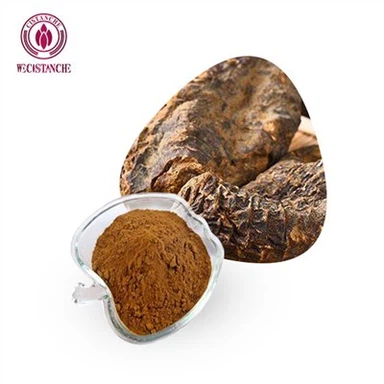
Cistanche is a genus of parasitic plants that belongs to the family Orobanchaceae. These plants are known for their medicinal properties and have been used in Traditional Chinese Medicine (TCM) for centuries. Cistanche species are predominantly found in arid and desert regions of China, Mongolia, and other parts of Central Asia. Cistanche plants are characterized by their fleshy, yellowish stems and are highly valued for their potential health benefits. In TCM, Cistanche is believed to have tonic properties and is commonly used to nourish the kidney, enhance vitality, and support sexual function. It is also used to address issues related to aging, fatigue, and overall well-being. While Cistanche has a long history of use in traditional medicine, scientific research on its efficacy and safety is ongoing and limited. However, it is known to contain various bioactive compounds such as phenylethanoid glycosides, iridoids, lignans, and polysaccharides, which may contribute to its medicinal effects.

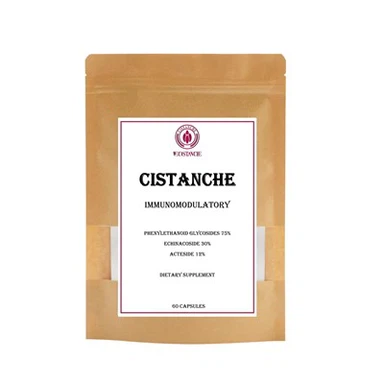
Wecistanche's cistanche powder, cistanche tablets, cistanche capsules, and other products are developed using desert cistanche as raw materials, all of which have a good effect on relieving constipation. The specific mechanism is as follows: Cistanche is believed to have potential benefits for relieving constipation based on its traditional use and certain compounds it contains. While scientific research specifically on Cistanche's effect on constipation is limited, it is thought to have multiple mechanisms that may contribute to its potential to relieve constipation. Laxative Effect: Cistanche has long been used in Traditional Chinese Medicine as a remedy for constipation. It is believed to have a mild laxative effect, which can help promote bowel movements and induce constipation. This effect may be attributed to various compounds found in Cistanche, such as phenylethanoid glycosides and polysaccharides. Moistening the Intestines: Based on traditional use, Cistanche is considered to have moisturizing properties, specifically targeting the Intestines. By promoting hydration and lubrication of the Intestines, may help soften tools and facilitate easier passage, thereby relieving constipation. Anti-inflammatory Effect: Constipation can sometimes be associated with inflammation in the digestive tract. Cistanche contains certain compounds, including phenylethanoid glycosides and lignans, that are believed to have anti-inflammatory properties. By reducing inflammation in the intestines, it may help improve bowel movement regularity and relieve constipation.
You Might Also Like
-
Cistanche Deserticola Extract
-

Black Maca Root Extract Powder
-

Cistanche Tubulosa Materials Cistanche Root Cistanche Ste...
-
Cistanche Dietary Supplement Immunomodulatory Phenylethan...
-

Cistanche Dietary Supplement Energy Supply Phenylethanoid...
-

Cistanche Dietary Supplement Cognitive Function Improveme...