Pengfei Tu: A Life Devoted To Cistanche
Sep 16, 2026
By Taizhou Media reporters Tao Ziqian, Liu Ting, and Xu Zhanghua
Pengfei Tu is not receiving China's National Science and Technology Progress Award (Second Prize) for the first time.
In 2015, the award-winning project focused on methodologies for quality control of traditional Chinese medicine (TCM). In July this year, the awarded project-titled "Key Technologies for the Whole-Industry-Chain Development and Promotion of the Desert Endangered Parasitic Medicinal Herb Cistanche, and Their Application"-targeted the challenges of depletion of wild resources, shortages in clinical supply, and worsening desert ecosystems, delivering systematic breakthroughs across the entire industrial chain.
Thirty-six years of work may appear as only a few lines in an official announcement. Yet those lines carry enormous weight-heavy enough to contain Tu's lifelong ambition, the livelihoods of countless farmers and herders in China's northwest, and a desert-control front that is closely tied to every one of us.
He does not talk much about the national award itself. What he truly enjoys discussing is a Special Science and Technology Grand Prize once granted to him by the Hotan (Hetian) region. Among the many honors he has received, it may not be considered the "largest" prize, but he values it deeply.
"After working steadily on the ground for more than ten years, receiving this award locally was recognition of my work," he said. Feedback that truly lands in real-world outcomes feels more like a medal.

I
Before 1990, Tu had never been to the desert. Born in Yuanqiao, Huangyan, Taizhou, he grew up surrounded by bamboo groves and streams. His image of endless sand existed only in martial-arts novels. He wanted to take the opportunity of studying cistanche to see the desert with his own eyes.
He traveled to Alxa (Inner Mongolia) and Yutian (Xinjiang) for field investigation. Starting from Beijing, he rode the old green train for days and nights, then transferred again through difficult routes. The most time-consuming journey was to Dariya Boyi Township in Yutian-known as one of the hardest ancient villages to reach in China-located 240 kilometers north of the county seat, deep inside the desert, in the very heart of the Taklamakan Desert.
Tu did not understand the local language. Outside the window stretched an endless sea of sand. He did not see the "romantic" scenery he had imagined-but he saw another reality.
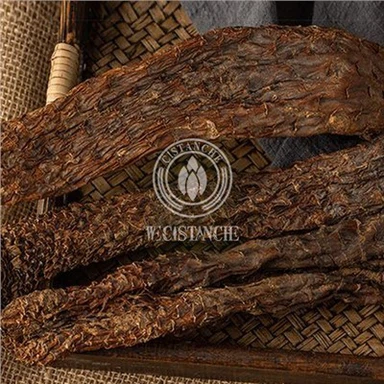
Cistanche is a parasitic plant that grows on the roots of desert plants such as Haloxylon ammodendron (saxaul) and Tamarix. Because of its distinctive kidney-tonifying effects, it is called the "Desert Ginseng." At that time there was no artificial cultivation; people could only dig wild cistanche in the desert.
"Back then, cistanche sold for 200 yuan per kilogram, while a professor's monthly salary was only 300 yuan. If you dug for one day you could earn more than 100 yuan, so many people rushed into the desert," Tu recalled. Driven by profit, harvesting methods were rough-some even dug out the haustorium (the parasitic connection disk) that links cistanche to its host plant. With years of overharvesting, wild resources were nearly exhausted, and it became difficult to see cistanche emerging above ground.
What worried him even more were the deep pits left behind after digging. No one refilled them. When the wind came, sandstorms rose. On the other side were local people who almost "lived in the wind and sand." Despite the intense digging, the local economy was still underdeveloped, and most farmers and herders remained poor.
Resource endangerment, land desertification, and poverty-three problems stacked together.
When he set out, Tu was driven mainly by curiosity. After witnessing the reality, a sense of responsibility rose within him:
"If we could cultivate cistanche and its host plants, we could control desertification and help local people become better off."
That thought filled his mind. He did not expect that once he stepped onto this road, he would remain on it for more than three decades.

II
Tu enjoys talking with farmers. In the northwest, he would ride a bicycle into the fields, squat with farmers and herders, and chat-not only about cistanche cultivation, but also about everyday family matters.
He remembers that he, too, came from the countryside. His family was poor. Even leaving the village was difficult; going to the county town once or twice a year was already a rare chance. As someone from Huangyan, he barely remembers the Yongning River. "There is little farmland in Huangyan, and life was hard. To live, you had to work." From primary school onward he worked in the fields; in middle school, winter and summer breaks were spent in production teams; after entering university, he still had to work the land during summer breaks.
Yet when he looks back, he says he was happy then. His primary school in Huayu Village, Yuanqiao (now Hongxing Village) was set in an old Buddhist hall. Behind it stood a mountain covered with bamboo. After school he would rush into the bamboo forest, play wildly, and run until he was sweating.
His early academic path was not smooth. He joked that in middle school he "played too wildly." After the reinstatement of the national college entrance examination, he failed the first attempt. The second year, he missed the undergraduate cutoff by just 1.5 points-which sparked his determination. In the third year, he transferred to Luqiao Middle School to prepare and finally entered Nanjing College of Pharmacy (now China Pharmaceutical University).
"At that time I didn't understand much. Taking the exam was simply to obtain an urban household registration," he said frankly when speaking of those three attempts. "Choosing Nanjing College of Pharmacy was not even my own wish at first-there happened to be an elder working there."
He still remembers traveling to Nanjing for enrollment for the first time. He and his classmates carried shoulder poles-bedding in front, a suitcase behind. Near the school at Dingjiaqiao, they wanted to ask directions but could not speak Mandarin. "Back then we didn't speak Mandarin. Even when we memorized Tang poems, we used the Huangyan dialect," he recalled.

III
After entering university, Tu seemed to become a different person. Whether the three years of repeated exams had sharpened him, or he had simply "opened up" at the right time, he began studying extremely hard. He attended evening self-study sessions every day, and his grades quickly rose to the top.
His rural experience also built a strong foundation for studying traditional Chinese medicine. "I used to run all over the mountains, and I recognized many plants-I just didn't know their scientific names," he said with a smile. "When I entered school, I discovered that one herb after another was actually an 'old acquaintance.'"
His ability to identify herbs improved rapidly, and soon he ranked among the best in his class. At that time, the TCM major had a course called Powder Microscopic Identification-using a microscope to identify medicinal powders and determine the components of powders or pills. The founder of this field was Professor Guojun Xu at Nanjing College of Pharmacy. The herbal medicines unearthed from the Mawangdui Han tombs in Changsha had turned to dust at the touch; it was Xu who identified all 13 herbs under the microscope.
Tu showed strong talent in that course. In lab sessions, when faced with powders consisting of dozens of herbs, he could often identify them quickly under the microscope. The course teacher reported this to Professor Xu, who then encouraged Tu to take his graduate entrance exam and join his team.
Professor Xu had suffered from ethmoid sinus cancer and had one eyeball removed; his wound never fully healed, yet he devoted himself to teaching and research daily-arriving at the office before 8 a.m. and leaving after 10 p.m. Later, after a stroke and hospitalization, students took turns caring for him. When it was Tu's turn, he went to the ward and did not see the professor; returning to campus, he discovered the old professor was already back at his desk working.
After earning his doctorate, Tu went to Beijing Medical University (now Peking University Health Science Center) and studied under Professor Zhicen Lou, who was as renowned as Professor Xu-together known in pharmacognosy as "Xu of the South, Lou of the North." Lou had studied in the UK and was always impeccably dressed in a suit, fluent in multiple languages. Tu often visited him on weekends, and through conversation learned a great deal-sometimes only a few sentences could unlock a whole line of thinking.
Once, Tu saw Lou reviewing old notes from Organic Chemistry and asked why. Lou said he had forgotten some of the knowledge and needed to revisit it. That scholarly attitude benefited Tu for a lifetime.
From Xu, Tu learned depth and specialization; from Lou, breadth and diligence. A student who took the college entrance exam three times met two great mentors-much like a martial-arts hero encountering masters one after another. Only, while the hero traveled from the desert to the Central Plains, Tu did the opposite: he plunged headfirst into the desert.
IV
Tu's doctoral dissertation was on Adenophora (Shashen), a mountain herb used to relieve cough and dissolve phlegm. As a postdoctoral researcher, he wanted to choose a medicinal herb with strong efficacy-something he could study for a lifetime.
After combing through ancient materia medica classics and modern literature, his attention settled on cistanche for three reasons:
It has been a key kidney-tonifying herb throughout history, with strong efficacy but unclear mechanisms.
It is a parasitic plant, and its parasitic mechanisms fascinated him.
It grows in the desert-and the young man "misled" by martial-arts novels wanted to see the desert.
He shared his idea with Lou, who said: "Cistanche is a good thing, but it grows in the desert. You must be prepared to endure hardship." Tu answered confidently: "I grew up in the countryside. I'm not afraid of hardship."
But once he reached the desert, he regretted boasting.
The extreme desert climate made this southerner suffer; the greatest difficulty was food. People from Taizhou are accustomed to rice, while northwest China eats mostly wheat-based foods-especially in Xinjiang in the 1990s, where people often ate dry, hard naan that "couldn't be broken by hand; you had to smash it with a stone." He craved rice so much that after learning there was a former Shanghai educated youth working at the local drug inspection institute, he hurried to befriend him: "Do you have rice at home? Let me eat one meal at your place."
The water came from shallow wells-high in salt and alkali, bitter, and unpleasant. After drinking it, his stomach would rumble. In the early 1990s there was no bottled water-washing one's face, or even brushing one's teeth, might happen only once every few days. Tu admitted that after working for a while he wanted to return home. But when he thought of the value of cistanche research, he stayed again and again.
At that time, besides the commonly known Cistanche deserticola in the market, another kind-Cistanche tubulosa-was also circulating. The former was called "soft cistanche," while the latter was known as "hard cistanche." But tubulosa was not included in the Pharmacopoeia; its chemical constituents and efficacy were unclear, and once found in the market, it was treated as counterfeit and destroyed.
Tu wanted to clarify the truth and went into the desert near Dariya Boyi to search for it. But locals were sharp-eyed and had already harvested much of it. "They had a method: they inserted an iron rod into the ground. When they pulled it out, if the tip was wet, there was cistanche below-because cistanche is very high in moisture."
A Uyghur colleague named Acha Hong, who purchased medicinal materials in Yutian County, spoke Chinese. Tu wanted him to guide the way to Dariya Boyi village. Acha Hong said they would have to ride donkeys and it would take half a month. "I said I didn't have that much time." Later, Tu rented a small four-wheeled truck, leaving at 6 a.m. and arriving in the village at 12:30 a.m.
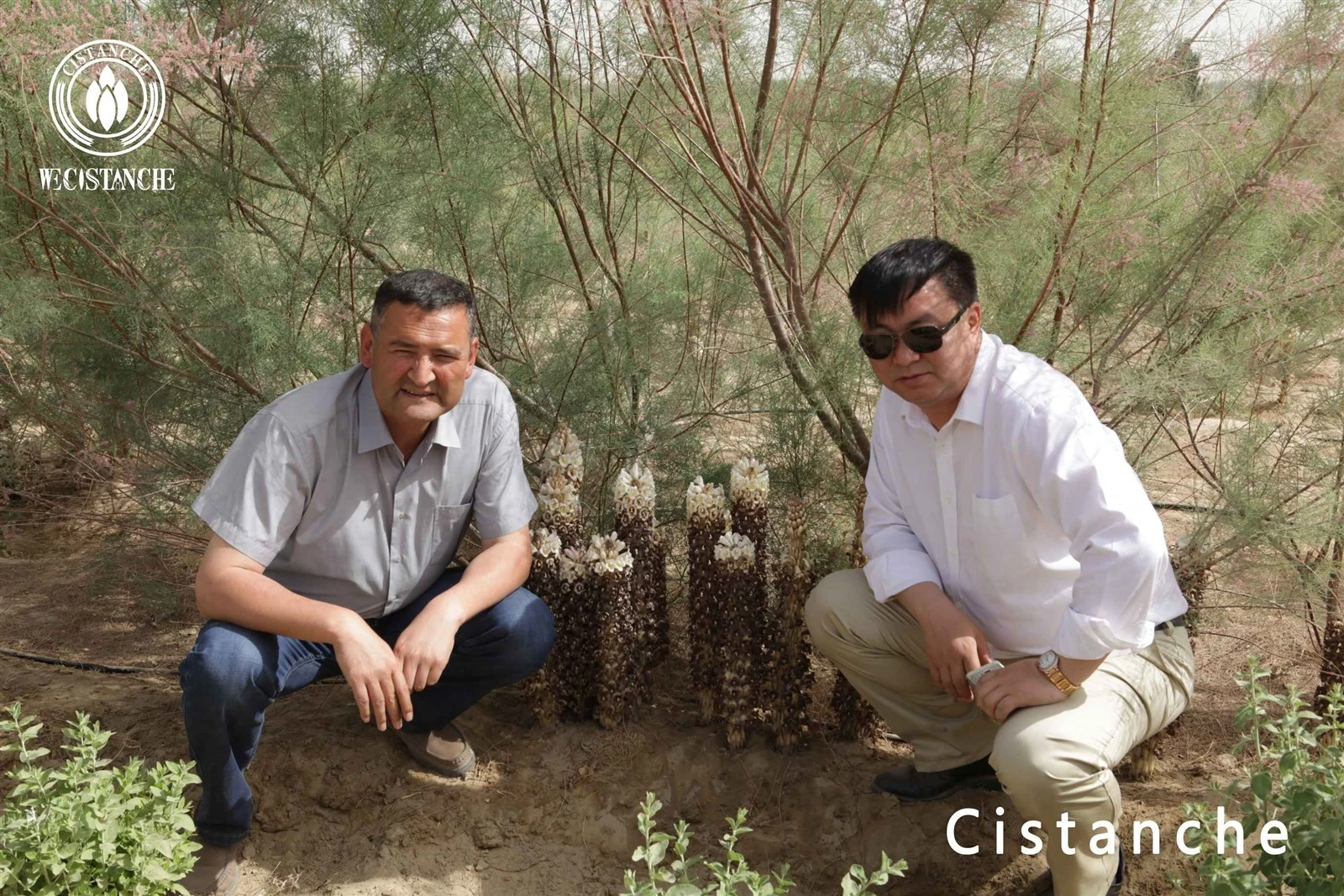
In the first year, he did not see cistanche with his own eyes. In October, cistanche stays underground and does not emerge. Not until May 1991 did Acha Hong take him into the desert. After searching for three full days, they finally found a wild flowering Cistanche tubulosa.
It was the first time he truly saw tubulosa growing in the ground. He was overjoyed and took many photos. "It was pale white, and its appearance was different from Cistanche deserticola."
After testing, he confirmed that the chemical composition, pharmacological effects, and safety of Cistanche tubulosa were basically consistent with those of Cistanche deserticola. Moreover, its key kidney-tonifying active components-phenylethanoid glycosides-were much higher, reaching five times that of deserticola. And its host plant Tamarix (locally called "Hongliu," red willow) is highly resilient, adapting to various climates and soils. To cultivate tubulosa at scale, one must first plant Tamarix; planting Tamarix also helps prevent wind erosion and stabilize sand.
Tu realized that Cistanche tubulosa had greater value in terms of economic, social, and ecological benefits.
"In those days it wasn't in the Pharmacopoeia-so it was destroyed as counterfeit," he said. "If we could 'give it a rightful name,' we could also solve the shortage of cistanche resources."
He proposed to the Chinese Pharmacopoeia Commission that Cistanche tubulosa be included as an official source plant for the medicinal material "Cistanche," and he undertook the research and drafting of its quality standards. In 2005, Cistanche tubulosa was officially included in the Chinese Pharmacopoeia, meaning it could now circulate openly in the market.
When the news reached Hotan, the region held a special press conference and awarded Tu the Hotan Special Science and Technology Grand Prize-the first time Hotan granted this award to someone from outside the region.

V
Giving Cistanche tubulosa its "rightful name" was, in many ways, work beyond research. Yet the parasitic mechanism of cistanche, cultivation methods, chemical constituents, and pharmacological effects offered countless topics for investigation.
The first major hurdle was artificial cultivation. Previously, there had been no precedent worldwide for the artificial cultivation of parasitic plants. "In the world, research on parasitic plants mainly aims to eliminate them, because they negatively affect crops. In Africa, one-third of grain yield losses are caused by parasitic plants." Only Tu took the opposite approach: not only to understand the mechanisms, but to help the plant grow better.
Through day-after-day field observation, sampling, and experiments, his team discovered the two-way induction mechanism between cistanche and its host plants such as Haloxylon and Tamarix.
"After cistanche seeds absorb enough water, they actively release chemical signals that induce the host's hairy roots to grow toward the seeds," Tu explained excitedly, pointing to a diagram. "When the hairy roots grow to within half a centimeter to one centimeter of the seeds, the seeds initiate germination, extending a tube-like haustorium that precisely 'grabs' the host root. Isn't the plant incredibly 'smart'?"
He has explained this principle to countless people and never gets tired of it. He is genuinely intoxicated by the wonder of nature.
To study parasitism, he used his greatest hobby-photography. He took large numbers of field photos and used time-lapse photography to record, frame by frame, the subtle changes between seeds and host hairy roots-tens of thousands of images.
The discovery of the two-way induction mechanism became the key that unlocked large-scale cultivation. In the past, farmers and herders did not understand the underlying principle and only tried to find host roots, place stones underneath, and scatter seeds. Now, they simply needed to sow seeds in the host's root zone, wait for the seeds to "summon" the host roots, and complete the parasitic connection.
Another discovery that changed the industry came purely by accident.
As a medicinal material, cistanche must be harvested when it is just emerging above ground or has just emerged. Once it flowers, it consumes its nutrients, active components decline, and it loses medicinal value. At that time, Tu would place collected specimens into plant presses with layers of paper to absorb moisture. But cistanche contains so much water that pressed samples not only failed to dry-they even flowered, making the harvest useless.
To dry samples quickly and prevent flowering, one time at a guesthouse he asked staff to boil a kettle of water and poured the boiling water directly over the samples, "scalding" the cistanche to death. The scalded samples dried quickly. Back in the lab, he was astonished to find that the content of active ingredients in that batch was several times higher than usual.
He concluded that enzymes inside cistanche hydrolyze its active components during drying, and the boiling water had happened to deactivate those enzymes. From this, he established the high-temperature enzyme-inactivation processing technology for cistanche, locking in the active compounds. Today, it is a nationwide shared standard technology.
"What if you hadn't poured that kettle of water on a whim-would your team have ever gone down this road?" the reporters asked.
Tu burst into laughter: "It's very possible we never would have. Scientific discoveries are often born from accident." After a pause, he added: "I often tell my students: don't be afraid of making mistakes in research. But when you're wrong, you must understand why. Success is found through correcting mistakes."
VI
Tu has almost no sharp edges to his personality. Solid and round in build, with a face that feels non-aggressive, he smiles easily-gentle and approachable, with a hint of honest simplicity. Walking in the streets or in the fields, he can "hide" among ordinary people. He is calm and plain, like a stone polished smooth by wind and sand over many years.
Farmers and herders trust him and will tell him everything. After large-scale cultivation was widely promoted, some farmers even showed him their notebooks, saying they had earned 2.1 million yuan that year.
But thirty years ago, when he went to local governments and farmers in Hotan to say that cistanche could be cultivated and bring prosperity, almost no one believed him.
He did not waste words-he delivered a "combination punch." If they didn't believe, he built demonstration bases and showed them the results. He organized academic conferences, invited experts from different regions, and also invited government officials and farmers and herders to attend, removing mental barriers. Once attitudes softened, he brought local technical staff to Beijing for training at Peking University and China Agricultural University, so they could learn and return to teach farmers.
In 2000, Yutian County took the lead in including the artificial cultivation of Tamarix in the "top leader" demonstration project in Oytoghrak Township, planting and inoculating cistanche on 200 hectares. Two years later, companies were introduced to explore industrialization via the "company + base" model.
Wecistanche Factory Details

Supportive Service Of Wecistanche-The largest cistanche exporter in the China:
Email:wallence.suen@wecistanche.com
Even after perspectives shifted, the road was not smooth. At that time, Hotan had planted 500,000 mu of cistanche, yet yields did not rise. Tu went to inspect and realized why: once cistanche flowers, its active components are lost and it can no longer be used medicinally. Some farmers wanted both medicinal materials and seeds. Before the seeds matured, they cut off the fruiting parts above ground; those immature seeds could hardly germinate.
To solve the problem of "area without yield," from 2013 to 2015, with support from a national science-and-technology benefit program, he used seeds from his own seed base and from the market, screened and tested them, and distributed them to farmers free of charge-a total of 9 tons, worth about 25 million yuan-but required everyone to strictly follow his team's method. As a result, yields rose rapidly.
The team continued to improve cultivation technology. Standards for inoculation depth, irrigation methods, and more were continuously updated. In Xinjiang, Cistanche tubulosa often suffers from freezing injury; Tu promoted an autumn sowing–autumn harvesting model-planting in autumn and harvesting the next autumn-to avoid freeze damage while increasing yield, and improving quality compared with spring harvests.
From Yutian in Xinjiang and Alxa in Inner Mongolia, to Gansu and Qinghai, Tu expanded cultivation step by step. Today, his team has promoted the planting of Haloxylon and Tamarix across 11.51 million mu nationwide, saving the country 23 billion yuan in desert-control costs. The entire cistanche industry chain generates annual sales of more than 20 billion yuan, increasing income for more than 200,000 farmers and herders in desert regions.
"This data is equivalent to turning 7,673 square kilometers of desert into oasis," he said proudly. "In the past, for national desert control, if you used straw checkerboard grids at 5 yuan per square meter, each mu would cost 3,300 yuan. Now, for these desert-control projects, the state only needs to provide a small amount of guiding funds, and local people are extremely motivated to plant Haloxylon and Tamarix."
As Tu wrote in his book Cistanche: An Immortal Desert Herb (Damò Xiāncǎo Ròucōngróng): more than ten years of focused research and more than twenty years of hard promotion-today, the desert is widely blooming with cistanche flowers.
Cultivation has been addressed, but deep within pharmacological efficacy, an even tougher battle remains.
In recent years, he has brought one cutting-edge technology after another into TCM research. With LC–MS, a single run can detect hundreds of components. His team also uses organoid and chip-based methods to screen the activity of TCM compounds, discovering that metabolites of cistanche resemble monoamine neurotransmitters in structure and can directly exert neurotransmitter-like effects. This pushed cistanche research from traditional tonic medicine into the realm of neuropharmacology.
Cistanche is currently the plant known to contain the highest level of phenylethanoid glycosides, among which the compound echinacoside is its core active ingredient, showing improvement effects on Alzheimer's disease, Parkinson's disease, and oligoasthenospermia. Using target "fishing" techniques, the team clarified the targets and molecular mechanisms behind its brain-benefiting effects. Based on these findings, the new medicine Congrong Total Glycosides Capsules for vascular dementia has been marketed, filling a gap in modern TCM treatment of vascular dementia. In addition, Echinacoside Tablets (Naoqing Zhimin Tablets) for vascular dementia and Congrong Runtong Oral Liquid for constipation are also undergoing clinical trials.
The team also found that cistanche can delay aging. In aging mouse experiments, mice in three cistanche-fed groups had an average lifespan 15% longer than the control group, with significantly better physiological indicators.
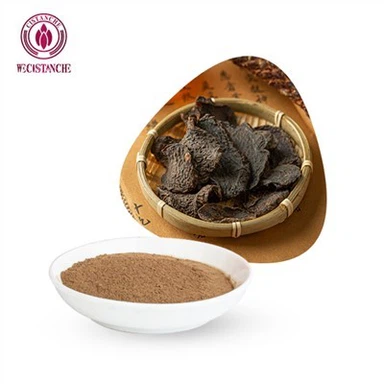
The team attaches great importance to new drug development and technology transfer. So far, they have developed more than 50 products including innovative drugs based on effective fractions, compound Chinese patent medicines, and health foods, obtaining 4 new drug certificates and 9 clinical approvals. High-quality cistanche slices and extracts are exported to Japan, Europe, and the United States. A product cluster worth over 10 billion yuan, including Shenbao series, Jing liquor, and more-covering 25 Chinese patent medicines and health foods-has been formed.
His hometown is also an important stop in his transformation and collaboration journey. He has cooperated with Yongning Pharmaceutical and Tianyu Pharmaceutical. Though he has lived away from home for many years, he remains practical at heart. In his view, scientific research breakthroughs and industrial advancement are inherently integrated:
"Publishing papers alone doesn't mean much. Only when achievements are transformed and implemented-benefiting ordinary people and society-does research reveal its true value."
VII
Tu's team's cistanche research is far from finished. Winning the National Science and Technology Progress Award is a new starting point. Tu told reporters that although the cistanche–host "two-way induction" parasitic mechanism has been discovered, deeper molecular mechanisms are still being explored. In recent years, the team has invested substantial funds and energy into this work.
"In the past, the international community believed that strigolactones are the parasitic induction substances for root-parasitic plants. Strigolactones are plant hormones and they indeed can induce seed germination in many parasitic plants-but what truly works in the field is not them. Our earlier research was misled," Tu said. "At present, we have preliminarily clarified this mechanism and will release it at an appropriate time."
At 63, he remains energetic and sharp-minded. His eyes are bright and focused, and his appearance does not reveal his age.
His WeChat name is "Congrong Yisheng" ("A Calm Life"), a homophonic play on "cistanche" (congrong). Colleagues and students describe him with high-frequency words like "broad-minded" and "indifferent to gains and losses." He has his own "desert philosophy": in the desert, under the vast sky and dancing sand, humans feel small, and you understand that you should put down the inner demons of short-term gain and loss, and simply live well.
From cistanche and its host plant Tamarix, he has also learned much.
"Cistanche parasitizes the roots of its host plant. It is like people living in society-only by continuously absorbing nourishment and accumulating strength can one bloom into brilliant flowers," he said. "And Tamarix has an exceptionally strong ability to adapt. It can live anywhere, improve the environment, and be kind to people. We call this the 'Hongliu spirit'."
In Compendium of Materia Medica (Bencao Gangmu), cistanche is described as: "This herb tonifies but is not harsh; therefore it is called 'Congrong' (calm and gentle). Congrong means a mild and unhurried manner." In other words, its tonifying power is warm and gentle, not intense, so supplementation can be calm and steady.
Tu has spent half his life advancing step by step, enabling cistanche to spread across the desert and become "gold in the sand." And he himself has come to embody the calm and composed spirit of "Congrong."
Profile: Professor Pengfei Tu
Professor Pengfei Tu was born in 1963 in Huangyan, Taizhou. He is a Boya Distinguished Professor and doctoral supervisor at Peking University, a recipient of the National Science Fund for Distinguished Young Scholars, and a Qihuang Scholar.
He serves as:
Director of the Modern Research Center of Traditional Chinese Medicine, Peking University
Executive member of the 12th Chinese Pharmacopoeia Commission
Chair of the First Professional Committee on Chinese Medicinal Materials and Decoction Pieces
Chair of the Sandland Medicinal Materials Committee, China Association of Chinese Medicine
Chair of the Cistanche Committee, China Wild Plant Conservation Association
His research focuses on pharmacodynamic substances and new drug creation for TCM, as well as resource and quality control studies. He has successfully created 2 innovative drugs based on effective fractions, obtained 4 new drug certificates and 9 clinical approvals, published 400+ papers as corresponding author in journals including PNAS and Nature Communications, authored 21 books, and has been granted 175 patents.
As the first contributor, he has received two National Science and Technology Progress Awards (Second Prize) and five first prizes at ministerial level (including the Ministry of Education). He has also received the 2016 National Poverty Alleviation Award, the title of "Most Beautiful Ecological Public Welfare Figure" (2016), the 2017 National Innovation and Excellence Award Banner, the Wu Jieping Medical Innovation Award, the Special Contribution Award for Innovative Drugs of the 16th China Pharmaceutical Development Award, and is the leader of one of the third batch of National "Huang Danian-Style" University Teacher Teams.