Pioneer Of L-dopa Treatment For PD——Arvid Carlsson, Hornykiewicz, William; The MAO-B Inhibitor Master Who Got Out Of The Nazi Concentration Camp-Joseph Knoll
Mar 26, 2022
ali.ma@wecistanche.com
For more than fifty years, levodopa (L-DOPA) has been the mainstay in the treatment of Parkinson's disease (PD). Although it does not improve all symptoms of Parkinson's Disease, and there are almost inevitable motor complications, this imperfect drug ingredient has a unique legend, embodies the strong and sharp minds of scientists, and, of course, the difficulty of science and mystery.

Click to Cistanche and procyanidin for Parkinson's disease
In 1913, chemist Marcus Guggenheim isolated and identified a component (chemically named D, L-3,4-dihydroxy-L-phenylalanine) from faba bean, which was used for Studies of blood pressure or dopamine metabolic pathways.

Arvid Carlsson
In 1958, Swedish scientist Arvid Carlsson discovered that dopamine can pass through the blood-brain barrier and has the highest concentration in the basal ganglia of the brain, while levodopa (L-DOPA, D, L-3, 4-dihydroxy-L -L-isomer of phenylalanine) can reverse reserpine-induced depletion of intracerebral dopamine and improve motor function in experimental animals. Since then, the role of dopamine as an important transmitter in the central nervous system has been discovered, and it has also become a prelude to the treatment of Parkinson's disease with L-DOPA. Arvid Carlsson also discovered the functional connectivity pathway between the substantia nigra and striatum, and was awarded the 2000 Nobel Prize in Physiology and Medicine for his research on central nervous system signaling.

Cistanche is effective in treating Parkinson's disease (PD)
Oleh Hornykiewicz, an Austrian neuropathologist, worked there after graduating from the University of Vienna, Austria. The 30-year-old boy came to study in the famous Hermann Blaschko Laboratory in Oxford, England with a scholarship. Professor Blaschko has been pondering the problem of dopamine, thinking that it is not only a precursor of norepinephrine but may have its own unique function. So Professor Blaschko called the young Oleh Hornykiewicz to him and gave him the task of studying dopamine. Through research, Oleh Hornykiewicz found that dopamine has a different effect than norepinephrine - a blood pressure-lowering effect. At the same time, studies have found that in the brains of various animals, the content of dopamine is basically the same as that of norepinephrine. All the indications confirm Professor Blaschko's speculation that dopamine is a neurotransmitter with biological effects.

Oleh Hornykiewicz
After more than a year of study, Oleh Hornykiewicz returned to his own laboratory at the University of Vienna to continue his research on dopamine in the brain. Subsequently, studies have found that reserpine can deplete dopamine in the brain, and at the same time, the side effects of reserpine causing Parkinson-like manifestations can be seen clinically. At this time, an extremely pivotal study was published in Science. Swedish neuroscientist Arvid Carlsson found that levodopa (a precursor that can be metabolized into dopamine in the body) can pass through the blood-brain barrier and can reverse the blood The effect of dopamine depletion in the brain caused by flattening improves the motor function of experimental animals. From it, Oleh Hornykiewicz quickly realized that a reduction in dopamine in the brain was likely the very essence of Parkinson's disease. Through the study of 6 cases of Parkinson's disease, 2 cases of Huntington's disease, and 17 normal brain samples, Oleh Hornykiewicz was the first to demonstrate that the content of dopamine in the caudate nucleus and putamen of the basal ganglia of the brain of patients with Parkinson's disease was significantly reduced, while that of Huntington's disease There is no such change in the normal human brain.

Based on the idea of "what's missing, what's missing", Oleh Hornykiewicz tried to treat Parkinson's patients by supplementing dopamine. After giving 20 Parkinson's disease patients intravenous levodopa, the patients' symptoms were miraculously relieved.
The real commercial production of levodopa is due to the American chemist William Knowles. William Knowles produced a catalyst that produced almost 100% pure levodopa at the end of the hydrogenation reaction, making it possible to produce levodopa on an industrial scale. In 1970, levodopa developed by Roche was approved for marketing in the United States, which opened the prelude to the gold standard of anti-Parkinson's disease treatment for decades.
L-DOPA was finally produced commercially under the exploration and progress of dosing regimens and synthetic means. In 1970, L-DOPA developed by Roche was approved by the FDA, and L-DOPA became the gold standard for anti-Parkinson's Disease therapy for the next 50 years.

William Knowles
The discovery of levodopa gave birth to two Nobel Prize winners. In recognition of their great contributions, Arvid Carlsson was awarded the 2000 Nobel Prize in Physiology and Medicine, and William Knowles was awarded the 2001 Nobel Prize in Chemistry.

Cistanche has the effects of boosts the secretion of dopamine to treat Parkinson's disease (Parkinson's Disease)
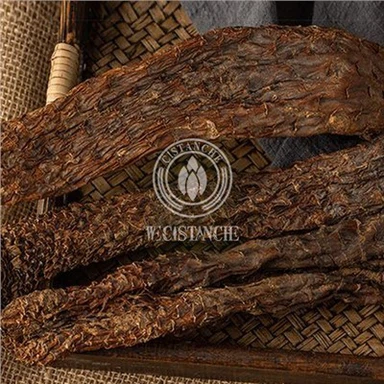
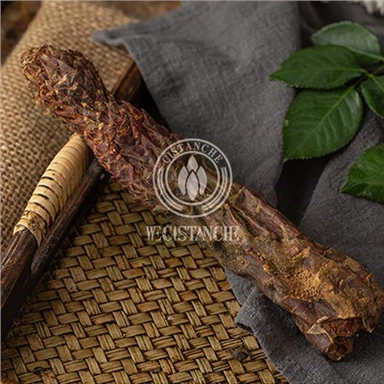
Note: The traditional Chinese medicinal herb cistanche (also known as the "dragon herb" and "desert ginseng"), grows only in the arid and warm deserts. As one of the nine immortal herbs, Cistanche (cistanche tubulosa/cistanche deserticola/desertliving cistanche/cistanche salsa)contents with rich effective ingredients such as echinacoside, acteoside, total phenylethanoid glycosides, flavonoids, polysaccharides, etc. these effective ingredients made cistanche a precious nourishing herb and food material for people's immunity, internal organs, and brain cells and neurons, etc. The modern pharmacological studies have confirmed the following effects of cistanche(benefits of cistanche): improve immunity; improve sexual function and kidney function; anti-fatigue; anti-aging; improve memory; anti-Parkinson's disease; anti-Alzheimer's disease; antioxidation; ease-constipation; anti-inflammatory; promote bone growth, whitening skin; protect liver; etc.