Treasure Plant in The Desert, Host Of Xinjiang Cistanche Deserticola, Red Willow
Nov 06, 2024
1, The medicinal value of red willow
The medicinal value of red willow is rich and diverse. In addition to the aforementioned benefits, its branches, leaves, flowers, bark, and other different parts also have unique medicinal effects.

Host of Desert Ginseng and Cistanche deserticola - Red Willow
Red willow branches and leaves have a sweet and pungent taste, with a mild nature. The decoction can be taken orally to treat symptoms such as colds, measles opacity, rheumatoid arthritis, and urinary pain. It can also be used topically to treat rubella itching. Red willow flowers have the effects of clearing heat and causing rash and can be used to treat rubella.
Red willow leaves have antioxidant, anti-inflammatory, analgesic, antibacterial, detoxifying, hemostatic, and anti-inflammatory effects. Can eliminate free radicals in the body and enhance cellular metabolic capacity; Reduce inflammatory response and achieve anti-inflammatory and analgesic effects; Inhibit bacterial growth and reproduction to prevent infection; Relieve heatstroke, treat sore throat, oral ulcers, acne, and other illnesses; It can also be used for external bleeding and swelling.
Red willow branches have the effects of detoxification, reducing swelling, promoting urination, dispelling wind, and relieving pain. It can be used to treat diseases such as erysipelas and sores and has a good therapeutic effect on cloudy urine. When used in combination with mulberry branches, it has even better pain relief and dampness removal effects. It can also be used for the treatment of rheumatic pain.
Red willow flower generally refers to willow flower, which has the effects of clearing heat and detoxifying, cooling blood and stopping bleeding, reducing swelling and dispersing nodules, relieving pain, calming the mind, and stopping cough. It has significant therapeutic effects on acute pharyngitis, tonsillitis, and other diseases, and can be used to treat internal and external bleeding. It has the effects of reducing swelling, dispersing nodules, relieving pain, calming the mind, and stopping cough.
In addition, red willow is also used to treat nipple cracking, which can be treated with local application of red willow paste, erythromycin ointment, etc.

Host of Cistanche deserticola - Red Willow
In summary, as a traditional Chinese medicine, red willow has various medicinal values. However, caution should be taken when using it, especially for pregnant women, patients with gastrointestinal ulcers, and allergies. It should be used with caution under the guidance of a doctor to avoid adverse consequences.
2, The effect of red willow on hyperthyroidism
Red willow, as traditional Chinese medicine, is said to have certain anti-hyperthyroidism effects. In terms of traditional Chinese medicine treatment, red willow can be boiled and concentrated juice can be taken daily in moderation. However, it should be clarified that due to hyperthyroidism being a serious endocrine disease, the efficacy of red willow in treating hyperthyroidism has not been strictly scientifically validated, so it cannot be completely relied on to treat hyperthyroidism.
For patients with hyperthyroidism, adjusting their diet is crucial. One should avoid consuming high-iodine foods and try to choose foods with lower iodine intake. At the same time, consume foods rich in vitamins, minerals, and protein to maintain the body's nutritional balance. For example, you can choose fresh vegetables, fruits, lean meat, fish, and other foods, and avoid consuming iodine-rich seafood such as seaweed, shrimp, and hairtail.
Controlling emotions is also an aspect that hyperthyroidism patients need to pay attention to. Emotional fluctuations and stress may exacerbate the symptoms of hyperthyroidism, so hyperthyroidism patients need to learn to relax themselves and avoid tension and emotional fluctuations. Stress can be relieved through methods such as fitness, yoga, meditation, etc. These activities not only help patients relax their body and mind but also enhance their immune system, which helps them better cope with the disease.
Regular daily routine is equally important for patients with hyperthyroidism. Maintaining good sleep habits can help regulate the physical function of hyperthyroidism patients and enable them to better adapt to treatment. Try to maintain a regular daily routine, go to bed early wake up early, and develop healthy habits. Avoid bad habits such as staying up late and overwork to prevent them from affecting the body's recovery.
In short, hyperthyroidism is a chronic disease that requires comprehensive treatment, including standardized medication, regular checkups, and lifestyle adjustments. Although red willow is rumored to have a certain anti-hyperthyroidism effect, it can only be used as an adjuvant therapy. For patients with hyperthyroidism, following the guidance of professional doctors and undergoing standardized treatment is the most important.
3, The efficacy of red willow leaves
The antioxidant effect of red willow leaves can to some extent eliminate free radicals in the body and enhance the metabolic capacity of cells. According to research, red willow leaves contain various antioxidant components that can effectively neutralize free radicals in the body and reduce oxidative stress damage to cells. This is of great significance for preventing and delaying aging and reducing the risk of chronic diseases.
In terms of anti-inflammatory and analgesic effects, red willow leaves are rich in tannins and have a certain degree of astringency, which can reduce inflammatory reactions and achieve anti-inflammatory and analgesic effects. For example, in some arthritis patients, using red willow leaves for external application or decoction can alleviate joint pain and swelling, and improve the patient's quality of life.
Antibacterial and anti-inflammatory effects are also one of the important benefits of red willow leaves. The active ingredients in red willow leaves have antibacterial and anti-inflammatory effects to a certain extent, which can inhibit the growth and reproduction of bacteria, thereby preventing bacterial and viral infections. Experimental data shows that red willow leaves have a certain inhibitory effect on various common pathogenic bacteria such as Staphylococcus aureus and Escherichia coli.
The heat-clearing and detoxifying effects of red willow leaves can alleviate heatstroke to a certain extent, and can also be used to treat conditions such as sore throat, oral ulcers, acne, etc. In the hot summer, people are prone to symptoms of heatstroke. Drinking soup made from red willow leaves can help clear heat detoxify, and alleviate the discomfort caused by heatstroke. For problems such as sore throat and oral ulcers, red willow leaves can also exert their anti-inflammatory and fire-reducing effects, promoting the improvement of the condition.
In terms of stopping bleeding and reducing swelling, red willow leaves have a certain effect on stopping bleeding and reducing swelling, which can promote blood coagulation and constrict blood vessels. They are usually used for situations such as external bleeding and swelling. In daily life, if there is slight external bleeding, red willow leaves can be crushed and applied to the wound to stop bleeding. Meanwhile, for swollen and painful areas, red willow leaves can also help alleviate swelling and pain.
However, although red willow leaves have many benefits, they should be used under the guidance of a doctor. Because red willow leaves may have some potential side effects and usage taboos. For example, for certain individuals with special constitutions, allergic reactions may occur. In addition, improper use may affect the efficacy of other medications or worsen the condition. Therefore, when using red willow leaves for treatment or health care, one must be cautious and follow the doctor's advice.
4, The Ecological Value of Red Willow
Red willow, as a tenacious life in the desert, has an undeniable ecological value.
Red willows have become an important force in sand prevention and control due to their strong vitality. Its root system is extremely developed and can spread several kilometers around, firmly grasping onto sandy soil to prevent further expansion of desertification. In areas ravaged by sandstorms, red willows are like a sturdy green barrier, resisting the invasion of sandstorms. Its branches are slender and flexible, whistling in the wind when a storm strikes, demonstrating a tenacious spirit of resistance.
Red willows are still an important pillar in reducing carbon emissions. With the increasingly severe greenhouse effect, carbon emissions trading has emerged. Red willows have strong carbon sequestration capabilities and can absorb a large amount of carbon dioxide, contributing to addressing climate change. In the Hotan region, red willows are widely distributed and have become an indispensable part of the local ecosystem.
In addition, red willows can parasitize Cistanche deserticola, forming a unique ecological symbiotic relationship. Guanhua Cistanche has extremely high medicinal value and brings benefits to local residents. Red willows provide a growth environment and nutrients for Cistanche deserticola, while Cistanche deserticola promotes the growth and reproduction of red willows to a certain extent. This symbiotic relationship not only enriches the biodiversity of desert ecosystems but also provides new avenues for local economic development.
The ecological value of red willows is not only reflected in preventing and controlling desertification and reducing carbon emissions, but also plays an important role in maintaining ecological balance and protecting biodiversity. It provides habitats and food sources for many wildlife, promoting the stability and sustainable development of ecosystems.
In short, red willows play an important role in desert areas with their tenacious vitality and unique ecological value. We should strengthen the protection and management of red willows, fully utilize their ecological functions, and contribute to the construction of a beautiful ecological environment.
5, The Economic Value of Red Willow
Red willow has extremely high economic value and provides important support for people's production and life in multiple aspects.
Firstly, the tender branches and leaves of red willows are high-quality feed for sheep and camels. It is rich in crude fiber and protein, and livestock can endure hunger and gain weight after consumption. In some areas of northwest China, the tender branches and leaves of red willows have made important contributions to the development of local animal husbandry. The tender branches, leaves, and flowers in spring not only treat rheumatism and have medicinal value, but also serve as food for livestock, saving feed costs for farmers.
Secondly, the branches of red willow have strong flexibility and durability, which can be used to weave baskets, funnels, sieves, and other devices. In the northwest region, farmers use slender red willow branches to weave these tools, which is both practical and environmentally friendly. At the same time, red willow branches can also be used to weave mats and kang mats for building houses. These traditional handmade products not only have high practical value but also reflect the local cultural characteristics.
In addition, red willows are currently mainly used for creating farmland protective forests and sand fixation forests, in addition to feeding. As an important plant for windbreak and sand fixation, red willow plays a crucial role in protecting farmland and improving the ecological environment. At the same time, red willows bloom from late May to July, with a flowering period that lasts until the end of September to early October. They are rich in honey powder, which is beneficial for bee reproduction, and are an important honey source plant. This provides abundant resources for the beekeeping industry and promotes the development of related industries such as honey.
Red willows also have a certain market value. For example, red willow branches are professionally polished into high-quality red willow skewers, which are currently the hottest-selling red willow barbecue skewers. Fresh red willow branches, after being roasted, can secrete a juice that not only effectively removes the gamey taste of lamb, but also infuses its unique aroma into the meat, giving people a unique taste of pleasure. Compared to traditional iron skewers, it is very popular and can be sold for over 40 cents every 30 centimeters. The development of this industry has brought new ways for local farmers to become prosperous.
In summary, the economic value of red willow cannot be ignored. It not only provides high-quality feed for animal husbandry and raw materials for traditional handicrafts but also plays an important role in ecological protection and the development of other related industries.
6, Red Willow and Cuisine
In some areas of northwest China, people use red willow branches to skewer lamb for grilling, which is particularly delicious and is the top grade of grilled meat.
The reason why Mutton Shashlik with Red Willow is delicious is as follows. Firstly, the red willow branch itself carries a unique fragrance. Red willow, also known as tamarisk, is a deciduous shrub whose branches and leaves can be used for medicinal purposes. At the same time, the unique fragrance emitted by the branches and leaves will blend into the lamb during the roasting process, adding a unique flavor to the lamb. According to relevant records, the red willow skewers are golden and shiny in color, and the red willow skewers are soaked in meat juice, which immediately increases one's appetite.
Secondly, during the roasting process, the red willow branches will secrete a slightly viscous juice. This juice can not only break down the gamey smell of lamb but also release the unique aroma of red willow into the meat. For example, in Xinjiang, the locally roasted lamb with red willow branches makes the fat crispy and the lean meat firm and chewy, suitable for both fat and lean, with tender and juicy meat. As a specialty cuisine of southern Xinjiang, red willow branch roasted lamb also appeared in the second season of "A Bite of China". The main ingredients required are lamb leg meat, lamb fat, white onions, salt, cumin powder, chili powder, red willow branches, etc. String the marinated meat pieces together with red willow branches and place them on the barbecue grill. Bake them in the oven, then sprinkle cumin powder, chili powder, and a little salt on top. The dish is delicious.
Furthermore, roasted lamb with red willow branches is more environmentally friendly. In Xinjiang and other places, red willow trees grow everywhere, making it very convenient to use local materials. This method of cooking with natural ingredients not only makes the food more distinctive but also aligns with modern people's pursuit of environmental protection. Moreover, the roasted lamb with red willow branches is large and has a strong aroma. The crispy outer skin of the lamb, combined with the plump and fresh meat, leaves an endless aftertaste.
In addition to roasted lamb, red willow grilled fish also has a unique flavor in some places. The red willow grilled fish in Xinjiang, represented by the red willow grilled fish in the Lop Nur Desert, is highly distinctive. The fish must be freshly caught and fresh. Use a thicker red willow branch as the main support, and then use three thinner branches to cross it horizontally, so that the entire fish is completely stretched out. Then, use dried branches of Populus euphratica to light a fire and barbecue. During the baking process, fresh red willow branches secrete red willow juice, making the fish meat more delicious. The fish meat is crispy on the outside and tender on the inside, with a tempting aroma. Red Willow Grilled Fish fully maintains its original flavor, and the production process is intuitive and visual, catering to modern people's demand for "peace of mind when using and eating" food. At the same time, it also meets people's psychological needs to return to nature and simplicity.
7, The spiritual symbol of the red willow
People in exceptional environments often describe themselves as ordinary yet persevering, like the Red Willow. The people who aid Xinjiang are like red willows deeply planted in the desert, silently dedicating themselves.
Red willows grow tenaciously in harsh environments, symbolizing a tenacious spirit. Whether it is a desert ravaged by sandstorms or a land severely affected by salinization, red willows can deeply root and demonstrate strong vitality. This tenacious quality inspires people to not give up or retreat in the face of difficulties and challenges, and to move forward courageously.
Red willows silently contribute, bringing vitality to the desert and the Gobi. Its well-developed root system can fix sand and soil, prevent soil erosion, and make great contributions to the improvement of the ecological environment. At the same time, red willows also provide feed for local animal husbandry and facilitate people's lives. This spirit of silent dedication coincides with those who aid Xinjiang. People who aid Xinjiang leave their hometowns and come to the difficult border areas, selflessly dedicating their youth and strength to promote local economic development, social stability, and ethnic unity.
The red willow also symbolizes greatness in the ordinary. It doesn't have a tall body or thick branches, just ordinary shrubs. However, it is these ordinary red willows that gather together to form a powerful force, guarding the desert and Gobi. The people who aid Xinjiang are also like the Red Willow. They may not have achieved earth-shattering feats, but in their ordinary positions, they demonstrate responsibility and dedication through their practical actions, contributing their strength to the development of the border areas.
In life, we can also draw strength from the red willow. When we encounter difficulties, we should be as tenacious as the red willow and bravely face challenges; When we can provide help to others, we should silently dedicate ourselves like a red willow, without expecting anything in return. Let us take Red Willow as an example and create extraordinary value in ordinary life.
8, Red Willow and Cistanche deserticola

dragon herbs cistanche
Red willow, as the host of Cistanche deserticola, plays an important role in both ecology and economy. Cistanche deserticola parasitizes the roots of red willows, forming a unique symbiotic relationship between the two.
The developed root system of red willow provides a stable growth environment and nutrient source for Cistanche deserticola. Meanwhile, the growth of Cistanche deserticola does not cause damage to the red willow but rather promotes its growth and reproduction to a certain extent. This symbiotic relationship not only enriches the biodiversity of desert ecosystems but also contributes to the improvement of desert ecology.
In many parts of Xinjiang, the bountiful harvest of Cistanche deserticola has brought significant economic benefits. Taking Cele County as an example, the Cele Desert Research Station of Xinjiang Institute of Ecology and Geography, Chinese Academy of Sciences, actively practices the concept of green development, and closely combines desert ecological governance with the development of the sand industry. By inoculating Cistanche deserticola into the roots of red willows, a virtuous cycle of forest cultivation has been formed. Local farmer Maimaiti Abudula Aimer started planting Cistanche deserticola in 2016, and now the area has reached 200 acres. Last year, his family harvested more than 30 tons of fresh Cistanche deserticola, with an income of 240000 yuan. At the beginning of October this year, his family had already mined 13 tons with a revenue of 130000 yuan, and the remaining 9 tons could be sold for over 80000 yuan after mining.

Cistanche deserticola florescence
The cultivation of red willows and big clouds in Hotan County has also become one of the pillar industries for increasing farmers' income. As of this year, the planting area of Hongliu Dayun in Hotan County has reached 28000 mu. The average yield of fresh Dayun per mu in Yingairike Township is about 280 kg. Calculated based on the purchase price of 6 yuan per kg of fresh Dayun in 2018, the average income per mu is over 1600 yuan. In 2018, Hotan County implemented an ecological compensation project, further promoting the development of the Red Willow and Big Cloud industry.
The combination of red willow and Cistanche deserticola has also driven the development of related industrial chains. On the one hand, as a precious traditional Chinese medicine, Cistanche deserticola has extremely high medicinal value and a large market demand. On the other hand, other uses of red willows also provide support for industrial development. For example, red willow branches can be used to make grilled meat skewers, bringing new ways of wealth to the local area. At the same time, red willow can also be used as feed, weaving tools, etc., enriching the industrial structure.

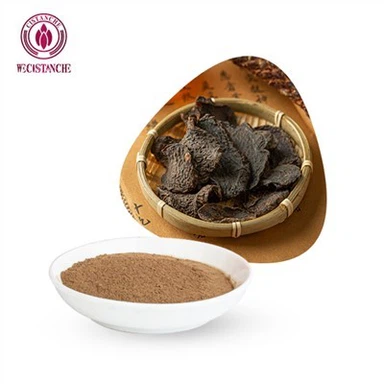
Cistanche deserticola slice
Click here to view Organic Cistanche Extract Powder products
【Ask for more】 Email:cindy.xue@wecistanche.com / Whats App: 0086 18599088692 / Wechat: 18599088692
In short, as the host of Cistanche deserticola, red willow is of great significance in improving desert ecology, bringing economic benefits, and driving the development of related industrial chains. We should fully recognize the value of the symbiotic relationship between Salix and Cistanche deserticola, strengthen their protection and utilization, and achieve sustainable development of ecology and economy.