Experience in Treating Constipation
Oct 23, 2023
Yan Zhenghua, the first Master of Traditional Chinese Medicine, chief physician and professor of Beijing University of Traditional Chinese Medicine, and instructor for inheriting the academic experience of veteran Chinese medicine experts across the country. Mr. Yan has been engaged in clinical work in traditional Chinese medicine since 1940. He has rich clinical experience and is especially good at treating miscellaneous internal diseases. His experience in treating constipation is summarized as follows for the benefit of colleagues.

Click to constipation treatment
Constipation refers to a disease characterized by difficulty in defecation and prolonged defecation time or defecation interval due to abnormal conduction function of the large intestine. Constipation is not only an independent disease but also a symptom that often appears in the process of various acute and chronic diseases. Traditional Chinese medicine has rich experience in treating constipation.
During the pre-Qin period, the Huangdi Neijing had recognized that constipation was related to cold in the spleen and stomach, heat in the intestines, and kidney disease. For example, "Su Wen Jue Lun" says: "The reversal of Taiyin will lead to fullness and distension of the abdomen, which will be unfavorable in the back." "Su Wen Jue Lun" says: "Hot air remains in the small intestine, causing pain in the intestine. Heat and thirst will lead to hardness. The constipation cannot come out, so it is painful and blocked." Zhang Zhongjing has a relatively comprehensive understanding of constipation, and has proposed the different pathogenesis of cold, heat, deficiency, and excess, and proposed the three methods of treating constipation: Chengqi Decoction, Maziren Pills, and Magnolia officinalis. Decoctions and other prescriptions were used to treat different types of constipation, establishing basic principles for the treatment of constipation by later generations of doctors.
During the Jin and Yuan Dynasties, Li Dongyuan emphasized the relationship between diet, work and rest, and constipation, and pointed out that laxatives should not be used indiscriminately to treat constipation. For example, "Lanshi Secret Collection·Dry Stool Gate" says: "If you are hungry and full, work too much, damage your stomach qi, and eat spicy, hot and thick-flavored things, it will help the fire evil, lie in the blood, and dissipate the true yin.", lack of body fluid, so the stool is dry and knotted. "To cure the disease, Croton, morning glory, etc. cannot be used all the time, as it will damage the body fluid, the dryness will be worse, the stool will be dry and knotted again, and in extreme cases, it will even lead to obstruction of the lower part. There is no way to save it." Cheng Zhongling's "Medicine Enlightenment: Obstructed Defecation" of the Qing Dynasty divided constipation into four types: "real secret", "deficient secret", "hot secret" and "cold secret", and listed the symptoms of each type respectively. The treatment methods and prescriptions provided a reference for future generations to treat constipation.

Professor Yan Zhenghua believes that the internal causes of constipation include eating disorders, emotional disorders, old age frailty, etc., while the external causes are caused by external evils. From the perspective of etiology and pathogenesis, if dryness, heat, and blood stasis accumulate in the intestines and stomach, it is classified as heat secretion; if the qi mechanism is blocked, it is classified as qi secretion; if Qi and blood are deficient, it is classified as deficiency secretion; if cold evil accumulates and stagnates, it is classified as cold secretion. Among the four, deficiency and excess are the key points. Heat secret, qi secret, and cold secret are true, and those with insufficient yin and yang qi and blood are deficient.
Syndrome differentiation
● Hot Secret
The main symptoms of heat secretion are dry stool, abdominal distension and pain, dry mouth, and bad breath, flushed face and upset, short red urine, red tongue with yellow and dry coating, and slippery and rapid pulse. It is treated by purging heat, guiding stagnation, moistening the intestines, and laxatives. The commonly used prescription is Ma Ziren Pills. Commonly used medicines are rhubarb, citrus aurantium, Magnolia officinalis, hemp seeds, cassia seeds, Trichosanthes trichosanthes, Radix multiflorum, etc.
● Qi secretion
The main symptoms of Qi secretion include dry stool, inability to pass stool when desired, or discomfort during defecation, borborygmus and gas, distending and pain in the abdomen, frequent belching, fullness in the chest and flanks, thin and greasy tongue coating, and stringy pulse. Treat qi stagnation. The commonly used prescription is Liumo Decoction. Commonly used medicines are costus, aegypti, rhubarb, betel nut, citrus aurantium, etc.
● Cold secret
The main symptoms of cold secretion are dry stool, abdominal pain and tightness, fullness and refusal to press, cold hands and feet, hiccups, white and greasy tongue coating, and stringy and tight pulse. Treat by warming the body, dispersing cold, and relieving pain. The commonly used prescription is Wenpi Decoction. Commonly used medicines are aconite, rhubarb, dangshen, dried ginger, licorice, angelica, cistanche deserticola, black root, etc.
● Qi deficiency and secrets
The main symptoms of Qi deficiency secretion are slightly dry and hard stools, difficulty in defecation despite the desire to defecate, sweating and shortness of breath when exerting effort, fatigue after defecation, pale face and tired mind, pale tongue with white coating, and thin and weak pulse. Treatment is to nourish qi and moisten the intestines. Commonly used prescriptions are Buzhong Yiqi Decoction and Sijunzi Decoction. Commonly used medicines are Codonopsis pilosula, Poria cocos, Atractylodes macrocephala, Astragalus membranaceus, hemp seeds, white honey, tangerine peel, etc.
● The secret of blood deficiency
The main symptoms of blood deficiency include dry and hard stools, dull complexion, dizziness, palpitations, forgetfulness, pale lips, pale tongue with white coating, and thready pulse. Treat with nourishing blood and moistening intestines. The commonly used prescription is Siwu Decoction combined with Runchang Pills. Commonly used medicines are Angelica sinensis, Rehmannia glutinosa, hemp kernel, peach kernel, Citrus aurantium, etc.
● Yin deficiency secret
The main symptoms of Yin deficiency secretion are dry stool, weight loss, dizziness and tinnitus, red cheekbones, restlessness, and insomnia, hot flashes and night sweats, soreness and weakness of the waist and knees, red tongue with less coating, and thready and rapid pulse. Treat with nourishing yin and laxatives. Commonly used prescriptions are Yiwei Decoction and Zengye Decoction. Commonly used medicines are Scrophulariaceae, Ophiopogon japonicus, Radix Rehmanniae, Angelica sinensis, Dendrobium, Adenophora adenophora, etc.
● Yang deficiency secret
The main symptoms of Yang deficiency secretion include slightly dry stool, difficulty in excretion, long and clear urine, lukewarm limbs, cold pain in the abdomen, cold waist and knees, pale tongue with white coating, and slow and slow pulse. Treat with a warming yang and laxative. The commonly used prescription is Wenpi Decoction combined with Jichuan Jian (modified and subtracted). Commonly used medicines are Cistanche deserticola, Cynomorium Cynomorium, Achyranthes bidentata, Angelica sinensis, Cimicifuga, Alisma, Citrus aurantium, dried ginger, Aconite, etc.
treatment method
Based on syndrome differentiation and treatment, Professor Yan Zhenghua often uses the three methods of moistening the intestines, strengthening the circulation, and attacking the lower body.
● Intestinal moisturizing method
This method is commonly used by Professor Yan Zhenghua. Cassia seed, Polygonum multiflorum, Trichosanthes trichosanthes, black sesame, hemp seed, Cistanche deserticola, Angelica sinensis, honey, Yu Liren, etc. are often used for clinical symptoms. Professor Yan Zhenghua believes that the clinical treatment of constipation cannot only be based on keratin, but should be based on regulating the functions of the organs and mobilizing internal factors in the body, so it is preferable to use medicines with mild potency. For constipation that is not urgent, the above drugs are used as the main treatment, and good results are obtained. For patients with other diseases and constipation, this method is often used as an auxiliary treatment.
Among them, black sesame, Cistanche deserticola, Chinese angelica, and honey are all products that can replenish essence and blood. They are warm and juicy. They can be used to nourish the body, attack evil without harming the body, and are suitable for those with insufficient body and blood. If they also have heat symptoms, they are the first choice. Cassia seeds, trichosanthes, Polygonum multiflorum, and other cold products; for those with obvious qi stagnation, it is often combined with qi-moving products such as Citrus aurantium, Citrus aurantium, betel nut, and other qi-moving products to enhance the effect of clearing the bowels. If the qi stagnation is mild, use Citrus aurantium husk, if the qi stagnation is severe, use Zhishi, and if the qi stagnation is more serious, use betel nut. Although intestinal moisturizing medicine has a mild potency, as long as the syndrome differentiation is accurate and the compatibility is reasonable, it can achieve the effect of laxatives, has good safety, easy to control dosage, and is particularly safe for treating chronic habitual constipation.
● Healthy Movement Method
For those who have insufficient Qi and weak bowel movement, or are old and frail, with weak Qi and blood and difficulty in defecation, Professor Yan Zhenghua often uses Atractylodes macrocephala to nourish Zhongzhou, strengthen the spleen, and move the intestines. This type of patient's stool is not very dry and hard, but it is difficult to defecate, and it is difficult to use ordinary laxatives to relieve constipation. It is necessary to take supplements to strengthen the spleen and stomach, normalize the rise and fall, and clear the intestines. Atractylodes laxative was first seen in "Synopsis of the Golden Chamber" and "Treatise on Febrile Diseases" Guizhi Aconite Quguijia Atractylodes Decoction. The original text states: "If the person has hard stools and is self-directed in urination, remove Guijia Atractylodes and use Atractylodes decoction to treat it." Yu Jiayan believes that Atractylodes can "nourishes the stool"; Wang Lingyou believes that "Atractylodes is the main medicine of the spleen... it can be used to dry out dampness.", and nourish the liquid with it."
Professor Yan Zhenghua often adds and subtracts Wei Longxiang Atractylodes laxative prescription (Atractylodes, Rehmannia glutinosa, Cimicifuga) for clinical symptoms, and always gets good results. For those with dryness and constipation, use rhubarb and Glauber's salt together; for those with weak Yang energy, remove Rehmannia glutinosa and add Cistanche deserticola, Angelica sinensis, astragalus, etc.; for those with insufficient Yin fluid, use Rehmannia glutinosa together with Trichosanthes trichosanthes and Ophiopogon japonicus; for the elderly and infirm, add Cistanche deserticola, Angelicae spp. Angelica sinensis and other nourishing essences and blood. The dosage of Atractylodes generally starts from 15g, and depending on the condition, 30-60g can be used, as long as the stool is smooth and not loose. If the stool is loose, it is easy to produce Atractylodes Atractylodes, which are fried Atractylodes, enhance the function of strengthening the spleen and reducing dampness.
● Attack method
The clinical manifestations of constipation caused by intestinal dryness in Yangming Fu organs are "puffiness, dullness, dryness, and excess". Ancient and modern doctors have used rhubarb, Glauber's salt, and the like to treat hot knots. Professor Yan Zhenghua also commonly uses this method. This method is used to treat patients who have had constipation for a long time and have obvious signs of dampness and heat, or who have diarrhea it is difficult to get results with a light dose, but the patient has no symptoms. Professor Yan Zhenghua must start with a small dose when applying rhubarb. If the effect is not obvious, increase the dose. Generally, 6g of rhubarb is used, and it is limited to 4 to 5 times of stool per day. If it exceeds, reduce the amount, and if it is less than 1 time, increase the amount. When using Glauber's salt, Xuanming powder, which has a milder laxative effect, is often used instead, to relieve constipation without damaging the body. For clinical symptoms, use Glauber's salt and rhubarb, often combined with citrus aurantium, betel nut, Magnolia officinalis, and other qi-moving products to enhance the power of clearing the bowels. Professor Yan Zhenghua uses this method and strictly controls the dosage to eliminate evil without damaging the good.
▲ Glauber's salt
Constipation is a common clinical disease, often with a mixture of deficiency and excess, and a mixture of cold and heat. The above three methods can be applied alone, or two or three methods are often combined according to the condition. Generally, for habitual constipation, if the heat knot is not severe and the virtual phenomenon is not obvious, the moistening method can often be effective; for those with an obvious hot knot or damp-heat stagnation, the attacking method is often the main method; for those with the obvious virtual phenomenon, the strengthening method is the first choice. Clinical application requires clear identification of the pathogenesis and flexible application based on specific symptoms.
Natural Herbal Medicine For Relieving Constipation-Cistanche
Cistanche is a genus of parasitic plants that belongs to the family Orobanchaceae. These plants are known for their medicinal properties and have been used in Traditional Chinese Medicine (TCM) for centuries. Cistanche species are predominantly found in arid and desert regions of China, Mongolia, and other parts of Central Asia. Cistanche plants are characterized by their fleshy, yellowish stems and are highly valued for their potential health benefits. In TCM, Cistanche is believed to have tonic properties and is commonly used to nourish the kidney, enhance vitality, and support sexual function. It is also used to address issues related to aging, fatigue, and overall well-being. While Cistanche has a long history of use in traditional medicine, scientific research on its efficacy and safety is ongoing and limited. However, it is known to contain various bioactive compounds such as phenylethanoid glycosides, iridoids, lignans, and polysaccharides, which may contribute to its medicinal effects.

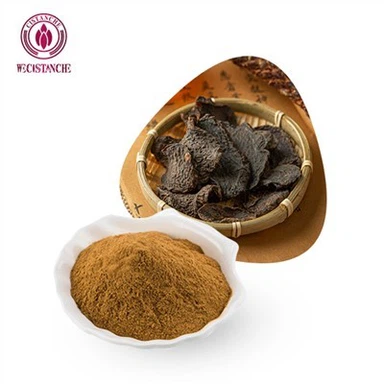
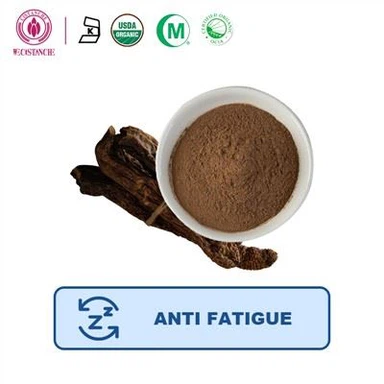
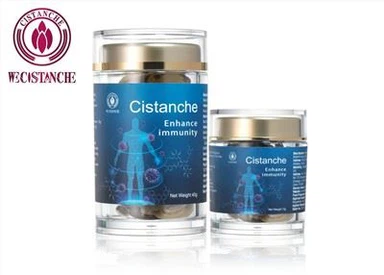
Wecistanche's cistanche powder, cistanche tablets, cistanche capsules, and other products are developed using desert cistanche as raw materials, all of which have a good effect on relieving constipation. The specific mechanism is as follows: Cistanche is believed to have potential benefits for relieving constipation based on its traditional use and certain compounds it contains. While scientific research specifically on Cistanche's effect on constipation is limited, it is thought to have multiple mechanisms that may contribute to its potential to relieve constipation. Laxative Effect: Cistanche has long been used in Traditional Chinese Medicine as a remedy for constipation. It is believed to have a mild laxative effect, which can help promote bowel movements and induce constipation. This effect may be attributed to various compounds found in Cistanche, such as phenylethanoid glycosides and polysaccharides. Moistening the Intestines: Based on traditional use, Cistanche is considered to have moisturizing properties, specifically targeting the Intestines. Promoting hydration and lubrication of the Intestines may help soften tools and facilitate easier passage, thereby relieving constipation. Anti-inflammatory Effect: Constipation can sometimes be associated with inflammation in the digestive tract. Cistanche contains certain compounds, including phenylethanoid glycosides and lignans, that are believed to have anti-inflammatory properties. By reducing inflammation in the intestines, it may help improve bowel movement regularity and relieve constipation.