Giftedly Gifted, Authentic Masterpiece - An Analysis Of The Core Reasons For The Optimal Quality Of Cistanche Tubulosa in Hotan, Xinjiang
Apr 24, 2026
Cistanche tubulosa, known as the "desert ginseng", is a highly regarded tonic treasure in traditional Chinese medicine. The "Shennong Bencao Jing" lists it as a top-grade herb, recording its ability to "nourish the five organs, strengthen yin, and nourish essence and qi" by treating the five pains and seven injuries. Among numerous production areas, Cistanche tubulosa produced in Hotan, Xinjiang, stands out for its plump meat, rich nutrition, and outstanding active ingredients, becoming recognized as the best quality. Its outstanding quality is not accidental, but the result of the combination of multiple advantages such as natural gifts, host symbiosis, scientific cultivation, and standardized control. Behind it lies a unique set of "quality codes".

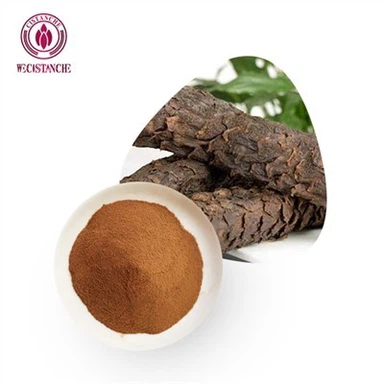
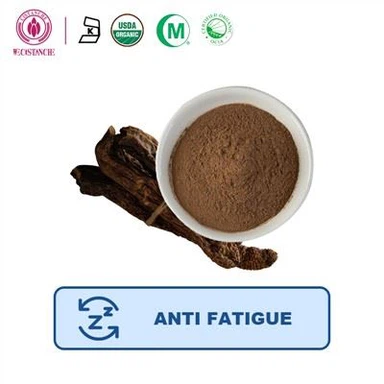
benefits of cistanche tubulosa
Click here to view Cistanche for Kidney disease products
【Ask for more】 Email:cindy.xue@wecistanche.com / WhatsApp: 0086 18599088692 / Wechat: 18599088692
Natural endowment: The ecological buff of the chosen land lays the foundation for quality
The high quality of Hotan Cistanche primarily stems from its irreplaceable geographical and climatic conditions. The unique terrain at the foot of Kunlun Mountain and the edge of the Taklamakan Desert has created a "natural greenhouse" for its growth, with the four natural advantages layer by layer, making it difficult for other production areas to reach.
The unique geographical location is the foundation. Hotan is located in the golden latitude zone of 37 degrees north latitude, with Kunlun Mountains to the south and Taklamakan Desert to the north. The unique terrain of half snow-capped mountains and half desert has formed a unique regional microclimate, which cannot be artificially replicated. It has become the core geographical indication that sets Hotan Cistanche apart from other production areas and provides a unique environmental foundation for its growth. As a Chinese national geographical indication product, the production area of Hotan Cistanche is strictly limited to eight counties and one city, including Hotan City and Hotan County, further ensuring its authenticity and quality stability.
Long hours of sunshine recharge the accumulation of nutrients. The annual sunshine duration in the Hotan area can reach 3000-3500 hours, which is equivalent to having more than 8 hours of "natural sunbathing" every day. Adequate light allows the photosynthesis of Cistanche tubulosa to reach its peak, continuously accumulating core nutrients such as polysaccharides and phenylethanolic glycosides, making the meat more plump and solid, and improving the quality from the source.
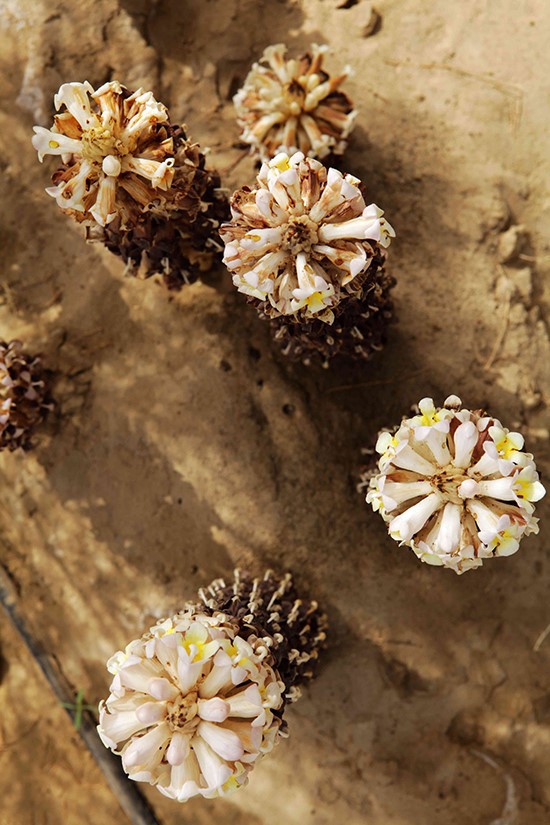
Cistanche tubulosa
The huge temperature difference provides protection for nutrient storage. The temperature difference between day and night at the edge of the Hotan Desert can reach 28 ℃. The high temperature during the day is conducive to the rapid growth and synthesis of nutrients in Cistanche tubulosa, while the low temperature at night can slow down respiration, reduce nutrient consumption, and firmly lock in the accumulated sugar and active substances during the day. This "temperature difference shock" makes Hotan Cistanche have a smooth and mellow taste, and when brewed, it can release a natural fragrance. Its nutritional utilization rate is also much higher than that of other production areas.
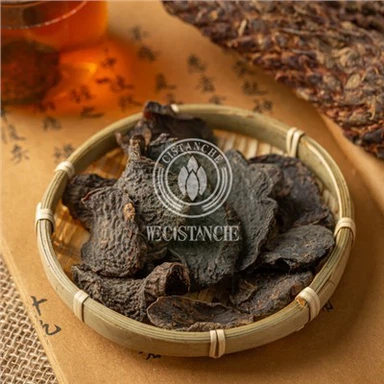
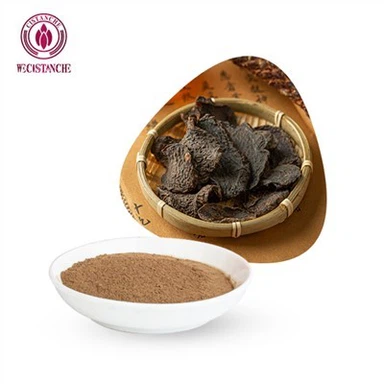
High-quality soil and water provide nourishment for growth. The soil in Hotan is mainly loose and breathable sandy soil, like a "natural breathable bed", allowing the root system of Cistanche tubulosa to freely extend without clogging or rotting, helping it grow robustly. After slicing, the texture is clear and visible. What's even more rare is that the irrigation water sources all come from the melted snow water in the Kunlun Mountains. This "high mountain mineral water" is rich in minerals and trace elements, pure and pollution-free, and does not require pesticides or fertilizers throughout the process, truly achieving "no technology and fierce vitality", allowing Cistanche tubulosa to grow naturally in its original ecological environment. At the same time, the arid environment with an annual precipitation of less than 50 millimeters in Hotan also forces Cistanche tubulosa to continuously optimize its survival mechanism, store more nutrients in the fleshy stems, and further improve its quality.
Host symbiosis: With the support of high-quality hosts, nutrient supply is more efficient
Cistanche tubulosa is a typical parasitic plant, and its growth depends on the nutrient supply of the host plant. The unique host selection and symbiotic mode in the Hotan area further amplify its quality advantage. Hotan Cistanche mainly parasitizes on the roots of red willows or red willows, both of which are excellent varieties with drought tolerance and developed root systems in the desert. Especially red willows, as the "nurse" of tube flower Cistanche, not only have strong drought tolerance and do not require excessive maintenance, but also can deeply absorb deep water and nutrients underground, providing stable and sufficient nutritional support for Cistanche.
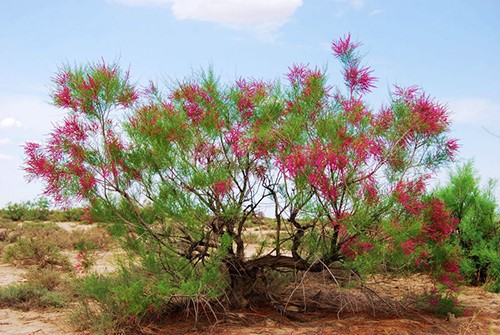
Host of Desert Ginseng and Cistanche tubulosa- Red Willow
More importantly, the Hotan region has formed a benign symbiotic ecology between Cistanche tubulosa and its host plants: red willows and red willows can prevent wind and sand, improve the soil environment, and the growth of Cistanche tubulosa does not require additional occupation of farmland or damage to host growth. This symbiotic relationship not only guarantees the natural quality of Cistanche tubulosa but also achieves a win-win situation for ecological protection and industrial development. Compared to other production areas, the host plants in Hotan grow more vigorously, accumulate more nutrients, and provide richer nutrition for Cistanche tubulosa. This is also one of the important reasons for the higher content of active ingredients in Cistanche tubulosa in Hotan. According to research, whether grown naturally or artificially, the effective functional ingredient content of Hotan Guanhua Cistanche is 5 to 10 times higher than that of desert Cistanche.
Planting and harvesting: scientific control, guarding every quality checkpoint
If natural endowment is considered a 'congenital advantage', then scientific planting, harvesting, and processing are the 'postnatal guarantee' for Hotan Cistanche to maintain its quality. After decades of development, the Hotan area has formed a mature and standardized planting and harvesting system, which controls quality from the source to the finished product.
Standardized planting lays the foundation for quality. Through systematic research, the Hotan region has developed a scientific system for simulating wild planting techniques. Healthy red willows or red willows that are 2-5 years old are selected as hosts, and the independently developed "2-meter ring ditch sowing method" is used to accurately control the planting spacing and depth, achieving efficient symbiosis between Cistanche tubulosa and host root systems. At the same time, strict implementation of crop rotation and fallow system, reasonable planning of planting cycle, effective maintenance of soil fertility and ecological balance, and avoidance of quality decline caused by excessive planting. In addition, a GAP base for Cistanche tubulosa has been established locally, strict planting standards have been formulated, and more than 100000 growers and technical personnel have been trained to ensure the standardization of the planting process.
Refined harvesting locks the nutrient essence. The timing and method of harvesting directly affect the quality of Cistanche tubulosa. The Hotan region breaks the traditional practice of harvesting in spring and chooses to harvest before the frozen soil in autumn. At this time, Cistanche tubulosa has accumulated nutrients throughout the summer and has not yet experienced nutrient consumption in winter. Its active ingredient content reaches its peak, and its texture is warmer. During harvesting, careful manual digging is used to minimize damage to the Cistanche tubulosa and preserve its internal nutritional components to the maximum extent possible. This distinguishes it from the extensive harvesting methods in other production areas, further ensuring its quality.
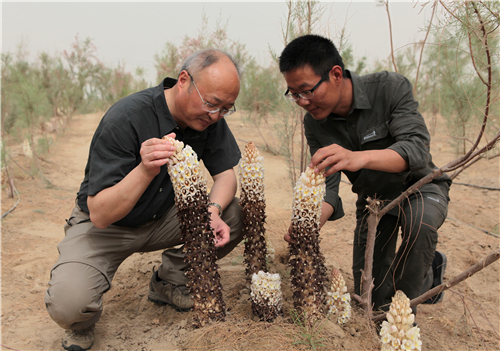
Father of Cistanche tubulosa- Professor Tu Pengfei
Standardized processing preserves nutritional activity. Hotan Cistanche adopts low-temperature dehydration and drying technology below 60 ℃, effectively retaining more than 98% of thermosensitive active ingredients such as phenylethanolic glycosides and polysaccharides, avoiding nutrient loss caused by traditional high-temperature drying. The processing strictly follows the national food safety standard GB 14881, and the entire process of removing impurities, cleaning, and cutting is standardized to ensure that the finished Cistanche tubulosa is free of mold, insect infestation, and odor, and meets the standards of the national pharmacopoeia.
Quality certification: authentic benchmark, able to withstand market and authoritative inspections
The excellent quality of Hotan Cistanche has not only been widely recognized by the market, but also has authoritative certification and data support. In 2016, the former General Administration of Quality Supervision, Inspection and Quarantine approved the implementation of geographical indication product protection for "Hotan Cistanche", clarifying its origin range and quality standards, further strengthening its authentic status.
From the perspective of ingredient testing, the core active ingredient content of Hotan Cistanche is significantly higher than that of other production areas. According to the 2025 edition of the Pharmacopoeia of the People's Republic of China, the total amount of echinacroside and verbascoside in Cistanche tubulosa must be ≥ 0.30%, while this index in Hotan Cistanche tubulosa generally reaches over 1.50%, far exceeding the national standard; Its polysaccharide content is ≥ 5 grams per 100 grams, which is also at the leading level in the industry. At the same time, the safety indicators such as pesticide residues and heavy metals of Hotan Cistanche comply with national standards such as GB 2763, and the testing data is transparent and traceable, making consumption more reassuring.

Planting of Cistanche tubulosa
From a historical and market perspective, Hotan, as the main producer of Cistanche tubulosa, has a history of over two thousand years of consumption and medicinal use, and is widely recognized as an outstanding representative of Cistanche tubulosa. Nowadays, Hotan Cistanche not only sells well domestically, but also gradually enters the international market. With stable quality, it has won high recognition from consumers and the industry, becoming a quality benchmark in the Cistanche market.
In summary, the optimal quality of Cistanche tubulosa in Hotan, Xinjiang, is the result of a unique ecology gifted by nature, a benign symbiotic host relationship, scientific and standardized planting and harvesting, as well as authoritative and strict quality control. This exquisite product of "desert ginseng" is not only the natural preference for the land of Hotan, but also the result of ten years of perseverance and innovation by the local people, ultimately achieving its irreplaceable authentic quality and market position.